








Snowboard Width Explained
Snowboard width is a measurement that is often overlooked as riders tend to focus more on the length of their snowboard. Get the width wrong though and you will have all kinds of trouble, and you may not be able to perform certain techniques, such as carving accurately. The width of your snowboard may vary depending on the type of riding you do and the conditions you are riding in, but the biggest indicator is your foot size.

HOW TO JUDGE SNOWBOARD WIDTH
The width of your snowboard should allow your toes and heels to overhang the edge of your board by around 1/2 an inch. By having this slight overhang, your toes and heels will be directly placed above the edges of your snowboard. This foot placement will allow you to quickly transfer the power from your movements to your edges to turn your board.
When in the store finding your next snowboard, ask the salesperson to let you place the snowboard on the floor. This is common practice in snowboard stores so should not be an issue. When on the floor you can stand on the board in your stance, without shoes, to see where your feet lay in relation to the edges. Remember that snowboard boots will add a few CMs to your feet so if you are already over the edge it is likely the board you are standing on will have too narrow a waist.
Even better if you bring your actual boots and bindings to the store with you. Most stores will allow you to attach your bindings to their demo board so you can see what the width is like when using your gear. This will give you the best idea of whether the board is the right width for you.
Really important to stand on the board using your riding angles! This will give you the most accurate results.
IS SNOWBOARD WIDTH REALLY IMPORTANT?
If your toes/heels overhang the board by over 1/2 an inch it is likely that you will experience some kind of toe or heel drag in the snow when turning. Toe or heel drag indicates that your snowboard width is too narrow and will result in reduced snowboard performance. The drag can cause your board to slip out during turns and you could end up falling regularly. This will be a particular problem during carving.
Having a board that is too narrow will negatively affect your snowboarding however some people choose to ride with a wider snowboard. Wide snowboards are designed for those with bigger feet, ergo bigger boots, and should help prevent toe/heel drag in the snow. The same 1/2 inch rule should apply to big booted riders only that they will achieve this by riding a wider board.
CAN I RIDE A WIDE IF I DONT NEED TO?
In short, the answer is yes… here are some of the reasons why you may or may not want to do that.
One guy who absolutely swears by riding a wider board is Ryan Knapton. Ryan is probably one of the best carvers you will ever see and he rides an extra wide board to allow him to fully lay trenches. By having a wider board Ryan demonstrates that you can lean further into your turns without getting any drag. If you have not heard of Ryan Knapton make sure to check out his Youtube here where this point will be fully demonstrated. Or watch the below video.
Riding a wider board will add stability and increase your float in pow, so for freeriders going wider could be a better idea.
Why may you not want to ride a wider snowboard than you need to… well due to the extra width a wider board can take longer to go from edge to edge. This can influence your turn size and shape. By watching the video above I hope it proves that going wider doesn’t stop you from being able to snowboard well… but you will need experience to handle that width on your snowboard.
POWDER BOARDS
Powder boards may be the exception to every rule where you will want to look for a wider board. In recent years, powder shapes are getting wider as this adds surface area and will increase float in the deep stuff. On a powder board, don’t worry if your feet are a little narrower than the board’s width. If your intention is to only use this board when its dumped you will thank yourself for getting the extra width.
FREESTYLE BOARDS
Pay extra attention to waist width when choosing a freestyle snowboard. Generally speaking, freestyle boards are designed to improve manoeuvrability and as such will have narrower waists. The narrower waist will help reduce swing weight and allow the rider to turn on a dime but if your feet are overhanging then this could cause you issues.

ARE SIZING CHARTS RELIABLE?
Snowboard width sizing charts do exist but honestly, in our opinion, the best thing to do is to get into the store and stand on the board. Even better if you can bring your boots and bindings to the store to get a proper feel. Most shops now have a demo fleet and I would recommend a demo day if you are still unsure of width.
WHAT TO DO IF YOUR SNOWBOARD IS TOO NARROW
Assuming that it is too late to return the snowboard and that nobody wants to buy it off you for a reasonable price…. all is not lost. If your snowboard is too narrow you can add risers to your bindings. Risers will lift your bindings higher off the board allowing you to lean but reducing toe/heel drag in the process. Yes, you would have to buy them but its a damn lot cheaper than a new board!
Another purchase you could make is a new pair of snowboard boots. You will find that different brands or models of boots can be longer or shorter even if they are the same shoe size. Ask your local snowboard store about low profile boots that may reduce your foot length on the snowboard. By reducing the space your boots take on the board you may even be able to fit into a smaller pair of bindings.
ABILITY AND SNOWBOARD WIDTH
For beginners, it is unlikely that snowboard width will affect your ability to learn. In the formative stages of snowboarding, you are not going to be doing any extreme inclination or angulation with your board. This means if you are given a rental board and your boots overhang it should not pose a massive issue. If however, you are buying your own board to learn, make the effort to find the correct width snowboard as if it is too narrow this could hold you back later on.
Advanced snowboarders who like to spend their time carving aggressively should ensure they get the width right. Having a board that is too narrow will prohibit your ability to get further up onto your edges. You should aim to get a lower profile boot to accompany your snowboard to make the perfect combination for carving. If carving is your main riding style then going wider will help ensure there is less drag through your turns.
FINAL THOUGHTS
Getting the width of your snowboard right is important and shouldn’t be a rushed decision. Make sure to go to your local snowboard store and try out a number of boards. By standing on the boards you will have a better idea of whether you will need a wider board in that model.
STILL UNSURE?
As always thanks for reading and if you are still unsure feel free to get in touch via the socials or the comment section. Make sure to check out the Snowboard Buyers Guide where you will find all the information regarding how to buy a snowboard.

Jones Ultra Mountain Twin Snowboard Review

THE ONE-STOP SHOP FOR ALL-MOUNTAIN FUN
Jones has been renowned for making some of the best freeride-inspired snowboards on the market. Jones snowboards have been ridden in some of the most gnarly terrain so when they had the idea to spec up their already popular Mountain Twin snowboard I had to get one.
During this review, I will delve deeper into the Jones Ultra Mountain Twin Snowboards performance in Powder, Piste and Park whilst giving further information on its profile and the important specs.
This review is my opinion of the Jones Ultra Twin Snowboard, which I purchased with my own money. If you find the review useful consider purchasing your gear through the affiliate links in the post to support the website and future content.
ABOUT ME
Before jumping into the full review it is worth noting the following information about me as a snowboarder. I am lucky to snowboard a lot but I am not a professional. I have lots of experience riding in all terrain in all conditions and have previous snowboard shop maintenance and retail experience. I use my website to express my opinions on gear and I hope you find them useful when choosing what gear works for you.
WHAT JONES SAY
The Ultra Mountain Twin is a high-powered directional twin freestyle board built for the expert freerider who likes to throw big tricks outside the terrain park. Balanced rocker in the tip and tail deliver serious float in pow, while camber underfoot gives the Ultra Mountain Twin awesome pop and edge hold.
TEST CONDITIONS
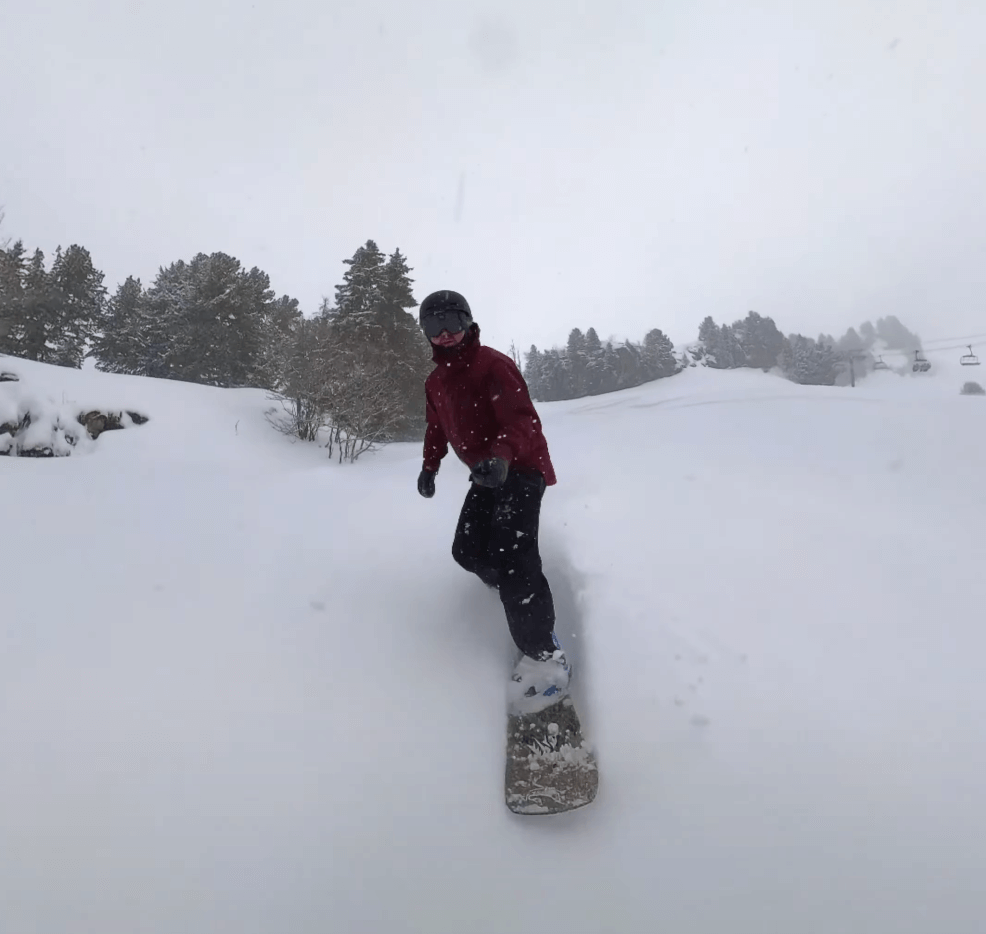
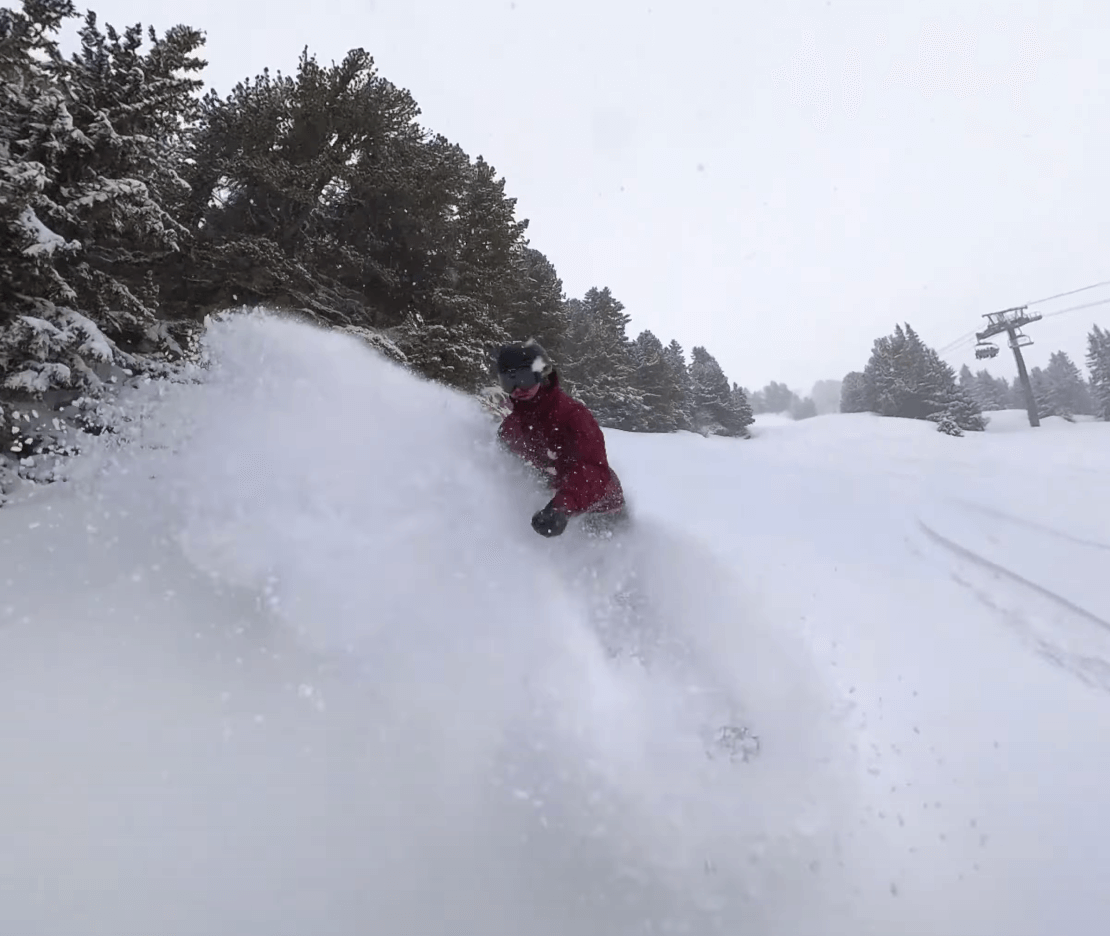
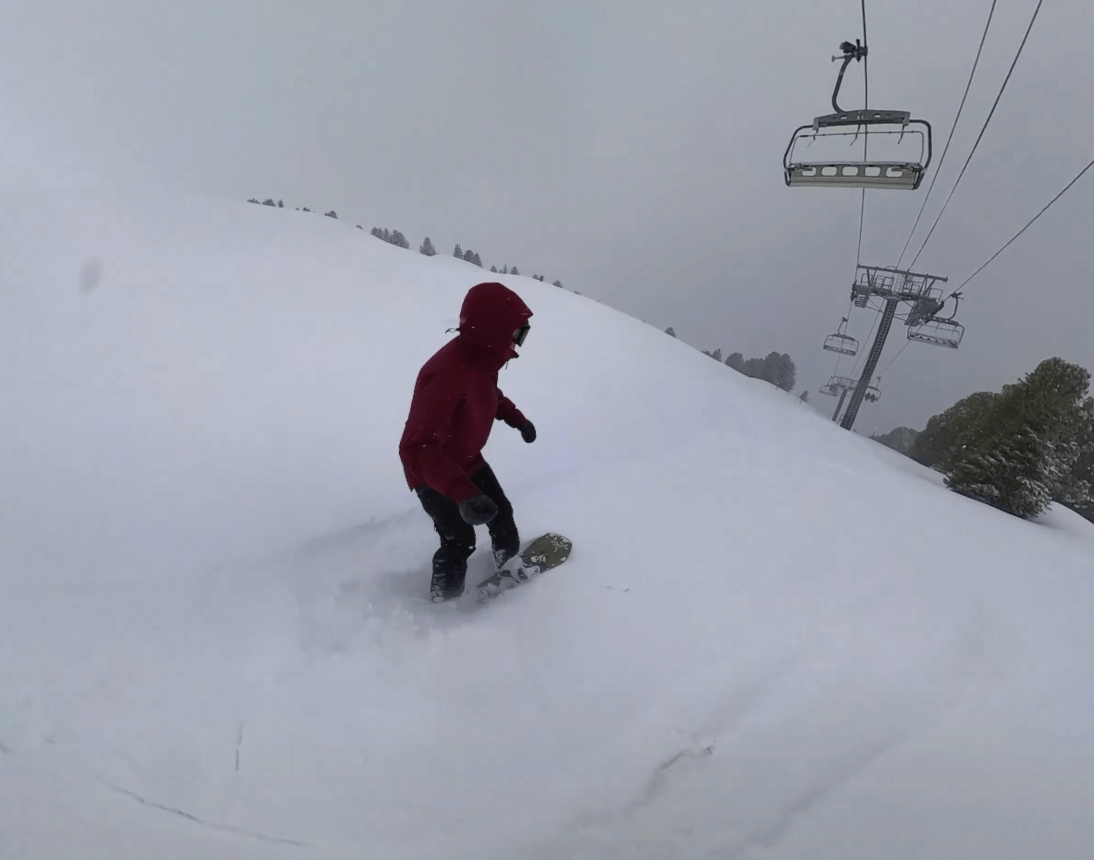
The Jones Ultra Mountain Twin Snowboard was my board of choice for the 2023/24 winter season where I snowboarded across the Grand Massif. I chose the Jones Ultra Mountain Twin as I wanted to see if I could cut down my quiver and take only one snowboard to do it all. Throughout the winter I had the full range of conditions from incredible powder, hard icy pistes to spring slush. If you want to check out exactly what I put this board through then head to my Grand Massif Youtube playlist.
BINDINGS
Across the winter I partnered the Jones Ultra Mountain Twin with the following bindings.
Burton Cartels
STANCE
The Jones Ultra Mountain Twin has two recommended stance widths; centered and freeride. I rode this board in the freeride stance, slightly set back for the majority of the winter.
BOOTS
I partnered this board with the following boots.
Salomon Echo Dual Boa
Jones Ultra Twin Snowboard
PROFILE
The Jones Ultra Mountain Twin Snowboard has a hybrid CamRock profile that ensures it is a versatile all-mountain snowboard. The hybrid profile of the Ultra Mountain Twin combines camber underfoot with a rocker tip and tail.
BENEFITS
Camber provides a stable ride and pop
Rocker allows for a catch free turn initiation and better float in pow.

COST
The Jones Ultra Mountain Twin Snowboard isn’t cheap and at £629.95 on the Jones website can feel like a massive outlay. I managed to find one in the sales and paid around £400 so it is worth hunting for deals.
CONSTRUCTION
In terms of construction, there are some differences between the Ultra and regular Mountain Twin which account for the extra cost. A major upgrade is the responsive Power Core which is stiffer than the regular Mountain Twin which gives the Ultra a performance lift. The Power Core combines, poplar, bamboo and laulownia to make a durable and lightweight core.
In addition to the Power Core the Ultra Mountain Twin utilises tri-ax glass and Basalt stringers. This helps to deliver an improved responsiveness from the Ultra over the regular Mountain Twin.
The Jones Ultra Mountain Twin also has an incredibly fast sintered base which is one of the most high-end bases on the market.
To learn the difference between sintered and extruded bases you can check this article.
PISTE
Whether you are a powder fiend or a park enthusiast you are going to have to ride some pistes along the way. The Jones Ultra Mountain Twin was great on the pistes even on those icy days with hardpack snow.
The Jones Ultra Mountain Twin snowboard has a few key features that help it excel on-piste.
The first feature is the camber under the bindings. This is something that I will not compromise on with any of my snowboards, camber underfoot in my view is a necessity. The camber on the Jones Ultra Mountain Twin helps it feel secure in its carves and gives the board a stability that is reassuring.
Secondly, the Jones Ultra Mountain Twin snowboard has Traction Tech. This is similar to Magna traction or Underbite that you will find on Never Summer and Yes Snowboards. Traction Tech essentially adds extra bumps along the boards edge which help your snowboard cut through and grip on harder icier snow. Think about a bread knife and the serrated edge, Traction Tech works in the same way.
Finally, the Flex on the Jones Ultra Mountain Twin makes is stiffer than on the regular Jones Mountain Twin snowboard meaning it feels more stable at higher speeds.
FREESTYLE
I am not an incredible freestyle snowboarder so you can take my advice here with a pinch of salt however I enjoy heading into the park and will hit both rails and jumps.
What I am looking for in a snowboard in terms of freestyle is does it feel fun and whether it has a catch-free feel. The Jones Ultra Mountain Twin Snowboard delivers in both of these regards.
Let’s start with pop: The Jones Ultra Mountain Twin Snowboard has a camber under the feet which gives it a snap and pop which is great for boosting of rollers, jumps and side hits.
Edge Catch: The Jones Ultra Mountain Twin has a rocker on both nose and tail which meant it felt really catch-free when doing flatland spins and presses. The board felt smooth and this feeling transferred onto boxes and rails where I never felt like I was going to catch an edge.
Switch Riding: Despite riding the snowboard in the set-back stance for the majority of the winter the Jones Ultra Mountain Twin was super easy to ride switch. This isn’t a surprise for a Directional Twin snowboard but it is good to know it delivers on what is expected.
POWDER
The Jones Ultra Mountain Twin exceeded my expectations in terms of powder riding. There was no back leg burn and it seemed to float effortlessly. I’ve ridden directional snowboards that performed worse in deep snow. This was a big surprise for me because I had sized down 3cm compared to my usual directional board length so had expected powder performance to suffer.
The setback stance and rocker in the nose and tail seem to do an amazing job of keeping the board above the snow. My version of the Jones Ultra Mountain Twin Snowboard was a 156W. The wide version will have helped the powder performance due to an increase in surface area over the regular boards.
CHECK OUT THE POWDER PERFORMANCE IN THE VIDEO BELOW
FINAL THOUGHTS
The Jones Ultra Mountain Twin Snowboard has been one of my all-time favourite snowboards to ride and I truly rate it as a one board to do everything. I was really surprised by just how well the Jones Ultra Mountain Twin performed in powder, especially given that I sized down. There was no back leg burn and it seemed to float effortlessly. I’ve ridden directional snowboards that performed wor
SUPPORT FUTURE CONTENT
If you found this post useful then consider supporting future content by purchasing through the Amazon Link below or using this link to Buy me A Coffee

Ten Reasons You Should Snowboard In Bulgaria
So you are planning a snowboarding trip and Bulgaria is not on your list. Well, I am here to tell you exactly why it should be. As a former ski resort snob myself I used to laugh at the idea of snowboarding in Bulgaria, but now all that has changed. Having been to snowboard at two of the largest Bulgarian ski resorts over the past few years I have learned a fair bit about what a Bulgarian snowboard trip entails. So come along with an open mind and maybe you too can add Bulgaria to your ski resort bucket list.

PURPOSE-BUILT RESORT
Bulgaria has three main resorts; Bansko, Borovets, and Pamporovo. There are more smaller resorts but it is likely that if you decide to head to Bulgaria to snowboard it will be to one of those three. The villages and facilities around these ski resorts are all purpose-built to make your stay as hassle-free and enjoyable as possible. All the resorts offer hotels and apartments within walking distance of the slopes. Convenient shops will make it easy to find and collect your snowboard hire, with many of them operating drop-off services in the hotels. The facilities are improving in Bulgaria all the time and the more popular it gets the more that money is reinvested into improving infrastructure.
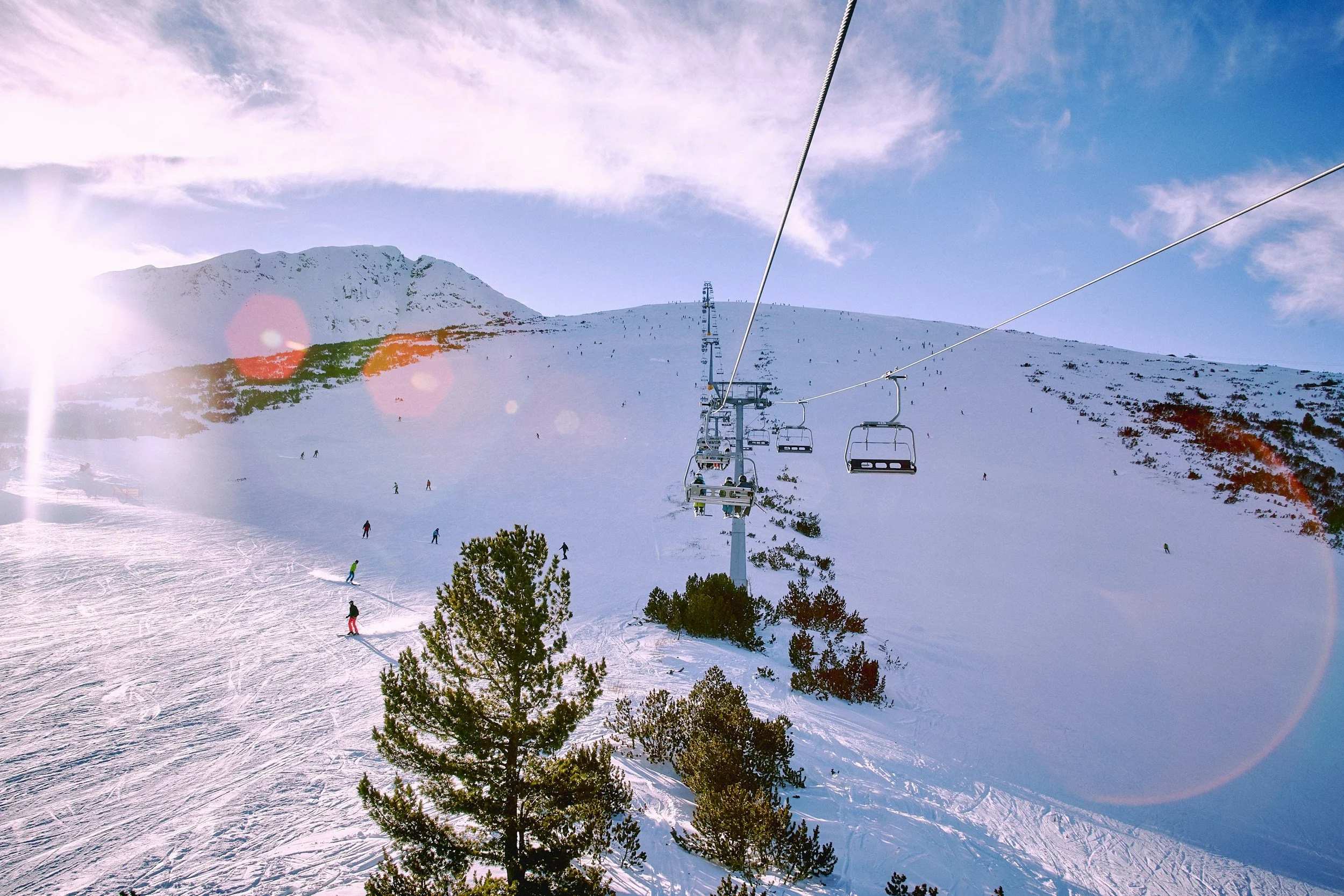
At the major resorts of Bansko and Borovets, the lifts are fairly fast (with the exception of the gondolas) and the terrain would be enough to keep most people entertained for the week. You will find a World Cup downhill run at Bansko and well-constructed terrain parks. Bulgaria offers more than the basic facilities some people expect.
EASY ACCESS
One of the major determining factors in choosing a holiday destination is the travel. Well, the journey to Bulgaria is simple and affordable. Airlines fly between the UK’s major airports and the Bulgarian capital of Sofia regularly throughout the winter with many offering great deals. Once at Sofia International Airport you will find short transfer times (just the 1 hour to Borovets) and a number of easy ways to transfer. Whether it be resort coach, self-drive, or the public bus system Bulgarian ski resorts are accessible with ease.

AWESOME VALUE
It is impossible to argue against the value of a Bulgarian ski holiday. Let’s start with the true international comparison of value, the price of a beer. A beer in Bulgaria will cost you around £1.50 and when you compare that to the prices in; France, Switzerland, or even the more affordable Italy you will be laughing all the way to the bar. But value isn’t just found at the bar in Bulgaria. A week’s lift pass in Borovets will cost around £170 just £130 cheaper than at France’s 3 Vallees resorts. Additionally, you may not even have to worry about purchasing your lift pass as some holiday tour operators throw this in with the price of their half-board or all-inclusive board options. If meals are not part of your deal do not worry. Head out into town and you will be able to eat for around £10 per head, £15 if you want to share a bottle of wine. All in all, Bulgaria really does offer more for your money than most ski destinations.
APRES SKI
There are a few places in the ski world that claim to have a great apres-ski environment, sadly some of them are too expensive to actually be able to indulge, Bulgaria is different. We have already discussed the price of beer, but when you can sample the local lager across lively bars, nightclubs, and music venues you are spoilt for choice. Yes, you may come across the stag/hen crowd in Bulgarian ski resorts but that doesn’t mean it’s not a family place. If the bars are not your scene, then head to the bowling alley, the cinema or enjoy the leisure facilities in the hotel. There is plenty of apres for everyone, however, you want to conduct it.

BULGARIAN CULTURE
I was not planning to be sampling too much of the Bulgarian culture on my ski trips but I got sucked in. Bansko has an old town which is a UNESCO heritage site and its cobbled streets are home to a number of great local restaurants. I’ll get onto the food soon, but the Old Town is the place to go to sample local Bulgarian music (usually folk) and to wander through the medieval streets. It really leaves a different impression to the modern and bustling area around the gondola station.
BULGARIAN CUISINE
Bulgarian food is fantastic and really wasn’t what I was expecting. As discussed, the Old Town of Bansko is filled with plenty of fantastic places to eat. Borovets too has a number of restaurants where you can sample local meat and fish dishes accompanied by salads or side dishes. You can of course opt for the non-local food, with fast food and pretty much every western cuisine on offer…. but then you’d be missing out.
The final point on Bulgarian food, if you have opted for an accommodation option where food is included don’t let this handcuff you to your hotel. Most hotels provide a buffet spread but it can get a bit repetitive.
PERFECT FOR PROGRESSION
Bulgaria is perfect for beginner skiers and snowboarders. First of all, it is cheap, so its less of a risk should you not like the activity (although this would never happen!!!). But more to the point is the affordability and quality of ski school lessons in Bulgaria. All of the resorts have a local ski school that delivers group and private lessons on a very affordable basis.
The terrain in Bulgaria is mostly suited to beginners and intermediates so you will be able to progress from green to blue runs fluidly throughout your first week. If you are a fast learner your progression won’t be stunted in Bulgaria, there are a number of red and black pistes that you can aim for or provide a further reason to return next year.
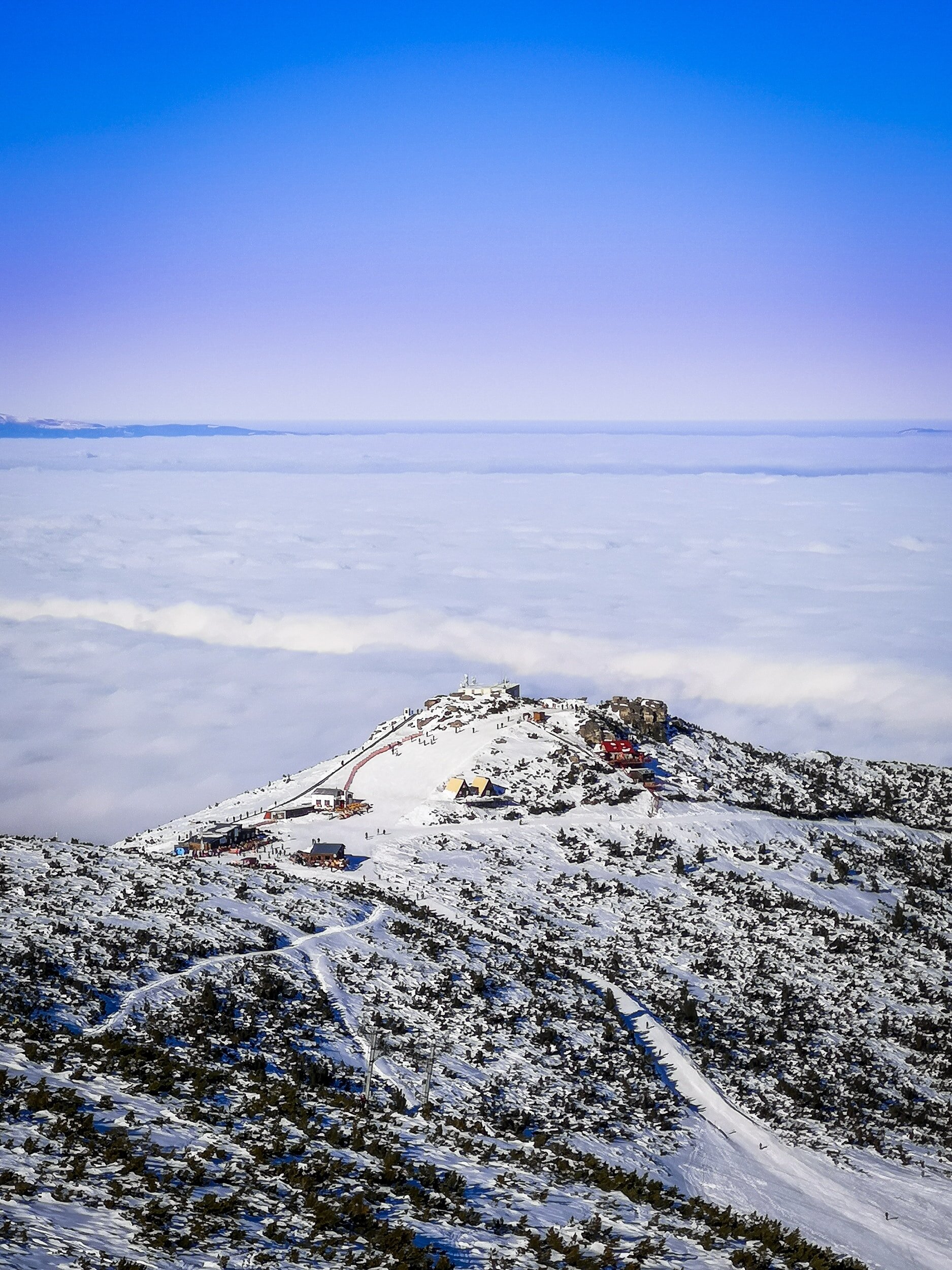
Photo Credit @antoniachekrakchieva
OTHER ACTIVITIES
So you want to snowboard but you want more from your holiday. Well away from the skiing and snowboarding Bulgarian ski resorts have a number of activities to keep you busy throughout your stay. You can stay in the winter spirit with a trip to an ice-rink or a snowshoe excursion. Alternatively, you can take a day away from the cold by heading to the spa or getting locked into an escape room. With the addition or cinemas and bowling alleys, museums and galleries there is plenty to keep you occupied.
WELCOMING ATMOSPHERE
The Bulgarian people are incredibly friendly and welcoming. I always tell the story of watching my football team lose a match one evening in a local bar. There wasn’t a person in the bar who didn’t buy me a drink or offer a word of condolence whilst I sat slumped in my bar stool. This attitude extends out of the bar, into the village and onto the slopes where the locals will be happy to assist you if you need help. In general, the Bulgarians seem happy that you are there which can not always be said in all ski resorts.
ALL-INCLUSIVE SNOWBOARDING
One of the reasons people like an all-inclusive beach holiday is the idea that you have everything you need paid for and organized before you go. The same can apply in Bulgaria with many tour operators and hotels offering all-inclusive and half-board deals. These can even cover your lift passes and ski lessons making the idea of a ski trip to Bulgaria absolutely hassle-free.
There are ten reasons why you should consider a ski trip to Bulgaria this winter. Is it on your hit list? Have you been before? I’d like to hear from you, so let me know down in the comments if you agree or disagree with this list and whether you will head to Bulgaria to ski in the future?

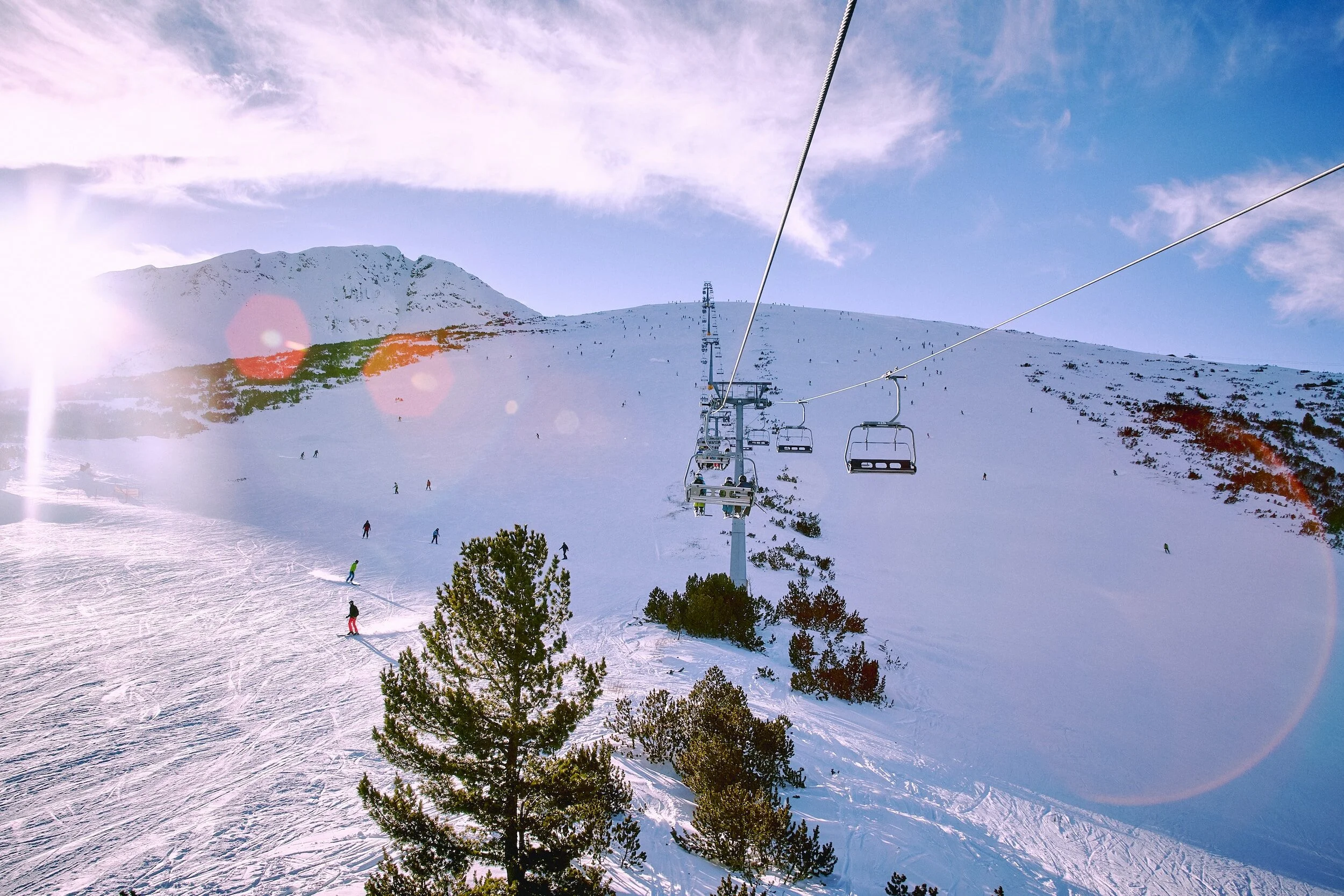


Bulgaria Country Guide
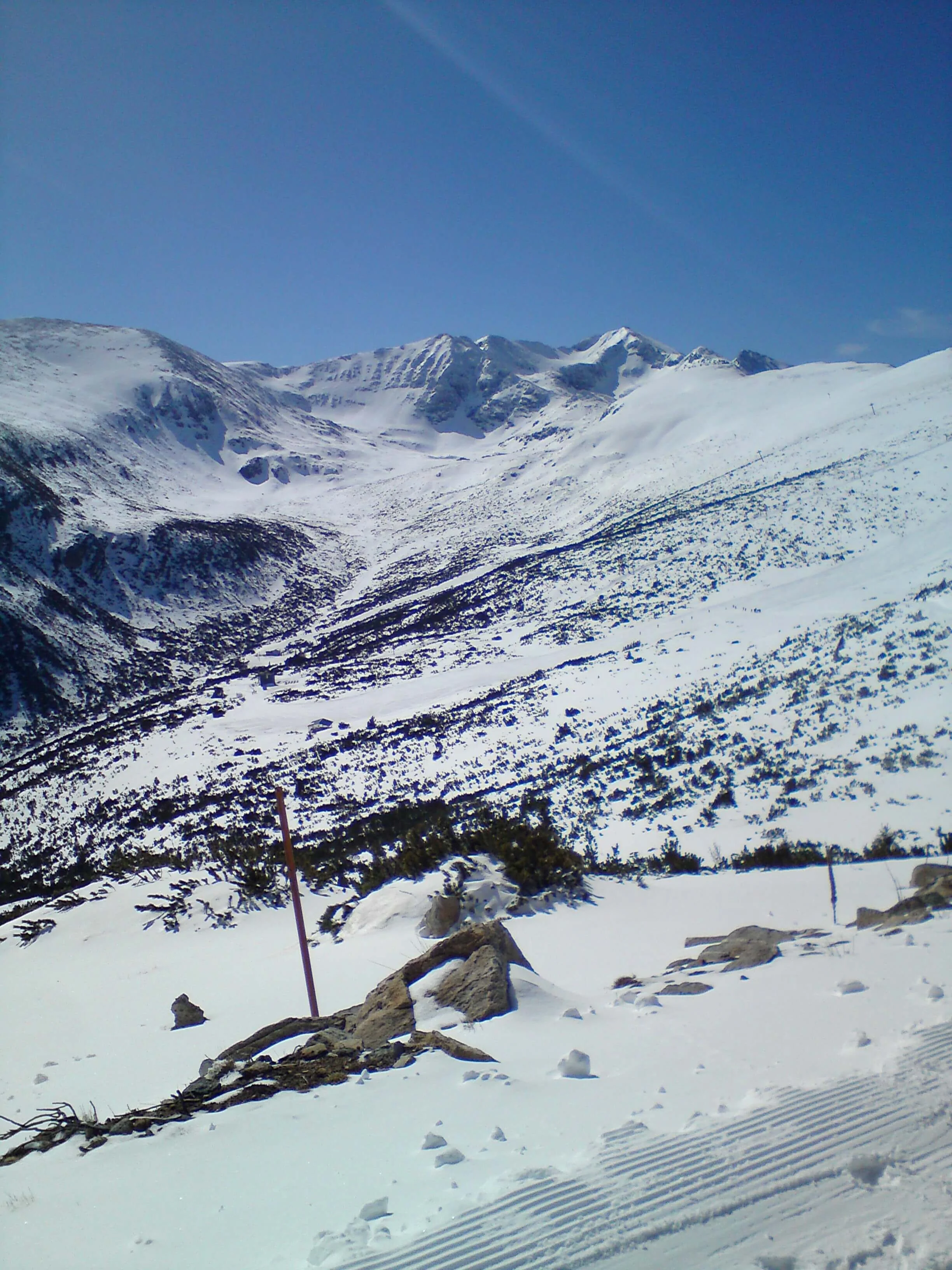
Looking for an awesome destination without breaking the bank? Well, Bulgaria has long been a ski destination that allows you to stretch those pounds a little further. This has made Bulgaria a popular destination with families and students which has cultivated an environment that is a mix of family activities and après ski bars. It used to be the case that a trip to a Bulgarian ski resort would be looked down on in some circles, but this is ridiculous as Bulgaria provides a great all round ski experience.
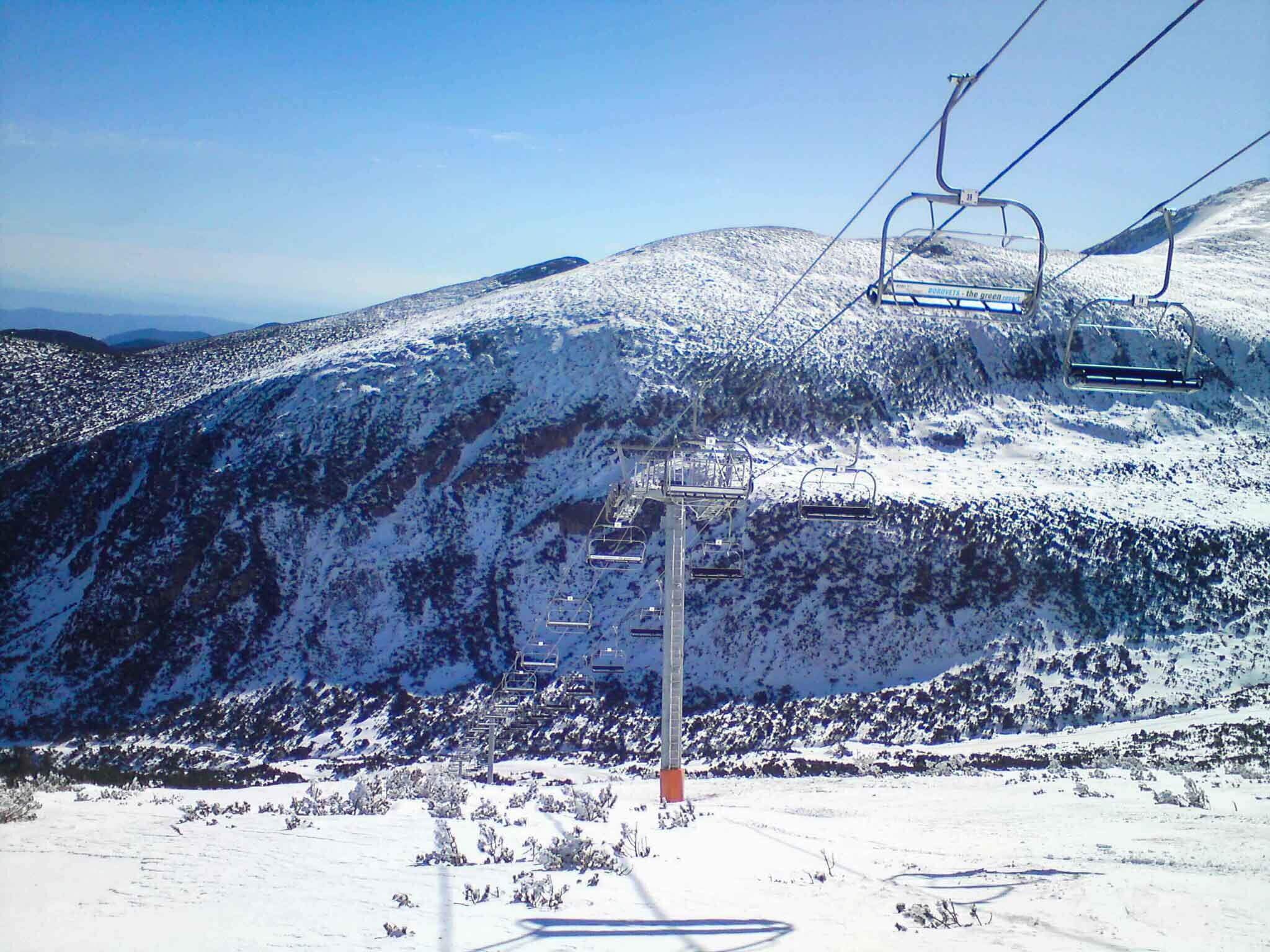
SNOWBOARDING IN BULGARIA
There are plenty of interesting places to go skiing or snowboarding across Eastern Europe but Bulgarian ski resorts are ahead of their neighbours. Attracting an international clientele, Bulgaria has warmly welcomed travellers to its resorts with the promise of cheap Bulgarian snowboarding holidays. Flights to Bulgaria are easy from most destinations with international flights into the capital Sofia and Plovdiv. Bulgaria of some of the best snowboarding in Europe for beginners but shouldn’t be considered as just beginner resorts. Bansko hosts FIS ski races and challenge can also be found at Borovets.
Bansko, Borovets and Pamporovo offer the best skiing in Bulgaria with the former being the main highlight. The largest resort Bansko is an eclectic mix of a traditional old town and a more modern mix of bars. The resort of Bansko offers the best terrain in Bulgaria and has hosted FIS events on its slopes. Borovets is another good option with Pamporovo being well suited to families. All three resorts are low altitude so can suffer from poor snow in the early and late season but plan a trip for January and February and you should be fine. Bansko snow conditions tend to be decent with snowmaking across some of the terrain.
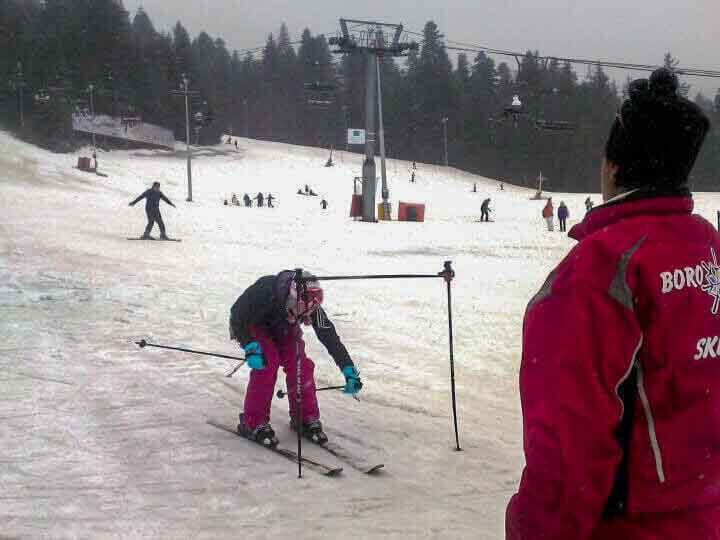
A massive selling point for Bulgarian ski resorts is the affordability of their lift passes and ski schools. I can vouch that the instruction received at Borovets was great service and cheap as chips. With this in mind consider tipping your instructor if you enjoyed the lesson. The terrain in Bulgaria is not going to be expansive but Bansko’s 50kms of trails will keep most occupied for a week’s trip. Try to avoid school holidays as this can lead to large lift queues around the resort, especially for the gondolas at the base on Bansko and Borovets.
Accommodation is improving and all resorts offer hotel options on a full board or all-inclusive options extending your savings further. If you do not have meals included I wouldn’t worry as it is really cheap to eat out in the Bulgarian ski towns which is a pleasant change from the Alps. Adding to the affordability are the cheap flights available with low-cost airlines into the capital Sofia (make sure to calculate baggage charges before booking). From Sofia, the transfer is simple and is normally available on a package through a tour operator. I have also taken a taxi to Bansko from Sofia and that was reasonable and easy to book.
BULGARIAN POSTS


FREQUENTLY ASKED QUESTIONS ABOUT SKIING IN BULGARIA
Is skiing in Bulgaria any good?
Simple answer, yes. Bulgaria makes for a really good ski trip as long as you go in knowing what to expect. Bulgaria has three main ski resorts; Bansko, Borovets and Pamporovo, there are smaller resorts but these will be the most appealing to visit. In Bansko and Borovets you will find good skiing and snowboarding, especially for intermediates. There is a world cup run in Bansko that shows they have challenging ski terrain in Bulgaria but it is on a smaller scale. The Pirin mountains are beautiful in their own right but do not expect to be surrounded by 3000m or 4000m peaks.
When can you ski in Bulgaria?
The Bulgarian ski season runs from December to April with the season starting around the middle of December. The main resorts in Bulgaria do make use of snow cannons which can prolong the season into early/mid-April but the best conditions will be found in January and February. If possible I would try to avoid any school holiday period whilst skiing or snowboarding in Bulgaria as you will experience serious crowds at these times.
Which is the biggest ski resort in Bulgaria?
Borovets ski resort is the largest ski resort in Bulgaria with nearly 60km of runs. Bansko does however offer more challenging terrain. Pamporovo is the smallest of the main Bulgarian ski resorts and is well suited to beginner skiers and snowboarders.
How much is a ski pass in Bulgaria?
Much cheaper than in other parts of Europe would be my best answer. A 6-day lift pass in Bansko would set you back around €190 compare, which is less than my friends paid to ski in the 3 Vallees for 3 days. Another interesting factor is that most package holidays to ski in Bulgaria include lift passes. This can make an extra saving on your holiday and be a great reason to visit Bulgaria to ski.
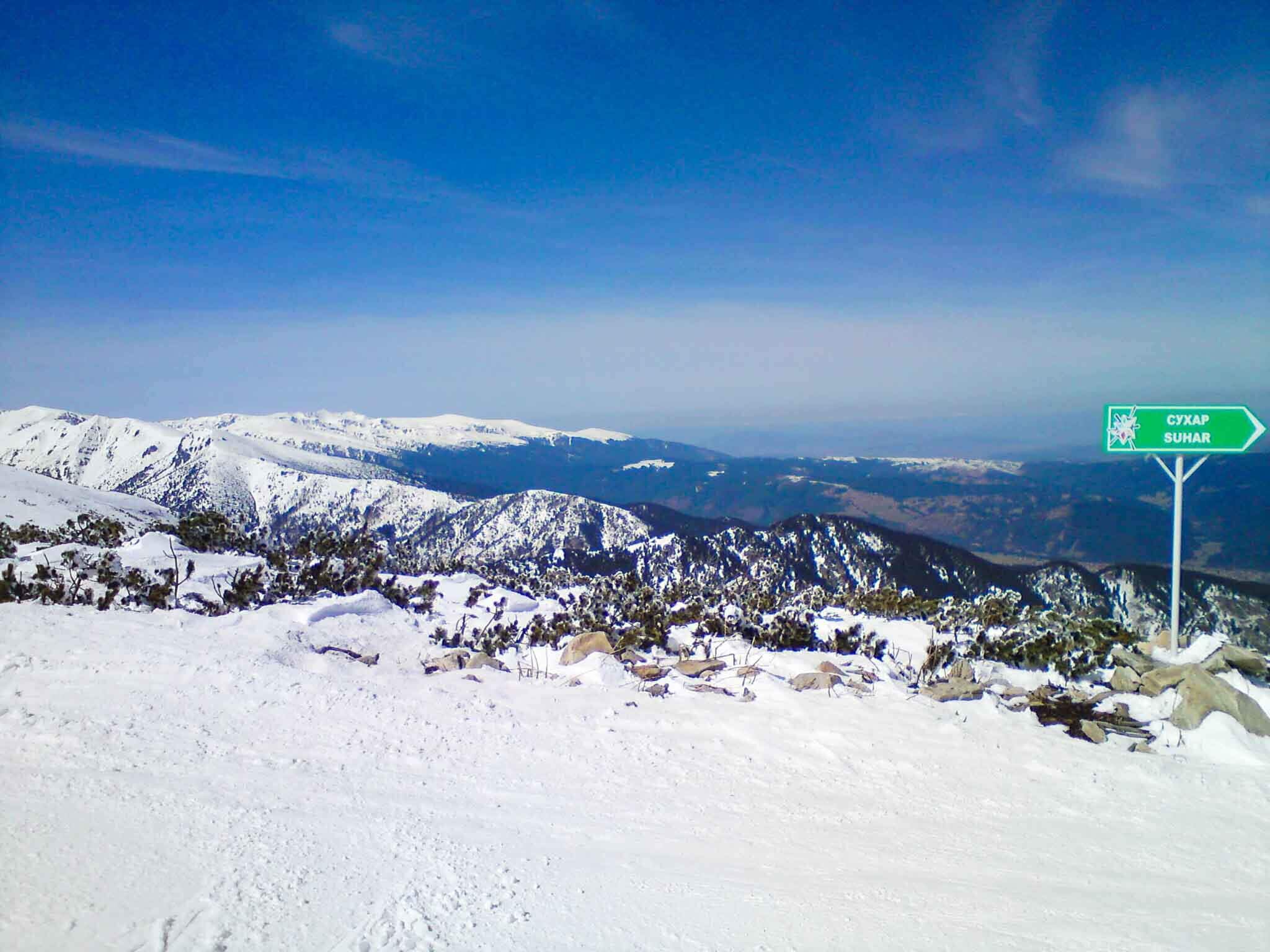
BULGARIA GALLERY
ABOUT BULGARIA
Why Visit Bulgaria
Are you looking for something different from the same tired ski destinations then a Bulgarian ski holiday might just be the change of pace you are looking for. Perfect for families who want to learn on the cheap, Bulgarian ski resorts offer some interesting all-inclusive packages. Although the peak weeks can be pretty hectic visiting outside of these times can offer quiet slopes and good terrain. The views from the resorts of Bansko and Borovets are pretty stunning with the Pirin and Rila mountains providing a great backdrop.
Ski Season Dates In Bulgaria
The snowboard season in Bulgaria runs between December and April but can be pretty touch and go in the early and late weeks. If you want to play it safe opt of a trip during January or February as these are the best months to visit.
Mountain Ranges In Bulgaria
When you consider that 1/3rd of Bulgaria is covered in mountains it is easy to see why mountain sports are so popular in the country. The Rila Mountains are the highest in Bulgaria and the 6th highest range throughout Europe. The highest summit in the Rila Mountains is Musala at 2925m. The Pirin Mountain range is also host to ski resorts in Bulgaria. The Pirin Mountains are home to brown bears which have led to the area being protected under national park status. If you like bluebird days then the proximity of the Pirin Mountains to the Mediterranean should get you excited.
The altitude of Ski Resorts In Bulgaria
Bansko Ski Resort 1100m-2500m
Borovets Ski Resort 1350m -2550m
Pamporovo Ski Resort 1450m - 1926m
Capital City Of Bulgaria
Sofia situated in the west of Bulgaria is the capital city. Well worth adding as an excursion or stayover when visiting Bulgaria, Sofia has over 2000 years of history that reflectins invasions from the; Greeks, Romans, Ottomans and Soviets. Modern-day Sofia has a bustling nightlife and affordable accommodation making it an appealing city break destination.

Cathedral Saint Aleksandar Nevski - Photo Credit @inedelchev
Languages Spoken In Bulgaria
The official language in Bulgaria is Bulgarian. Don’t worry if you do not possess any Bulgarian language basics as you will be fine with English.
Currency Used In Bulgaria
Bulgaria uses the Bulgarian Lev as their currency. Credit cards are not widely accepted so it is better to exchange cash on arrival in Bulgaria. Weirdly some prices are shown in Euros however this is more in an effort to allow Europeans to easily negotiate the exchange rates. When comparing the Bulgarian currency to GBP you will find that your pounds go pretty far in Bulgaria. At the time of publishing £1 = 2.23 Lev.

My Favourite Things To Do In Buenos Aires
Argentina is a country that welcomes you to enjoy yourself, to socialise and to spend time with the locals. The traditions of eating asado and drinking maté attest to this. The capital city Buenos Aires is a symbol of Argentina’s history and traditions and is waiting to wow you with; an incredible history, sumptuous food and quality wine. Buenos Aires is a city that is constantly moving, whether dancing the tango around street corners and through cobbled streets or into the early hours in one of the many nightclubs. The following are my favourite things to do and see, in one of my favourite cities in the world.
PLAZA DE MAYO
Plaza de Mayo is about much more than the colourful Casa Rosada that may draw the majority of your attention. If you can take your eyes off this stunning building and look towards the ground you will notice the white scarves painted in the square. These scarves represent Las Madres de Plaza de Mayo, a group of mothers and grandmothers who meet weekly in the square to protest. They are the parents and grandparents of the disappeared generation, 30,000 young people who went missing during the Dirty War.
Similarly, you will find disgruntled Falklands war veterans who have a camp manned 24/7 in the Plaza de Mayo. The veterans of the Falklands war are found here protesting for recognition of their efforts during the Atlantic conflict.
Ultimately, your attention will wander towards the pink house that stands proudly at the east end of the Plaza de Mayo. Casa Rosada itself is unique in its appearance from the surrounding buildings with its baby pink colour setting it apart. The balcony famous for the speech of Eva Perón is clearly visible from the square. Casa Rosada maintains a political significance as the workplace of the Argentinian President.
LA BOCA DISTRICT
I am not sure I have been to an area of a city that more accurately suits the word vibrant. From the colourful buildings to the atmosphere of music and celebration, La Boca is my favourite part of the city. Renowned for Caminito Street, a street lined with buildings painted in the brightest; reds, yellows, blues and greens, La Boca is a fantastic area to take photographs.
Although La Boca is a district famous for welcoming tourists it also has a rough reputation. It is fair to say that La Boca is one of the poorer working-class areas of the city. Nothing represents this area better than La Bombonera, home of Boca Juniors and a place of worship for the local community. Boca as a team is true to its routes, famous for its dogged, hard-working style of play. Like most tourist areas, crime is possible in La Boca with pickpockets operating in the area and people advise to leave before dark. But my experiences in this area were positive, with memories of celebration and community.
WATCH A FOOTBALL MATCH
Argentina is a football country and Buenos Aires is a football city, there really is no debate in this regard. Football is a way of life for many Argentines and having the opportunity to watch a live match in Buenos Aires was a great experience. There are six teams in the Argentine Primera División that are based in Buenos Aires, including the two most successful; Boca Juniors and River Plate.

You will need to choose a side to follow in this debate and once you have it is impossible to switch back. The rivalry is stronger than anything we experience between European football teams. This is part of what makes attending a Primera División match such a spectacle. The supporters are so passionate about their team and there is a true party atmosphere in the stands.
I was fortunate to see a local derby between Boca Juniors and Vélez Sarsfield at La Bombonera during my stay in Buenos Aires. As a season ticket holder at a UK football team and having watched matches all over Europe, I can honestly say nothing has compared to the experience of standing behind the goal in La Bombonera. The noise in the stadium is incredible and as the fans jump it feels like the stadium is moving beneath your feet.
Sadly, tickets are no longer sold directly outside of membership schemes so it is likely you will need to purchase one through an agency at an inflated price.

AVIENDA CORRIENTES
What feels like the centre of Buenos and the meeting point for many important streets is Avienda Corrientes or Corrientes Avenue. Contentious when it was planned, the widening of Corrientes Avenue only eventually happened following the Coup d’ètat in 1930. Extending 69 blocks, this main thoroughfare for traffic in the capital leads off to some of the most important streets in the city.
Stood tall at 67.5m (221ft) in the centre of Corrientes Avenue is the Obelisco de Buenos Aires. The Obelisk not only commemorates important past dates with inscriptions but is used as a symbol for current celebrations or commemorative occasions. In potentially the most unique of these occasions, the Obelisk was decorated as a condom for World AIDS Day in 2005.
EAT EMPANADAS
Empanadas are synonymous with Argentina and vendors can often be found on every street. Coming in a variety of flavours, empanadas are essentially baked dough with a filling inside. This can be anything from beef to cheese or chillies to a pumpkin. A trip to Buenos Aires wouldn’t be complete with trying empanadas and luckily for you, they won’t be hard to find.
Photo Credit: @eejermaine
SAN TELMO MARKET
If you are into street music, good food and souvenir searching then San Telmo’s market could be just the activity for you. Operating on Sunday the market is popular with both patrons and pickpockets, so be wary of your belongings. The atmosphere is pleasant and relaxed with street performers and places to sit and eat.
If you can’t make the Sunday market then there is an indoor market that operates throughout the week. This large indoor market opened in 1987 to cater to European immigrants and has been running ever since. The Mercado de San Telmo is more food orientated than the Sunday market.

TANGO
Tango is everywhere in Buenos Aires, it is impossible to escape it, with that in mind you may as well throw yourself in with both feet. There are plenty of opportunities to learn to Tango or you can just sit back and watch the dancers at work.
Booking a dinner and tango show in Buenos Aires is a great way to get a lesson and enjoy a show but these can be quite expensive. It is just as easy to find Tango on the streets or in the milongas of Buenos Aires.
DINE OUT
If there is one thing that defines my experience of Argentina it is the food. Dining in Argentina was about community and nothing quite says this like asado. Asado is a huge part of the Argentine tradition and involves having a barbecue and socialising with your nearest and dearest. Throughout my time in Argentina, I lost count of the amount of Asados I was invited to and I can assure you I didn’t turn one down!
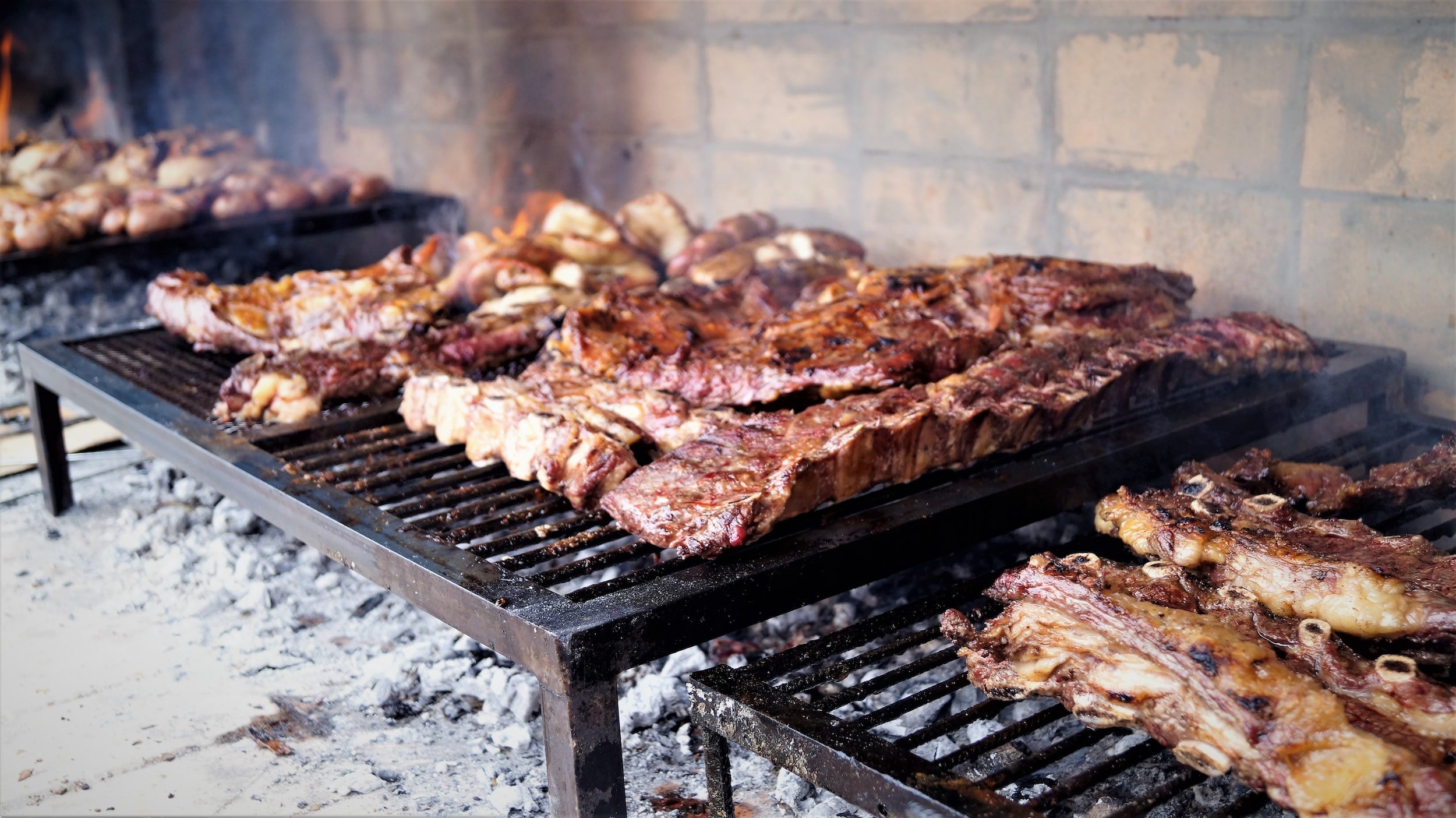
This community aspect of Asado translates itself into the Buenos Aires dining scene with locals enjoying eating out. Argentina’s diet is very meat-heavy with steak restaurants everywhere. The quality of the meat is superb with Don Julio being a favourite in Buenos Aires.

RECOLETA CEMETERY
If you think the idea of visiting a cemetery is rather strange… well I did, but Recoleta certainly doesn’t disappoint. The Recoleta cemetery is the resting place for the Argentine elite and upper class and this is reflected in the mausoleums. The mausoleums themselves are elaborately decorated as a kind of brag towards the owner’s wealth or power.
The resting place of Evita Perón, Recoleta cemetery resembles a maze where it is easy to get lost amongst the many aisles and mausoleums.

My favourite mausoleum is the one dedicated to Salvador Carril and Wife Tiburcia Dominguez. The couple had fought a public argument in the national newspapers, with Salvador complaining his wife was too lavish in her spending. Tiburcia lived longer that Salvador and before her death instructed her bust to be placed with her back to his. It remains that way to this day.
STREET ART

For a city and country that is artistic in its very nature, with music and dancing prevalent in all areas, it is only realistic to expect expression to be found in the form of street art. Although not something I specifically went looking for, it was clear to me that in every area of the city street art could be found. As with most art, there was a story, the murals with this piece found in La Boca depicting a mother of the Plaza de Mayo and naming Graciela Pennelli who disappeared during the dirty war. ‘Never Forgive or Forget’.
FLORALIS GENÉRICA
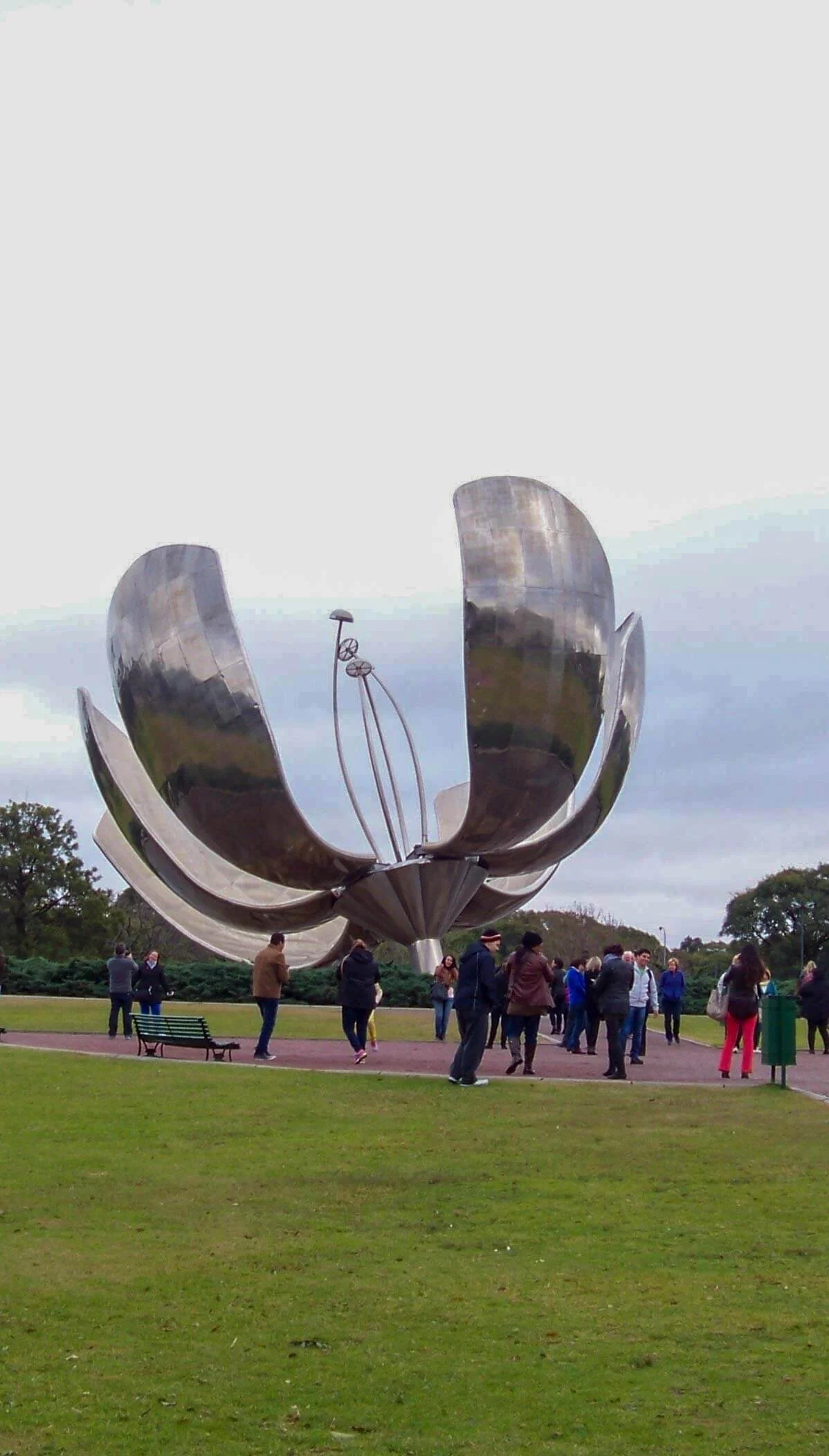
Sticking with the art theme is Floralis Genérica, a sculpture donated by Argentine architect Eduardo Catalano. This unique installation is a moving sculpture of a flower that opens and closes its petals throughout the day. Installed in 2002, the huge metal flower sits in Plaza de las Naciones Unidas. The petals open in the morning and are closed as the sun sets in the evening.
GET IN TOUCH
So there you have it. Some of my favourite things to do in Buenos Aires but now it’s time to hear from you. What are your favourite activities in Buenos Aires? Let me know in the comment section.
PIN IT FOR LATER



South American Snowboard Guide
Whether a visit to the Bolivian salt flats has been on your mind, or you want to enjoy a carnival in Rio, there are plenty of incredible reasons to visit South America. Luckily for us snowboard fanatics it is also possible to search out powder lines in the amazing Andes mountain range. Snowboarding in South America offers an opportunity for us Northern Hemisphere snowboarders to get some laps through the summer months.
Photo Credit: @hungriadb
WHERE TO SNOWBOARD IN SOUTH AMERICA
South American snowboarding is found in either Argentina or Chile in the Andes mountain range. The Andes offer an insane landscape of high mountain peaks surrounded by beautiful lakes which makes South American snowboarding some of the most scenic in the world. South America has some world-renowned ski resorts such as; Cerro Catedral, Las Leñas, Portillo, Valle Nevado and La Parva, however, it is perhaps equally well-known for its extensive backcountry terrain.
IF YOU FIND VALUE IN THIS POST CONSIDER CLICKING THE BUYMEACOFFEE LINK BELOW TO SUPPORT MY CONTENT.

SOUTH AMERICAN SKI RESORTS
ARGENTINA
Heading to Argentina to experience the Southern Hemisphere winter is one trip I will never forget. Yes, the resorts are incredible but an Argentinian snowboard trip should be about more than the on-snow experience. Argentine steak is known as some of the best in the world and the community experience of asado is both tasty and a great way to meet the locals.
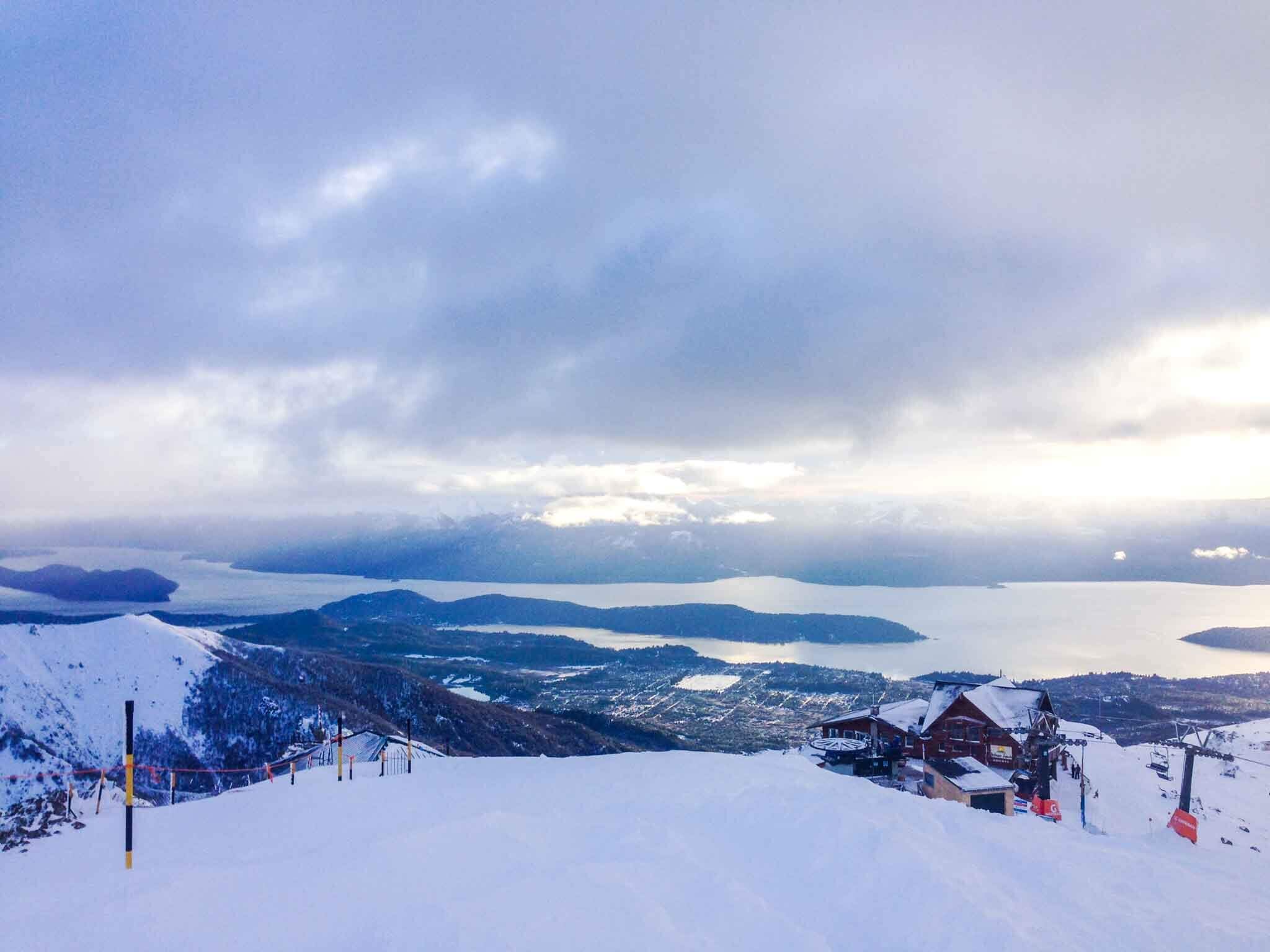
Argentina has a number of quality ski resorts with Cerro Catedral and Las Leñas amongst the most famous. Cerro Catedral, near the bustling town of Bariloche, offers high-speed lifts, a decent park and most importantly some awesome freeride terrain. Inbounds at Cerro Catedral, the Nubes is great but if you are looking for more adventure consider heading into La Laguna. Las Leñas ski area is closer to the Chilean border and is best known for its freeride terrain.
Other notable Argentine ski areas are Chapelco, Cerro Bayo and Cerro Castor. Cerro Castor sits at the most southerly point of Argentina, just outside of Ushuaia and is a resort I am really keen to visit. Cerro Bayo is quieter and smaller than Cerro Catedral so offers a more relaxed experience. Also smaller but with modern facilities, Chapelco is worth the visit. Chapelco has a modest amount of trails but its 730m of vertical drop is enough to keep most satisfied. Heading to Chapelco is a must as it is situated just outside of the town of San Martín de los Andes. The town has a stunning location along the Seven Lakes Road or Ruta de los Siete Lagos which is a drive well worth taking.
Los Penitentes ski resort can be skied in the Mendoza region but is small and is more likely going to form an add on to your trip to Las Lenas. If you are looking for something more affordable then consider La Hoya ski resort. La Hoya is south of Cerro Catedral near the town of Esquel.

Hiking into La Laguna backcountry
CHILE
Does the idea of snowboarding on an active volcano appeal? Well, add Chile to your list of need to visit ski destinations. Similarly to Argentina, Chile will offer spectacular views and some pretty epic terrain. A snowboard holiday to Chile offers you the chance to chase powder laps and experience Chilean culture.
Like Argentina, you will need to take a long flight, but unlike Argentina when you arrive in Chile the main resorts are not too far away. Close to the capital of Santiago, you will find the resorts of Valle Nevado, La Parva, Farellones and El Colorado. Valle Nevado offers world-class facilities and is perhaps one of the most widely known Chilean ski resorts. A not so short 164km drive from Santiago and you can visit Portillo, home to some epic freeride terrain and noticeable by its iconic yellow Hotel Portillo. The closer the resorts are to Santiago the better the infrastructure and quality of the facilities. Sadly, this also means the more expensive the lift pass becomes.
You will find a further 15 resorts spread throughout this rather strangely shaped country. The more southern resorts mostly boast slower chairlifts or surface lifts. Of the more southern resorts, Nevados de Chillan is worth adding to the list as it receives a rather epic 10m average snowfall.
WHEN IS THE ARGENTINA AND CHILEAN SKI SEASON?
The ski season in South America begins in June and will run into October. Early and late season conditions can be incredibly variable and therefore it is much better to visit South American ski resorts in August for reliable snow cover.
LIFT PASS OPTIONS
There are some multi-resort lift passes that will offer you some summer laps in South America. The major one is the Ikon Pass from the US. The Ikon will get you 7 days of free lift access at Valle Nevado in Chile which is great if you are already using this pass in the US. Weirdly, as it stands Vails Epic Pass has no partner destinations in South America. You can also get 2 days of free skiing at Valle Nevado with the Mountain Collective Pass ... but that is hardly much to write home about.
WHY I LOVE SNOWBOARDING IN SOUTH AMERICA
South America as a continent offers some of the greatest variety of skiable terrain in the world. The Andes mountain range is epic and offers an incredible backdrop to your ski or snowboard trip. But it would be remiss to ignore the holistic aspects that make a ski trip to South America stand out. Yes, you will love your time on the ski hill but more than that, South America is about the whole experience. Inherently, South Americans are welcoming and sociable. This single trait will lead you towards many an afternoon sipping maté or evenings eating asado with new friends. My experience is that South Americans are all about enjoying life. Be prepared to throw yourself into a Latin culture that likes to party, that likes to dance, that is open to new people. My experience is that the friends you meet at asado normally make great people to ski with the next day.
IF YOU FIND VALUE IN THIS POST CONSIDER CLICKING THE BUYMEACOFFEE LINK BELOW TO SUPPORT MY CONTENT.

FREQUENTLY ASKED QUESTIONS
IS SNOWBOARDING BETTER IN ARGENTINA OR CHILE?
Due to the geographical layout of the countries, there are a lot of similarities to be found between Argentine and Chilean ski resorts. It is perhaps best to compare the snowboarding between north and south rather than by country. The southern Andes and Patagonia regions are prone to some pretty extreme weather. This can mean incredible storm cycles that dump loads of pow into the resorts of Cerro Catedral or Nevados de Chillan. Unfortunately, this extreme weather can also lead to resort closures! The further north you go the more extreme freeriding can be found with Las Lenas and Portillo being particularly famous for their terrain.
HOW MUCH DOES IT COST TO SNOWBOARD IN ARGENTINA AND CHILE?
Lift passes in South America’s premier ski resorts are not cheap! Day passes can set you back around 80USD a day at Valle Nevado or Cerro Catedral resorts. Due to the fluctuation in the Argentine Peso, your trip can be noticeably cheaper or more expensive depending on the current rate of inflation.
WHAT SKI RESORT GETS THE MOST SNOW IN SOUTH AMERICA?
The average annual snowfall for ski resorts in Argentina and Chile is around 6-7m. Nevados de Chillan and Ski Pucon receive the most snow and can hit 10m in a good year. In Argentina, Las Lenas is well known for the quality of its powder and receives 6m per year on average.
EXPLORE BY COUNTRY

Chile
Coming Soon
GET IN TOUCH
As always thanks for reading and if you want to learn more about skiing and snowboarding in South America check out some of the featured posts below. I’d love to hear from you and now it is your turn to have your say! Get in touch in the comments or via socials to tell me about your South American skiing or snowboarding experiences. Have you done something cool away from the slopes or do you have any questions that I can help you answer?
CARE TO SHARE?
IF YOU FOUND THIS POST USEFUL AND YOU THINK IT MAY ALSO HELP OTHERS, PLEASE LIKE, SHARE AND COMMENT TO PROMOTE IT TO OTHERS
PIN IT FOR LATER


A Guide To Snowboarding In The Hakuba Valley Japan
When people are writing lists of their dream ski and snowboard experiences Japan is never far from the top. The Hakuba Valley and its 10 unique ski areas may just be amongst the most sought-after ski experiences in the world. Nestled within the heart of the Japanese Alps, the Hakuba Valley has rightfully earned its reputation as a premier destination for skiers and snowboarders seeking pristine powder, breathtaking landscapes, and a unique cultural experience. If you're a winter sports enthusiast looking for your next adventure, here's a comprehensive guide to skiing in the Hakuba Valley.
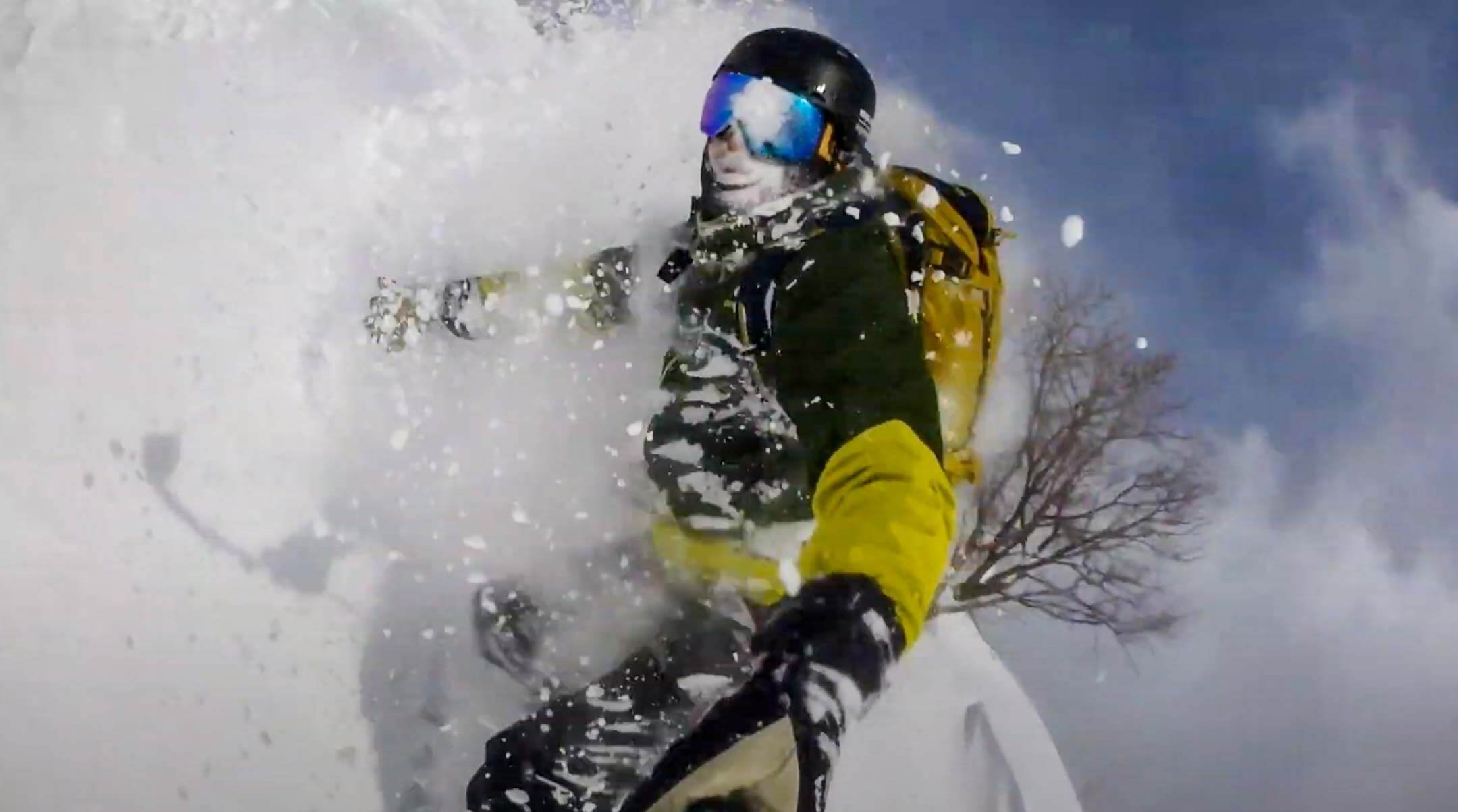
Powder Days at Hakuba Cortina ski resort
HAKUBA’S MAIN INGREDIENT
When choosing your ski destination there is one really important ingredient that surpasses all other requirements, snow! Without snow, it’s not a ski holiday. Luckily for the Hakuba Valley, it just may be amongst the snowiest destinations on earth. Hakuba gets blanketed in fresh snow between December on April, with an incredible average of 12m per winter. This incredible snow record combined with the diverse terrain on offer within the Hakuba Valley makes it an exceptional place to ski and snowboard.
ABOUT THE HAKUBA VALLEY
The Hakuba Valley is a combination of 10 ski resorts set amongst the beautiful backdrop of the Japanese Alps. The 10 Hakuba Valley ski areas are all included on the same lift pass making it really easy for skiers and snowboarders to navigate the different resorts. The real beauty of this combined ski area is found in the variety of the terrain, ensuring that everyone, expert through beginner has somewhere suitable to ski for their ability.
IF YOU FIND VALUE IN THIS POST CONSIDER CLICKING THE BUYMEACOFFEE LINK BELOW TO SUPPORT MY CONTENT
GETTING TO THE HAKUBA VALLEY
The Hakuba Valley is located on Japan’s main Island Honshu. Easily accessible from the major cities of Tokyo and Nagoya, there are options to visit Hakuba by train, bus, or private car. The closest airport to the Hakuba Valley is Tokyo’s Narita airport where you can catch a direct coach or the fast trains via Nagano.
TRAIN
Popular with many visitors to Japan a trip on the fast Japanese railway is well worth doing. From Tokyo, you will want to board the Hokuriku Shinkansen (Bullet Train) destination, Nagano. This section of the journey takes 1.5-2 hours.
In Nagano transfer train to the Oito Line destination Hakuba Station. This one-hour train ride drops you in the centre of Hakuba where regular buses run. From here it is also possible for many accommodations to collect you.
When travelling by train be sure to take advantage of the luggage transfer option direct from Tokyo Airport to your Hakuba accommodation. Baggage transfer can be arranged via the counters in the arrivals area and normally takes 24 hours. Expect to pay around 2000 yen per bag but this is weight dependent.
BUS
The easiest least fuss way to reach Hakuba is by bus directly from the airport terminal. Services are available from both Tokyo Narita and Tokyo Haneda Airports. I booked with Nagano Snow Shuttle who I would recommend. The service provided by Nagano Snow Shuttle was excellent with coach transport into Hakuba Echoland and small mini bus transfers direct to my apartment.
BEST TIME TO VISIT THE HAKUBA VALLEY
The ski season in the Hakuba Valley typically runs from December to April. The region receives abundant snowfall, making it a haven for skiers. The best time to visit is usually January and February when the snow is at its peak, and the conditions are perfect for skiing.
SNOW CONDITIONS
The primary reason snowboarders flock to the Hakuba Valley is the exceptional quality of snow. The area receives a generous amount of snowfall from late November to early April, creating the perfect canvas for shredding the slopes and finding freshies in the epic trees. The peak snow conditions are typically seen between mid-December and mid-February. During this time, the valley is blanketed in a thick layer of powder, offering the best opportunity to score some Japow! The Hakuba Valley has an average snowfall of 12m per season with the resorts of Tsugaike and Cortina benefiting the most.
CROWDS AND ATMOSPHERE
The winter months of December and January tend to attract more tourists due to the ideal snow conditions. While this is great for the vibrant atmosphere and the chance to meet fellow snowboarding enthusiasts, it also means more crowded slopes and busier accommodations. If you prefer a quieter experience with fewer people, consider visiting in late February or March. These months offer a good compromise between great snow conditions and a more serene environment. You can always get away from the crowds in Hakuba with resorts like Sanosaka which are far further from the main village and the mega-resort of Happo One.

WEATHER CONSIDERATIONS
While the Hakuba Valley is renowned for its consistent snowfall, weather conditions can still influence your snowboarding experience. January tends to be the coldest month, with temperatures potentially dropping to sub-zero levels. On the other hand, March offers milder weather, longer daylight hours, and a higher chance of bluebird days, which are perfect for capturing stunning photos against the backdrop of the Japanese Alps.
EVENTS AND FESTIVALS
To add an extra layer of culture to your snowboarding trip, consider timing your visit with one of the valley's events or festivals. The Hakuba Snow Festival, typically held in February, features spectacular light displays and cultural performances. This provides an opportunity to immerse yourself in the local culture while taking a break from the slopes.
EARLY VS LATE SEASON
The beginning and end of the snowboarding season in Hakuba each have their own appeal. Early season, from late November to early December, offers the chance to catch the first powder runs of the year. While the snow cover might not be as deep as later in the season, you can take advantage of fewer crowds and sometimes discounted rates on accommodations and lift passes. The late season, from late March to early April, brings warmer temperatures and the potential for spring skiing conditions. It's a great time for enjoying sunny days on the slopes and taking advantage of end-of-season deals.

In conclusion, the best time to visit the Hakuba Valley for snowboarding largely depends on your preferences and priorities. If you're seeking pristine powder and a vibrant atmosphere, the heart of the winter season from mid-December to mid-February is your ideal window. However, if you value quieter slopes, milder weather, and potential cultural experiences, late February to March might be more your speed. Whichever time you choose, the Hakuba Valley promises an unforgettable snowboarding adventure amidst breathtaking natural beauty.
HAKUBA VALLEY SKI RESORTS
The Hakuba Valley in Nagano, Japan, is a paradise for ski and snowboarding enthusiasts, boasting a collection of ten diverse and captivating ski resorts that together form the Hakuba Valley Pass. This pass offers visitors access to an array of slopes, terrains, and experiences, making it a sought-after destination for winter sports enthusiasts from around the world.
When visiting the Hakuba Valley you can base yourself at one resort or make the most of the Hakuba Valley ski pass to visit as many of them as possible. Here is an overview of the ten Hakuba Valley ski resorts but if you require more information please check out the resort guides.
HAPPO ONE SKI RESORT
Happo-One is the largest and most famous resort in the valley, renowned for hosting downhill events during the 1998 Winter Olympics. With over 1,000 meters of vertical drop and a wide range of runs catering to all skill levels, it's a popular choice for both beginners and advanced skiers. Its bustling village features numerous accommodations, restaurants, and après-ski options.
Happo is the most popular ski resort in the Hakuba Valley and as such can fall foul of crowding during peak periods. Happo One ski resort offers the closest access to the village amenities so is the hassle-free option for Hakuba Valley skiing.
Happo One is famous for its backcountry terrain with many skiers and snowboarders alike visible from the highest lifted point heading into the backcountry.

HAKUBA GORYU SKI RESORT
Hakuba Goryu snow resort offers an ideal blend of terrains for all levels, from gentle slopes for beginners to challenging steeps for advanced skiers. The resort is also famous for its family-friendly atmosphere with Goryu village and base area a great place to stay for families. Its interconnected slopes with Hakuba 47 allow skiers to explore a variety of trails and enjoy stunning panoramic views.
Hakuba Goryu is easy to access from the main Hakuba Village with regular bus services available from Echoland, Hakuba station and the Bus Terminal. The majority of the terrain at Hakuba Goryu is best suited for beginners however, there are some challenging areas such as the adventure course.
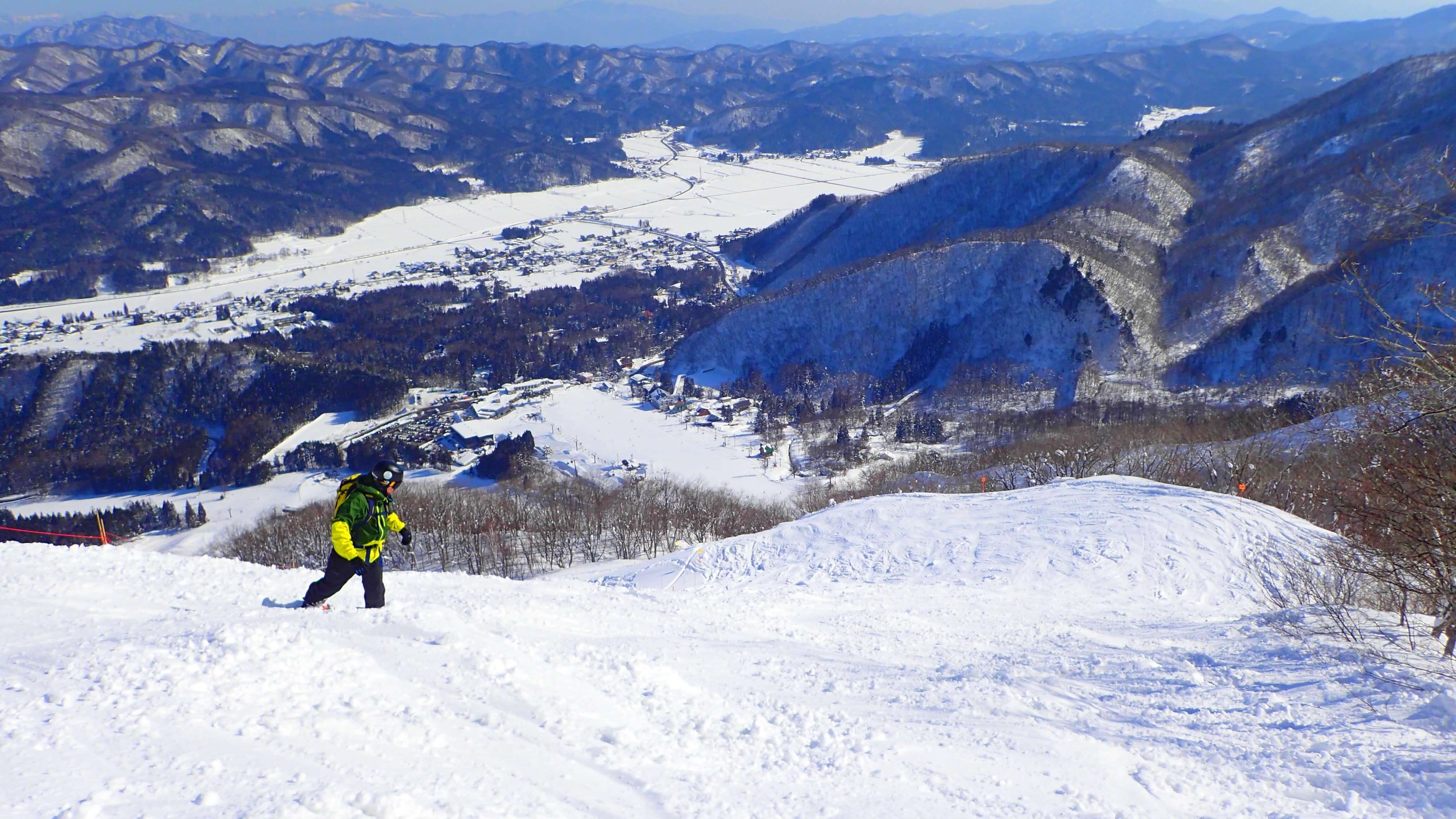
HAKUBA 47 WINTER SPORTS PARK
Adjacent to Goryu, Hakuba 47 boasts exceptional snow conditions and a reputation for its excellent tree skiing and powder zones. It's a haven for freestyle skiers and snowboarders, thanks to its extensive terrain park with various jumps, rails, and features.
Hakuba 47 is linked to Hakuba Goryu so you can ski between the resorts throughout the day. Hakuba 47 is best known for its large terrain park which is one of the best in the Hakuba Valley. Hakuba 47 has a dedicated tree-riding zone so be sure to sign up for the Double Black Diamond Club when you arrive at the resort.
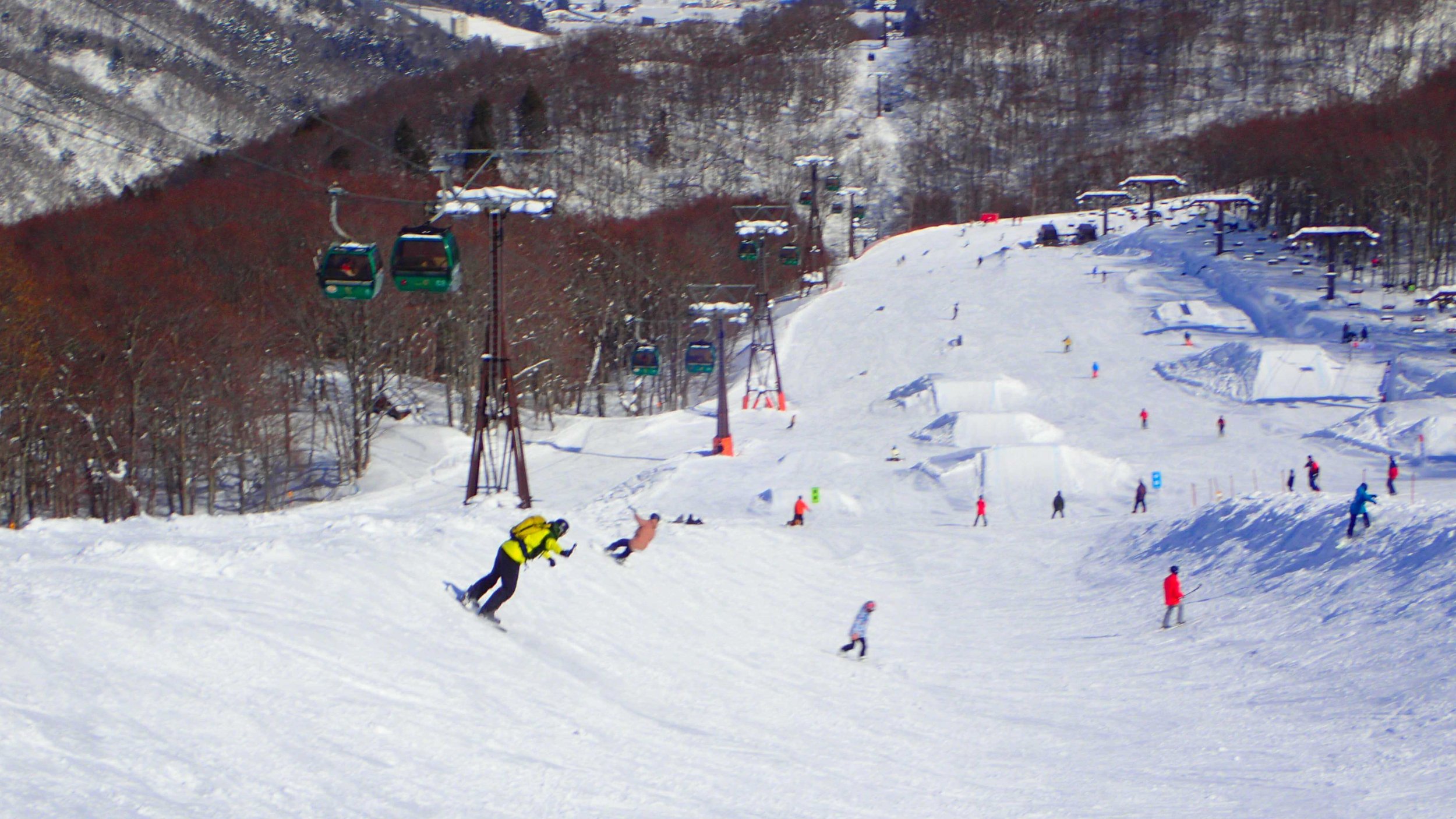
TSUGAIKE KOGEN SKI RESORT
Tsugaike Kogen is known for its vast area and long, wide slopes that cater primarily to beginners and intermediates. Its serene mountain environment and abundance of ski-in, ski-out accommodations create a tranquil experience. The upper areas provide more challenging terrain for those looking to improve their skills.
Tsugaike is a freeride haven with some of the best tree-skiing possible in the Hakuba Valley. To access the Tsugaike tree area called the DBD (Double Black Diamond) you must attend a free safety course. Tsugaike gets dumped on and this makes the tree skiing at Tsugaike some of the best in the area. Head to Tsugaike to chase powder turns without crowds.

IWATAKE SNOW FIELD
Iwatake Snow Field is an excellent choice for families and beginners, offering gentle slopes and relaxed surroundings. The panoramic vistas of the Northern Alps add to the resort's charm. It also features the Iwatake Snow Park for those interested in terrain park features.
Iwatake is a mere 10 minutes from the Hakuba station so accessing the resort is easy using the free shuttles. Once dropped at the gondola, Iwatake has mellow slopes on the lower mountain and more challenging terrain on the upper mountain. The best skiing and snowboarding at Iwatake can be found in the four tree areas near the SkyArc restaurant. From here you can find powder stashes for days after fresh snow.

HAKUBA CORTINA SKI RESORT
Cortina is celebrated for its heavy snowfall and stunning alpine scenery. Its challenging and varied terrains, including gladed areas and steep descents, make it a favourite among advanced skiers and snowboarders. The off-piste opportunities and deep powder runs are highlights of this resort.
Hakuba Cortina is more open-minded regarding its tree skiing than other Japanese resorts with no safety course needed to make the most of its wooded areas. Cortina tree-skiing is considered amongst the best in the world so it is no longer a secret. You may need to wait in line to score those Cortina powder turns but I can assure you it is worth the wait.
Make sure you take the backcountry run from the top lift that heads through the trees and across to the neighbouring ski resort Hakuba Norikura Onsen. This run was not just a favourite of my trip but also one of my favourite runs at any ski resort.
NORIKURA ONSEN SKI RESORT
Norikura Onsen is a quaint resort known for its natural hot springs and relaxed atmosphere. While it offers a mix of trails for different skill levels, it's especially suitable for those seeking a tranquil skiing experience away from the crowds.
Norikura really is the essence of what Japanese skiing should be. This local-focused resort has resisted the urge to pander to international tourists maintaining an authenticity lost in busier Hakuba ski resorts. The local area at Norikura Onsen is varied enough to keep the family entertained, with boarder cross, half pipe and a moguls course added for fun!

KASHIMAYARI SKI RESORT
Kashimayari stands out for its serene setting and excellent snow quality. It caters to a wide range of abilities with a mix of groomed trails and off-piste options. The resort's focus on nature and relaxation is perfect for families and those looking for a peaceful escape.
Kashimayari is disconnected from the main Hakuba village meaning accessing the resort takes longer and there are less frequent services. Although this may sound like a negative it actually plays into Kashimayari’s favour as if you make the journey you will be certain to have a more serene experience.

HAKUBA SANOSAKA SNOW RESORT
Hakuba Sanosaka is favoured for its family-friendly environment and affordable pricing. The resort's slopes cater mostly to beginners and intermediates, and its relaxed atmosphere is perfect for those seeking a laid-back skiing experience.
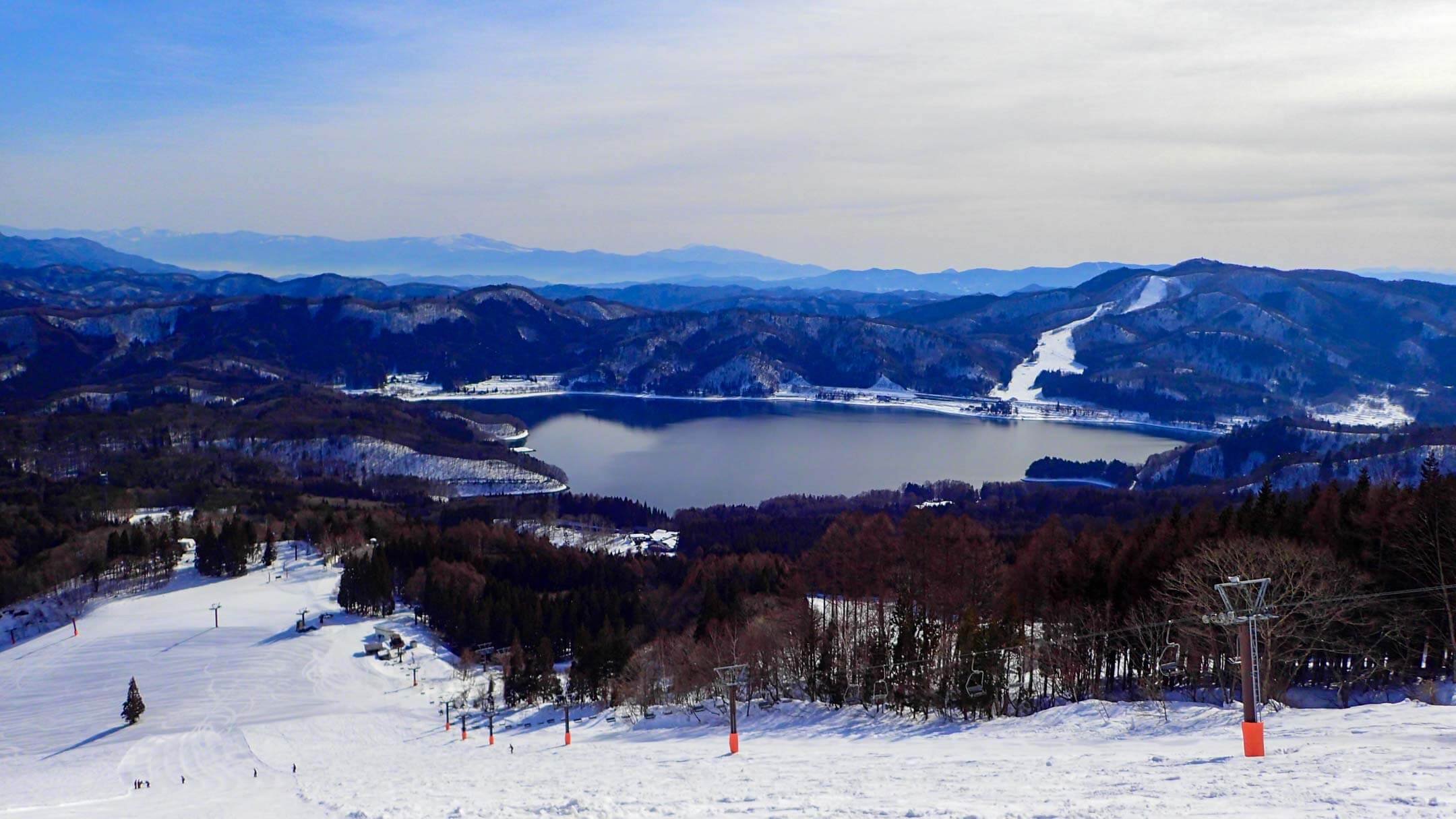
The views from Sanosaka over Lake Aokiiko are a highlight of snowboarding at Sanosaka. The views combined with empty pistes ensure that Sanosaka will remain one of my Hakuba highlights.
Lake down trail at Sanosaka is one of my TOP 5 HAKUBA VALLEY SKI RUNS.
JIGATAKE SKI RESORT
Jiigatake offers a more off-the-beaten-path experience, with fewer crowds and a focus on natural beauty. While its ski terrain is limited compared to larger resorts, it's a great option for those looking to enjoy the tranquillity of the mountains and explore less-travelled slopes.
WHERE TO STAY IN HAKUBA
With the variety of ski resorts and village bases on offer in the Hakuba Valley where to stay can become quite the headache. In the next section of the Hakuba Valley Guide, I will provide you with an overview of the main areas you could stay at on your visit to the Hakuba Valley.
HAKUBA VILLAGE
The central hub of the valley, Hakuba Village offers a mix of accommodations, dining options, and entertainment. This area is perfect for those who want easy access to the slopes as well as the convenience of nearby amenities. Hakuba Village provides a good balance between the buzzing energy of a resort town and the tranquillity of the mountains.
By staying in Hakuba Village you guarantee good transport links to all Hakuba Valley ski resorts and shops and amenities within walking distance.
HAPPO ONE
Happo-One is not only a popular ski resort but also a prime location to find lodging. Offering a variety of ski-in/ski-out accommodations, it's an ideal base for skiers and snowboarders who want to maximize their time on the slopes. The area boasts stunning views of the iconic Happo-One mountain and is surrounded by cosy restaurants and shops.
Staying at Happo One provides direct access to Hakuba’s largest ski area. The downside to residing in this area is that you will find it busier, but for some this will be a positive with access to plenty of bars and restaurants.
GORYU & 47
These interconnected resorts provide a wide range of accommodations suitable for families, couples, and solo travellers. With convenient access to the slopes and a friendly atmosphere, Goryu and Hakuba 47 are great choices for those looking for a relaxed stay while still having plenty of outdoor activities at their doorstep.
By staying close to Goryu and Hakuba 47, you guarantee close access to two ski resorts within the Hakuba Valley with accommodation within walking distance from the lifts. Additionally, ski resorts elsewhere in Hakuba have fantastic links to Goryu & 47 so if you want to be able to access all resorts but from a quieter village, this could be your best option.
ECHOLAND
If you're seeking a vibrant après-ski scene and a variety of dining and entertainment options, Echoland is the place to be. Situated just a short distance from the ski resorts, this area offers a mix of boutique hotels, guesthouses, and lodges. It's a fantastic option for those who want to unwind after a day on the slopes with lively nightlife and a diverse culinary scene.
Echoland is ideal for those who want to be amongst the thick of the action. Whether it is access to the resorts, buzzing bars or access to western or local cuisine, Echoland makes a fantastic base.
TSUGAIKE KOGEN
For a quieter and more secluded experience, Tsugaike Kogen provides a serene atmosphere away from the bustling crowds. The accommodations here range from traditional Japanese ryokans to modern lodges. This area is ideal for those looking to connect with nature and enjoy a peaceful escape.
Basing yourself in Tsugaike can feel disconnected from the main Hakuba Village however, this is overcome by being in the midst of the best powder in the valley. The area close to Tsugaike and Cortina gets the best snow in Hakuba and as such staying here means you are closer to being first in the lift lines.
CORTINA
If you live for deep snow, consider staying near Cortina. Known for its heavy snowfall, this area attracts avid skiers and snowboarders looking to explore the Cortina tree runs. Cortina offers limited accommodations, but its unique terrain makes it a must-visit destination for serious winter sports enthusiasts.
If searching out powder is your only concern than staying at Cortina could represent a good option. Cortina is linked to Norikura via slopes so it is possible to ski at both resorts. Furthermore, Cortina has good links to Tsugaike meaning Tsguapow is around the corner.
The negative to staying in Cortina is that you will have less choice in accommodation and fewer options for food and activities after the lifts have closed.
No matter where you choose to stay in the Hakuba Valley, you'll be treated to breathtaking scenery, incredible snow conditions, and warm Japanese hospitality that will make your trip unforgettable. Remember to book your accommodations well in advance, especially during the peak winter months.
IF YOU FIND VALUE IN THIS POST CONSIDER CLICKING THE BUYMEACOFFEE LINK BELOW TO SUPPORT MY CONTENT.

APRES SKI AND ACTIVITES
Away from the world-class skiing and snowboarding Japanese culture is a major attraction for skiers to visit the Hakuba Valley. Après ski in the Hakuba Valley may look different to what you may be used to in European ski resorts… Let's take a dive into Japan’s after-ski culture.
ONSENS
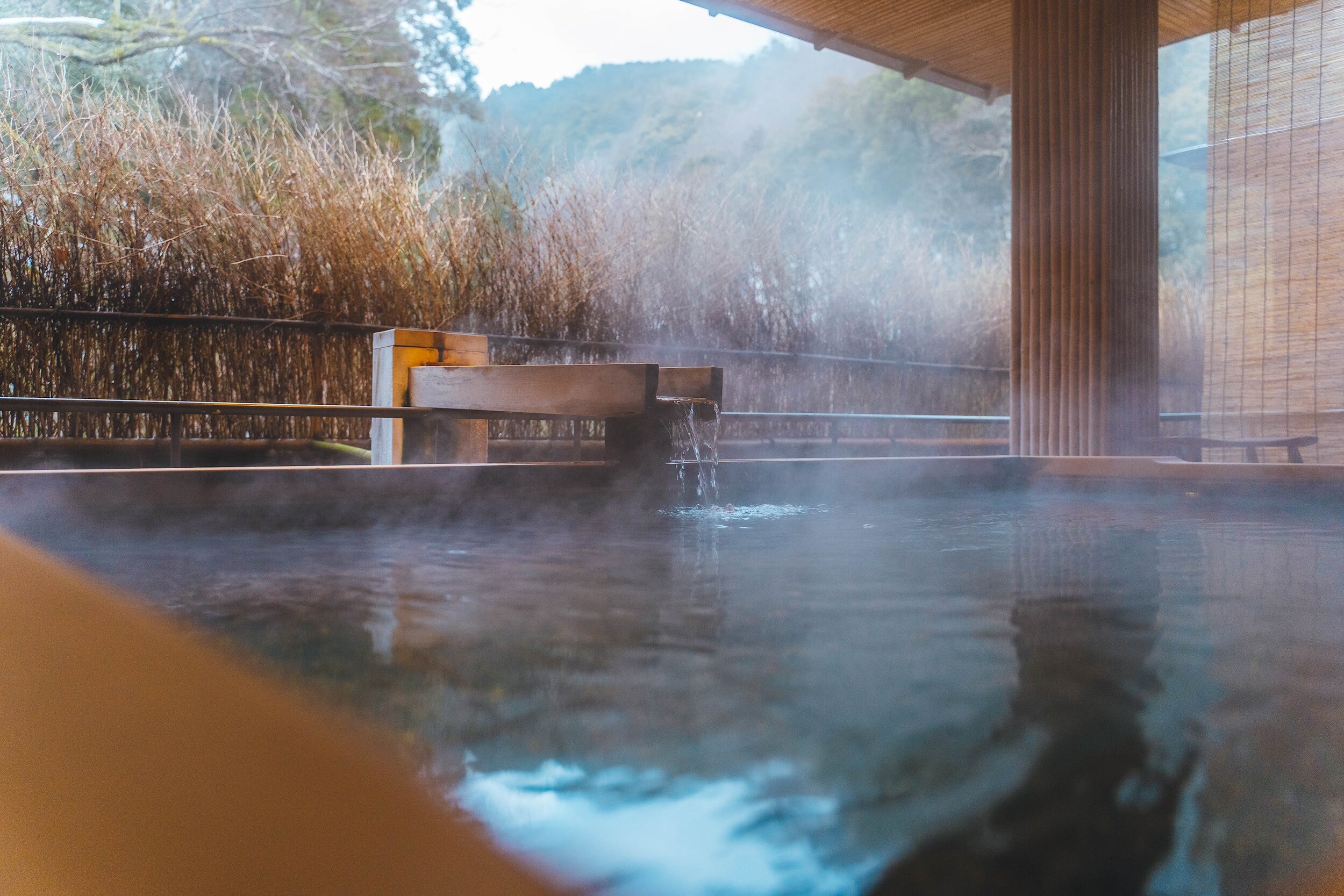
One of the highlights of après ski in Hakuba is the opportunity to soak in the region's renowned onsens (natural hot springs). The warm, mineral-rich waters provide the perfect way to soothe tired muscles and reinvigorate the body. Many accommodations in the area feature private or communal onsens, where you can immerse yourself in the serene ambience of snow-covered landscapes while enjoying the therapeutic benefits of the water.
DINING OUT
Hakuba's après ski scene also features an array of dining options that cater to diverse palates. You can savour traditional Japanese cuisine, including hearty bowls of ramen and fresh sushi, or opt for international flavours. It will sound uncultured but I think I had the best Kebab of my life (Samurai Kebab) in Hakuba which was just what I needed at the time.
One of my favourite things about the Hauba Valley is the many snack stalls at the base of each resort, there is always a vendor offering something incredible for the pallet.

Crepe bought at Goryu base area.
BARS AND CAFES
The drinking scene in Japan is not the same as in Europe but don’t let that fool you into thinking it doesn’t exist. There are hundreds of bars and restaurants in the Hakuba Valley with a good mix of everything, including a hidden speakeasy in a cigarette vending machine.
During my time in the Hakuba Valley, I enjoyed the atmosphere and food at Blizzard before heading to Happo One For Night Skiing and the foot onsen bar at the base of Tsugaike. Both of these spots are completely contrasting so there will always be somewhere to fit your mood!
CULTURAL EXPERIENCES
For those interested in delving into Japanese culture, Hakuba offers a chance to explore beyond the slopes. You might engage in traditional tea ceremonies, learn about local crafts, or even participate in snow festivals that celebrate the magic of winter. I enjoyed exploring various temples around the village as well as visiting the Snow Monkeys.


FINAL THOUGHTS
Snowboarding in the Hakuba Valley is one of the highlights of my life, not just my snowboard journey. The rich blend of incredible snow, interesting resorts, and an ancient culture moulded this into a unforgettable experience.
If you have any questions or would like help planning your trip to the Hakuba Valley consider booking a Trip Planning session.

Union Strata Snowboard Bindings Review

GREAT BINDING THAT YOU CAN TAKE ANYWHERE ON THE MOUNTAIN
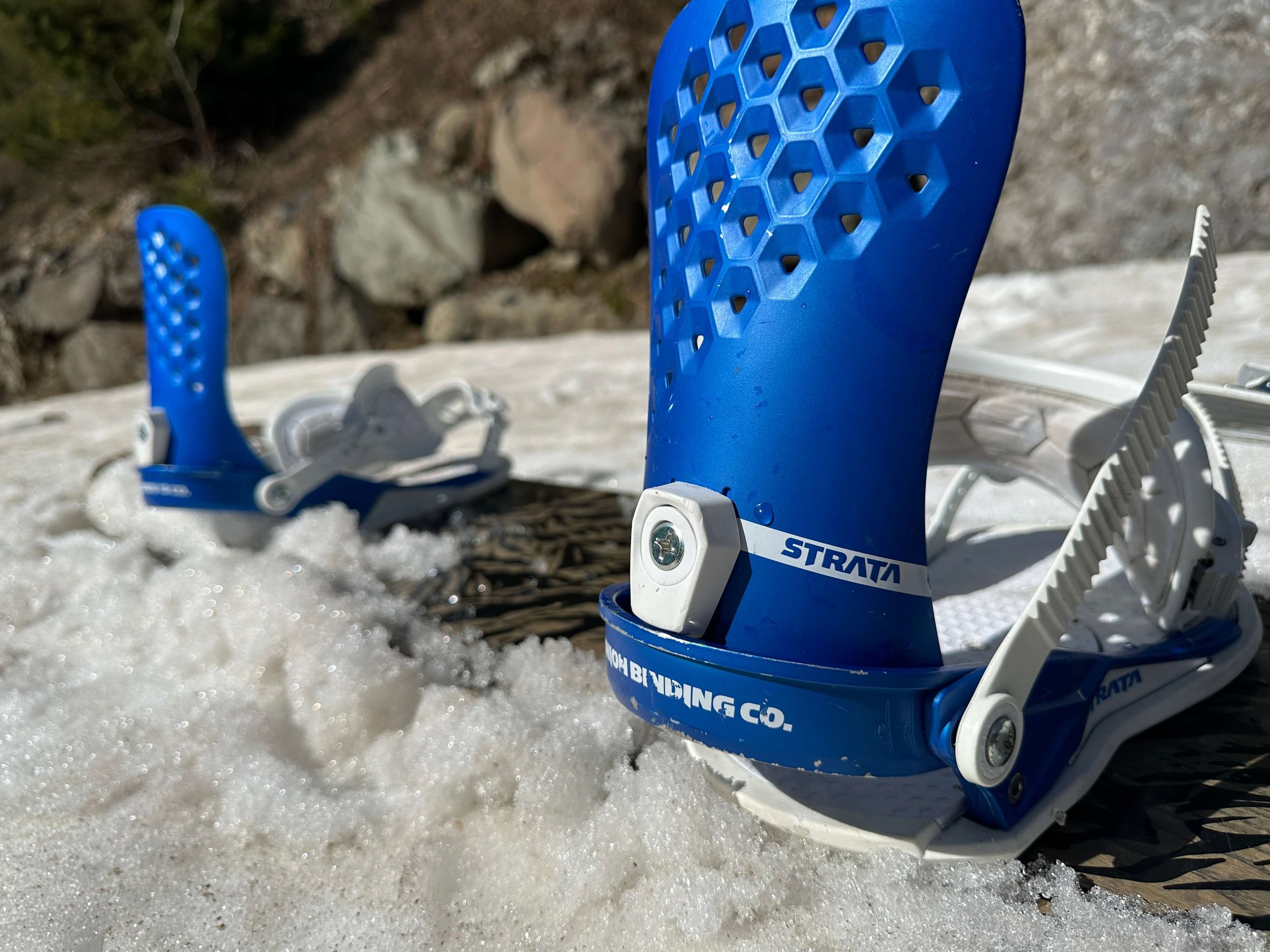
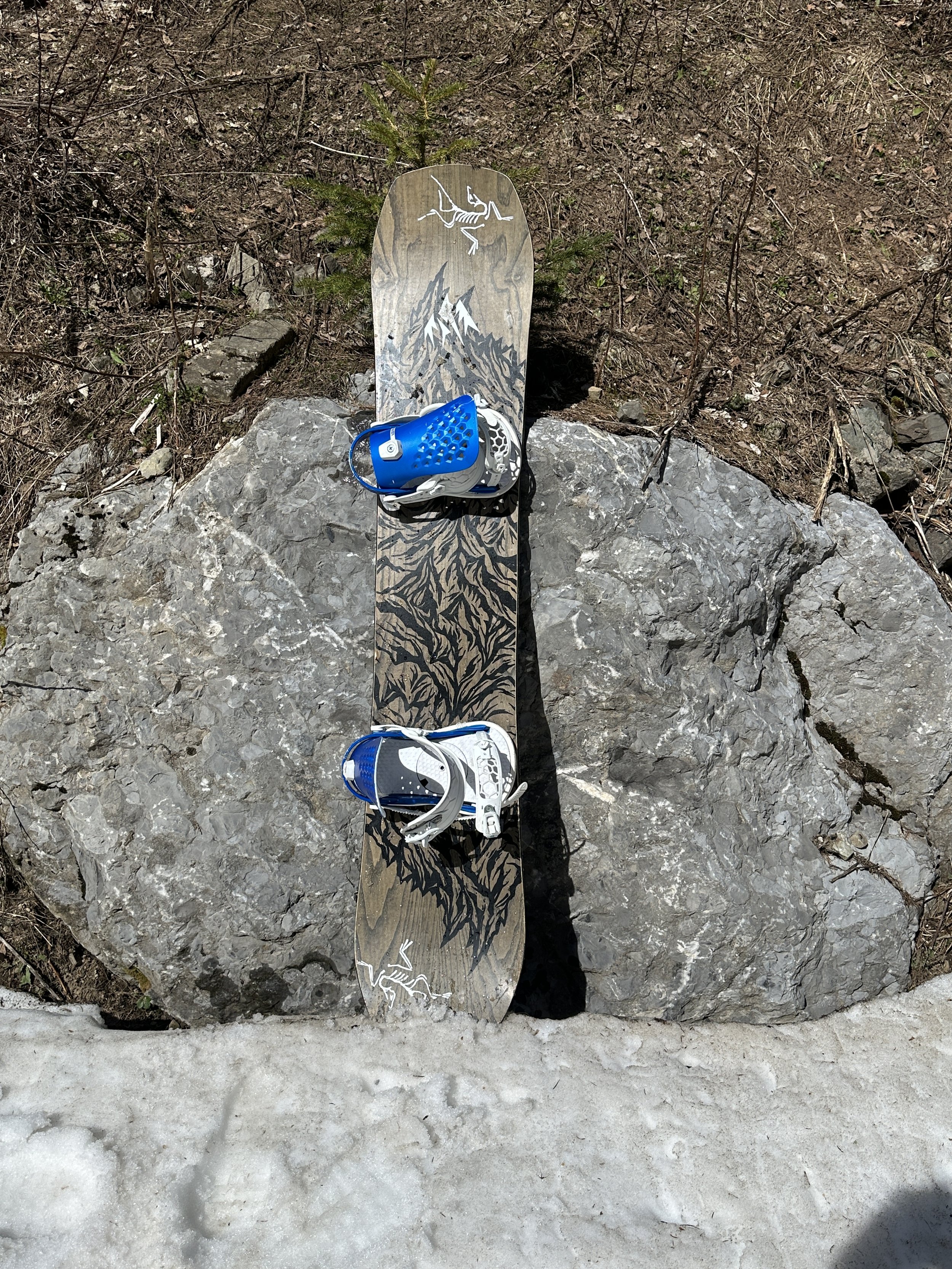
The Union Strata bindings have been one of the best-selling snowboard bindings over the past few seasons. What is appealing to many about the Union Strata is they are a binding from a household name in the binding world at a reasonable price with fantastic performance and comfort.
Let’s take a closer look at the Union Strata snowboard bindings whilst considering the following categories; Style, Cost, Flex, Comfort, and Durability.
Union Strata Snowboard Bindings
This review is my opinion of the Union Strata snowboard bindings which were purchased with my own money. If you find it useful consider purchasing your pair through the affiliate links in the post to support the website and future content.
ABOUT ME
Before jumping into the full review it is worth noting the following information about me as a snowboarder. I am lucky to snowboard a lot but I am not a professional. I have lots of experience riding in all terrain in all conditions and have previous snowboard shop maintenance and retail experience. I use my website to express my opinions on gear and I hope you find them useful when choosing what gear works for you.
WHAT UNION SAY
Union's #1 men's park and freestyle snowboard binding. The soft and surfy ride feel of the Union Strata is perfect for snowboarders looking to cruise the park or surf the whole mountain. Strap in and unlock your snowboards true flex.
TEST CONDITIONS
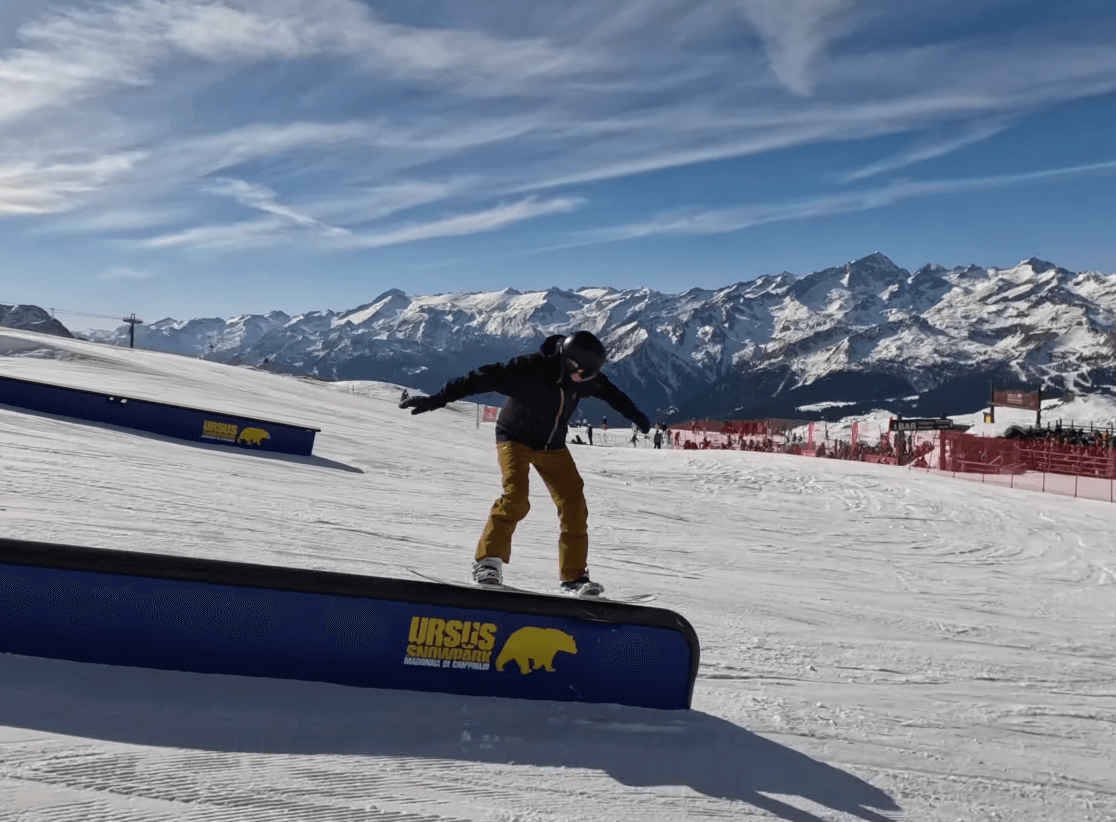
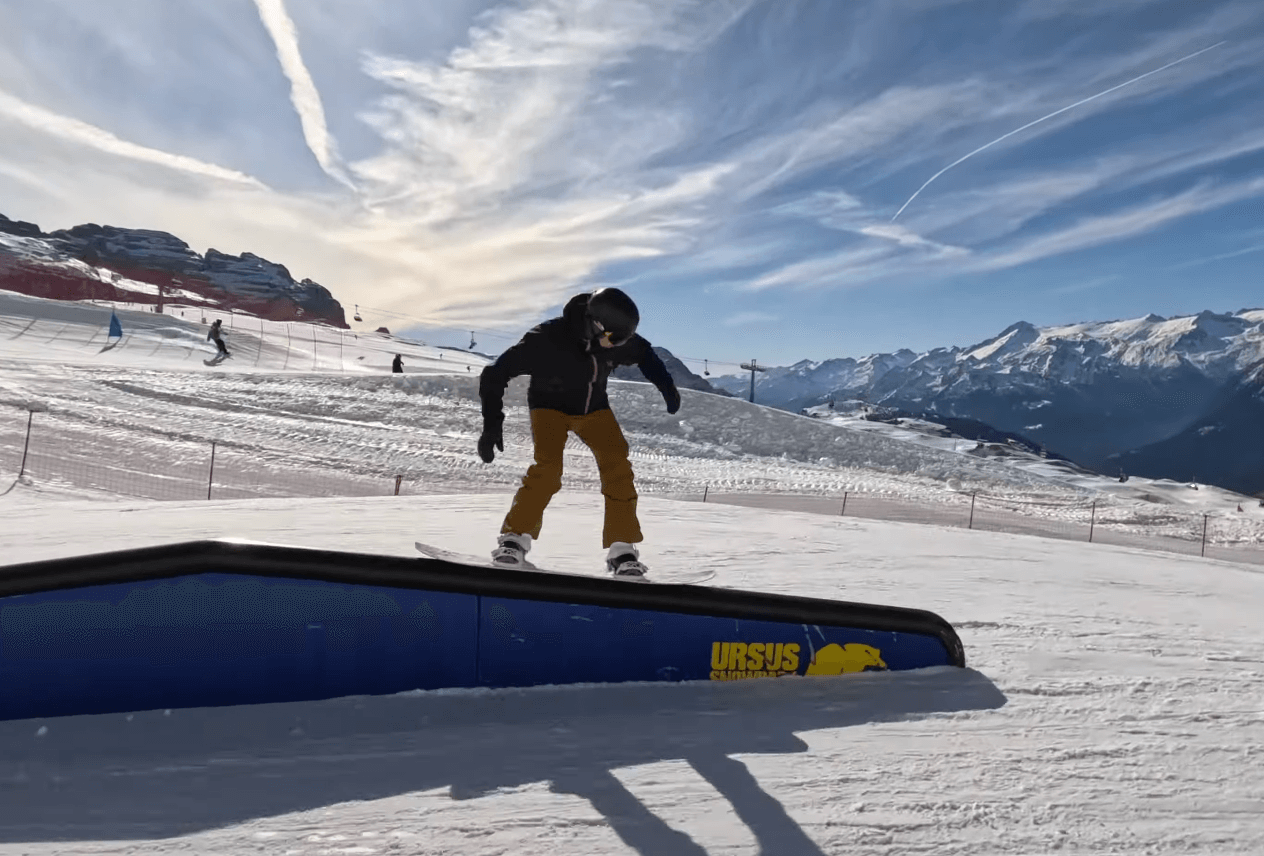
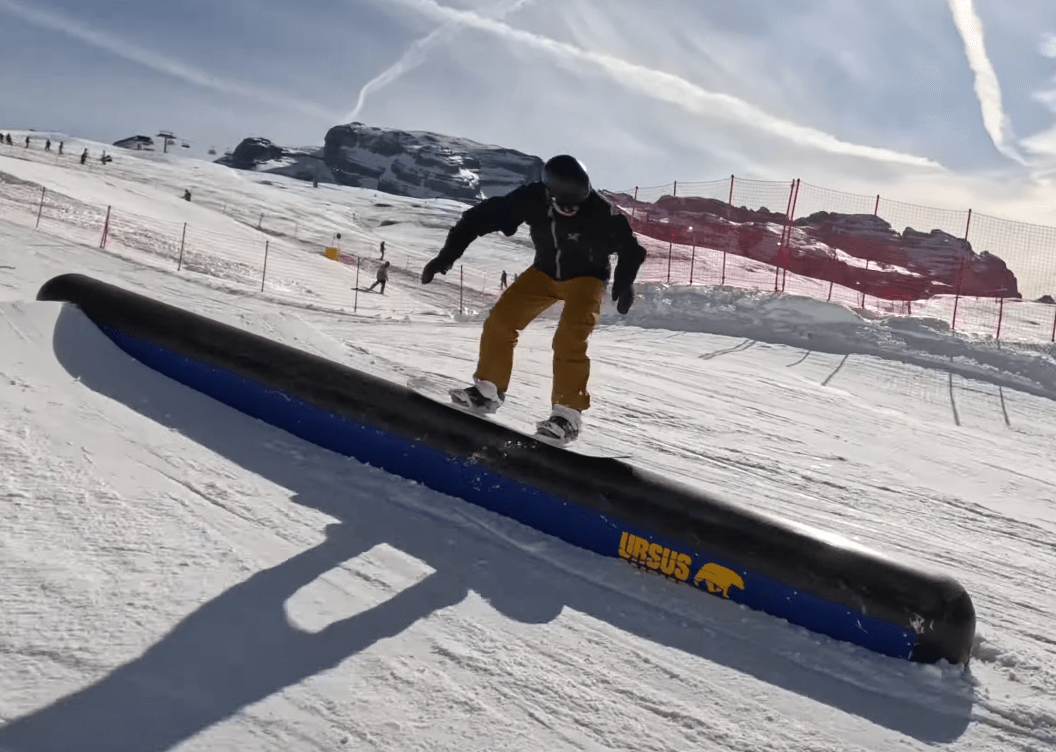
These bindings have been part of my binding rotation since 2020 and therefore have been put through their paces in a number of conditions.
BOARDS
I have partnered the Union Strata with the following all-mountain freestyle snowboards over the years.
Prior Wildcard
Prior AMF
STANCE
Mostly I run with +12 -9 but have recently switched to 0 on the back foot. My stance width is 21.5inches.
BOOTS
Salomon Synapse
Salomon Echo Dual Boa
JUDGEMENT
The Union Strata snowboard bindings have been perfect as a one-binding choice to ride everything The 6/10 flex offers enough response for freeriding but also subtlety for comfort. My riding style ensures I see a wide variety of terrain and these bindings’ biggest complement is that I never thoughts about them when riding… they just do the job and do it well.

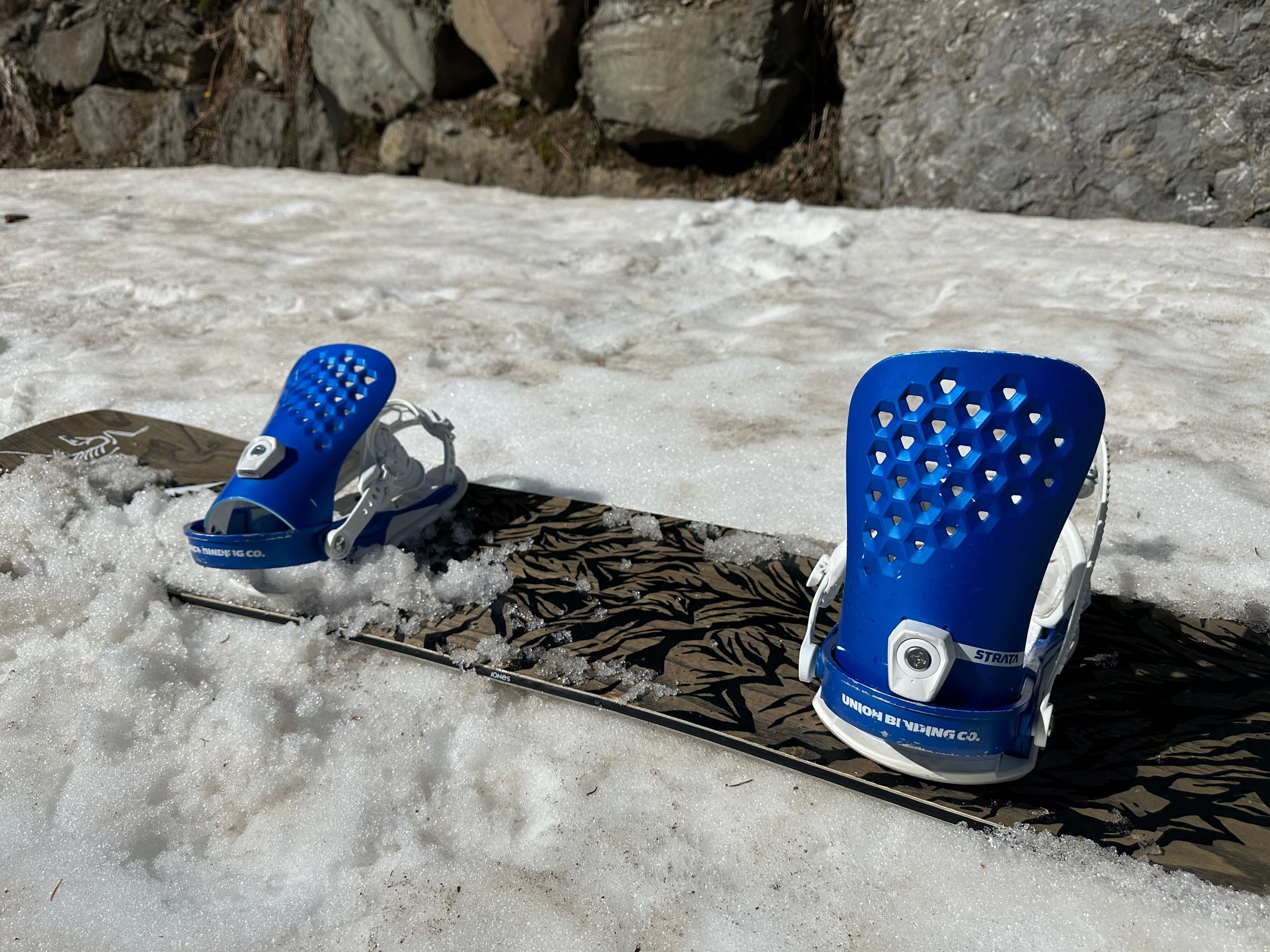
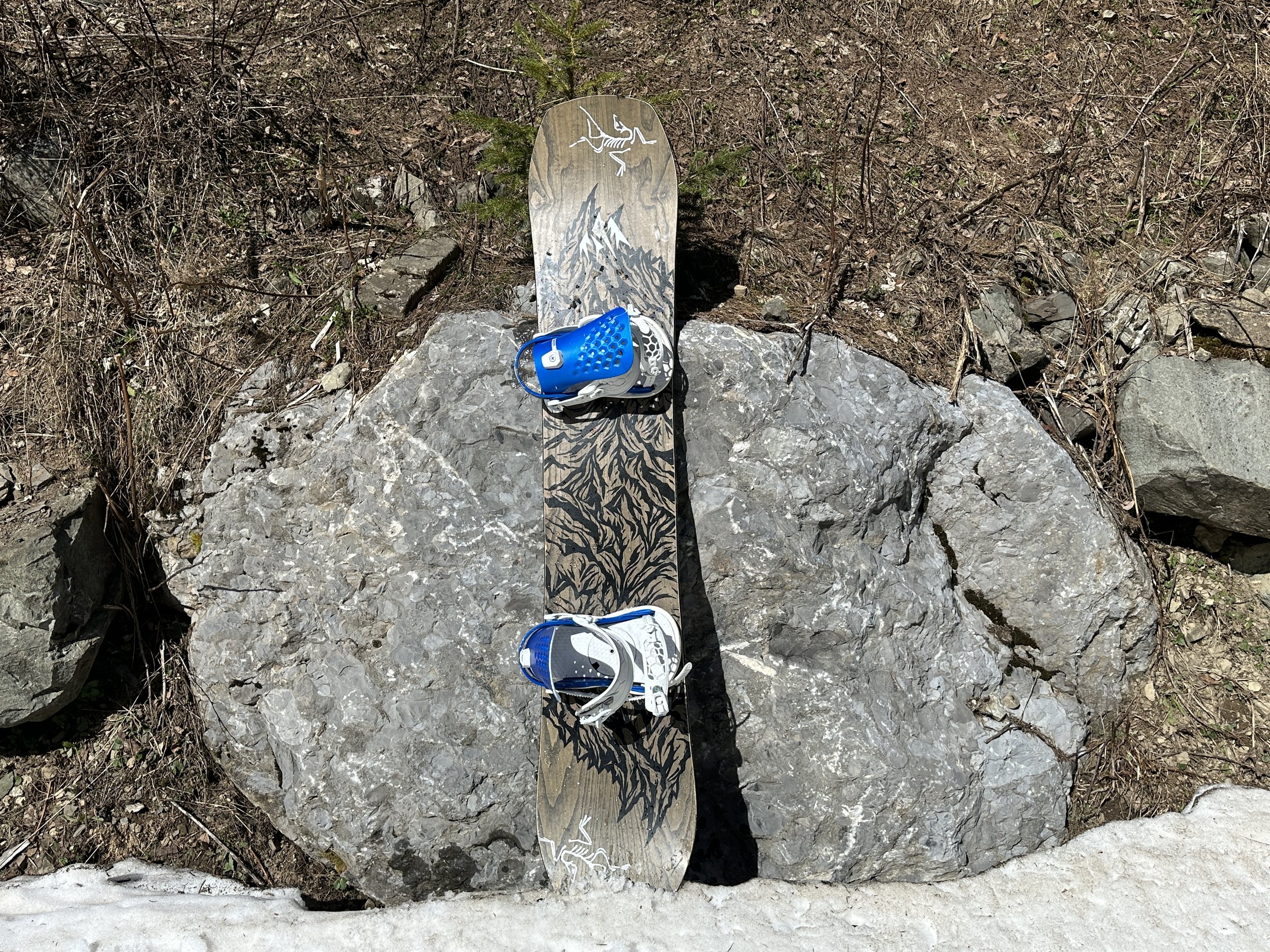
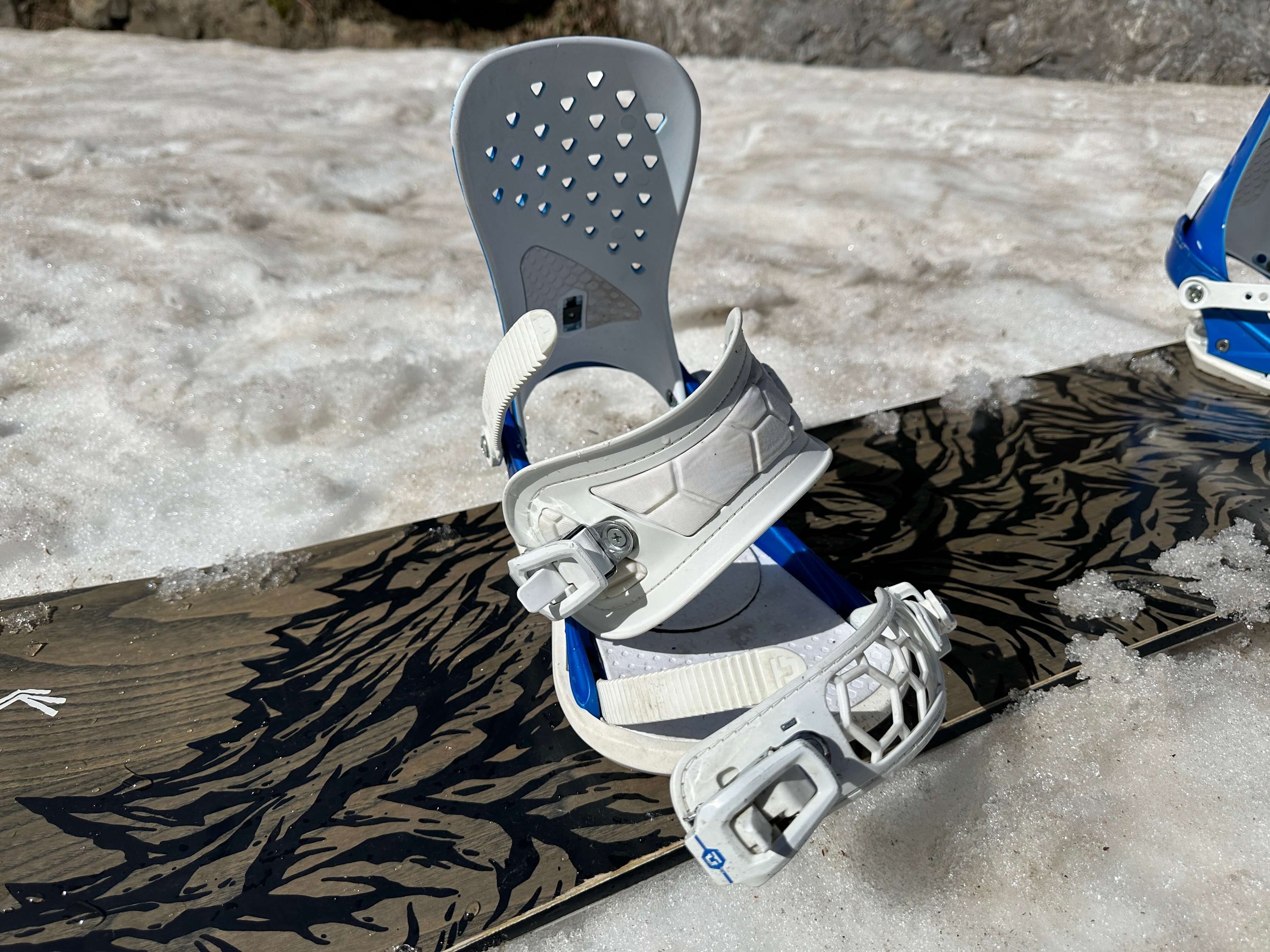
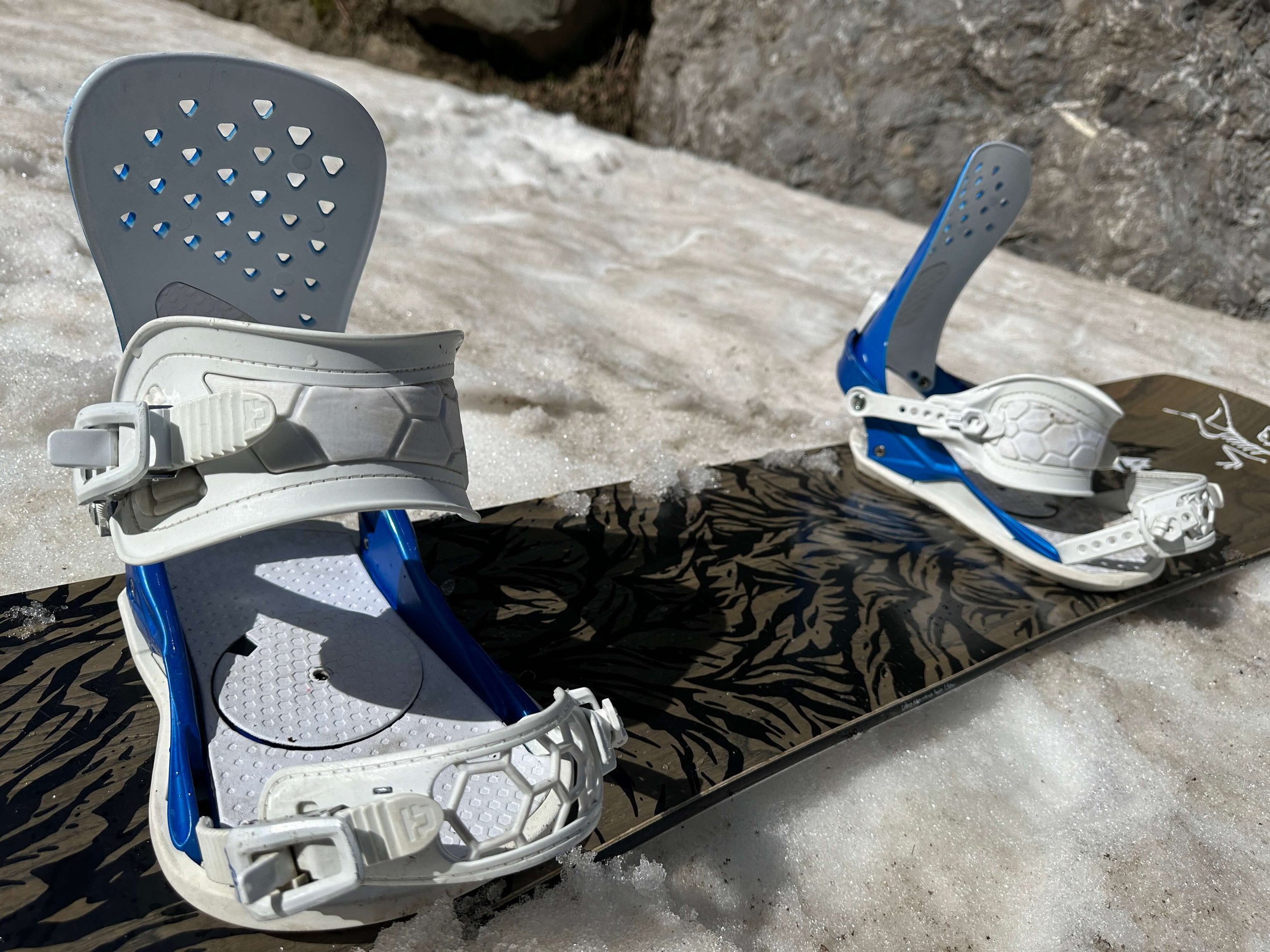
STYLE
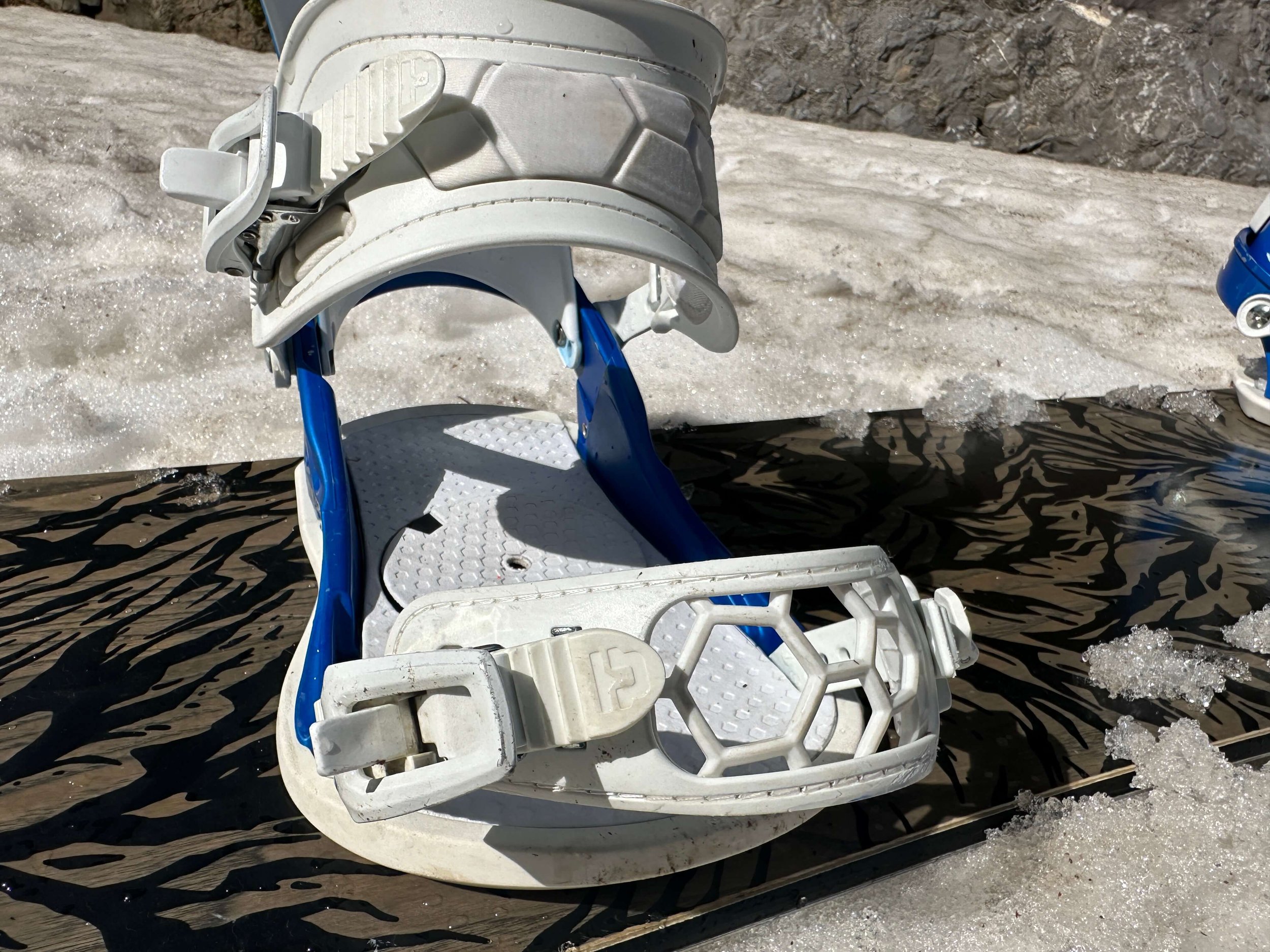
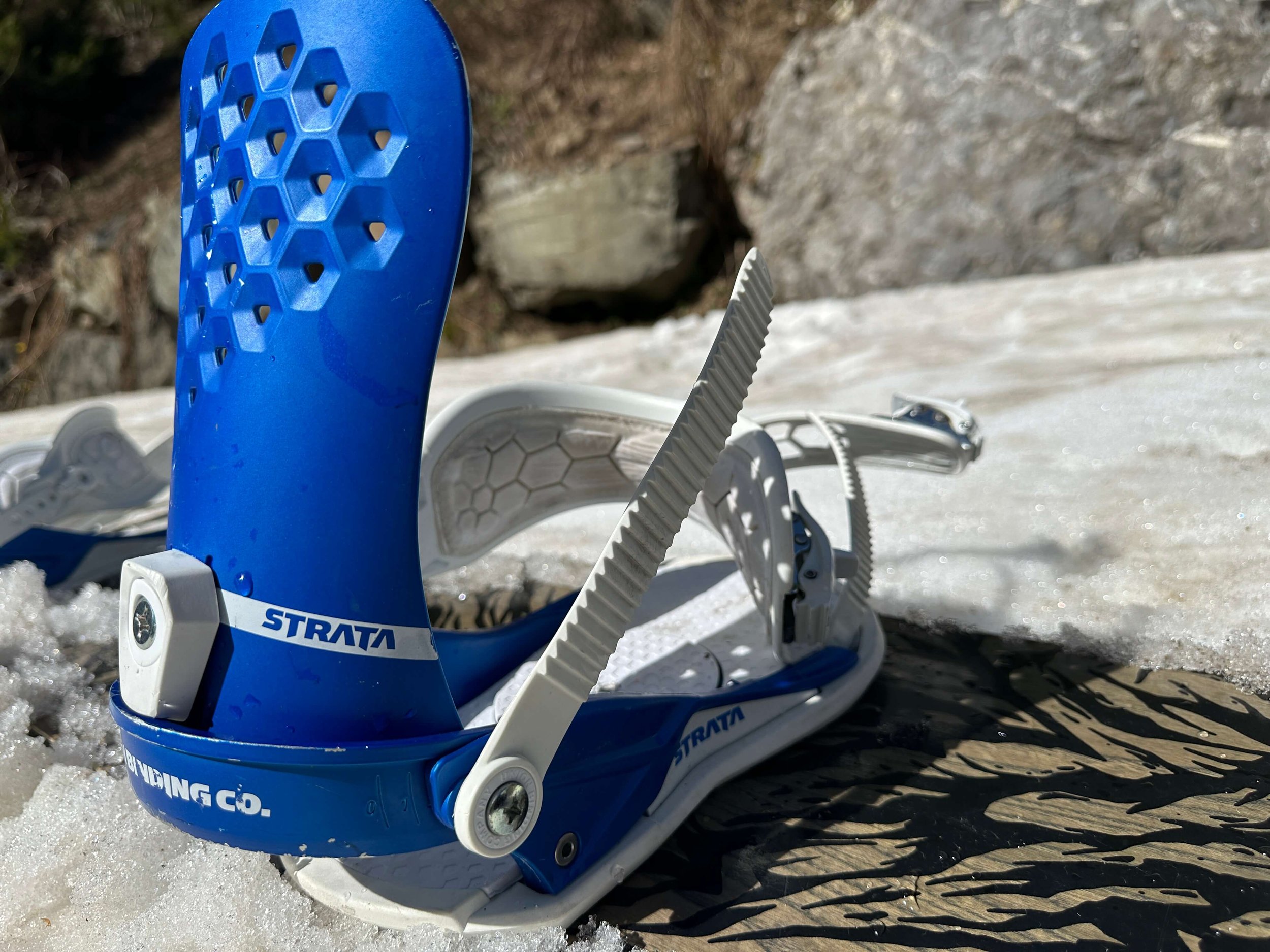
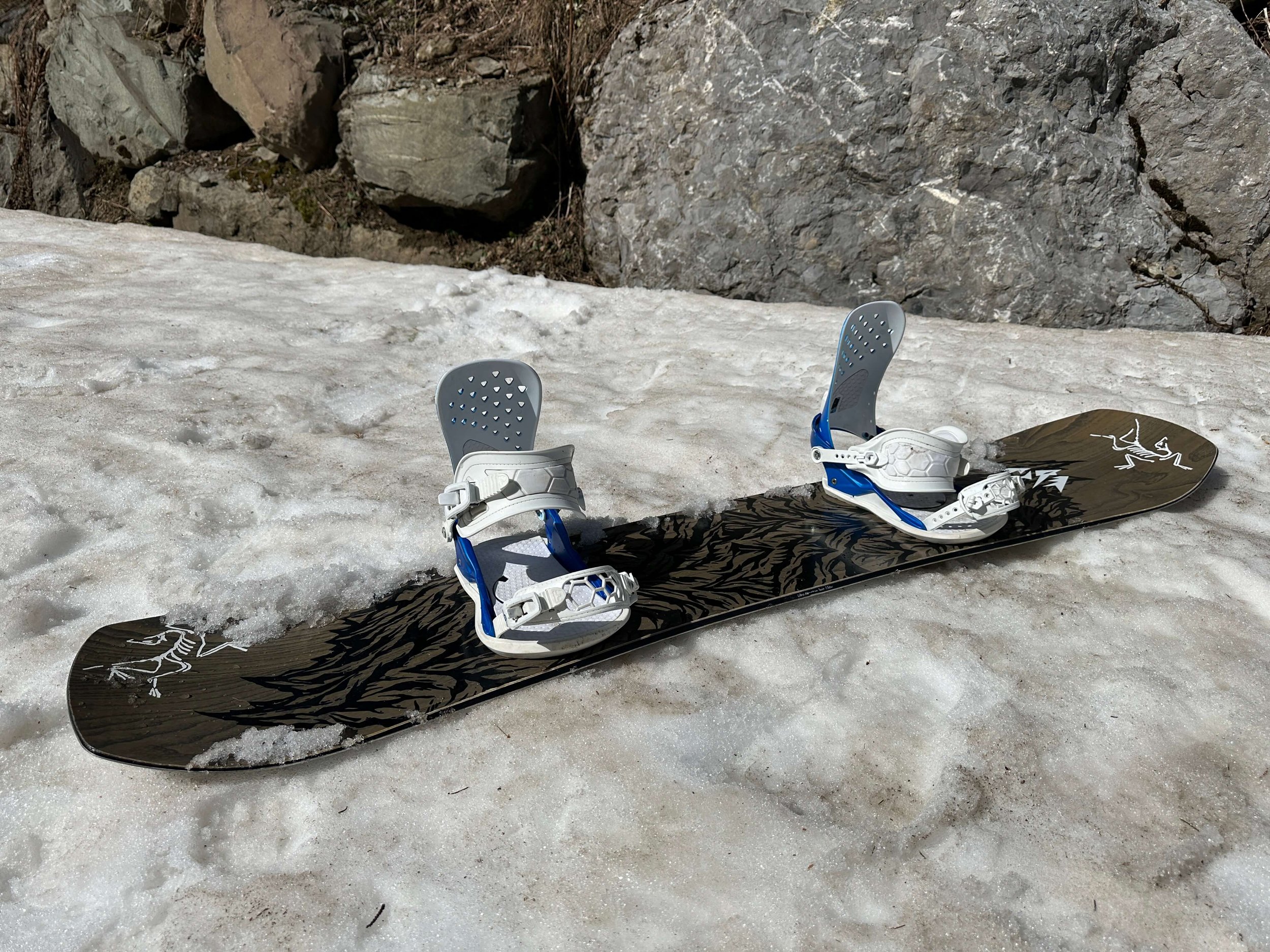
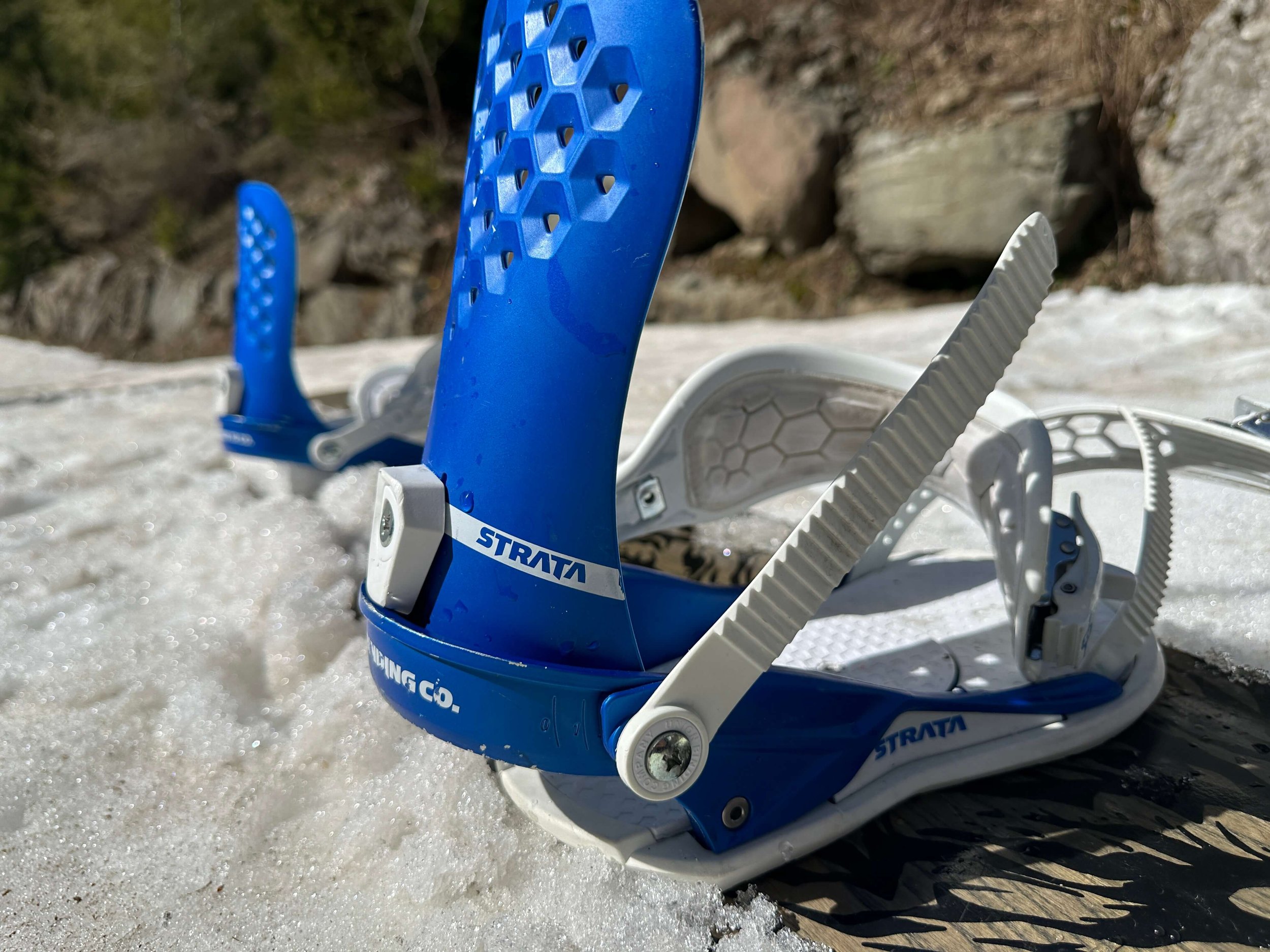
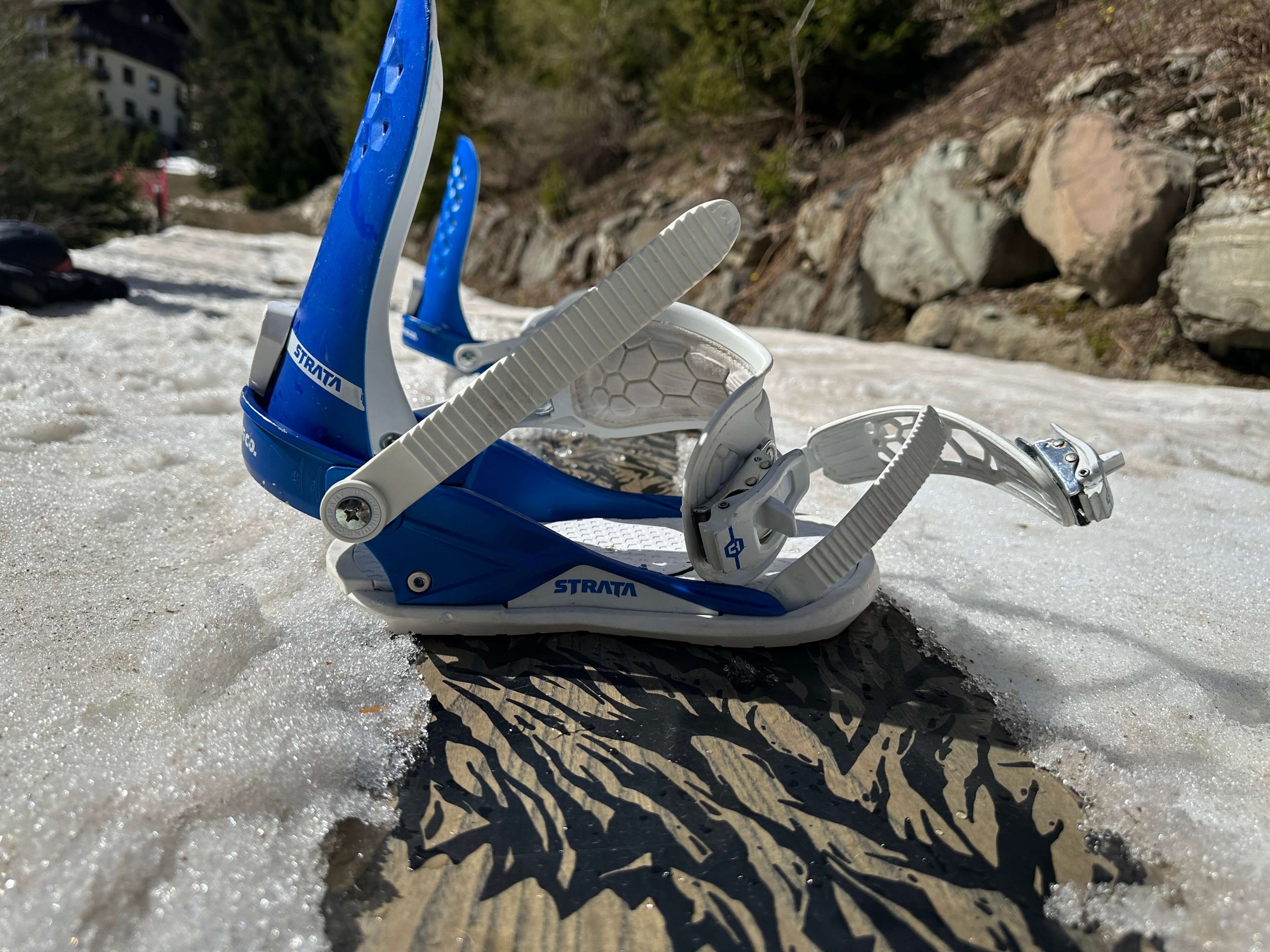
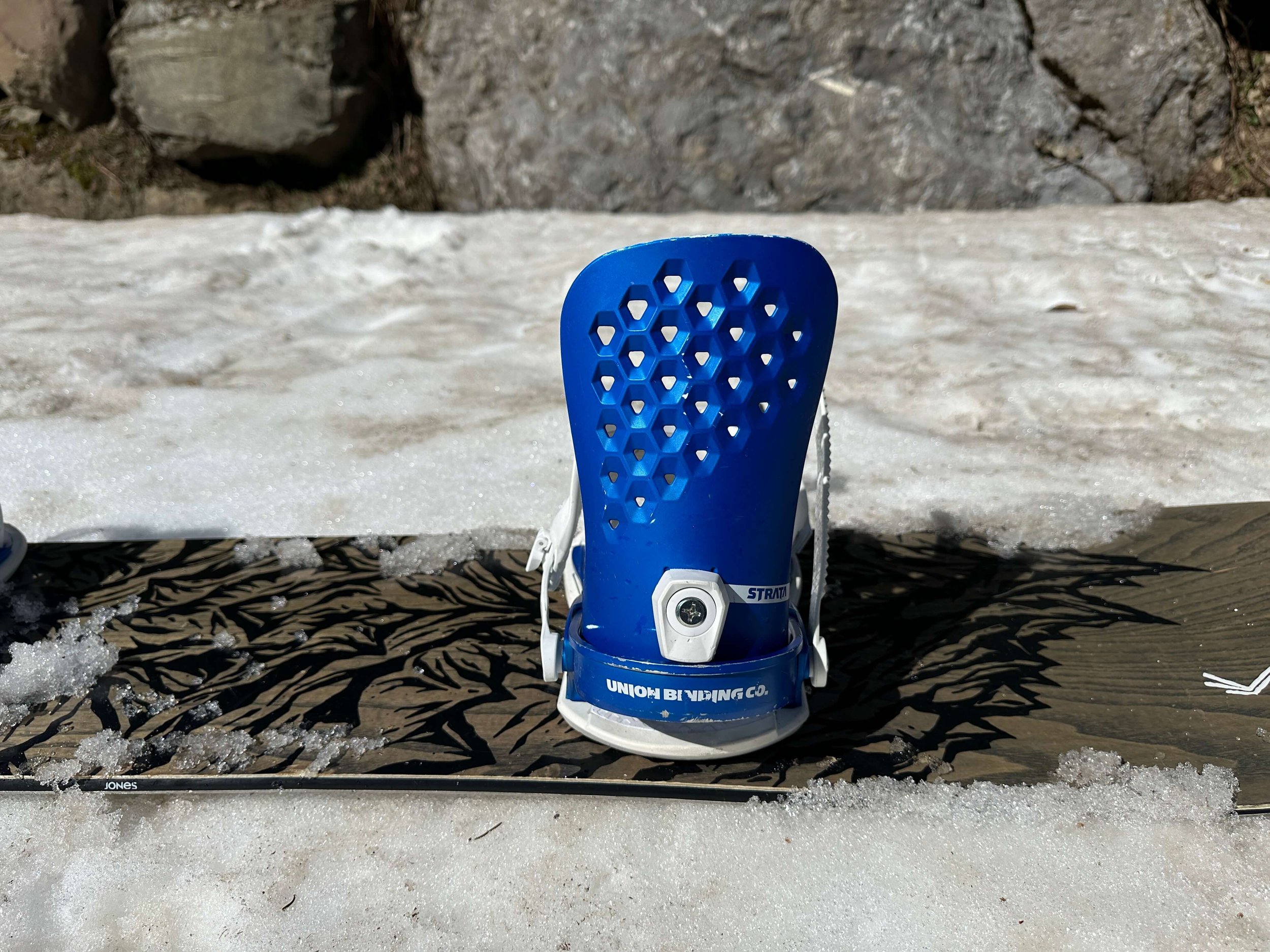
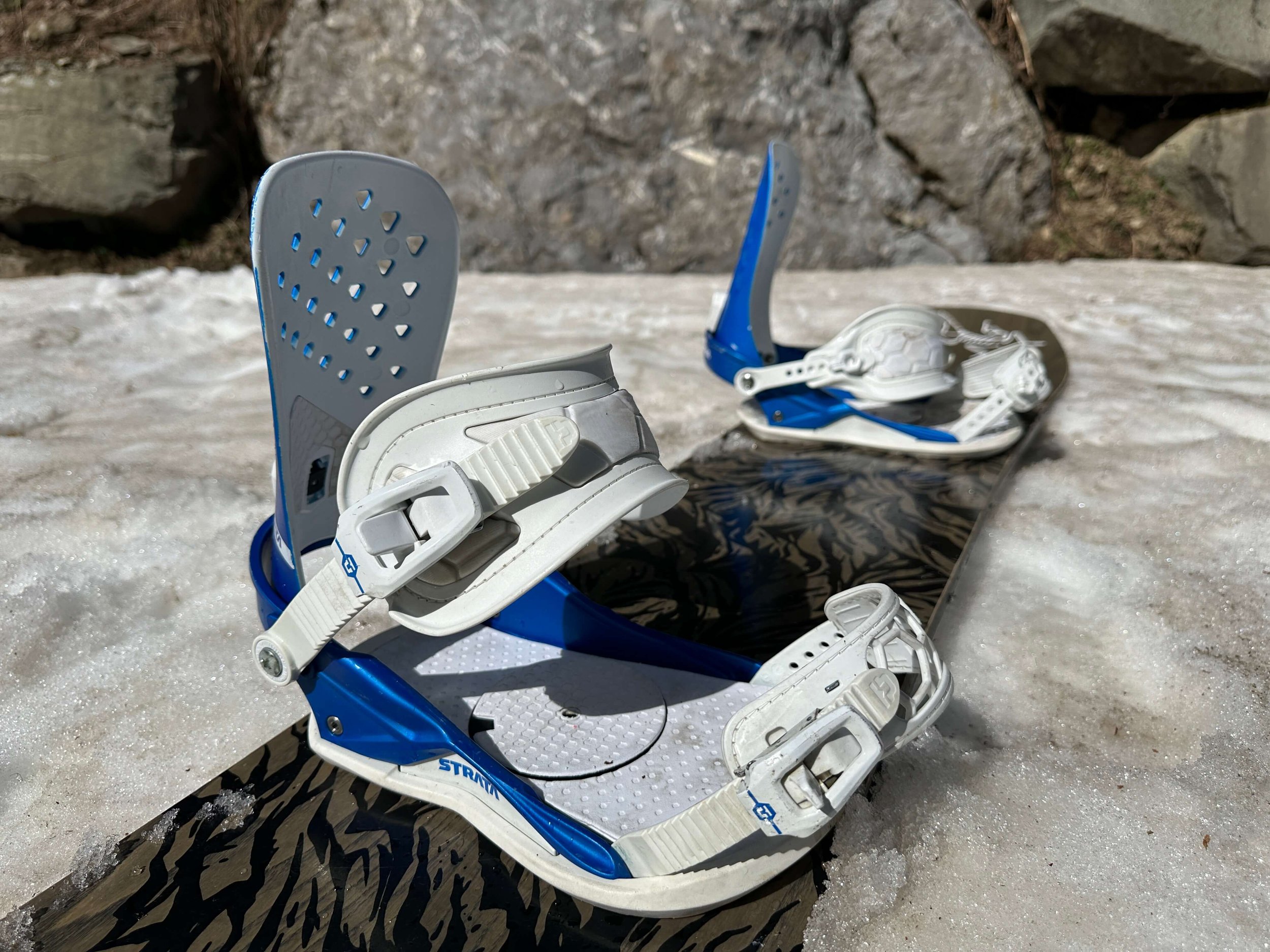
The Strata snowboard bindings from Union are an all-mountain binding with a freestyle feel. These are not the stiffest binding but neither are they wishy washy, the Union Strata is capable of exploring everywhere. Both videos below were filmed whilst wearing the Union Strata Bindings, from park to pow they deliver.
COST
The Union Strata snowboard binding has a RRP of £240 in the UK which sits it in the moderately priced category. The Union Strata is £70 cheaper than the popular Union Atlas and £170 cheaper than the Union Atlas Pro. When you factor in that the Union Strata is regularly available in the sales for closer to £160/£170 they represent great value.
COMFORT
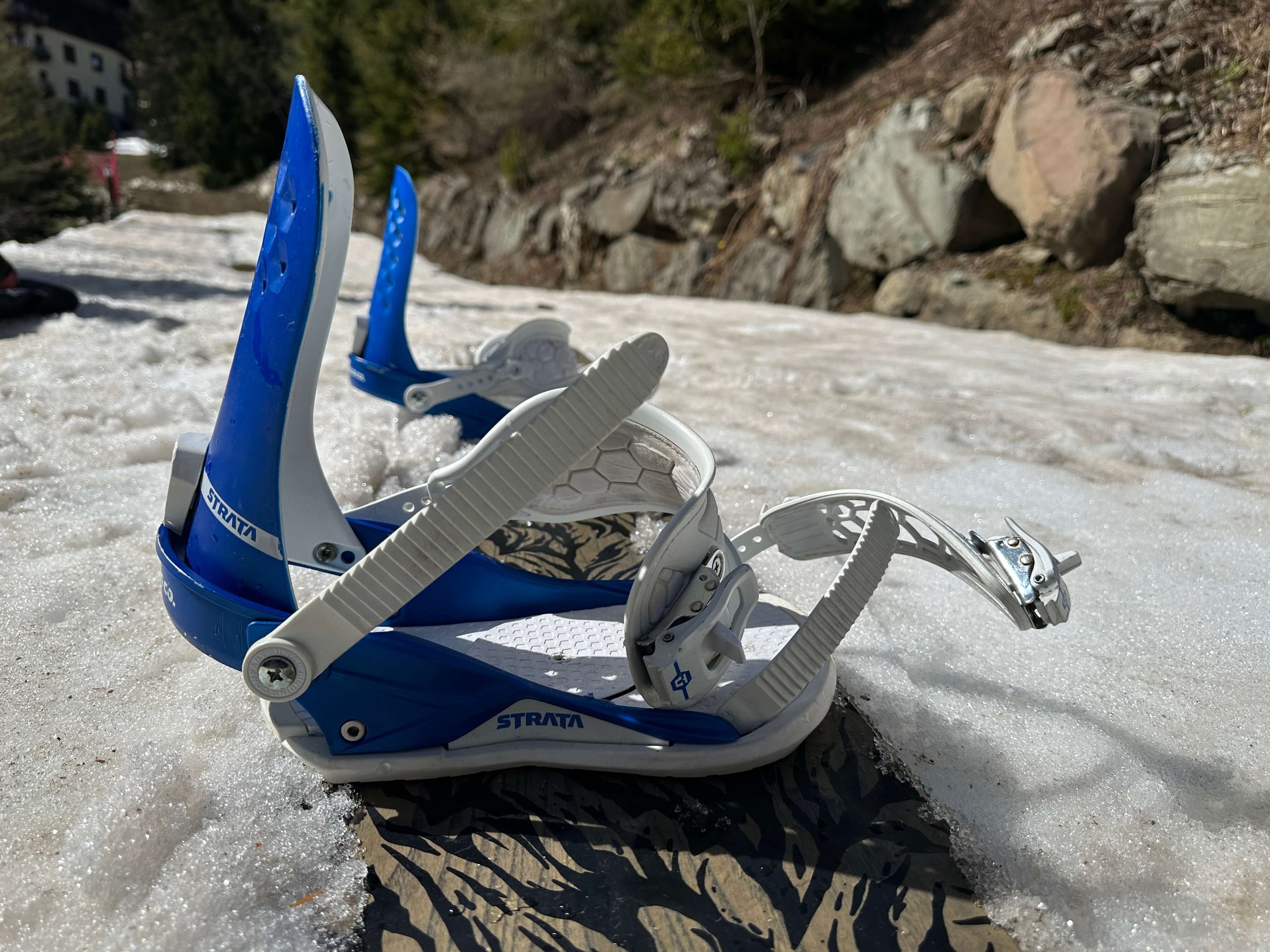
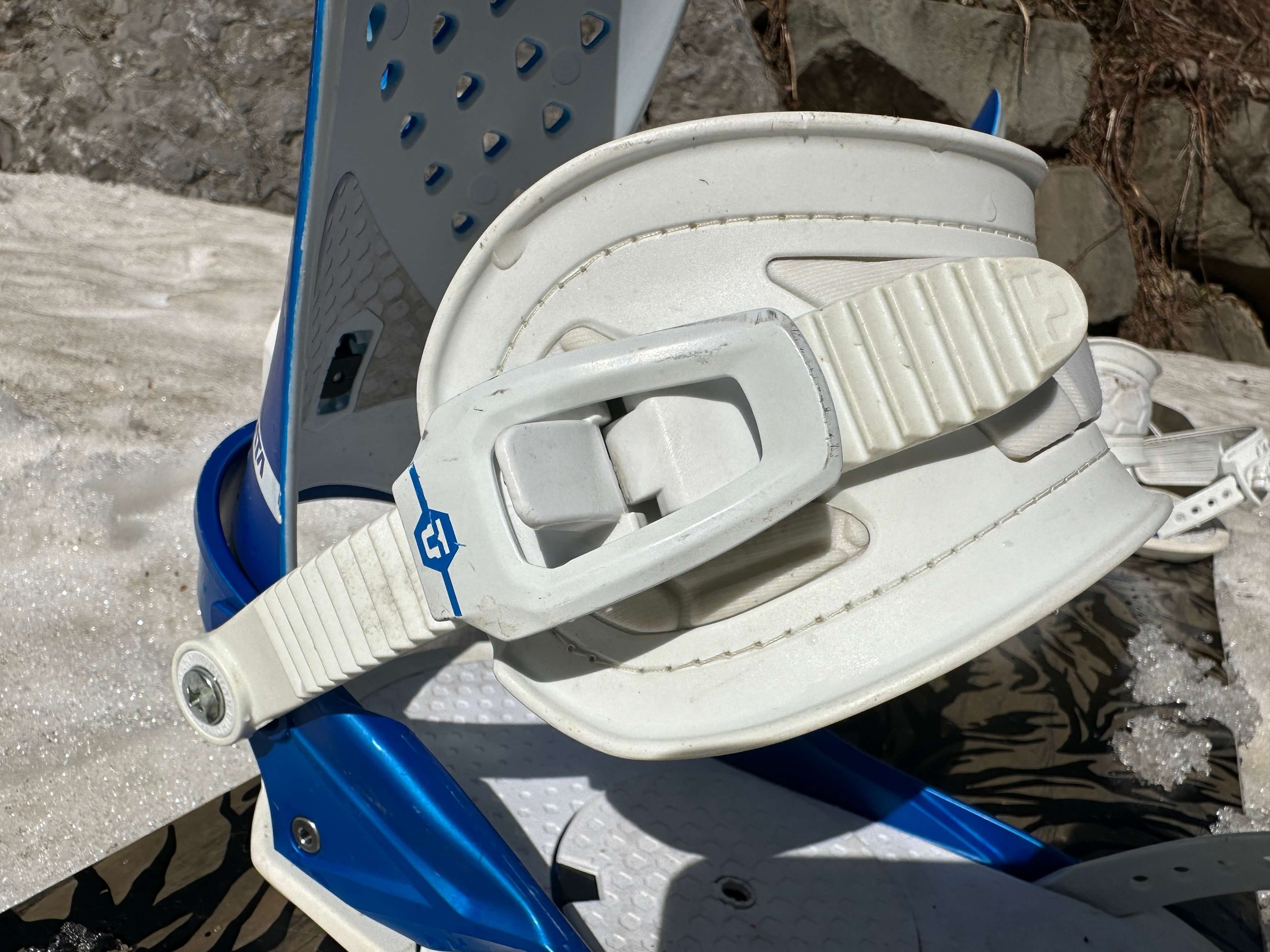
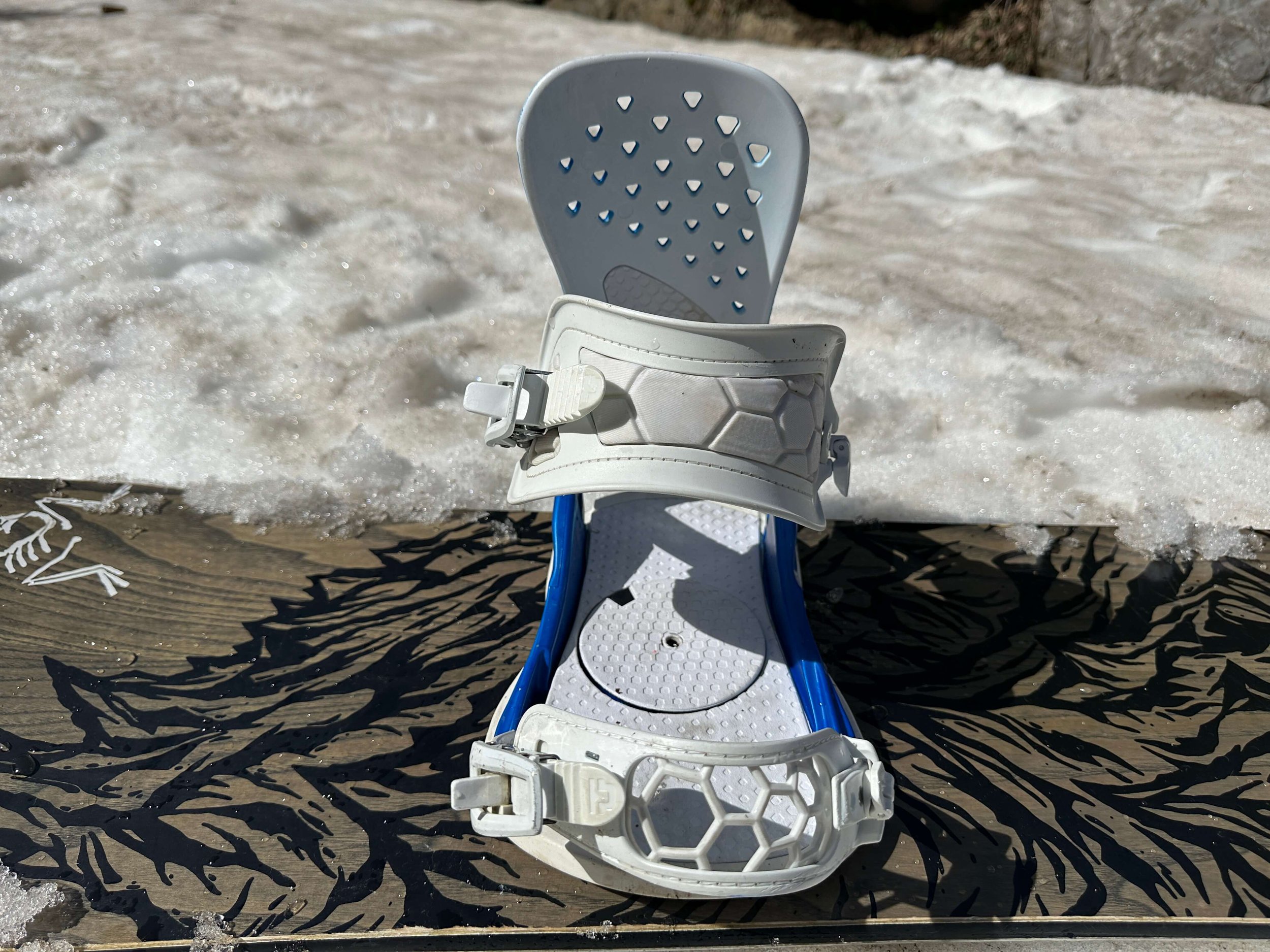
The comfort of the Union Strata snowboard bindings is fantastic. I love the straps and how they hug your boots in a secure but not straight jacket way. The straps have some give/flex which means you don’t get any pressure points across the boot. Similarly, the high-back doesn’t bite the back of your boots so comfort has never been an issue for me in these.
Union Strata Comfort
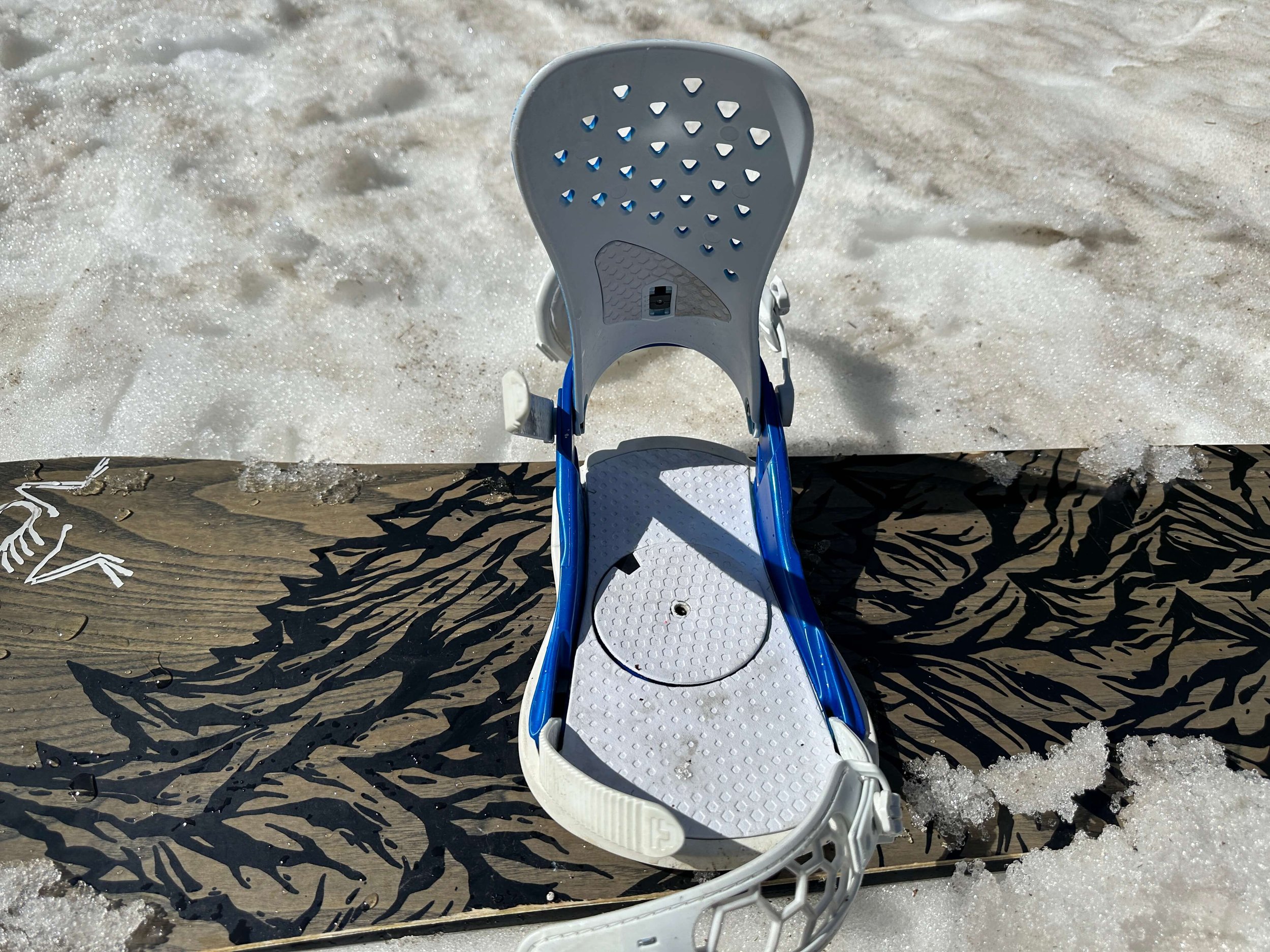
The footbed is cushioned and adds some great shock absorbtion to these bindings further adding to the comfort of riding the Union Strata bindings.
FLEX
Union rates the Strata as a medium flex 6/10 and I’d say this feels true. The Strata highback feels firm for a freestyle-inspired binding but this also helps its all-mountain appeal.
DURABILITY
Long gone are the days of losing ankle straps on Union Bindings with any issues regarding the screws well and truly resolved. The Union Strata snowboard bindings have stood the test of time.
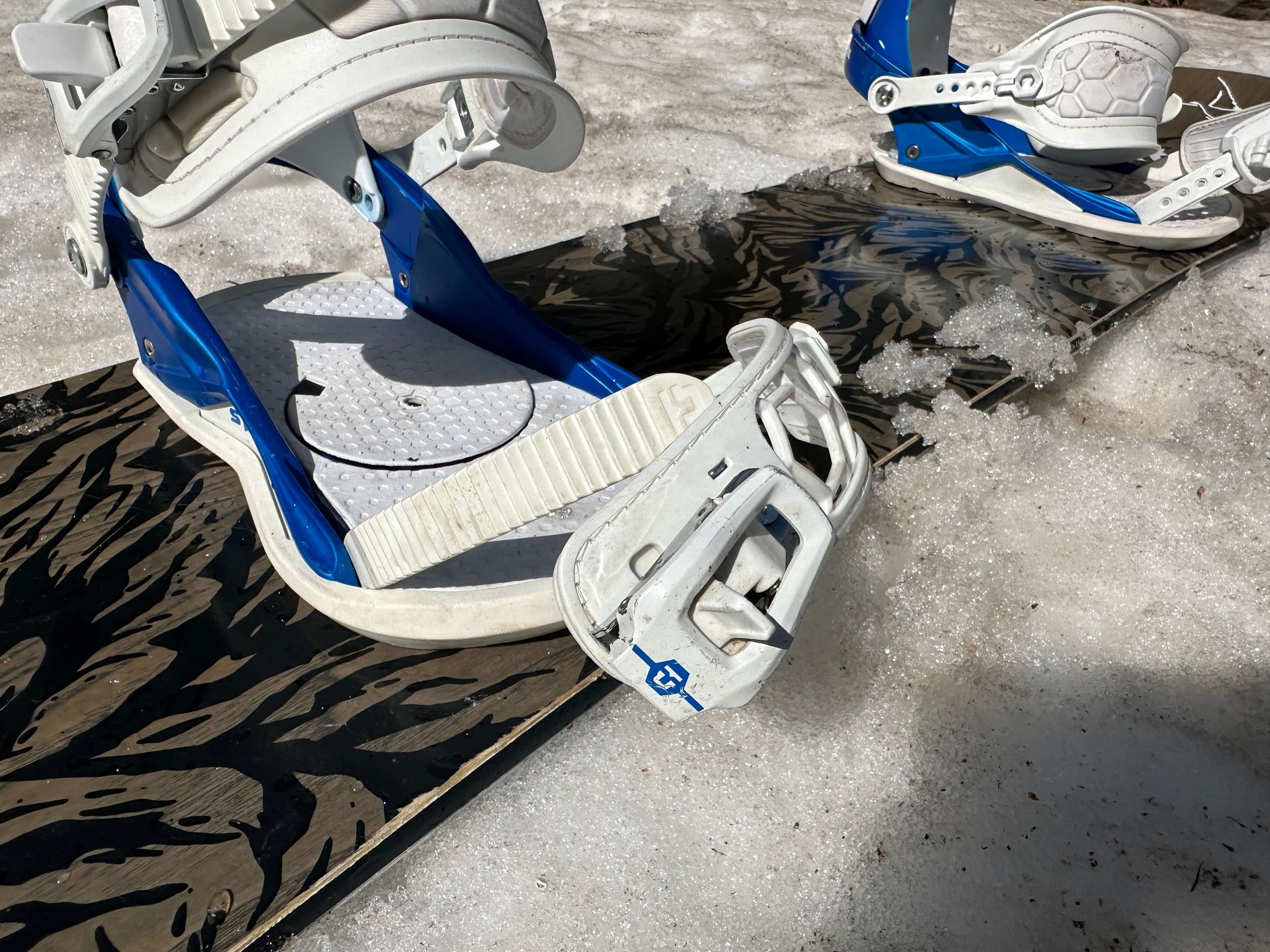
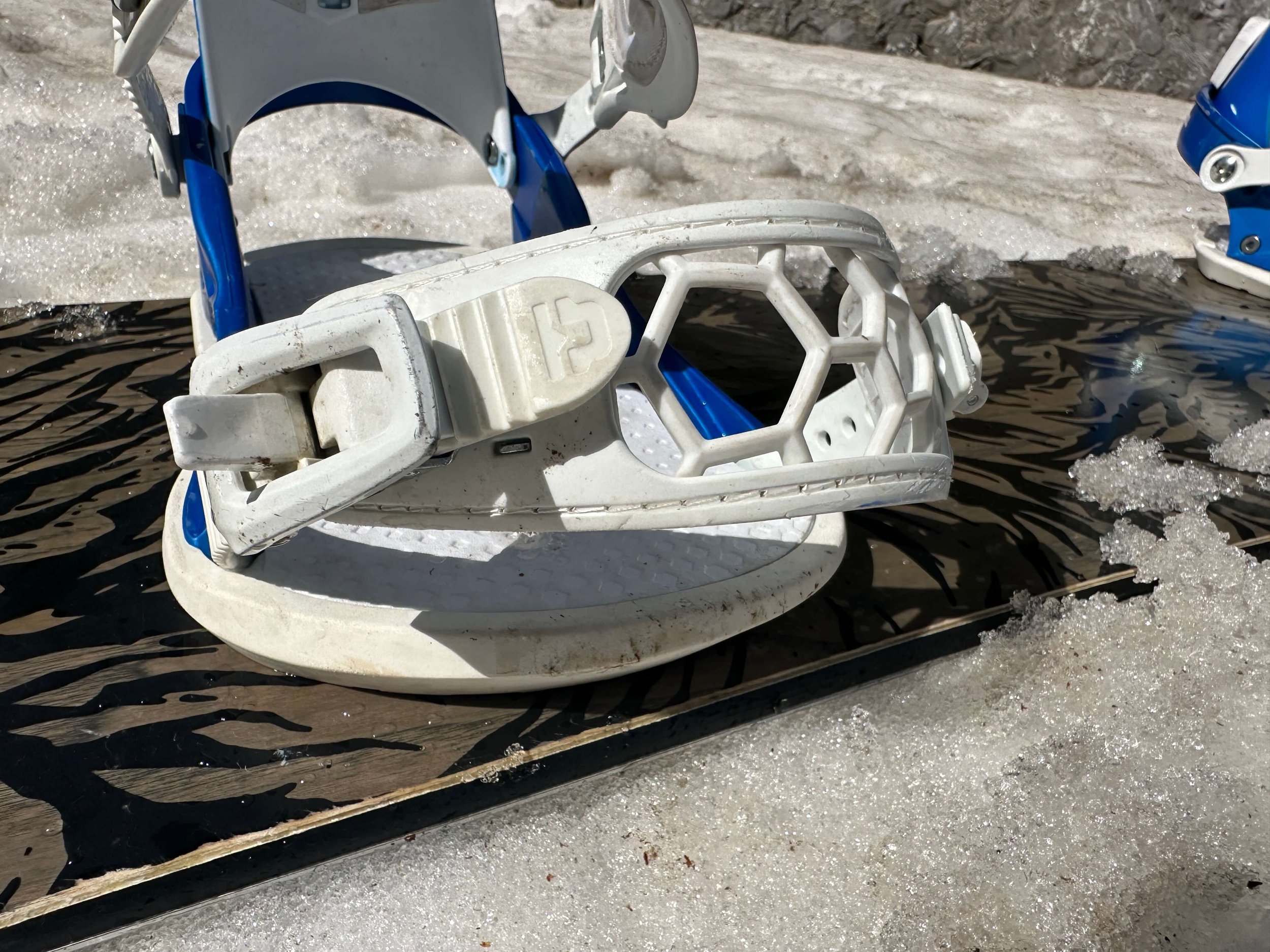
The baseplate and highback are in great condition with only the expected scratches from multiple seasons of use. The straps are dirty but function like day one. My only issue has been one buckle that recently had started to stick when unlocking. I tightened a screw and this issue was resolved.
Union Strata Bindings
STRAPS
To me the straps on a snowboard binding rate highly as to whether I am going to get along with the binding as a whole. A good easy to use strap with smooth buckles makes all the difference for a day on snow. The Union Strata has this smooth transition out of the binding with the quick release buckles and they are equally smooth to lock in. The Union Strata toe strap is one of my favourites across different bindings with the webbing really wrapping around your boots and pulling the boot back into the binding.
FINAL THOUGHTS
The Union Strata bindings have been a fantastic addition to my gear room and I never worry about them when out on the hill. The Union Strata will take you anywhere on the mountain and ultimately that’s what I am looking for in a snowboard binding. These Union bindings are comfortable and have lasted the test of time. A win for me.
SUPPORT FUTURE CONTENT
If you found this post useful then consider supporting future content by purchasing through the Amazon Link below or using this link to Buy me A Coffee


Hestra Heli Ski Glove Reviews | Hestra Gloves

For the harshest weather and the deepest storms, the Hestra Heli Gloves will keep you warm and dry lap after lap.
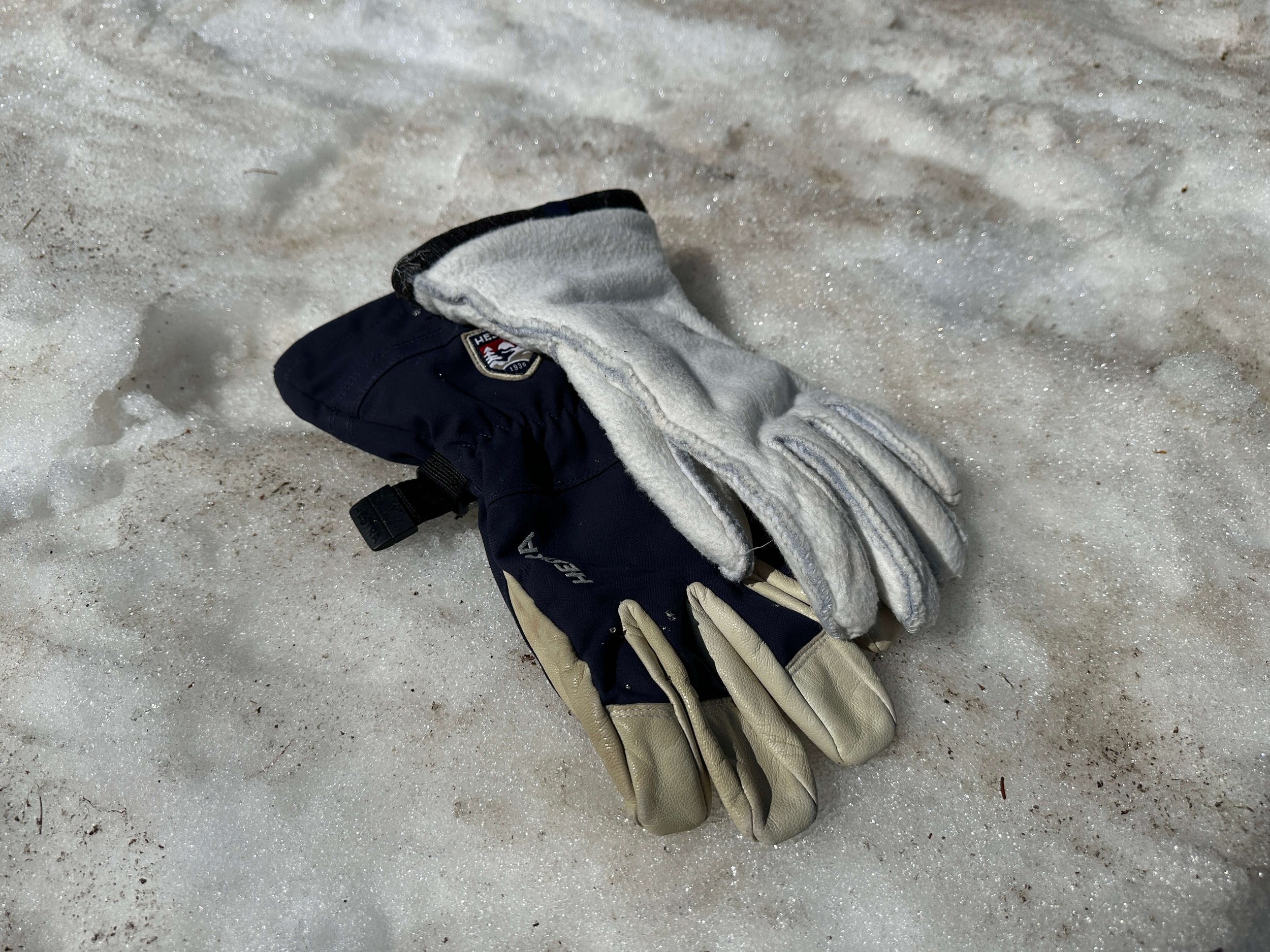
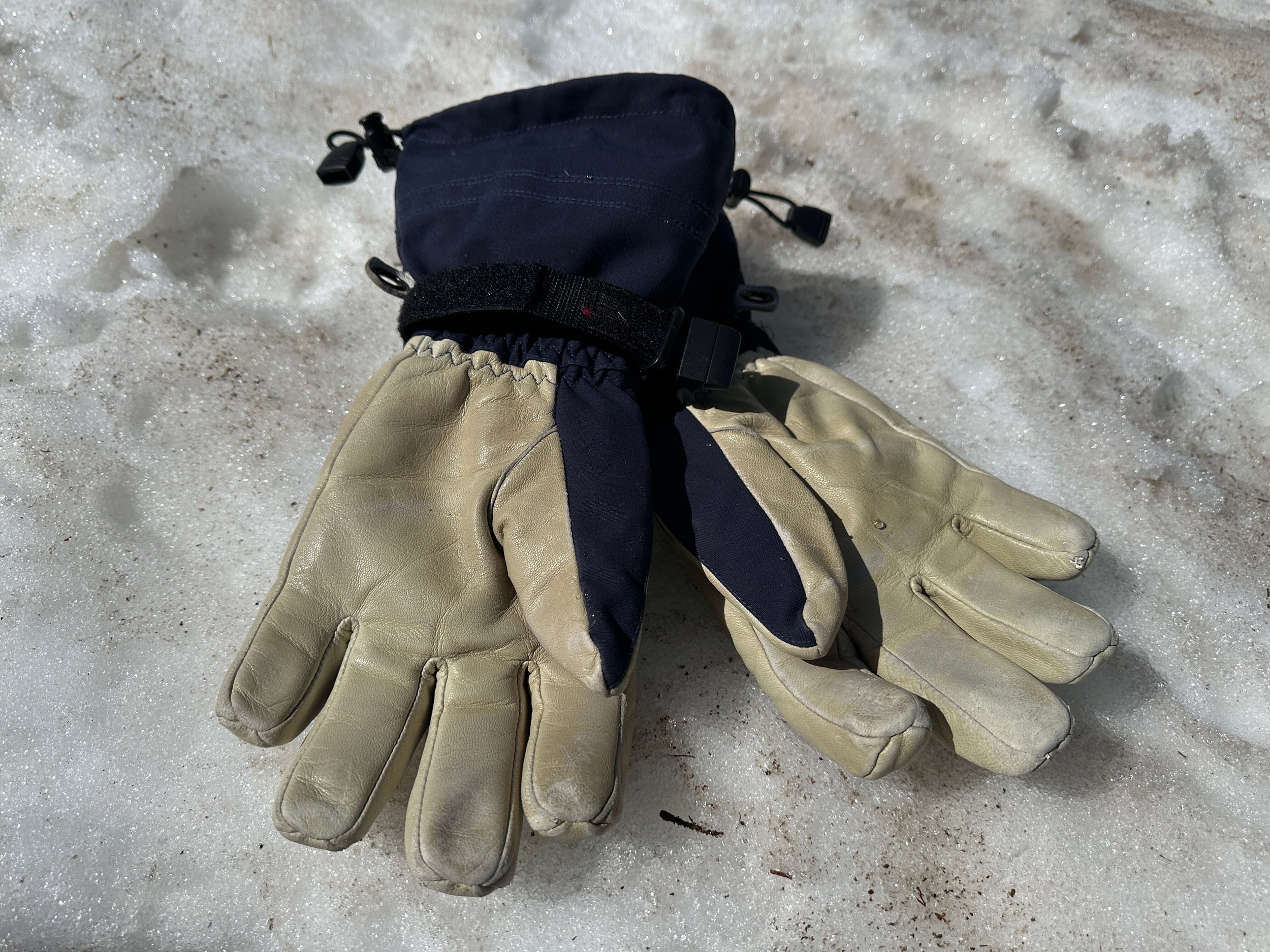
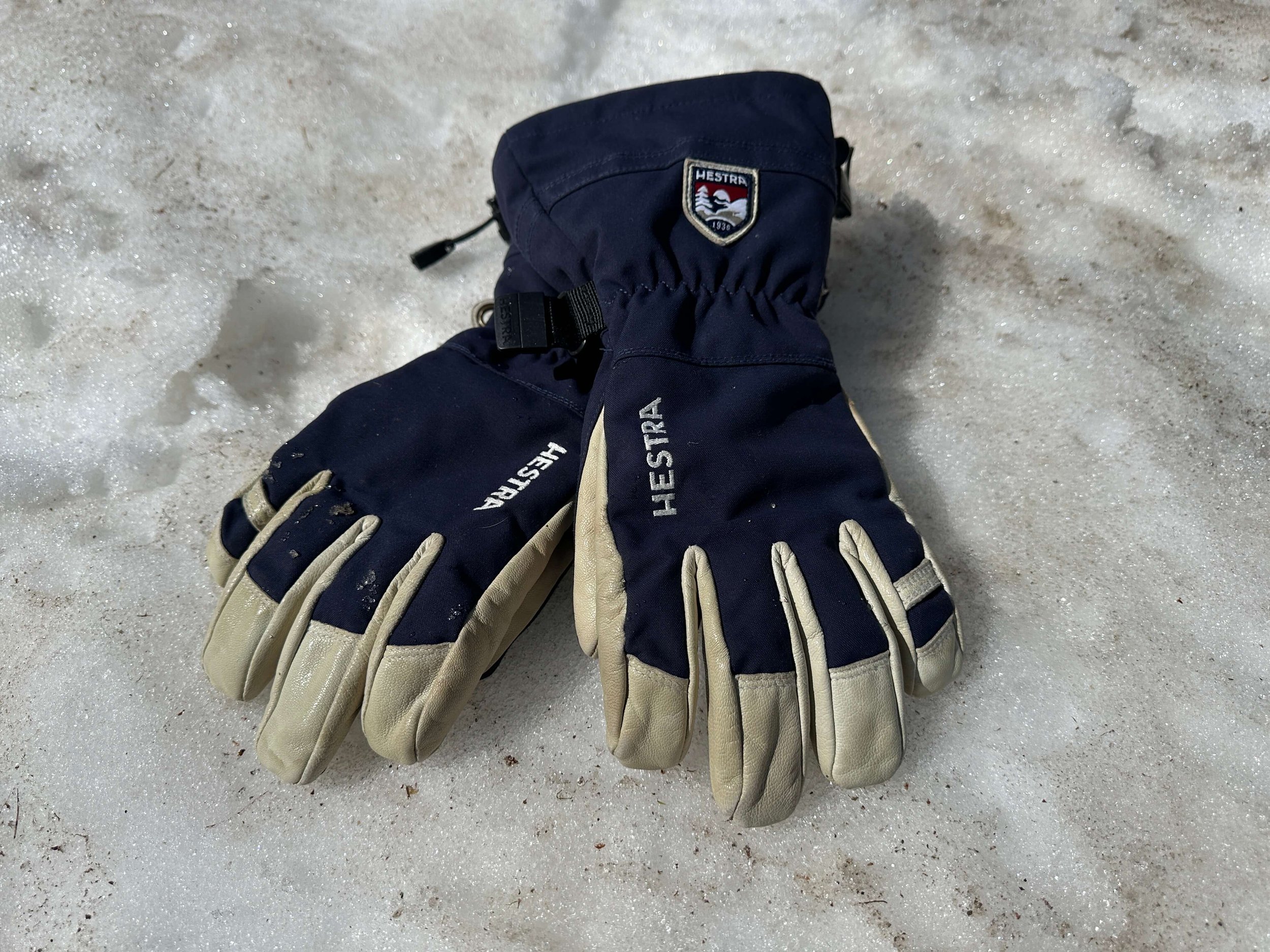
The Hestra Heli Ski Gloves are part of the Alpine Pro range which is the Swedish company’s attempt at delivering products that will stand up to the test in the harshest environments. To give them their full name, the Hestra Army Leather Heli Ski Gloves are an all-time classic. These gloves are the go-to for many ski instructors, mountain guides and all-out powder enthusiasts.
If you are looking for an under-the-cuff alternative to the Heli Ski Gloves, consider the Hestra Fall Line Mittens or Fall Line Gloves.

Hestra Heli Gloves Powder Protection
This review is my opinion of the Hestra Heli Ski Gloves which were purchased with my own money and have been worn on rotation since 2017. If you find it useful consider purchasing your pair through the affiliate links in the post to support the website and future content.
ABOUT ME
Before jumping into the full review it is worth noting the following information about me as a snowboarder. I tend to run warm, I have a tendency on all but the coldest days to remove gloves frequently due to overheating and feeling warm. This may skew my thoughts on these gloves warmth.
WHAT HESTRA SAY
Hestra's best-known ski glove is a modern classic with well-thought-out functionality. A long model suitable for those seeking powder snow and who need a warm, reliable comrade on the mountain. Removeable liner makes it easy to adapt to different temperatures and activity levels.
JUDGEMENT
The Hestra Heli Ski Mitt is my choice for powder days and when the temperature drops. These gloves are the ultimate barrier to the elements and have kept my hands warm and dry in the most extreme conditions on the mountain.
Below I will provide a more detailed review based on the following categories; Warmth, Dexterity, Waterproofing, Durability, Breathability, and Comfort
WARMTH
The Hestra Heli Ski Gloves were originally created for ski guides in Western Canada who deal with some of the coldest and most difficult winter conditions a daily basis.
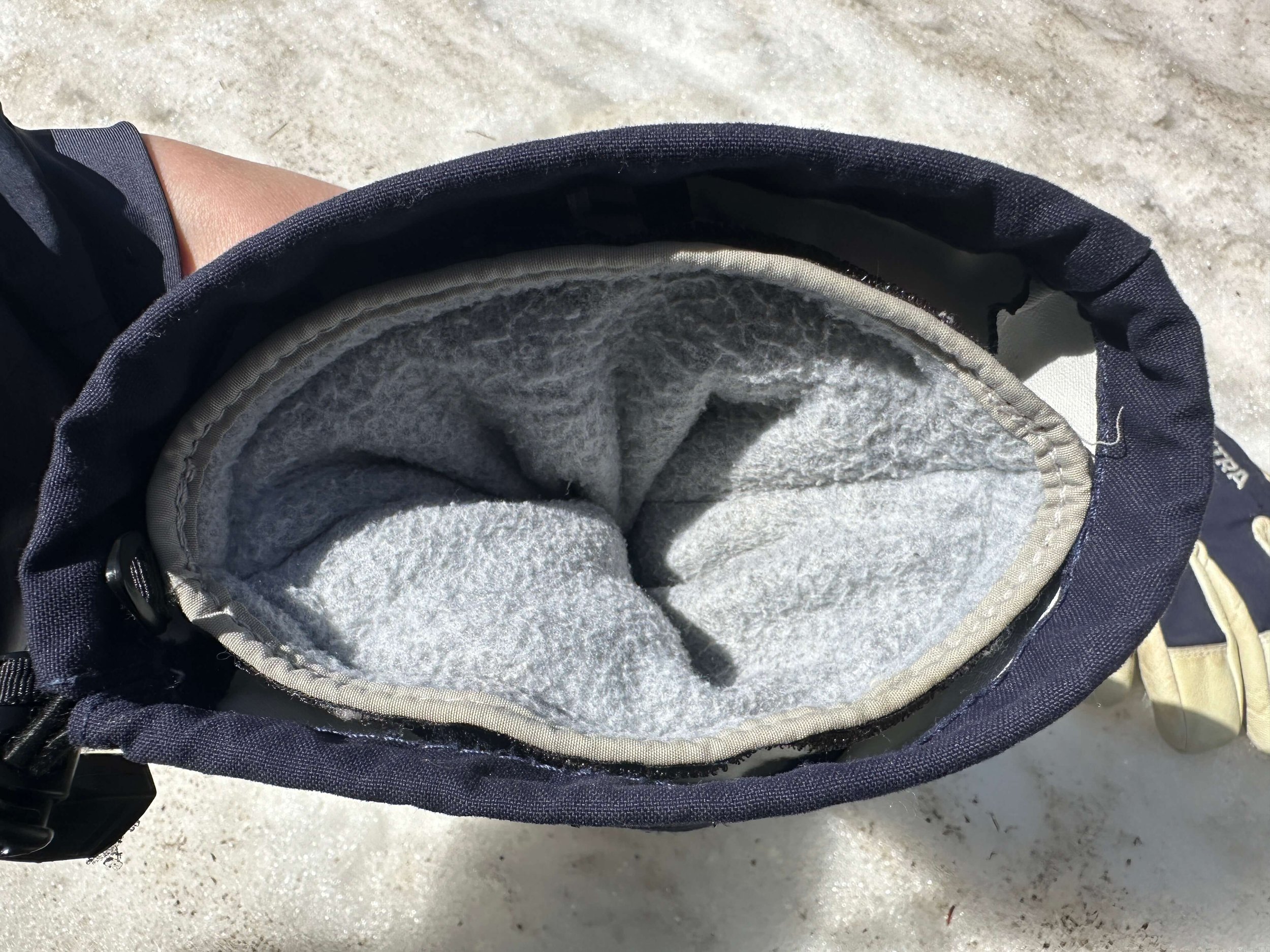
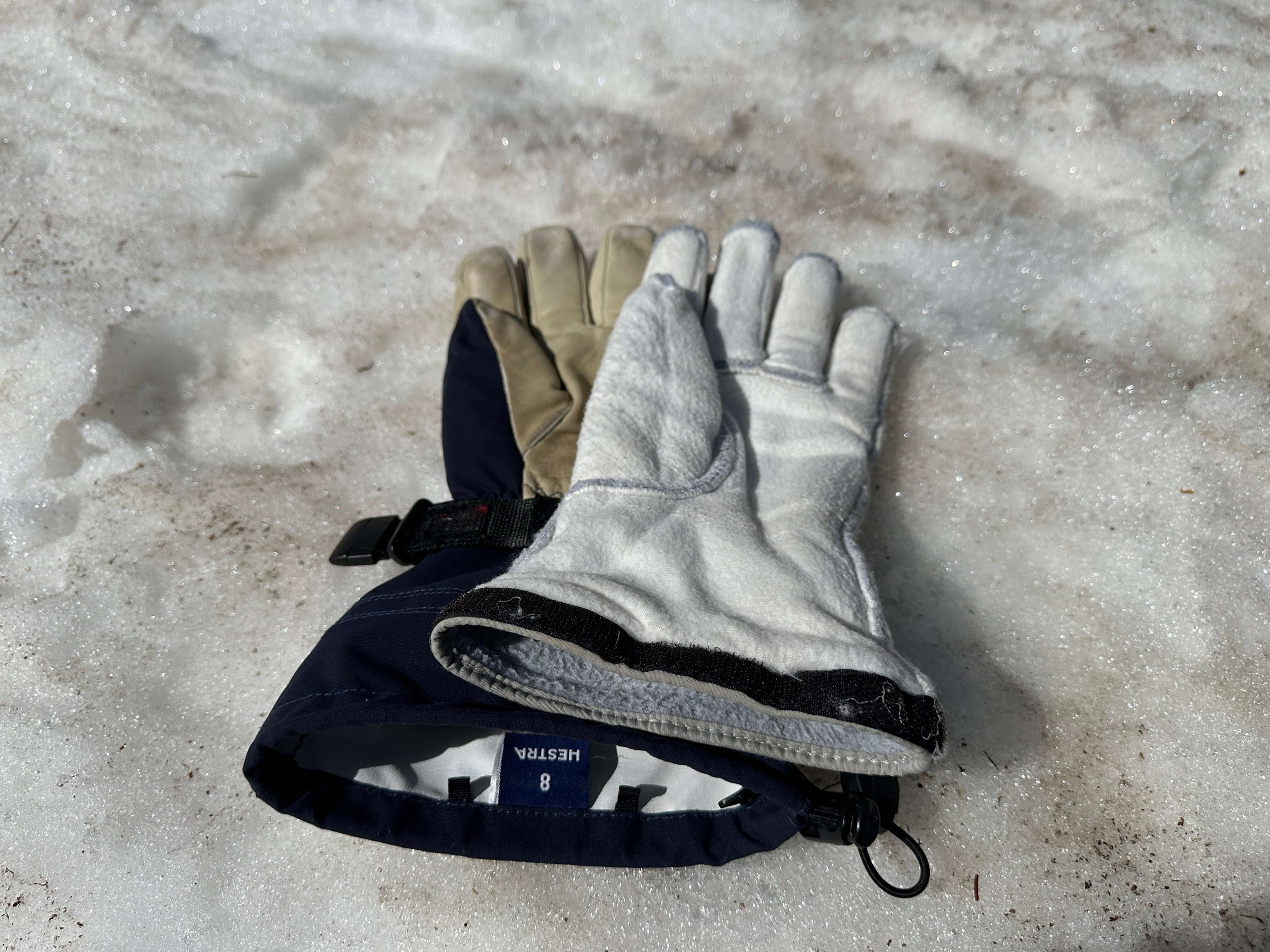
The removable fleece liner is warm and comfortable and has kept my hands warm throughout the coldest days. I love that this warm liner can be removed, and spares can be purchased to keep a spare in your backpack to change out on those wetter days.
The Hestra Heli Glove is my only choice when I know it is going to be a cold day out in the ski resort and that’s why I rate it 5 stars for warmth.
DEXTERITY
Dexterity is an important factor for me when choosing gloves to snowboard in as I need to operate a camera and tighten bindings (preferably without removing my gloves). I have no issues using the Hestra Army Leather Heli Ski for either of these requirements. These gloves are fine for the daily tasks of zipping pockets and jackets.
That being said, the Hestra Heli Ski Gloves have a thick liner which means these gloves are not as dexterous as other models… therefore 4/5.

COMFORT
The fleece liner on the Hestra Heli Ski Glove make it an incredibly comfortable glove to wear, the fleece is soft and warm against the skin so no complaints from me.
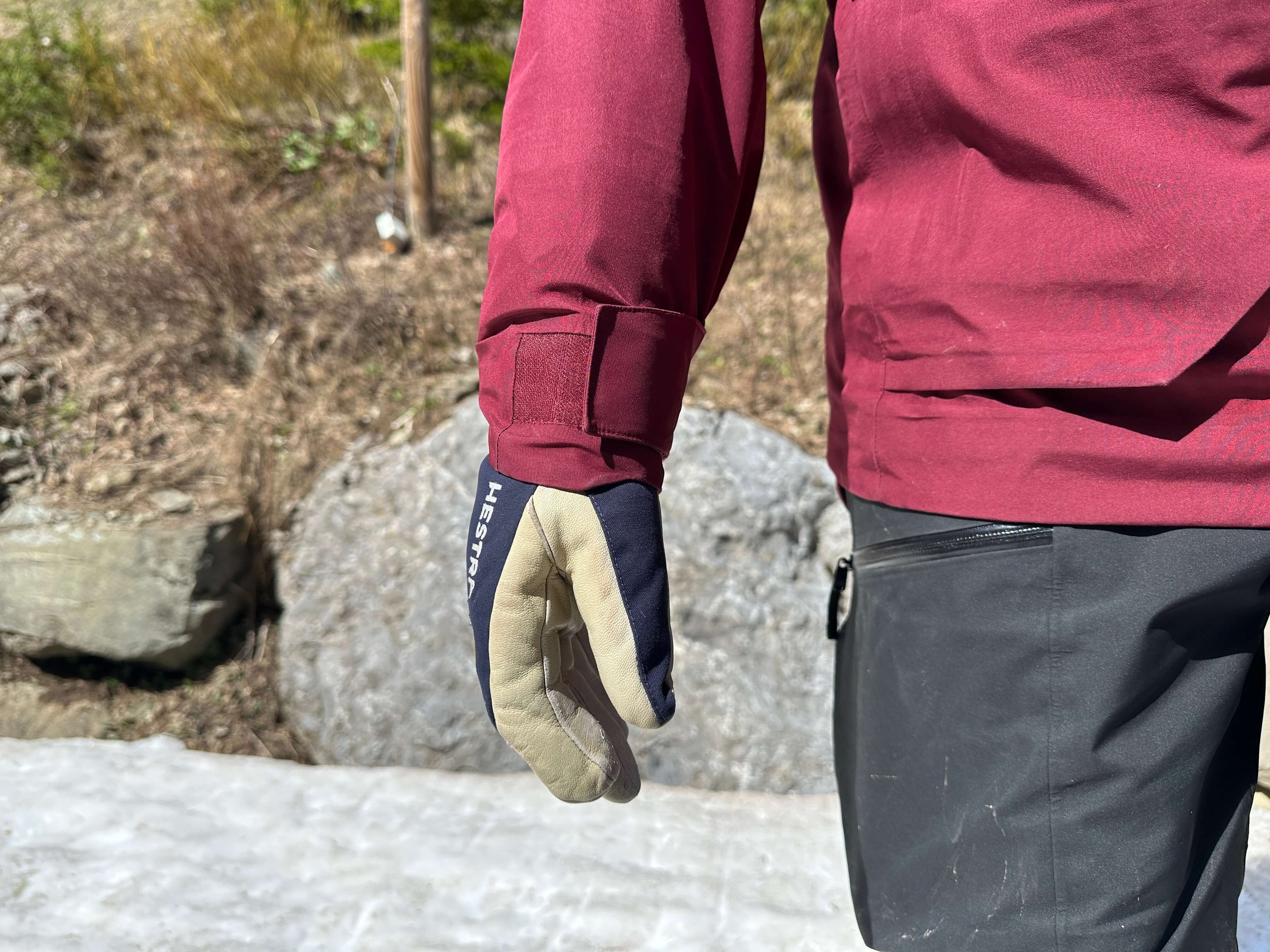
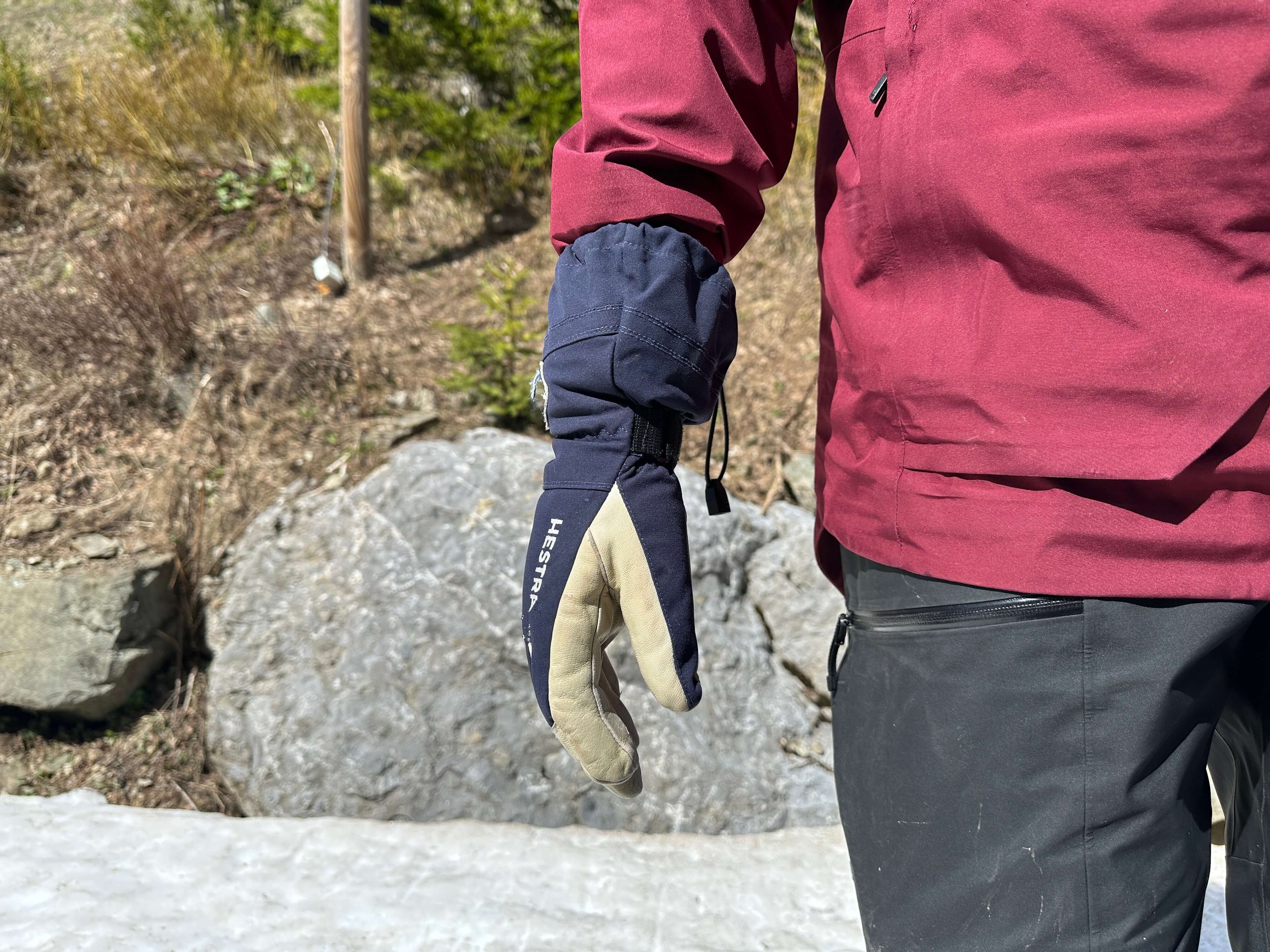
The wrist strap allows you to secure the glove in place meaning they do not slide about which also adds to the comfort factor.

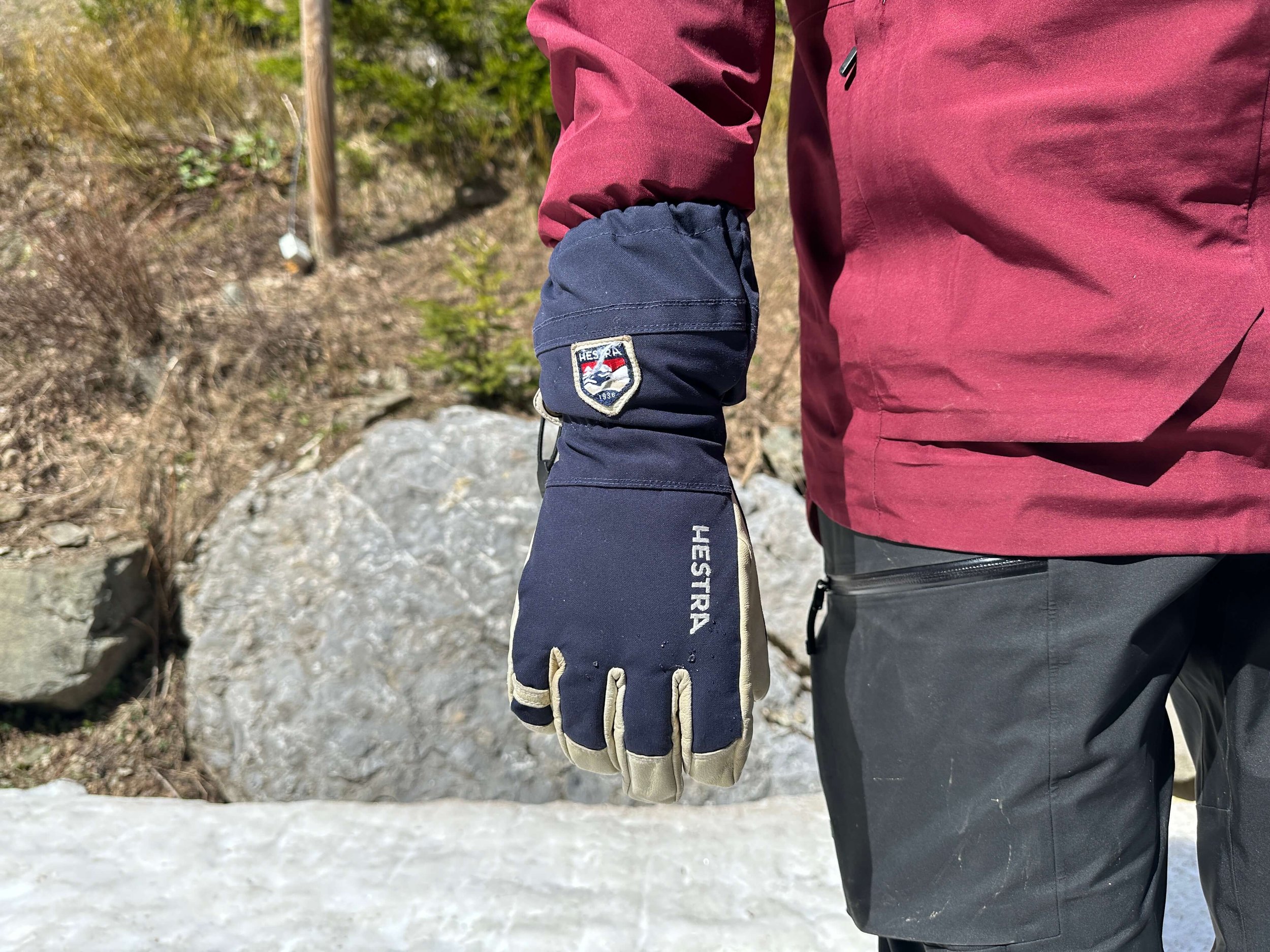
Hestra Heli Ski Glove Wrist Gaitor
Finally, with the Hestra Heli Ski Gloves being having a long write gaitor you can be sure to keep the elements out ensuring all day comfort even on the stormiest of days.
WATERPROOFING
To ensure waterproofing remains at maximum performance Hestra leather gloves will require maintenance over time. If treated using the Hestra Leather Balm or an alternative you will see good waterproof performance. As these are not a daily driver for me I have applied the leather balm at the start of each season and this has ensured good waterproofing performance.

As with all leather gloves, you will need to ensure maintenance to keep the glove waterproof over time. Using Hestra leather balm or an alternative will keep the gloves performing their best throughout the season.
BREATHABILITY
The Hestra Heli Ski Gloves have a 3-layer fabric which sits on the backhand of the glove. The front and palm are made from goat’s leather. Both the 3-layer fabric and goat’s leather offer breathability however the warmth of the glove can make these sweaty on temperatures above freezing.
Pro Tip: On the warmer days remove the liner and just wear the shell as a cooler waterproof/wind barrier.
DURABILITY
The goat’s leather palms on the Hestra Army Leather Heli Ski Gloves is extremely durable. I purchased these gloves in 2017 and they are still going strong. Yes, they are no longer my daily driver but they once were. If you look after these gloves and maintain them with the leather balm they will last.
Hestra Heli Gloves Powder Day
FINAL THOUGHTS
These gloves from Hestra are at the premium end of the market and the outlay may put many off purchasing them. However when you consider the longevity of the gloves and how many seasons they will last with proper care then the outlay for the quality seems negligible.
The Hestra Heli Ski Glove will always have a place in my snowboard bag.
SUPPORT FUTURE CONTENT
If you found this post useful then consider supporting future content by purchasing through the Amazon Link below or using this link to Buy me A Coffee


Hestra Fall Line Mittens Reviews | Hestra Leather Mitts

Durable, warm and the perfect companion for most days on the mountain.
The Hestra Fall Line Mittens are part of the Alpine Pro range which is the Swedish company’s attempt at delivering products that will stand up to the test in the harshest environments. These gloves first came to my attention when working as an instructor and noticing most of my colleagues had a pair of either the Fall Line Mittens or Fall Line Gloves. I had to try them. Years later this post gives an honest review of a glove I never go on a snowboard trip without.

Hestra Fall Line Mitts
This review is my opinion of the Hestra Fall Line Mittens which were purchased with my own money and have been worn on rotation since 2020. If you find it useful consider purchasing your pair through the affiliate links in the post to support the website and future content.
ABOUT ME
Before jumping into the full review it is worth noting the following information about me as a snowboarder. I tend to run warm, I have a tendency on all but the coldest days to remove gloves frequently due to overheating and feeling warm. This may skew my thoughts on these mitten’s warmth.
JUDGEMENT
The Hestra Fall Line Mitt is my go-to mitt for most days on the mountain. I enjoy the comfort and ease of the under-the-cuff design and appreciate the added touches like the finger sleeves on the interior of the mitt. The leather of the mitt is supple enough to ensure comfort but has remained extremely durable over time.
The Hestra Fall Line Mitt has features such as the wrist clip. This ring near the wrist allows you to clip your mitts to your pants or jacket. For me, this has been brilliant for those warmer days when I can clip the mitts to my pants and ride without gloves, but keep them close in case I need them.
Below I will provide a more detailed review based on the following categories; Warmth, Dexterity, Waterproofing, Durability, Breathability, and Comfort
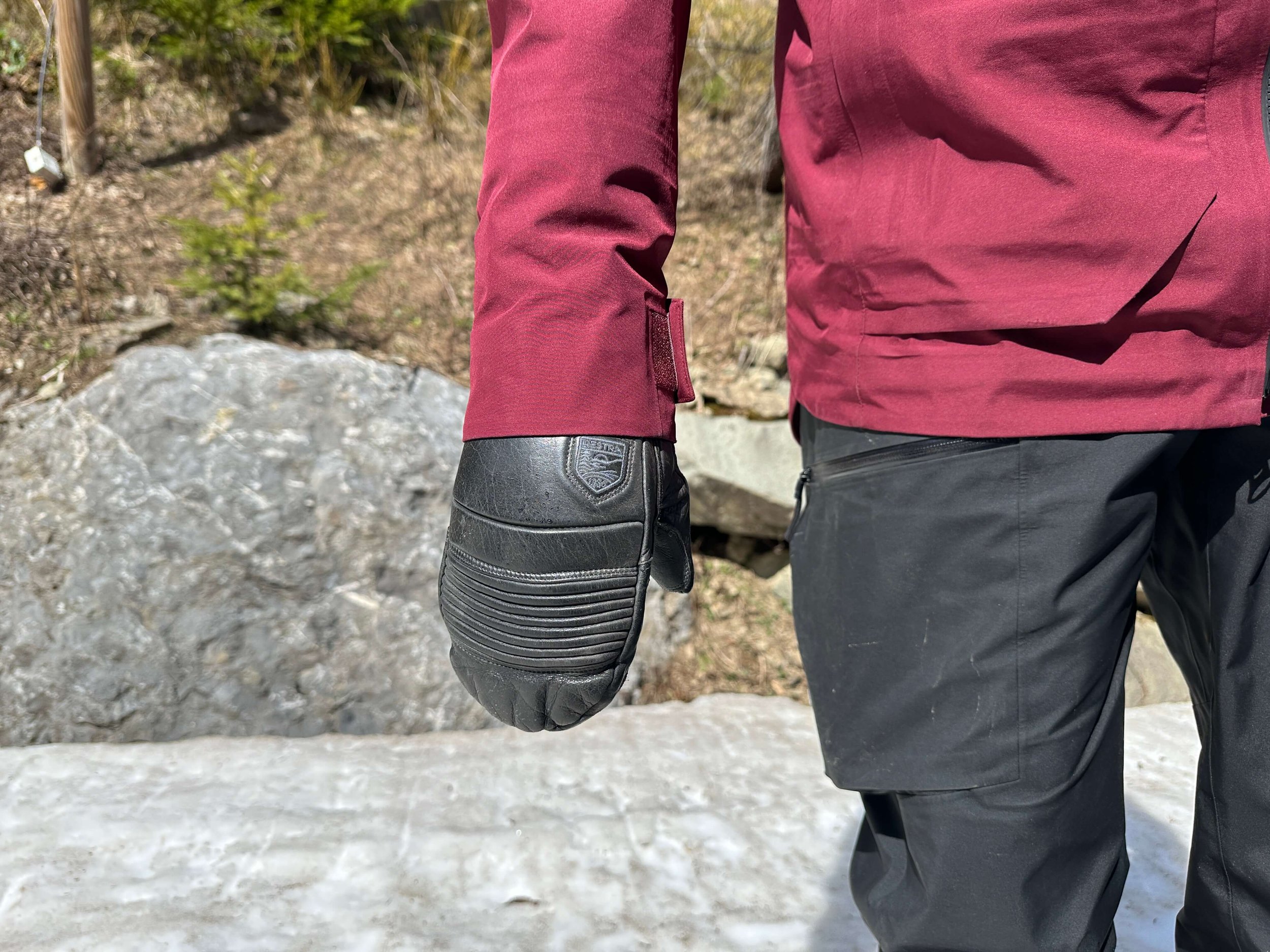
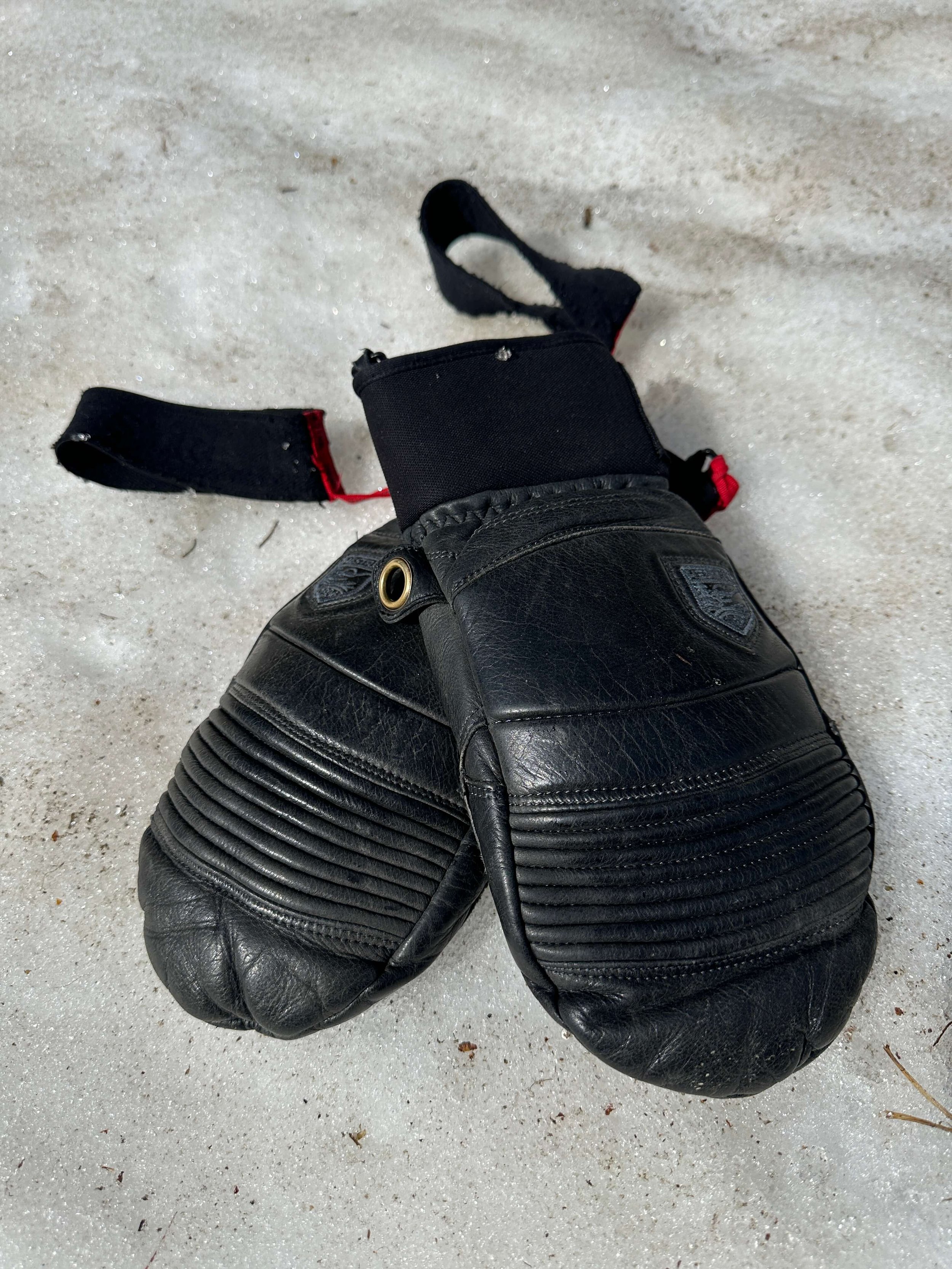
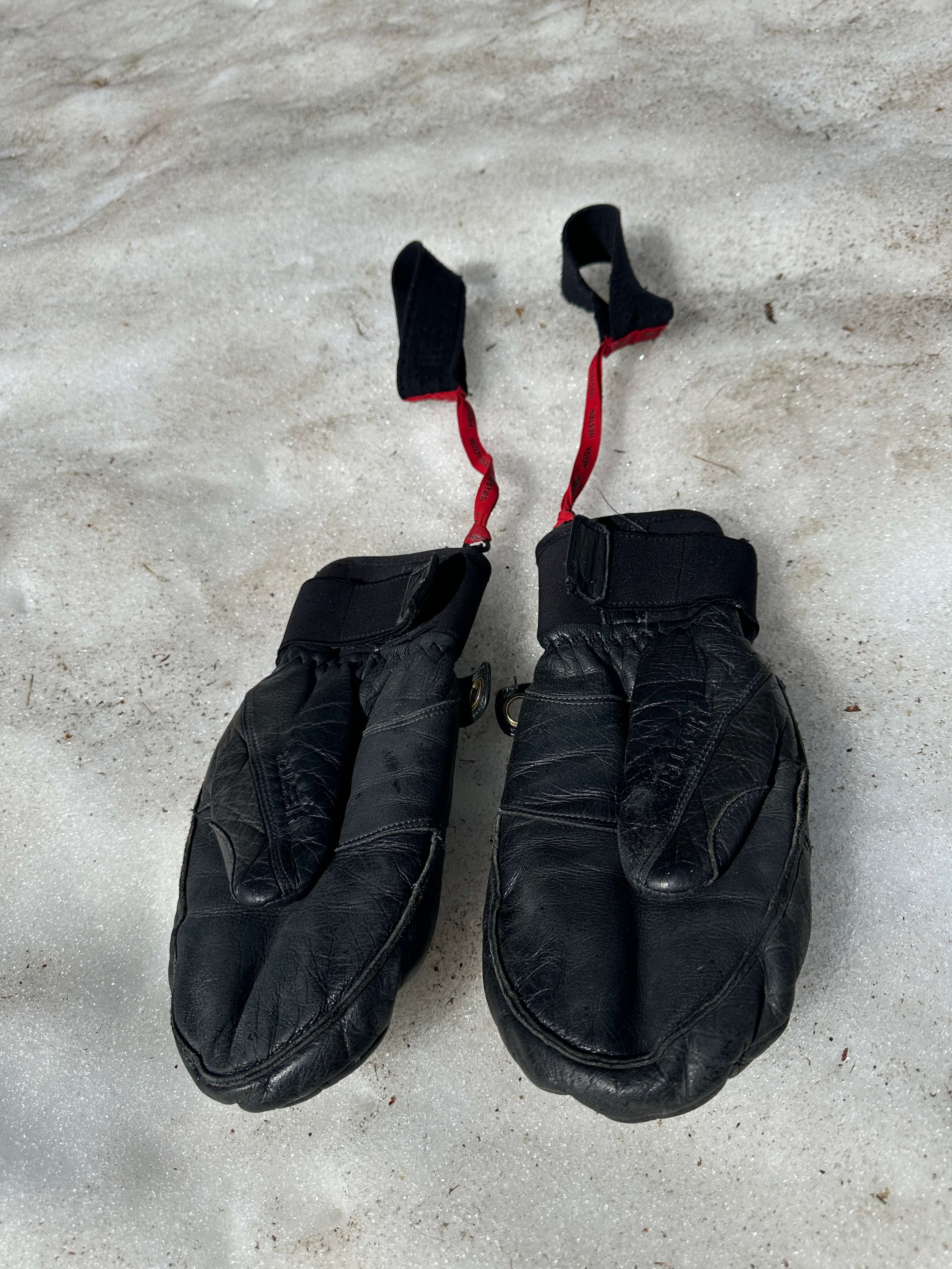
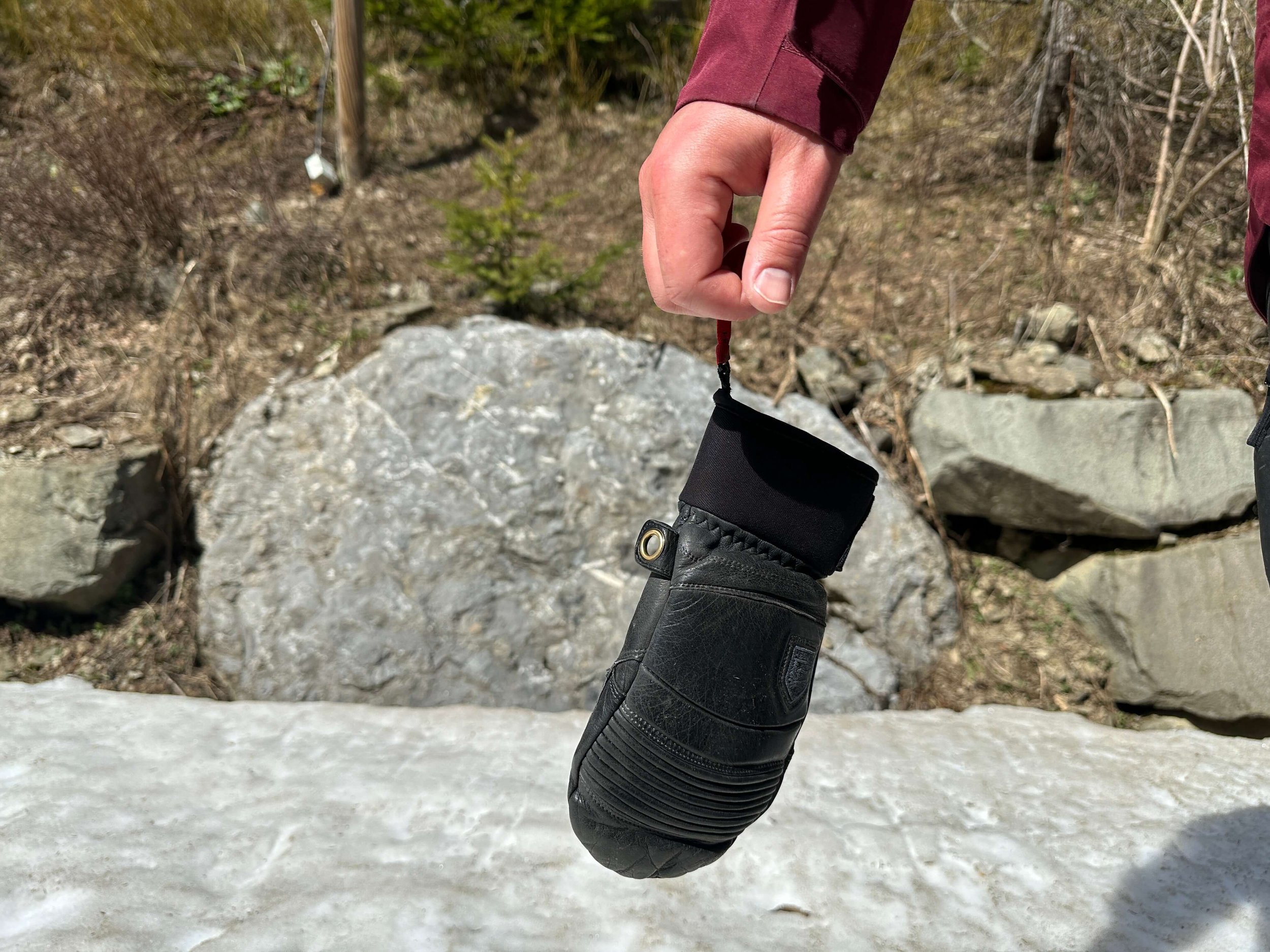
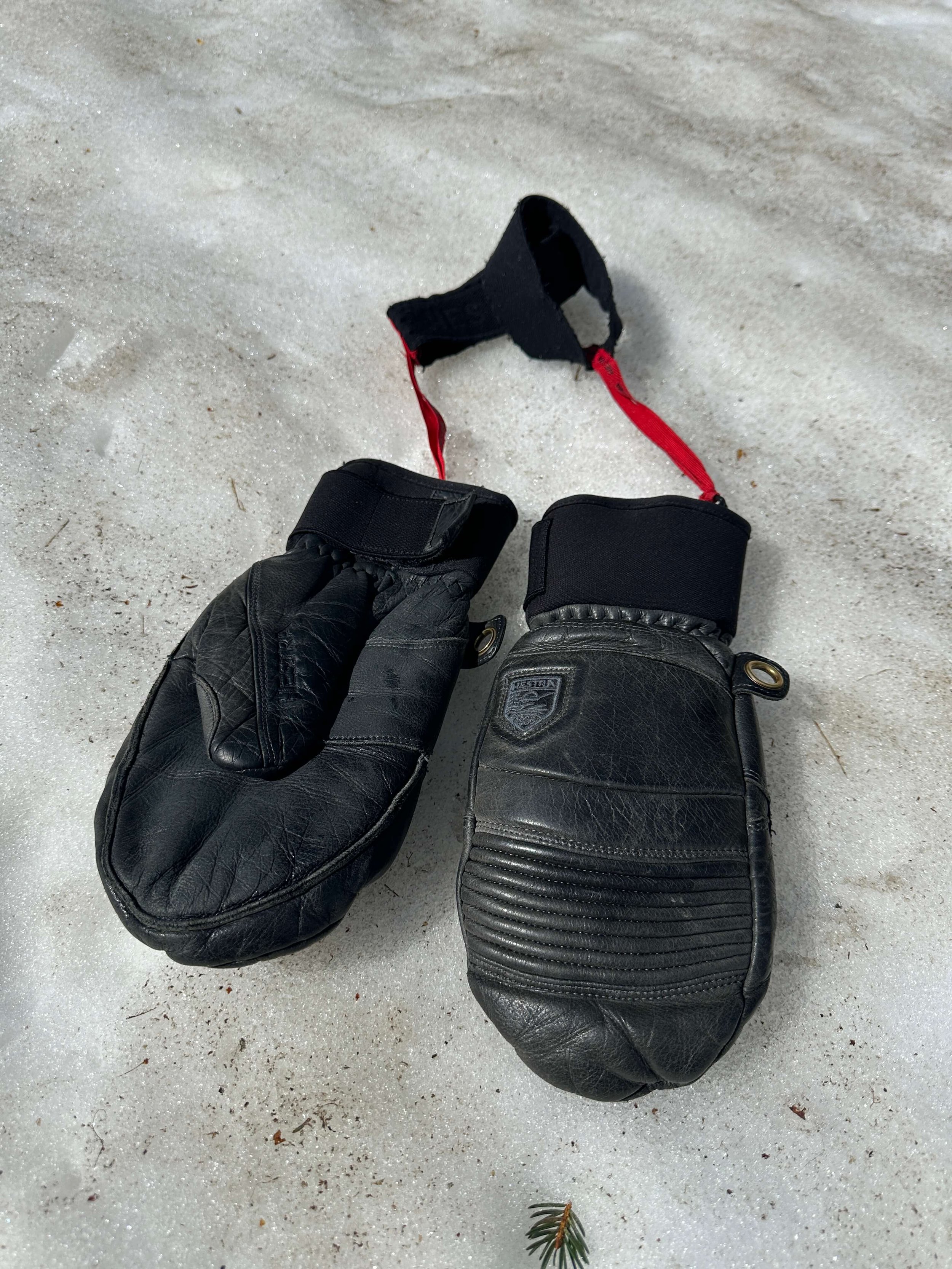
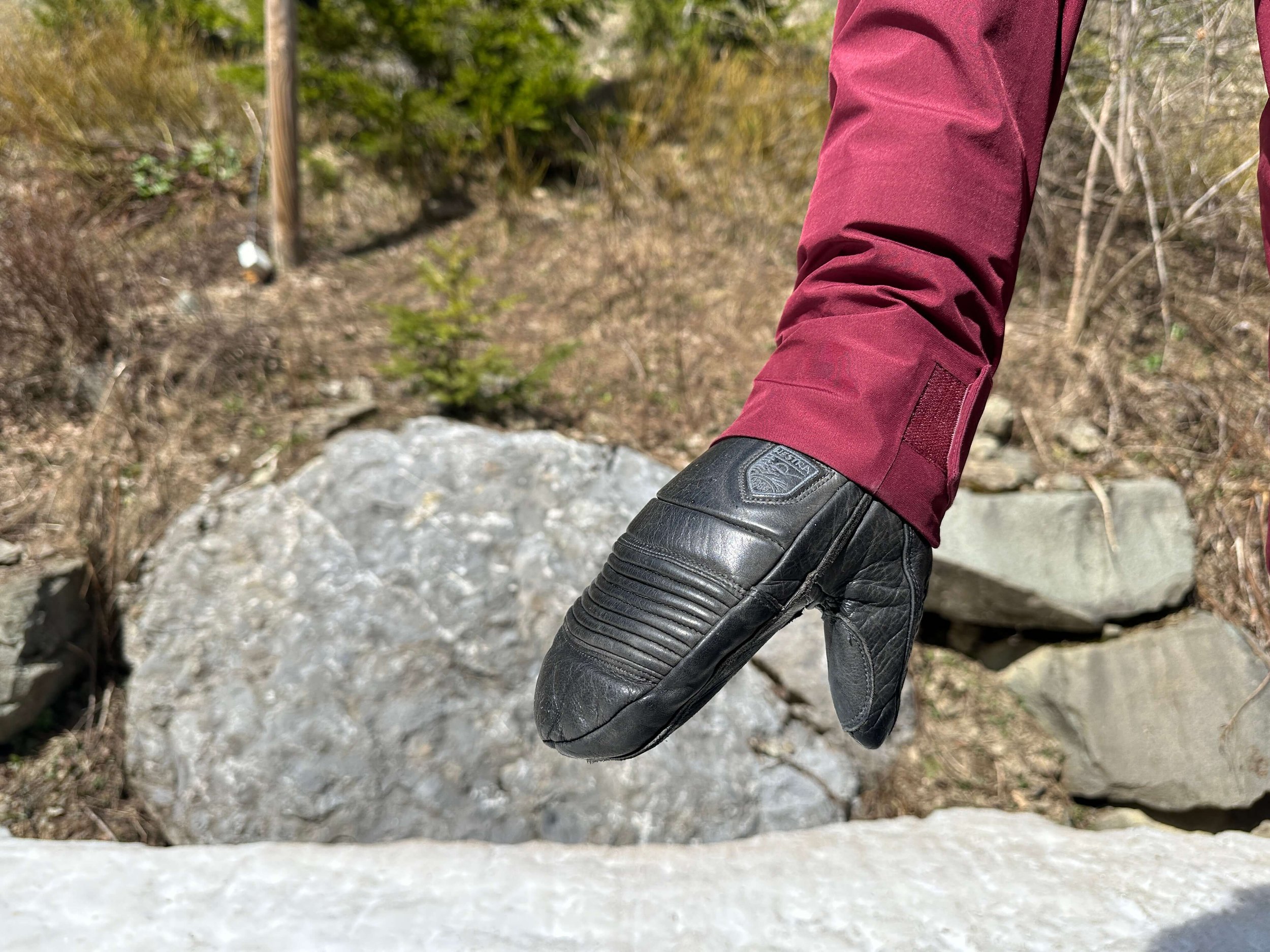
WARMTH
Most people’s concern when choosing a pair of ski gloves or mittens is whether they keep their hands warm whilst on the mountain. For me, the warmth factor has to be combined with other aspects such as variability and dexterity to choose the perfect warmth glove.
As someone who snowboards throughout the season, I have faced variable temperatures and conditions. The Fall Line Mittens are not the warmest glove I own and if warmth is the only consideration for you then consider my go-to for the coldest days, the Hestra Heli Glove which has a thicker liner.
For me, the Hestra Fall Line Mitts have kept me warm on most days and have been comfortable in the minus temperatures. The foam inserts which line the fingers on the inside of the mitt have been huge for ensuring fingers stay warm and not sweaty within the mitten.
DEXTERITY
Talking about dexterity in a mitt may seem silly as your fingers are confined to one space however without dexterity I couldn’t wear the mittens as I am always using cameras when I ride.

The high quality of the materials and construction ensures that the Hestra Fall Line Mitten has as much dexterity as possible in a mitten. The placement of the stitching in smart areas allows for the hand to move freely and the leather is soft and flexible without sacrificing durability.
Consider partnering the Hestra Fall Line Mittens with the Hestra wrist straps to allow for more flexibility on the mountain.

COMFORT
The Fall Line Mitts are amongst the most comfortable gloves I have ever worn. A combination of high-quality leather, a comfortable liner and the neoprene cuff make them top-of-the-line for comfort. One bonus of leather gloves is the more you wear them the more comfortable they feel as the leather softens and moulds to your hand. Putting on these gloves is one less thing to worry about as you can just enjoy your day knowing your hands are fine!
WATERPROOFING
The waterproofing on Hestra leather gloves and mittens will require maintenance over time if you want to keep performance to a maximum. If treated using the Hestra Leather Balm or an alternative you will see good waterproof performance. I treat my gloves at the start of the season and then again around February and have had no issues with waterproofing.
As with all leather gloves, you will need to ensure maintenance to keep the glove waterproof over time. Using Hestra leather balm or an alternative will keep the gloves performing their best throughout the season.
BREATHABILITY
I often end up taking these mitts off as my hands get too hot and on those warm spring days, you can get sweaty hands. The foam finger liners do a good job of keeping hands dry and wicking sweat away in all other temperatures.
One thing I miss from my previous mitts from Swanny is the zip which is intended for placing hand warmers in however, I used to open to vent the gloves.
Breathability is one area these gloves could improve.
DURABILITY
These mitts from Hestra have been incredible in terms of durabilty. Whether just enduring the conditions or being dragged through snow doing tripods the Hestra Fall Line Mitts have stood up to the tests. As with all leather gloves they need maintanence and if you keep on top of that TLC then these gloves will look after you for the foreseable.

Tripod testing the durability of the Hestra Fall Line Mitts
FINAL THOUGHTS
The Hestra Fall Line Mitts retail around the £100 mark in the UK, although deals can always be found, placing them at the top end of most peoples glove budget. For the cost, you are getting an extremely durable and comfortable glove that I have found to be perfect for most days on the hill.
SUPPORT FUTURE CONTENT
If you found this post useful then consider supporting future content by purchasing through the Amazon Link below or using this link to Buy me A Coffee


Flaine Ski Resort Guide | Grand Massif
Flaine is the most popular resort and flagship destination in the Grand Massif ski area. Flaine’s access to the fourth largest interconnected ski area in France is exceptional but it can also stand alone as a ski holiday destination. A purpose-built village ensures Flaine has everything you could want on your doorstep including a long ski season with guaranteed snow.

Flaine’s marmite village
Although the buildings in Flaine offer great ski slope access and amenities they also lack charm. This however doesn’t detract from Flaine being a fantastic base for a French ski holiday. With the highest base area in the Grand Massif, Flaine remains snowsure from Dec - April. A Flaine ski trip guarantees great quality snow, on-slope accommodation and modern facilities.
FLAINE FIRST IMPRESSIONS
Flaine is an acquired taste with some (only my opinion) hideous buildings in the village. Forget French alpine charm, think large concrete facades but Flaine’s village wouldn’t put me off visiting again. The resort of Flaine is well positioned to access the 265km of terrain spread throughout the Grand Massif with fast access to Les Carroz, Samoëns and Morillon, not to mention the 14km Cascades run to Sixt.
FLAINE SKI AREA
Flaine is a well-rounded resort that offers great value for families. Flaine’s main bowl ensures whichever direction you take a lift, you will end up back in the purpose-built village. This makes Flaine ideal for families of different abilities who can spread out, and find their own challenges but easily meet up again for lunch.
Flaine boasts the majority of the Grand Massif terrain with 145km of pistes to explore in the local area. This is good as sometimes the links to Les Carroz close due to high winds but you will still have access to the local ski area.
The ski area in Flaine offers a huge vertical drop with skiing possible between 2561m and 1600m within the resort and down to 700m if you include the links to Morillon. Flaine is a key part of the Grand Massif ski area with its huge bowl offering not only some fantastic in-bounds skiing but in the right conditions, exceptional off-piste.
Flaine has some other claims to fame, like views of Mt Blanc from Les Grandes Platieres and an incredibly enjoyable 14km blue run descending 1720m into the smallest Grand Massif resort of Sixt. The Cascades blue run between Flaine and Sixt is one of the longest in the Alps!
BEGINNERS TERRAIN FLAINE
The beginners area in Flaine is good with a nice wide piste serviced by a magic carpet. This allows people to learn without the space feeling overcrowded. The location of the beginner’s areas is close to the accommodation and some on-mountain restaurants in case you need to take a break. The best thing about being a beginner in Flaine is that you do not need to pay to access the magic carpet so you can save on lift passes. When you find your confidence exploring, Flaine is a breeze with some nice cruisey green and blue graded slopes, this theme is continued around the rest of the Grand Massif.
Magic Carpet near Grand Vans Chairlift at the top of Telebenne
INTERMEDIATES TERRAIN FLAINE
Flaine and the wider Grand Massif ski area are great for intermediates who are building that confidence to explore. With 66 blues and 48 red pistes spread across the Grand Massif, 50 of which are in Flaine, there is plenty for the confident intermediate to explore. Flaine offers numerous high-quality groomed pistes across its expansive bowl and these can also offer substantial vertical drop back to the resort.
Away from the pistes, Flaine has plenty of easily accessible slackcountry to explore just off the lifts, making for a fun first powder day. Those with a willingness to explore can find treelined runs on modest gradients which can be confidence-boosting.

Exploring the trees to the side of the pistes in Flaine
ADVANCED TERRAIN FLAINE
The more confident will love exploring Flaine and the rest of the Grand Massif. Flaine itself offers ample opportunity for off-piste and some interesting tree skiing. To add further challenge there are some steep black slopes and Flaine is great for free riding. The valley that drops between Flaine and Les Carroz offers awesome skiing after fresh snowfall as does the area off the Veret poma lift. I was also fond of the runs alongside the Gers drag-lift which was not the easiest lift but well worth the effort once at the top. On a powder day, this is a must!
Those who are able should consider the run beneath the Vernant chair which leaves the lift station and heads down into a Couloir before running back out to the Vernant chair.
WHERE TO SKI IN FLAINE DURING A STORM
Very few people enjoy snowboarding in a whiteout, myself included, so it is important to know where to head when the weather turns sour. Normally this means heading to the trees as the foliage provides a combination of context and cover from the storm. In Flaine, the majority of the terrain is treeless although there are some glades to be found closer to the village. You may be better served to leave Flaine and head for the treelined slopes of Les Carroz or the lower altitude of Morillon.
Flaines Aup de Veran gondola and Tete de Verdes chairlift lead to some interesting tree runs that are great fun on a bad weather day.
ACCESSING THE GRAND MASSIF
From Flaine it is easy to get between the other Grand Massif resorts and with this in mind you can make the most of the whole ski area. The Grand Vans chairlift takes you to the meeting points of Flaine, Les Carroz, Samoëns and Morillon. From atop Grand Vans (2204m) you can decide your route to sample the best of the rest of the Grand Massif. Within a couple of pistes/connections, you can be in any of the four villages that make up the rest of the ski area.
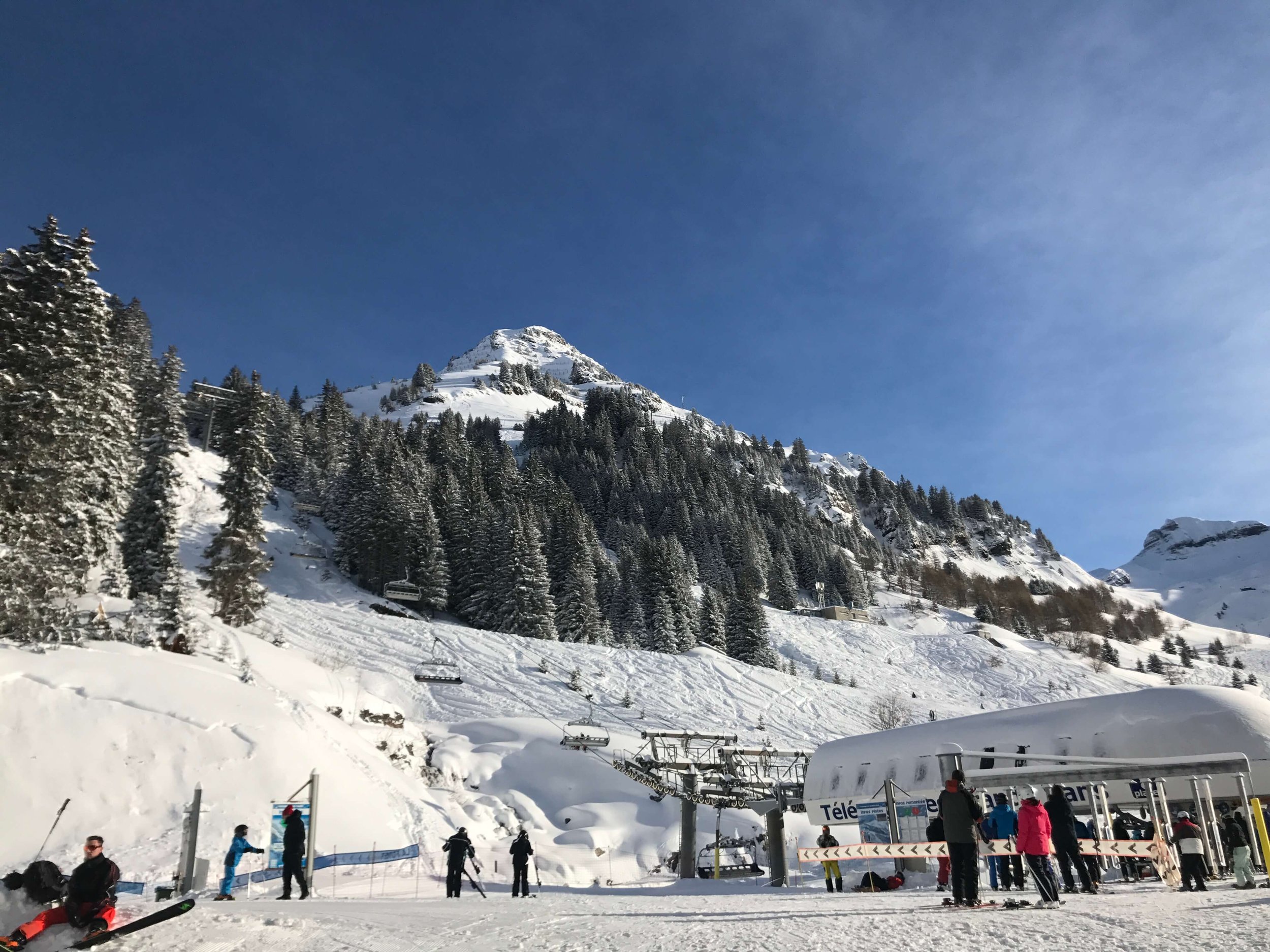
FREESTYLE FLAINE
In terms of freestyle, you have a couple of options in the Grand Massif. Flaine has a terrain park and border cross tracks that wind down skiers left of the bowl as you head towards the village. In Les Carroz there is a small park that is serviced by a poma, the layout of this park didn’t allow for good flow between jumps and rails but had some of the best features. Morillon also has a really fun terrain park. You can lap from the top of Morillon over some boxes and rails, through a border cross-track and then some awesome groomers, straight to a chairlift, repeat.
FLAINE SNOW HISTORY
Snowboard trips to Flaine can be regarded as pretty much risk-free in regards to snow worries. The Flaine ski area has a high average snowfall with a fantastic snow history. The higher reaches of the Flaine ski area have been known to receive upwards of 13m of snowfall annually. Because Flaine offers high-altitude skiing with resort accommodations around 1600m, snow conditions remain great throughout the winter. If visiting the Grand Massif in early/late season staying in Flaine is your best bet for guaranteeing suitable skiing conditions.
FLAINE LIFTS
Flaine has 24 ski lifts that cover the resort with access to a further 40 lifts across the wider Grand Massif ski area. Flaine has everything from high-speed chairs, gondolas, surface lifts and the unique Télebenne lift that was a first for me.
SEASON DATES
Due to the high altitude, Flaine is the most snow sure of the resorts in the Grand Massif. The resort of Flaine opens in mid-December and closes around the 20th of April. You can be assured of good-quality snow throughout the season but Sixt and Morillon may suffer during early and late seasons.
FLAINE PISTE MAP
To see the interactive piste map click here
GETTING TO FLAINE
Getting to Flaine is easy and pain-free with Geneva airport around an hour away. I’ve always taken a resort transfer directly into my Grand Massif accommodation which has always been smooth. Although driving is possible I have always favoured transfer to these resorts
TRANSFER COMPANIES
Most of my transfers to Flaine have been with GO MASSIF. Go Massif have been fantastic for shared transfers between Geneva and the Grand Massif and having used their service multiple times I would recommend them.
Alpin Bus are a company that I have used for private transfers between Geneva Airport and the Grand Massif. The communication throughout has been fantastic and service came in cheaper than Go Massif for the private option.
SEARCH FLAINE TRANSFERS
SELF-DRIVE
If you would prefer to self-drive there are numerous counters available at Geneva Airport where car-rental is possible. From Geneva, you can expect to drive for 1-1.5 hours depending on conditions. Other nearby airports; Chambéry and Lyon, also offer short drive times of 2 hours and 2.5 hours respectively. Driving to Flaine from Geneva represents one of the shortest ski resort transfers in the Alps.
ACCOMMODATION
The ski resort of Flaine has a purpose-built village with ski-in ski-out apartments available within walking distance of the lifts. The village architecture is not to my taste and lacks charm but the convenience of the village certainly makes up for this.
Photo @judithgirardmarczak
Flaine is car-free which makes the village very family-friendly and worry-free which can be a huge plus for families. Due to the locality of the slopes staying in Flaine can be more expensive than other parts of the Grand Massif.
If working within a budget consider staying in Sixt and using the resort bus services to access the other Grand Massif resorts. Using Sixt as a base is not the most convenient but can offer a more secluded ski holiday for those looking for a quieter experience. Staying in Les Carroz or Samoèns will give the most direct access to Flaine if staying outside of the resort with high-speed lift access.
SEARCH FLAINE ACCOMMODATION
FLAINE LIFT PASS
Lift passes in Flaine represent exceptional value. If you think you will ski more than one week in a season then consider getting the Grand Massif season pass, if purchased online before 30th November you save 50% meaning a whole season of skiing for €552. You can even add summer access so you have access to all the summer hiking and mountain biking.
If you are only visiting for one week then you can see all the options for lift passes here. I would always recommend getting the Grand Massif pass rather than the local area pass as it represents better value.
Adults can expect to pay around €48 for a day ticket to Flaine, whereas a 6 day Grand Massif lift pass costs €273 if purchased online.
FLAINE VIDEOS
FLAINE PROS
Flaine offers snow-sure skiing and a long season.
Flaine is connected to the resorts of Samoëns, Les Carroz, Morillon and Sixt which encompasses 265km of trails.
The terrain across Flaine and the Grand Massif is varied and as a result beginners through experts can have a great time here.
Flaine offers some free beginner areas that do not require a lift pass.
Ski-in Ski-out village that has everything you need for a ski holiday.
Flaine is super easy to access from Geneva.
FLAINE CONS
High winds in Flaine can close the links to the other resorts.
Flaine has updated its lift however there are still some slow chairs hanging in there.
The village aesthetic lacks that charming ski resort feel.
FLAINE GALLERY
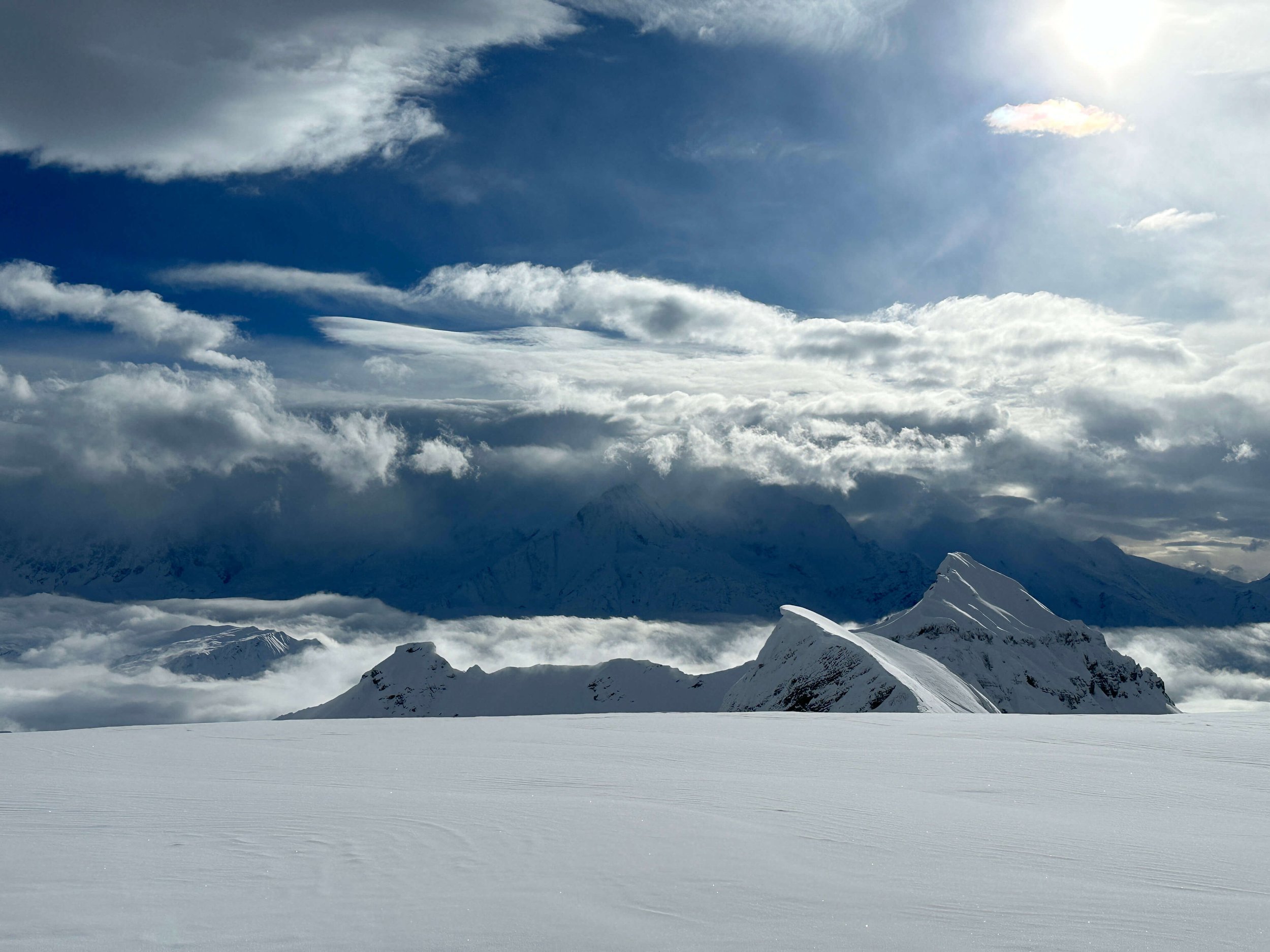
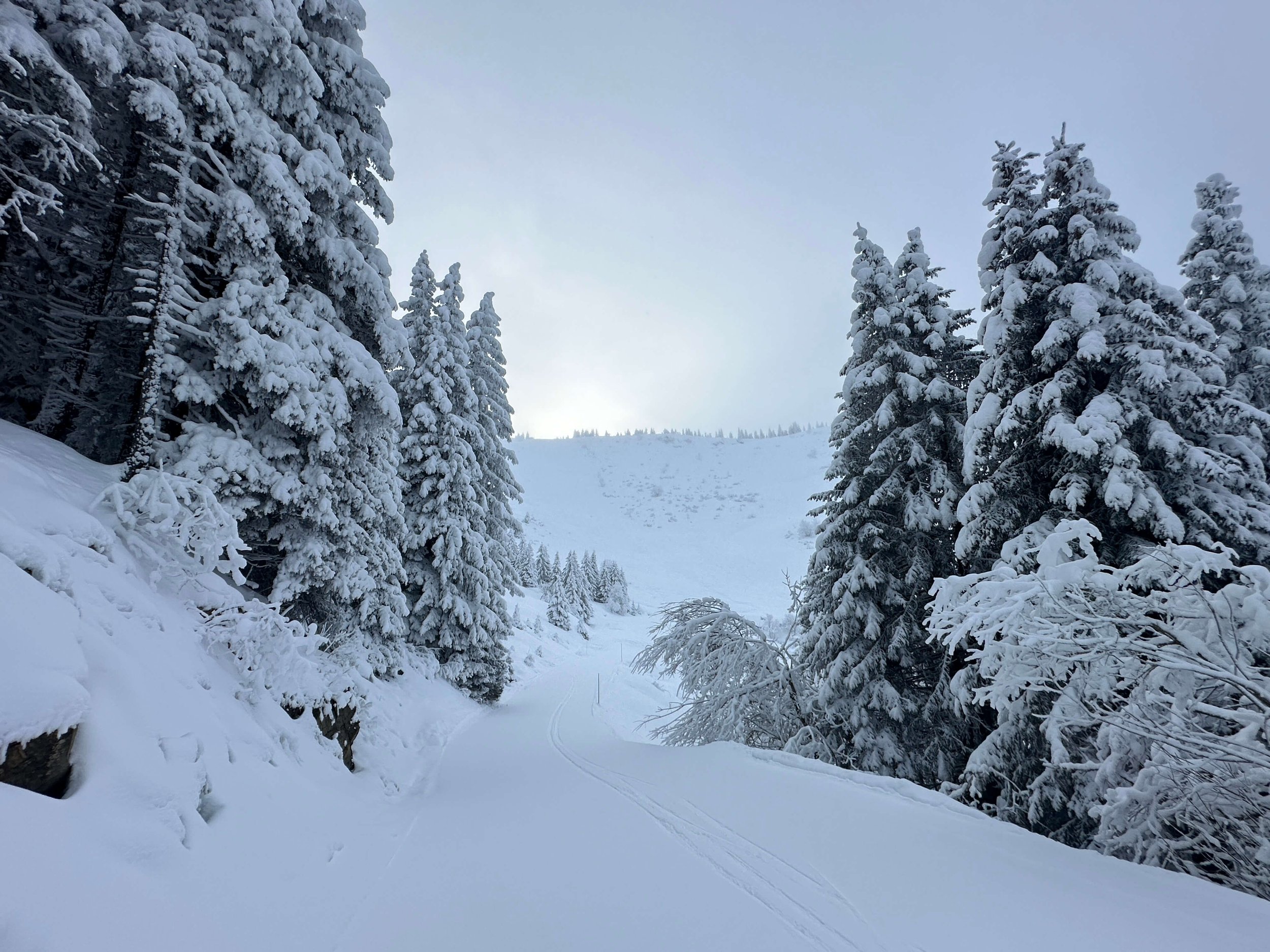
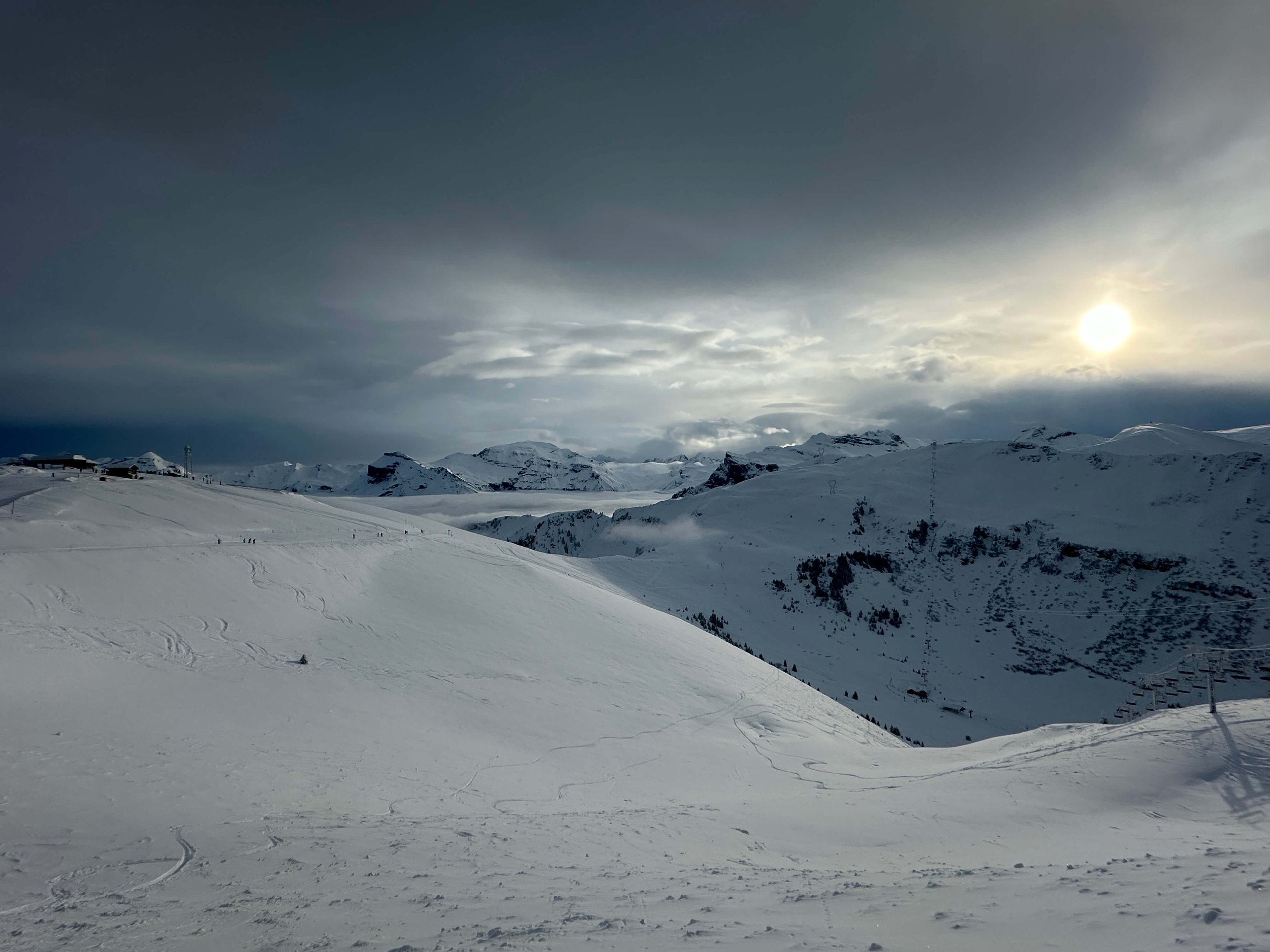

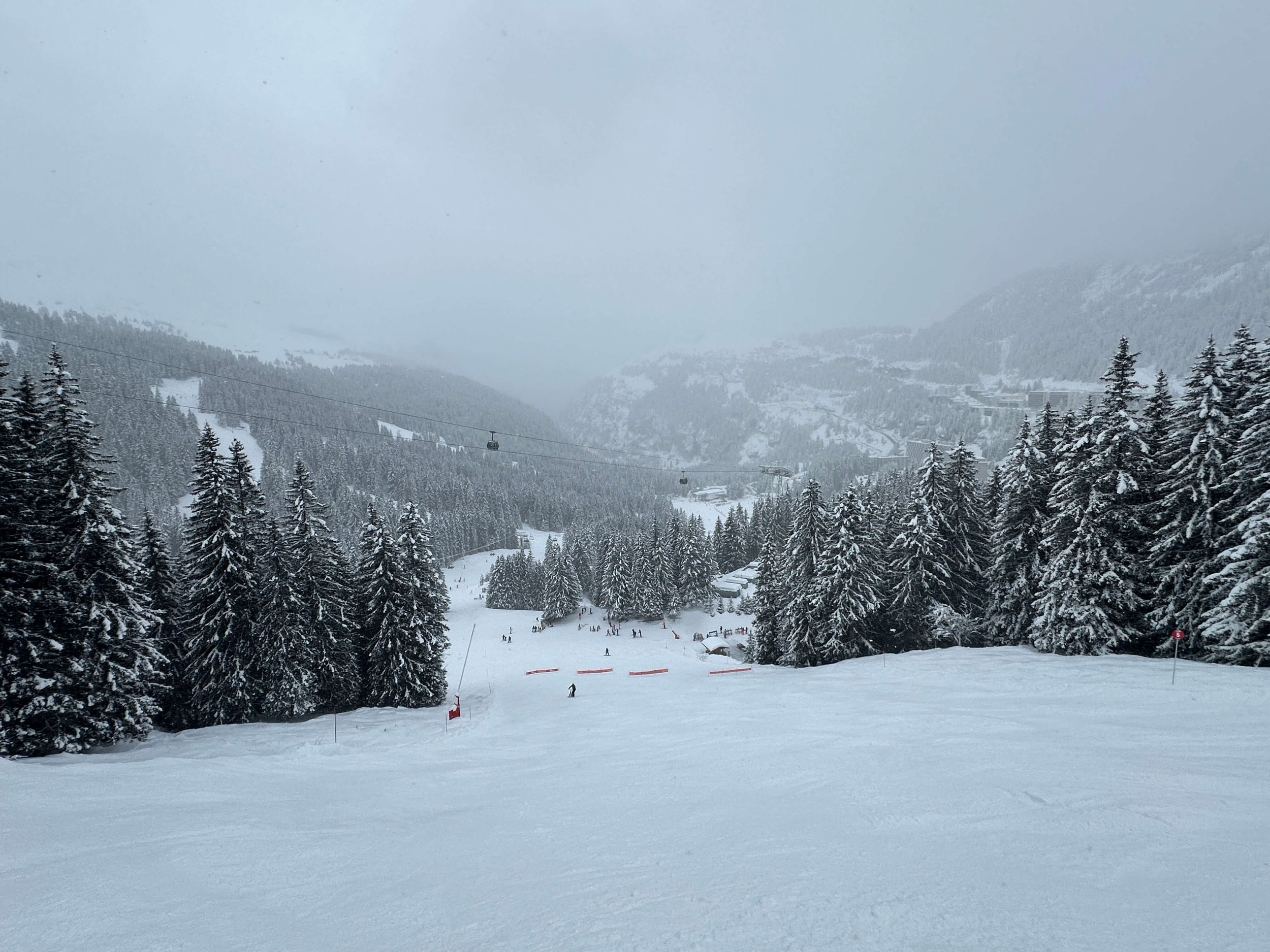
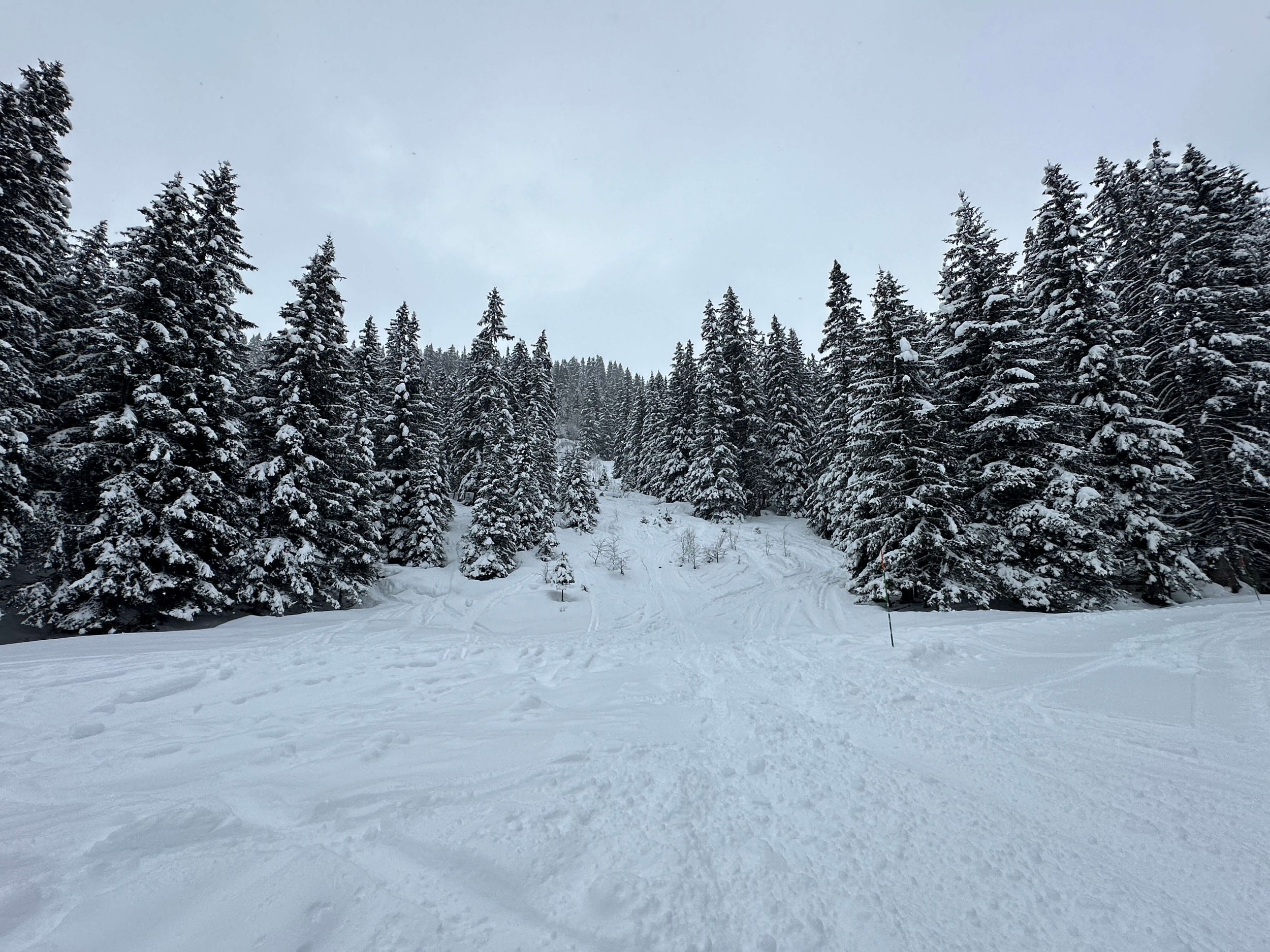
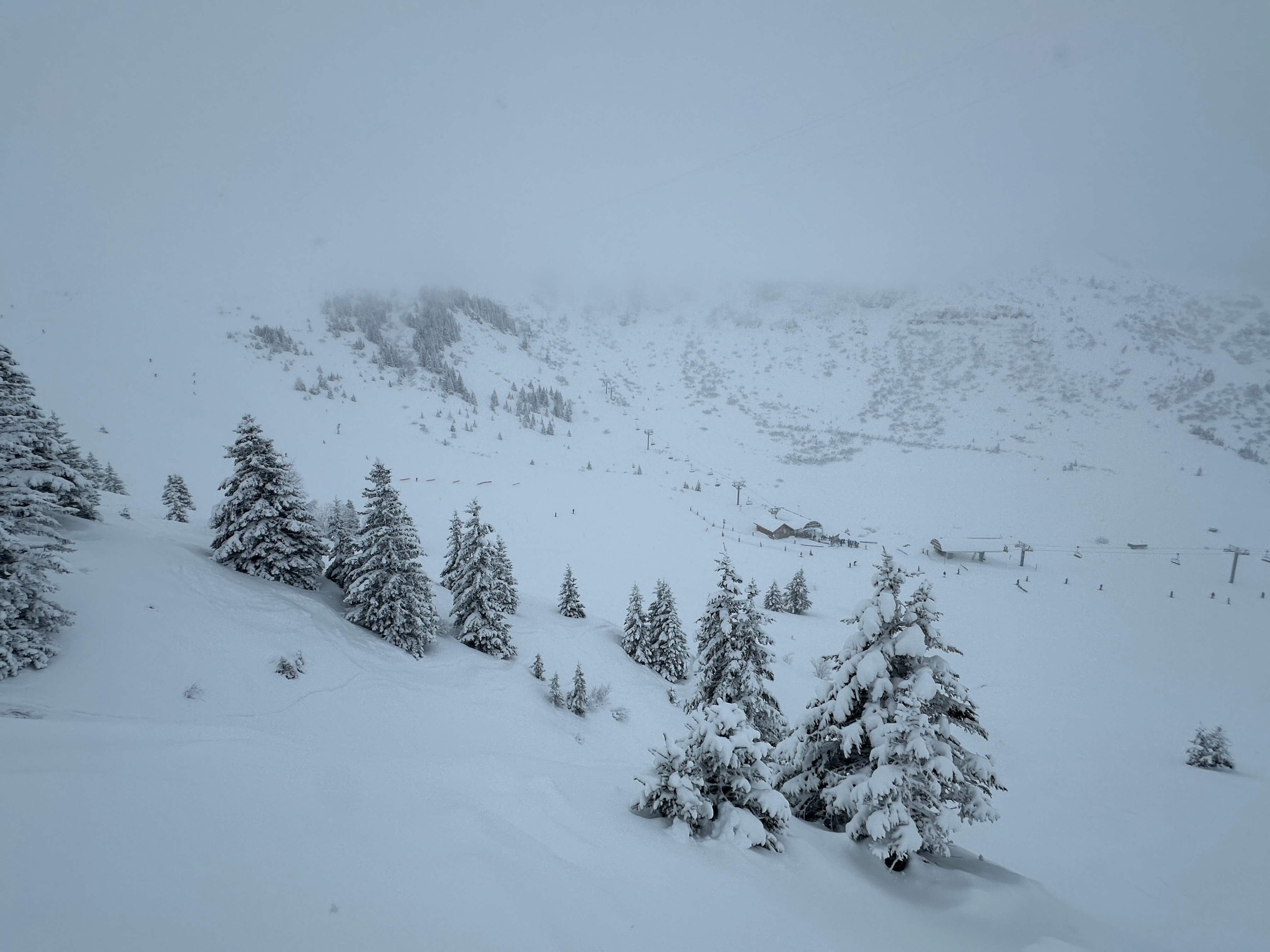
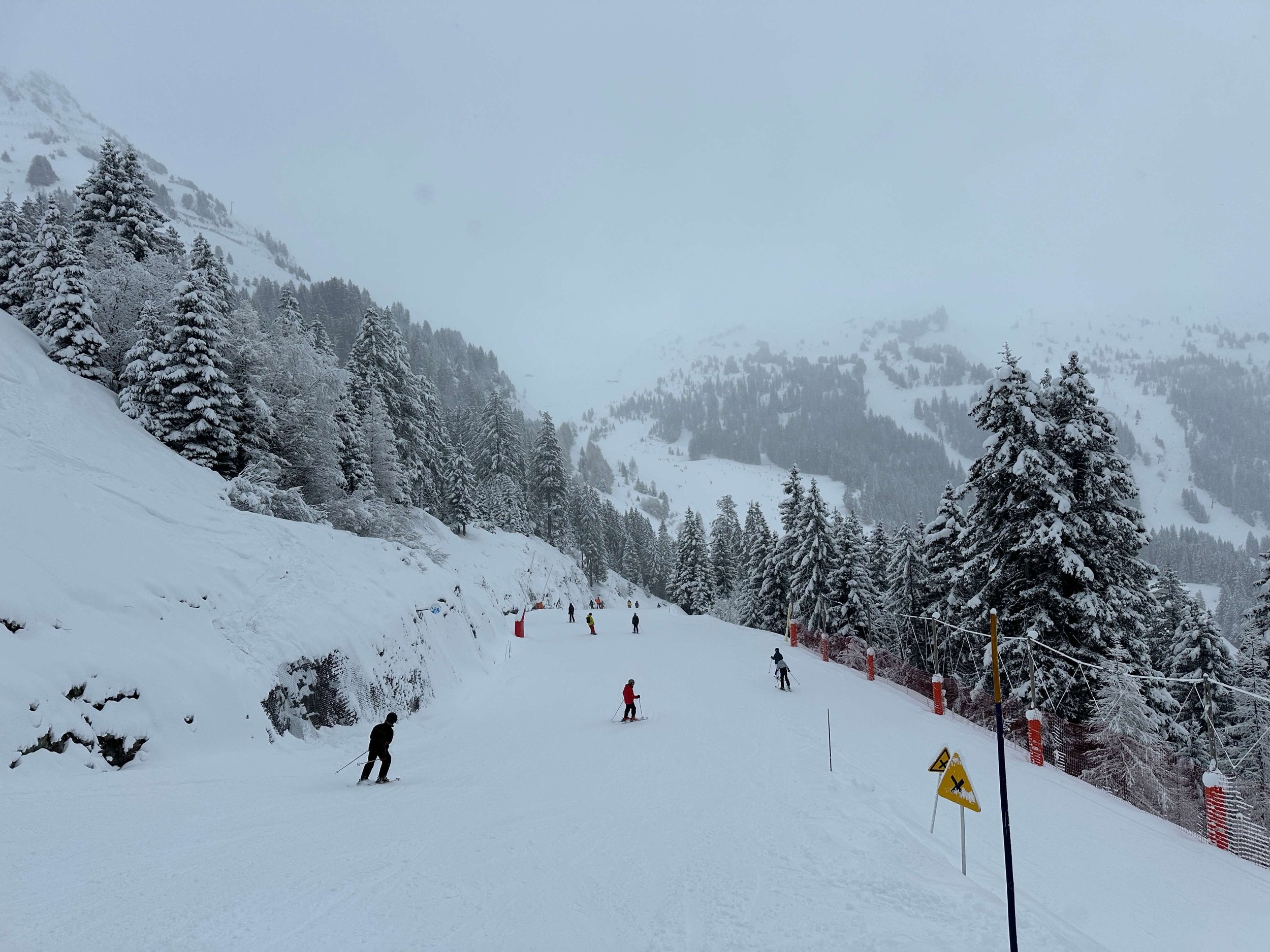
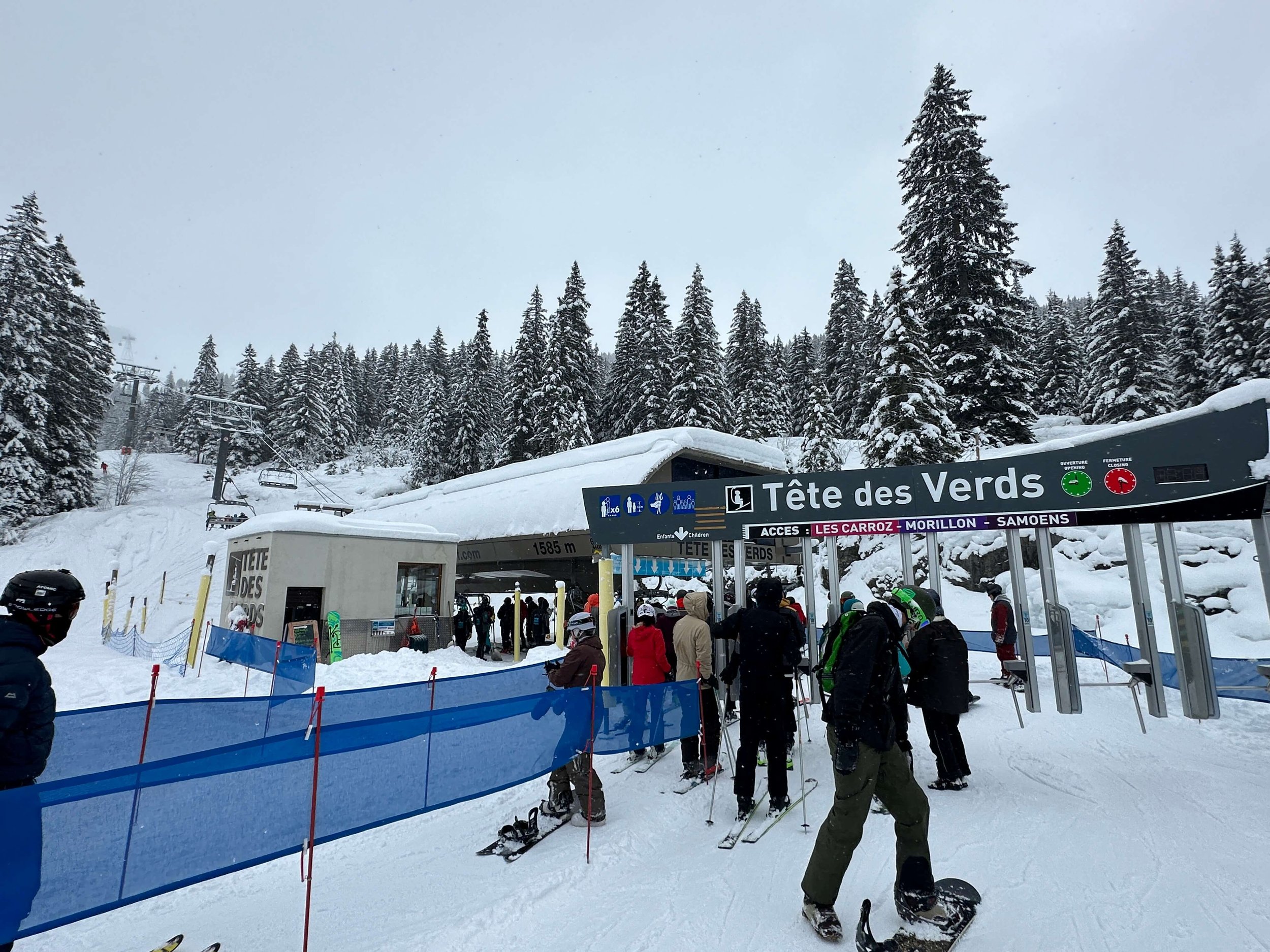


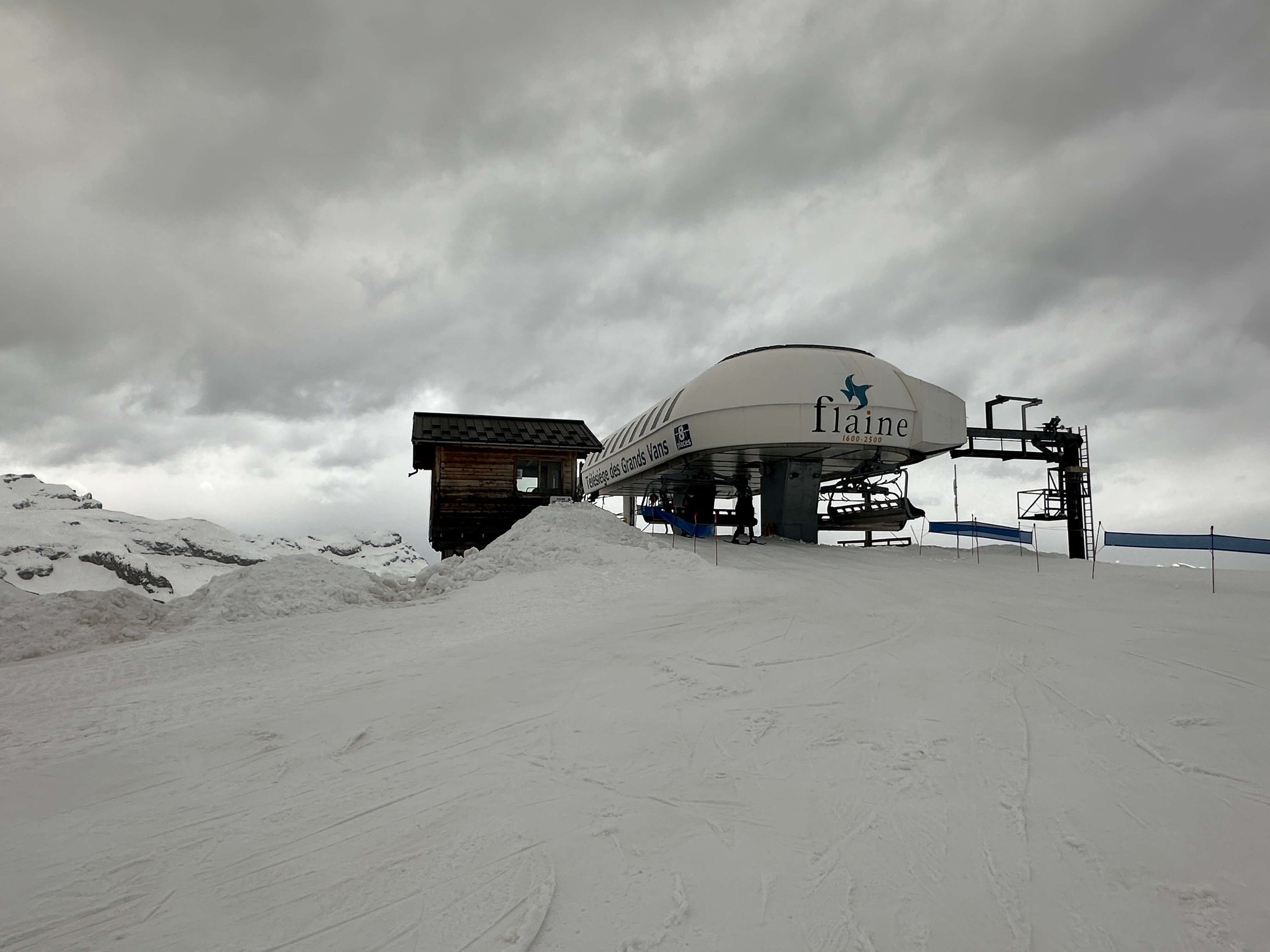
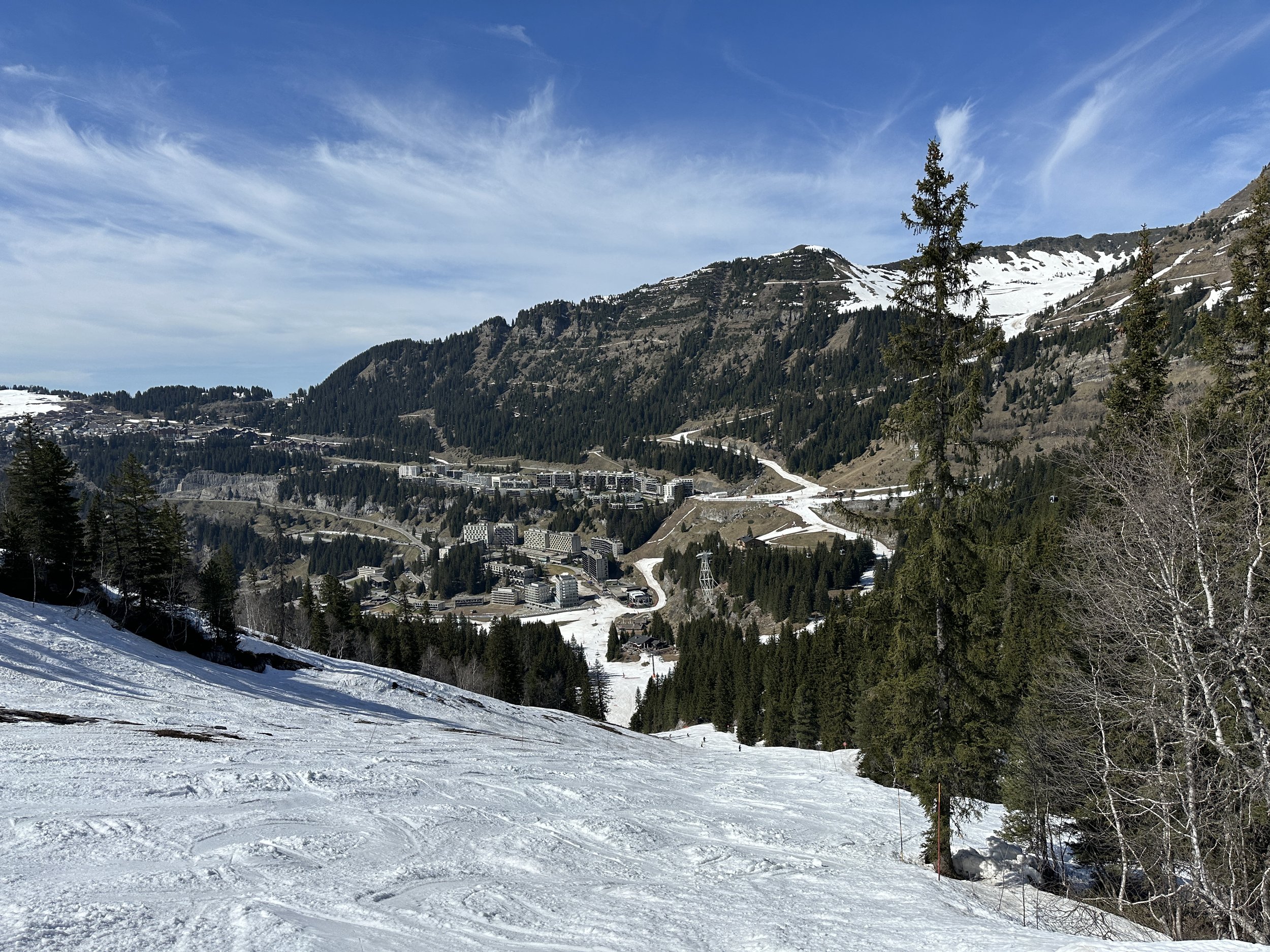
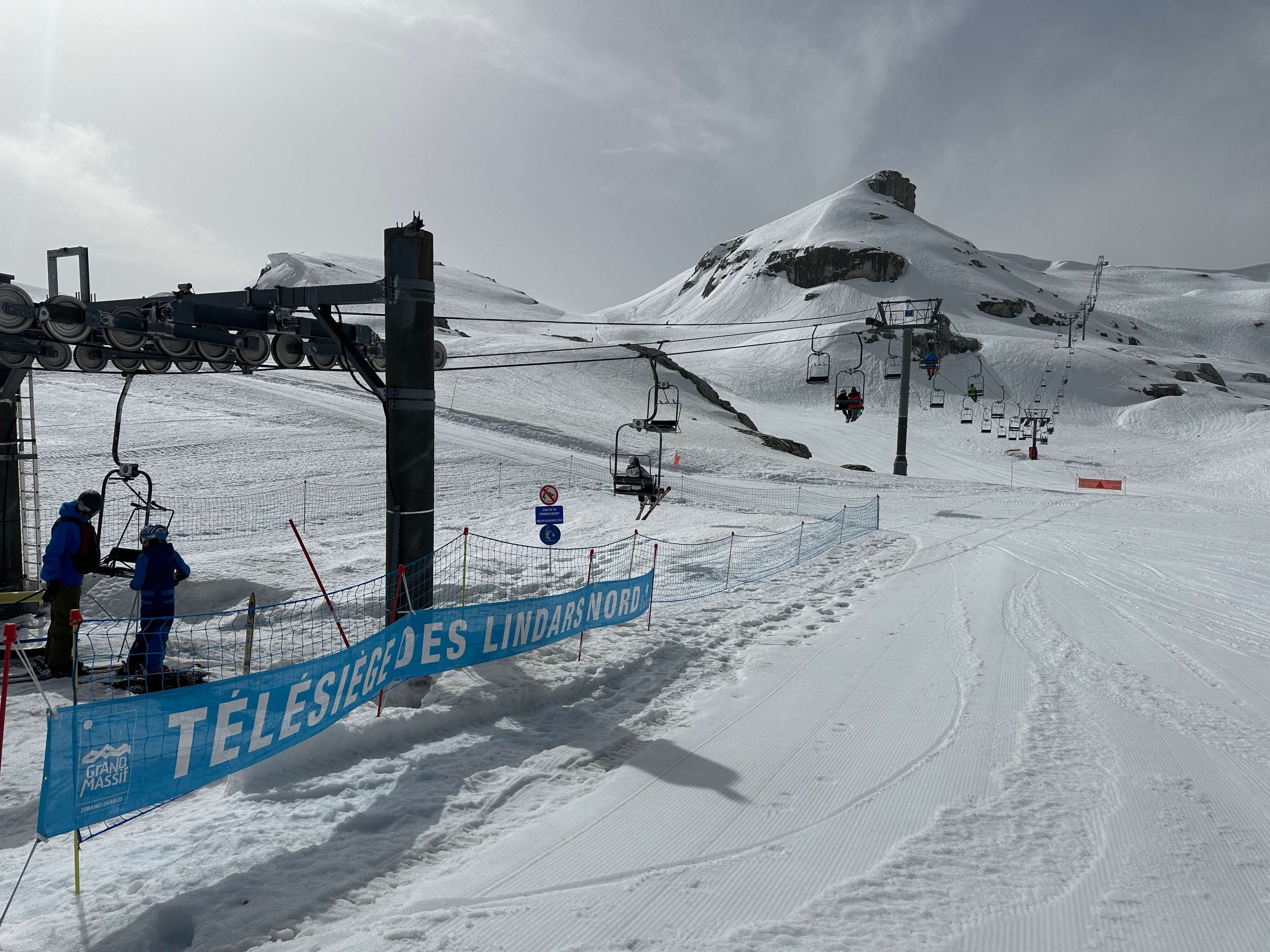
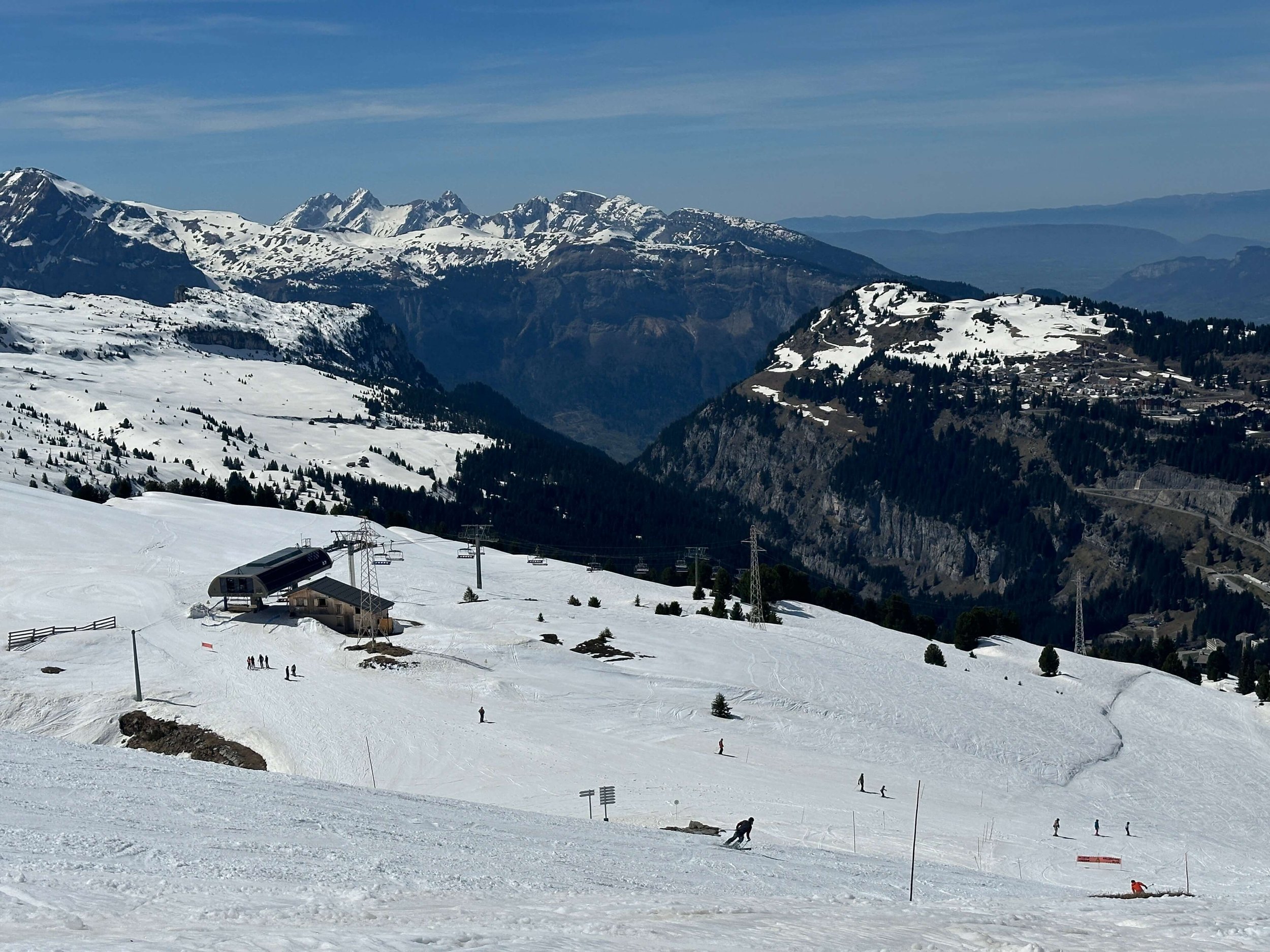
FINAL THOUGHTS
Flaine represents a great option for a French ski holiday. The terrain is well suited to families of differing abilities and the fact the beginner’s area can be used for free is awesome. I love Flaine for its great off-piste routes and snow-sure slopes that mean you can book with confidence. It is rare that I revisit ski areas however the Grand Massif is an area that keeps drawing me back.
AROUND THE GRAND MASSIF


Morillon Ski Resort Guide | Grand Massif
Quiet and unassuming, Morillon is a perfectly placed village that offers an escape from the grandeur and excess associated with some French ski resorts. Those looking for a more relaxed vibe and a friendly village should consider Morillon as a base to access the 265km of Grand Massif Pistes. The village of Morillon is split into two, the accommodation at the base of the gondola and Morillon Les Esserts at 1100m.

MORILLON FIRST IMPRESSIONS
My first day in Morillon was accessed from Samoëns where I skied down the wide pistes to the base of the gondola. Morillon grabbed my attention immediately with the ability to just cruise and carve your way without interruption. Morillon offers a good mix of beginner and intermediate terrain but with fantastic access to the rest of the Grand Massif where you can find more challenging runs.
MORILLON SKI AREA
Morillon village is the lowest base in the Grand Massif at 700m which can mean the slopes closer to the gondola base station are patchy in early and late season. It was possible to ski to the base in April but I wouldn’t say the conditions were enjoyable.
On my most recent trip, Dec 23/Jan 24 - skiing back to the village at 700m was not possible. throughout.
The Morillon ski area is small with 22 local runs, consisting of 5 green, 12 blue, and 5 red pistes. The local area is therefore well suited to intermediates and beginners with some beautiful wide pistes to help inspire some confidence. This however wouldn’t put me off booking accommodation in Morillon as a more advanced skier or snowboarder as the links to the rest of the Grand Massif are well-established. You will be required to take the Morillon gondola and then the Sairon chairlift which opens up the rest of the ski area.
From Morillon, you have easy access to the Coulouvrier chair, which at 2.9 km is the longest in Europe! This is one of my favourite chairs in the whole of the Grand Massif as it makes the whole Grand Massif accessible. From the top of Coulouvrier, it is possible to ski back to Morillon, down into Samoëns, across into Les Carroz or over to Flaine.
MORILLON FOR BEGINNERS
In Morillon 1100 you will find the beginner’s area which is well-positioned close to some restaurants and the ski-in ski-out village. From nearby you can take Les Esserts chair which will access some green terrain for when you fancy exploring for the first time. Morillon is also home to the green Marvel slope which is a 7km green trail that runs through the Morillon trees.
INTERMEDIATES IN MORILLON
Intermediates will love Morillon with a selection of blues available from the top of the Biollaires chairlift, Sairon is a particular favourite due to its 3km length and 600m vertical drop. Morillon is also home to several nice red pistes with Paccoty being an enjoyable route to the Coulouvrier chair. A much overlooked route is the short Freres blue route which can be lapped using the Vielle drag lift. This blue is tucked away near the start of the green Marvel run so is often overlooked.
Outside of Morillon, intermediates can explore the whole of the Grand Massif with some beautiful trails spread throughout the neighbouring resorts of Samoëns, Les Carroz and Flaine. If intermediates would like to experience a big day out… they should consider heading to Flaine and taking the 14km blue trail Cascades that runs to Sixt. From Sixt, you can return to Morillon using the free Navettes bus service.
ADVANCED SKIERS MORILLON
There isn’t much for advanced skiers and snowboarders in Morillon ski resort but with easy access to Samoèns and Les Carroz, you will be able to find a challenge. Head to Les Carroz which offers some fantastic tree-skiing. Like most people in the Grand Massif, you will also want to explore Flaine which offers brilliant off-piste within its large bowl.
Within Morillon, the excellent Stade Morillon red is an opportunity to open the lungs and get some speed, when it isn’t reserved for the race kids. Morillon is also a good spot to find uncontested freshies on a powder day.
FREESTYLE TERRAIN MORILLON
Morillon has a small but fun terrain park that runs alongside a drag lift Vielle. The run has several banked turns, flat boxes and small jumps. The Morillon Ze KidzPark is aimed at a blue level of run and is intended to provide an intro to freestyle.
Morillon is sheltered from the wind so the lifts here remain unaffected when the resorts of Flaine, Les Carroz and Samoëns need to close their upper installations.
On a bluebird ski day, Morillon is one of my favourite resorts. The slopes here get ample sun coverage and there are a few nice restaurants where you can enjoy a beverage on the sun terrace.
LIFTS MORILLON
Morillon has a total of 9 lifts in the resort with the longest being the Coulouvrier. From the village of Morillon, you will need to take the Morillon Gondola that will drop you at the satellite village of Morillon 1100 Les Esserts. From Morillon 1100 you have the option of Sairon or the shorter Les Esserts chairs. The Les Esserts chair only serves the lower part of Morillon so if you want to reach the summit you will need to take Sairon chair.
From the top of the modern Sairon chair, it is possible to ski across to Les Carroz and the Gron chair and Le Kedeuze gondola. Alternatively, you can ski towards Coulouvrier and the links to Samoëns and Flaine.
The lifts in Morillon could do with some updating but actually, this is part of the appeal of staying in Morillon. The slower lifts can make Morillon less popular than some of the other Grand Massif villages so is a fair price to pay for quieter runs.
@geoffreyarduini Biollaires Chairlift
SKI SHOP RECOMMENDATION
Located in Morillon 1100 next to the Les Esserts chairlift is the shop Ski One. During my stay, I received fantastic service from the store which repaired quite a bad core shot in my snowboard. Morillon doesn’t have many great ski shops with some of the equipment being quite dated across the other stores. Therefore if you are looking for ski rental, repairs or to pick up some gear I would recommend Ski One.
You can book rental online by using this link. This is NOT an affiliate link but a recommendation based on fantastic service.
SEASON DATES
The ski season in Morillon opens in December and closes in late April. Early season conditions have been variable over the past couple of seasons so be aware the whole area may not be open in December. If this is the case, skiing will still be possible above 1100m and in the nearby Grand Massif resorts.
MORILLON VIDEO
MORILLON GALLERY
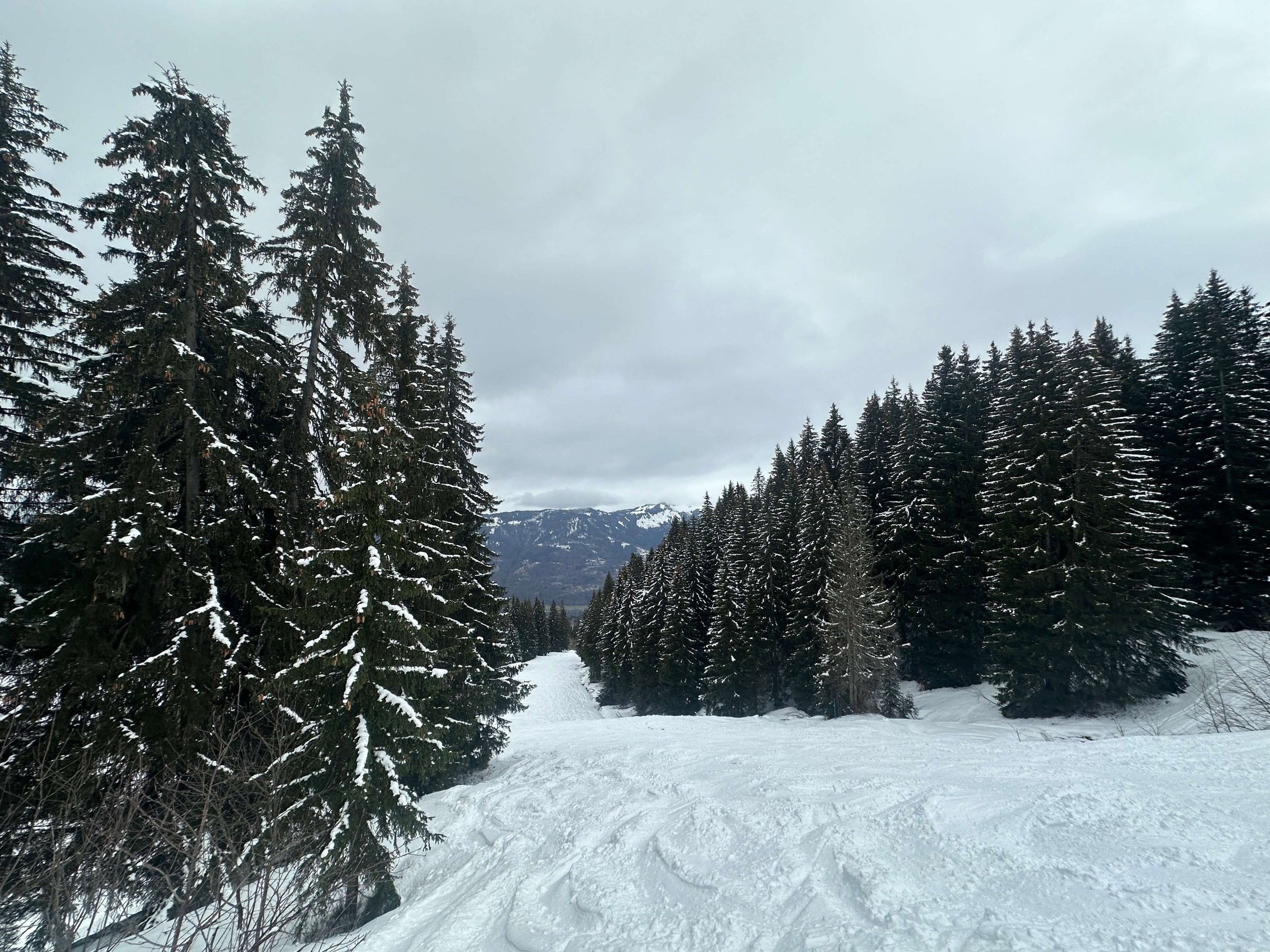
GRAND MASSIF PISTE MAP

GETTING AROUND THE GRAND MASSIF FROM MORILLON
MORILLON TO SAMOËNS
Getting from Morillon to Samoëns is possible via skiing between the resorts or taking the local Navettes (free shuttle service). Information and timetables on the Navettes can be found by clicking the picture below.

Using the buses between the ski stations is not a necessity as all resorts can easily be skied between however they can be a lifesaver if you have tired legs and can’t face the ski commute back.
TRAVEL TO MORILLON
Most international guests to Morillon will arrive at Geneva Airport where a short transfer to the village is possible. Depending on traffic and weather conditions your transfer should take no longer than 1 hour.
Alternatively, you can take the train from Geneva to Cluses whether you will then need to take a local bus service.
NEARBY SKI RESORTS


MORILLON ACCOMMODATION
As previously mentioned Morillon has two main bases; the village of Morillon at 700m and Morillon 1100 Les Esserts.
MORILLON VILLAGE
Staying in Morillon 700m will mean that you need to make the morning commute up the gondola however this could be well worth it. Although Morillon village is a quiet village, staying at Morillon 700m does give you access to several restaurants, bars and other amenities. I enjoy staying in Morillon village as it also provides flexibility in case you would prefer to take a Navette and start your ski day in another ski resort.

Morillon Village is also nice if travelling with family or pets. A short walk from the main street you can be down by the river where there are footpaths between Morillon and Samoëns. This area is also home to a lake, pump track, mini golf and children’s high ropes climbing area.
MORILLON LES ESSERTS
The satellite village of Morillon Les Esserts is a ski-in-ski-out village for those who would like to be as close to the action as possible. Staying at Morillon 1100 gives you more direct access to the slopes and you can avoid the morning gondola commute, however, there are fewer amenities in this part of the village.
BOOK MORILLON ACCOMMODATION
MORILLON PROS
Morillon is an affordable base for your Grand Massif ski holiday providing access to 265km at a fraction of the cost of Flaine accommodation.
The local area of Morillon has some fantastic pistes that are normally in great condition.
The Morillon ski area is fantastic for intermediates with numerous blue and red trails.
Morillon is home to Marvel a 7km long green run fantastic for beginners.
Morillon has great access to the other Grand Massif resorts and from the top of Sairon you can be straight into Les Carroz, one lift from Samoëns and two lifts from Flaine.
MORILLON CONS
Morillon has been suffering in the early season meaning its lower slopes have not been open. The resort run back to the base of the gondola is fantastic so this has been a real shame.
The lifts in Morillon are slower than in other parts of the Grand Massif and could do with updating.
The village of Morillon is small and quiet, for me this can be a positive, but many would prefer Samoëns or Les Carroz for their busier towns.
FINAL THOUGHTS
Overall, I feel that Morillon offers a good option for a holiday in the Grand Massif. Getting from Morillon to the other Grand Massif ski areas is not a problem and the local area has enough to offer. However, I can see why many would prefer to base themselves in a busier village and visit Morillon on a ski day.
I am fond of Morillon however the issues it has faced over the past couple of seasons with early season snow would make me think twice about basing myself here for a Dec-Jan trip.
AROUND THE GRAND MASSIF
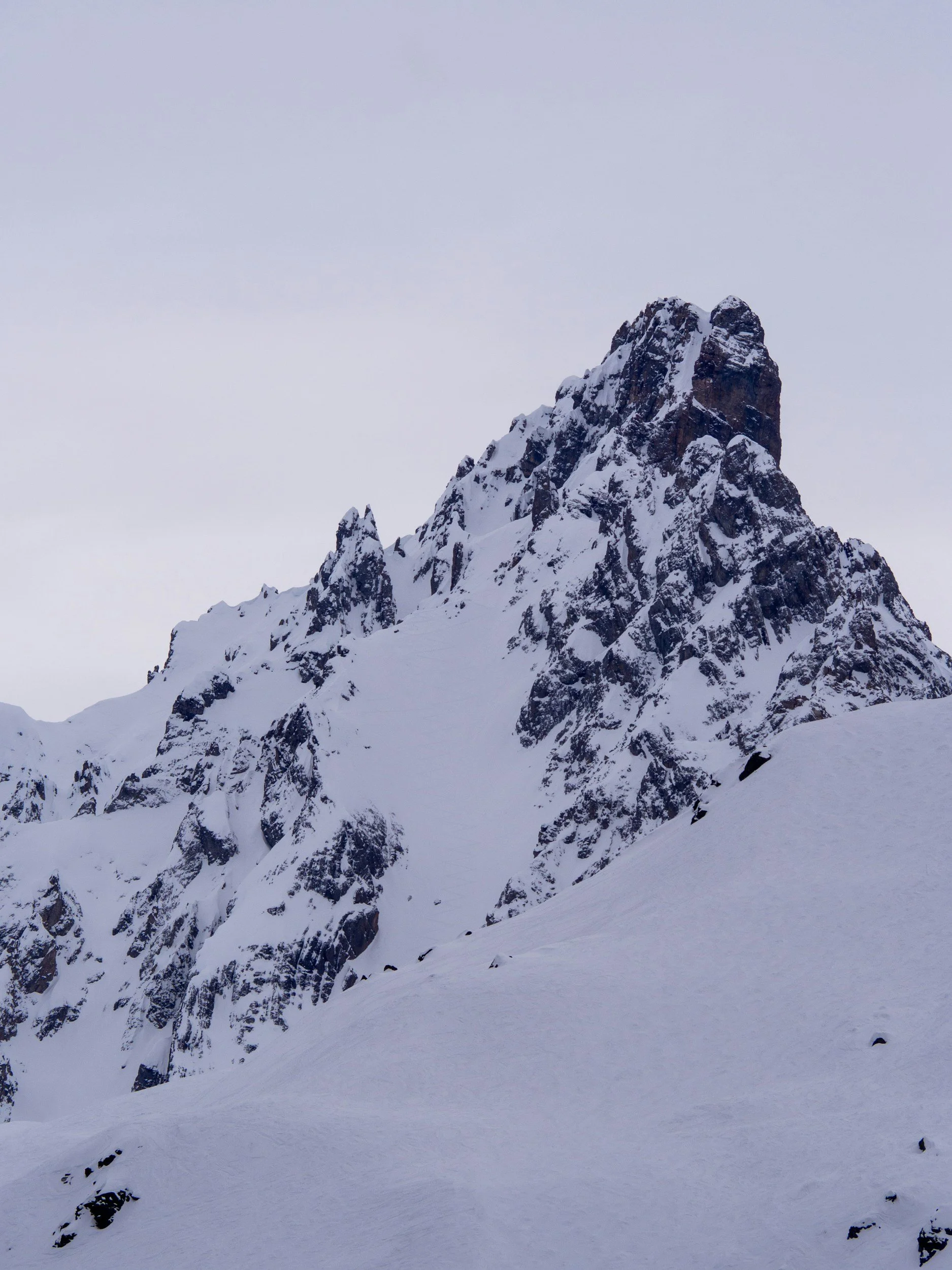


Is the Epic Pass worth it for European skiers and snowboarders?
The Epic Pass is an incredible product that comes from the company that owns Vail Resorts. The Epic Pass has been pretty controversial as the company has taken ownership of numerous ski resorts across the USA. What cannot be argued about is the value an Epic Pass represents to a US-based skier or snowboarder with unlimited skiing across Vail-owned resorts including; Heavenly, Breckenridge, Stowe and over 30 more. The Epic Pass also has many additional partner resorts allowing for up to 7-days access per winter. As a European-based snowboarder, I have taken advantage of the Epic Pass owned and partner resorts across four continents so I feel uniquely positioned to discuss whether this pass is in fact worthwhile for European skiers and snowboarders.
WHAT IS INCLUDED ON THE EPIC PASS?
In the winter of 2023/24, the Epic Pass retails for 949 USD for its all-access pass. This pass offers access to 41 ski resorts on an unlimited basis with no blackout dates. The Epic Pass includes some of the biggest names in world skiing with Whistler Blackcomb, Vail, Heavenly, & Park City alongside a number of partner resorts.
PARTNER RESORTS
As a European snowboarder, although I have used my Epic Pass in the US, it is the Partner Resorts in Europe that drew me into purchasing the pass. The Epic Pass is partnered with ski resorts in France, Italy, Austria and Switzerland which means you can still get your fill of resort access without the flight across the pond.
GOOD VALUE ACCESS
3 VALLEYS
For a number of years, Epic Pass has been partnered with some of the best ski resorts in Europe including the world’s largest combined ski area Les Trois Vallées. Access to the 3 Valleys with Epic Pass is limited to 7 days but includes all 600km of pistes across 7 French ski resorts. I’ve enjoyed making the most of the access to the 3 Valleys with Epic Pass and have been able to visit resorts across the region. If like me you are budget savy consider staying in Orelle or Les Menuires for cheaper accommodation with good access to the rest of the 3 Valleys ski area.
SKIRAMA DOLOMITI
The Skirama Dolomiti comprises eight ski resorts across the Dolomites including the chic Madonna Di Campiglio. A week’s Skirama Dolomiti lift pass is included with the Epic Pass which means access to some of the most beautiful ski resorts in the Dolomites. A personal favourite is Pejo 3000 which has high-altitude skiing with long descents back to a traditional Italian Alpine village.
ANDERMATT - SEDRUN - DISENTIS
Andermatt ski resort in Switzerland brings incredible value to the Epic Pass with unlimited skiing and snowboarding available at this Epic Pass Europe resort. Since its introduction to the Epic Pass Andermatt has become one of the main reasons why European skiers and snowboarders would purchase this lift pass. Skiing in Andermatt offers 120km of pistes including the Gemsstock which is home to some epic freeride routes.
ACCESS THAT COULD BE BETTER
VERBIER 4 VALLEES
Verbier and the 4 Vallees encompasses six ski resorts and 410km of pistes with some of the best freeride terrain in Europe. Epic Pass holders can get up to five days of access to this combined ski area, however, there are lodging requirements. Staying in partner lodging grants you a day’s pass for a maximum of 5 days. You get a one-day pass for each day of your lodging (up to a maximum of 5 days).
SKI ARLBERG
Ski Arlberg in Austria is the country’s largest connected ski area with over 300kms of pistes. To use your Epic Pass to ski in Ski Arlberg you need to stay in the partner lodging where you can gain 3 days of access the ski area.
FINAL THOUGHTS
As a European-based snowboarder, I would recommend the Epic Pass to skiers and snowboarders who are interested in taking multiple trips per winter. The Epic Pass allows skiers to visit some of the best ski resorts in Europe with lots of diverse terrain set amongst some beautiful alpine villages. I was able to save money and have some great experiences along the way.

Orelle Ski Resort Guide
Orelle is a small village in the Maurienne Valley that is linked to the world’s largest ski area the Three Valleys. From Orelle, the new Orelle gondola whisks you to high-altitude skiing and snowboarding above 2,000 m. Direct links between Orelle and Val Thorens ensure the local area has access to 150km of pistes to keep you occupied.

Referred to as the Fourth Valley, Orelle has an exceptional snow record with the ski area base really starting at 2350m. In addition to an excellent snow history, Orelle has 870m of vertical drop between the top of Bouchet chair and Plan Bouchet. There is a limited number of pistes in Orelle however the area has plenty of opportunity for off-piste and easy access to Val Thorens with a more extensive piste map.
ORELLE IN VIDEOS
ORELLE FIRST IMPRESSIONS
Arriving at Orelle is strange for French skiing because you arrive at the bottom of a gondola not close to the ski area. The area around the gondola has a car park, ticket office and small ski shop where ski and snowboard hire is possible.
View from the 3 Vallees Express gondola.
The Orelle gondola, formerly the 3 Vallees Express gondola, takes you to the base of the Orelle Ski Resort at 2350m. This journey takes 13 minutes and has some incredible views. Within 20 minutes from the car park, you can be on top of the Cime Caron at 3200m where you see the real beauty of skiing in the Three Valleys. Orelle feels small, but within minutes you can be skiing in the world’s largest ski area, this is a small ski area with a Mary Poppins bag full of surprises.
Ticket office in Orelle, next to the now replaced 3 Vallees Express gondola.
ORELLE SKI AREA
Locally the skiing in Orelle is based around Plan Bouchet your arrival point in Orelle. From Plan Bouchet it is possible to take two lifts, the Rosael or the Peyron. Both lifts access brilliant intermediate terrain with some fantastic blue trails leading back to Plan Bouchet. You can also continue to the Cime Caron using the new Orelle - Cime Caron gondola.
Taking the Rosael chair you can opt to remain in Orelle and descend via blue or red trails from the Col de Rosael. Alternatively, you can use this chair to drop into nearby Val Thorens where between the two resorts 150km of trails are shared.
The Peyron chair and trail are perfect for beginners and intermediates. Those looking for more challenge are encouraged to take the Bouchet chair to the highest point in Orelle, Sommet des 3 Vallees at 3230m. From the top of Bouchet, you can access two stunning red trails, however the more adventurous can also find great off-piste in this area.
Finally, the new Orelle-Cime Caron gondola links the village of Orelle with the Cime Caron at 3200m. From here it is possible to ski over to Val Thorens or take the Combe Rosael black trail back towards Orelle.
The ski area of Orelle is small in terms of pistes with 8 runs listed on the trail map. This doesn’t really do a good job of explaining the appeal of snowboarding in Orelle with plenty of fantastic off-piste options, links to Val Thorens, and high altitude snow-sure skiing.
ORELLE FOR BEGINNERS
A green nursery slope awaits at the top of the Orelle gondola, which is also the meeting place for the local ski school. Orelle does have nice wide blue trails that will be good for skiers and snowboarders developing the confidence to ski around the mountain.
On my trip to Orelle, a few of my friends were beginners and they found the area a good place to progress with blues to explore.

ORELLE FOR INTERMEDIATES
Orelle is perfect for intermediates, especially with the wide selection of blue and red runs shared between Orelle and Val Thorens. As an intermediate Orelle is a ski area where you can clock up the miles as you nail down that technique and gain confidence linking your turns.
For the more advanced intermediate, Orelle is a good place to explore to the side of the piste getting confidence in riding in changing snow conditions. My pal Mark made the best of the fresh snow making his first forays into the off-piste within the Orelle ski area.

ORELLE FOR ADVANCED
Snowboarding for the more advanced in Orelle is centred around the off-piste that is available. Yes, the reds from Bouchet and the Col de Rosael are excellent but the best terrain is found between the pistes. At every point of the resort you can look to the side of the piste and see something fun to ride. If you manage to combine your trip to Orelle with fresh snowfall, there is little need to head into the rest of the Three Valleys.
Combe de Caron
FREESTYLE ORELLE
There is no terrain park specifically in Orelle, however, the VT Park in Val Thorens is within an easy ride from the Col de Rosael. Within Orelle, you will find a boardercross track.
VT Park Val Thorens
OFF-PISTE ORELLE
Between Orelle and nearby Val Thorens there are many options to explore the off-piste. I enjoyed the off-piste from the Cime Caron and Bouchet chair specifically. From the Bouchet chair, the adventurous may want to attempt the Pierre Lory itinerary that you can read about here.
LIFTS ORELLE
As discussed previously, Orelle has recently upgraded the 3 Vallees Express gondola to a two-stage gondola between Orelle and the Cime Caron. This major lift investment is reflected across the Three Valleys where you will find excellent lift infrastructure throughout.
Besides the new gondola taking skiers from the village of Orelle to the Cime Caron in 20 minutes, there are three other lifts in Orelle; Rosael, Bouchet, and Peyron. I can not remember standing in a lift queue in Orelle and this is down to the quality of lifts.

Orelle Chairlifts
One issue that I had during my visit to Orelle was that the weather closed the resort for one and a half days. For me this wasn’t an issue as I was able to drive to another part of the Three Valleys that was open. It is worth noting that this can happen anywhere so maybe my timing was unlucky in this regard.
WHERE TO SKI IN BAD WEATHER ORELLE
As mentioned above the weather can greatly affect your experience during a ski trip and sadly my first trip to Orelle was hit by wind closures. Orelle is also way above the treeline so there is little in the way of places to hide out during whiteout conditions. This is similar for nearby Val Thorens so if you are in Orelle during a whiteout consider heading down to St Martin de Belleville.
ORELLE PISTE MAP
Piste Map Orelle
ORELLE GALLERY
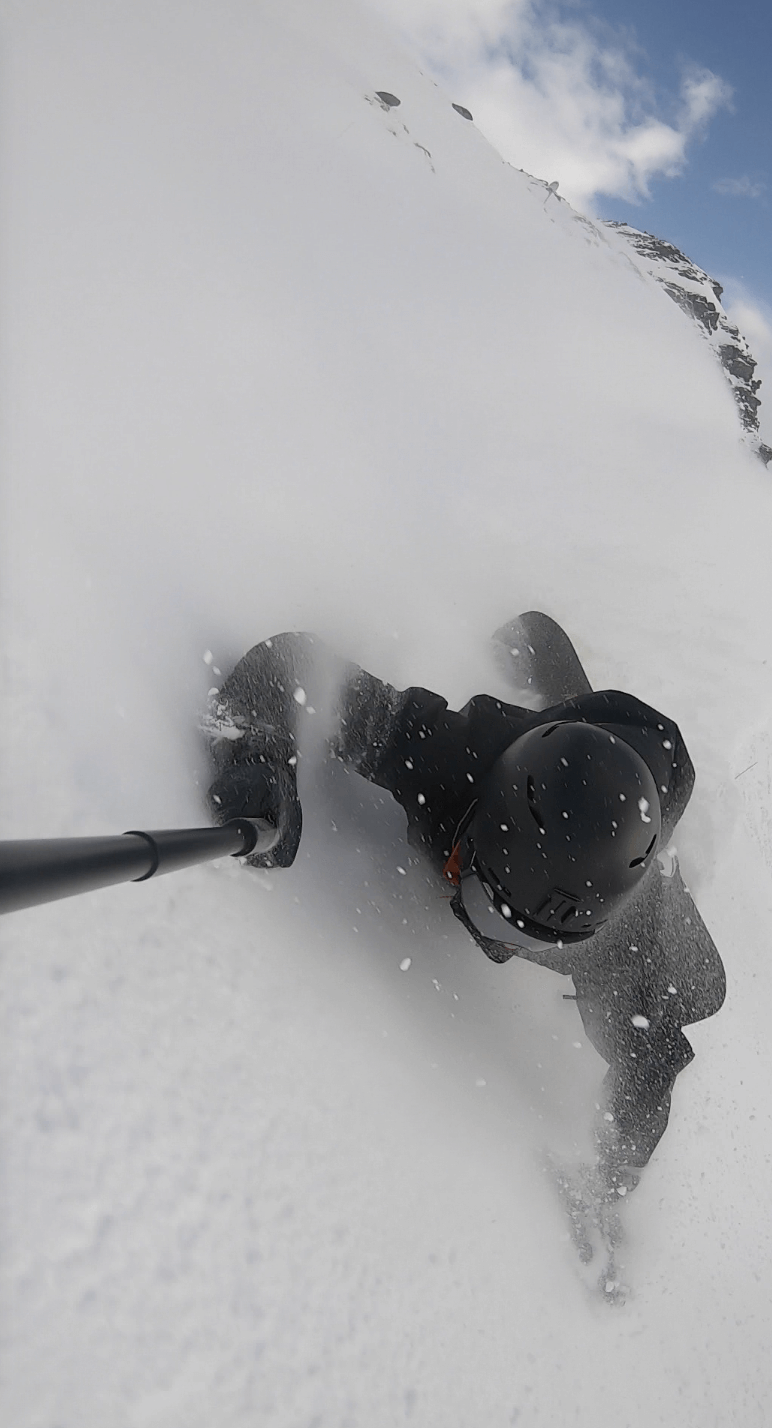

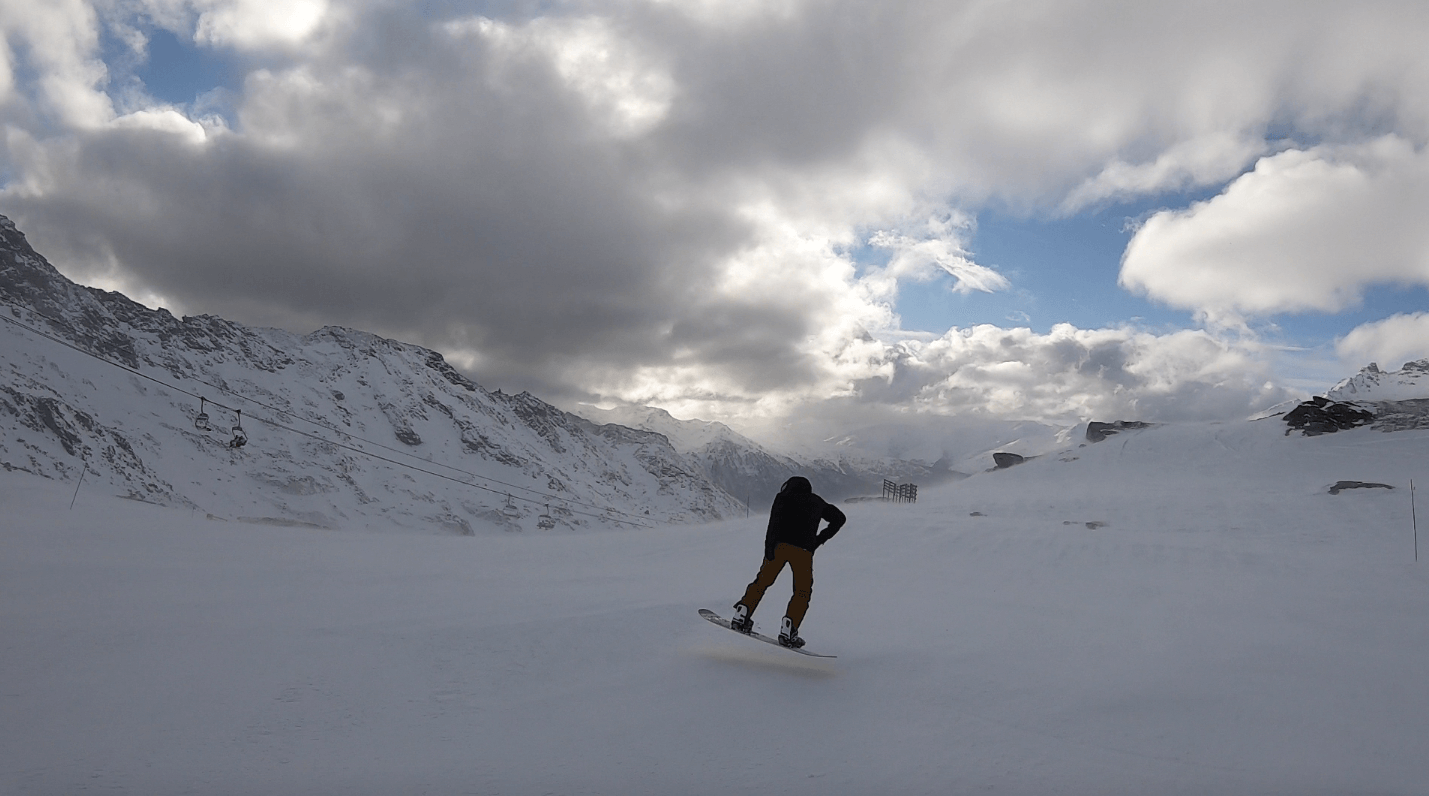

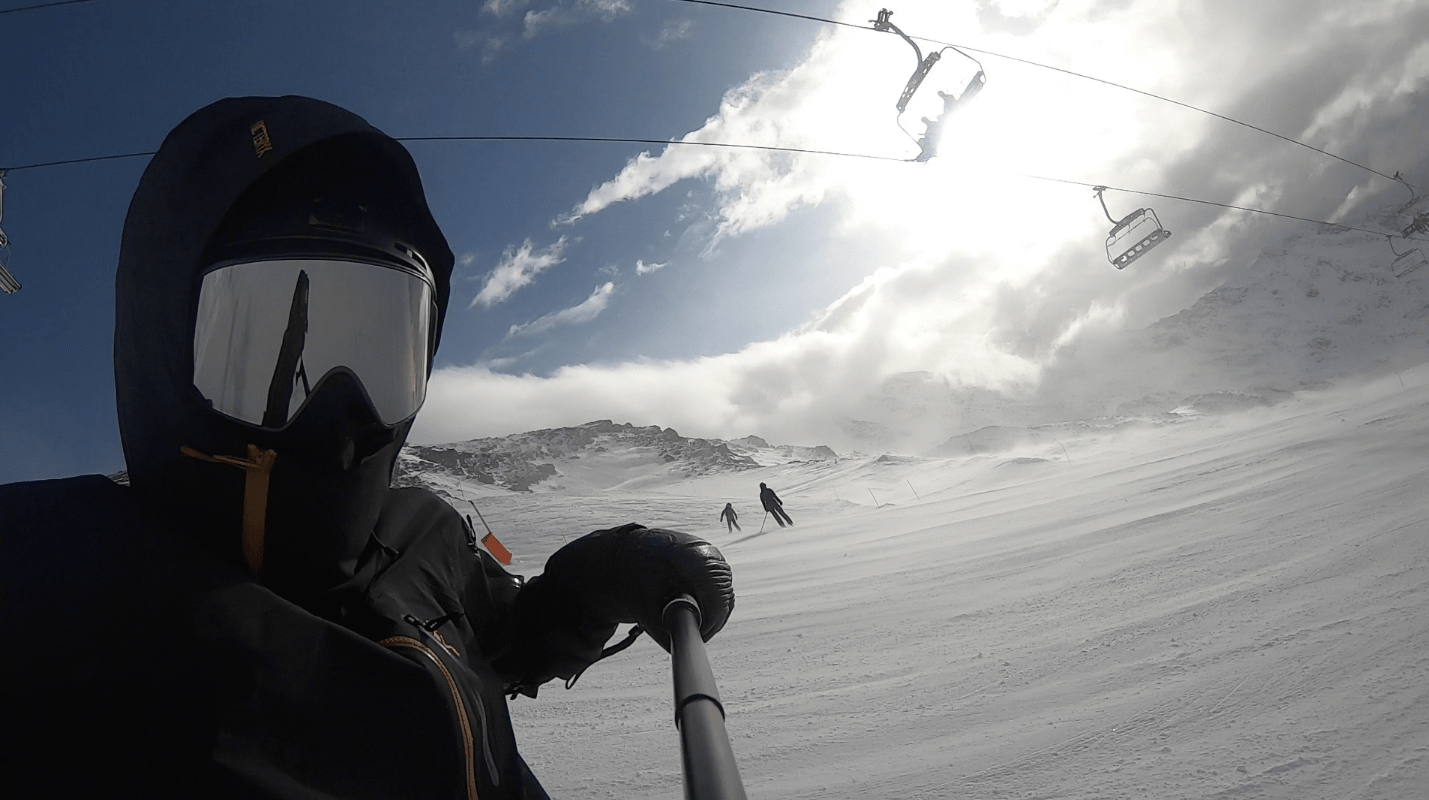
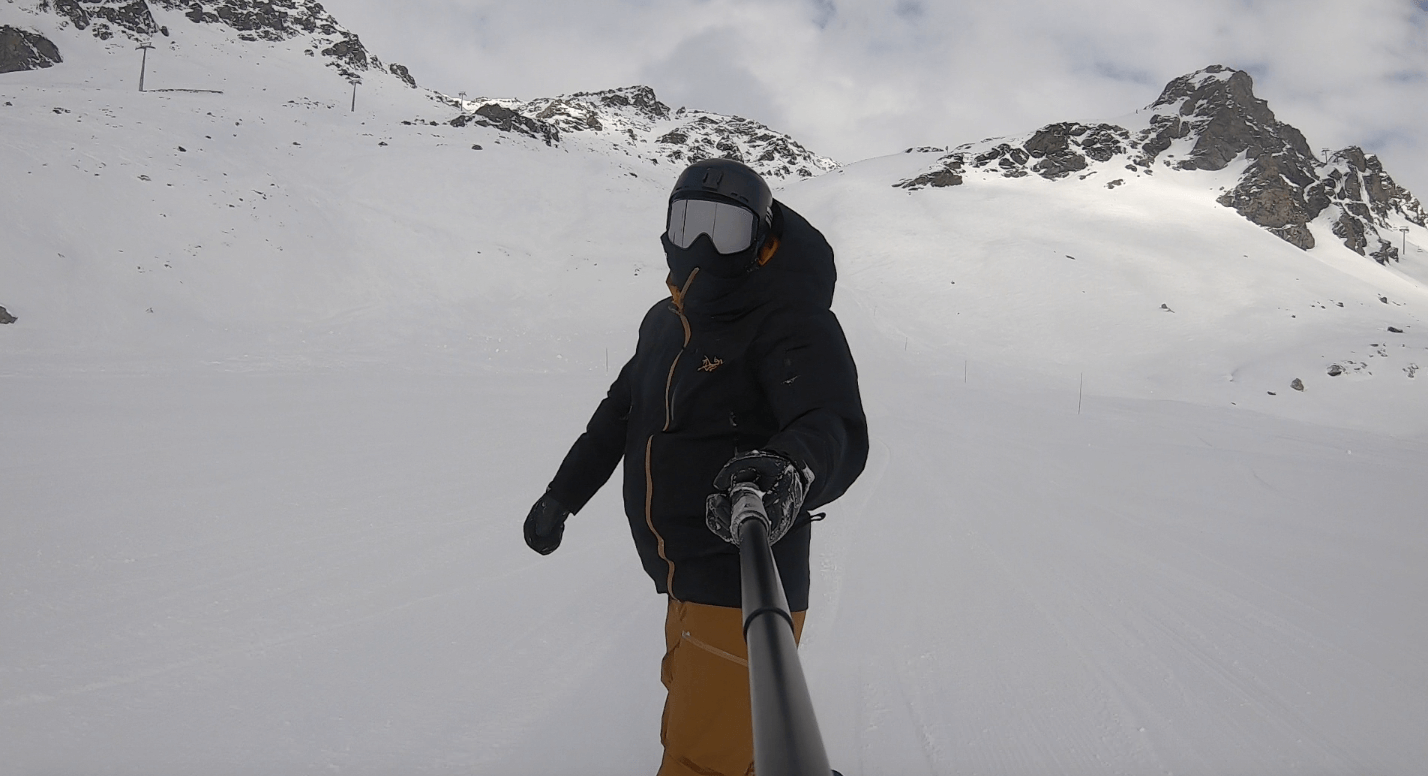
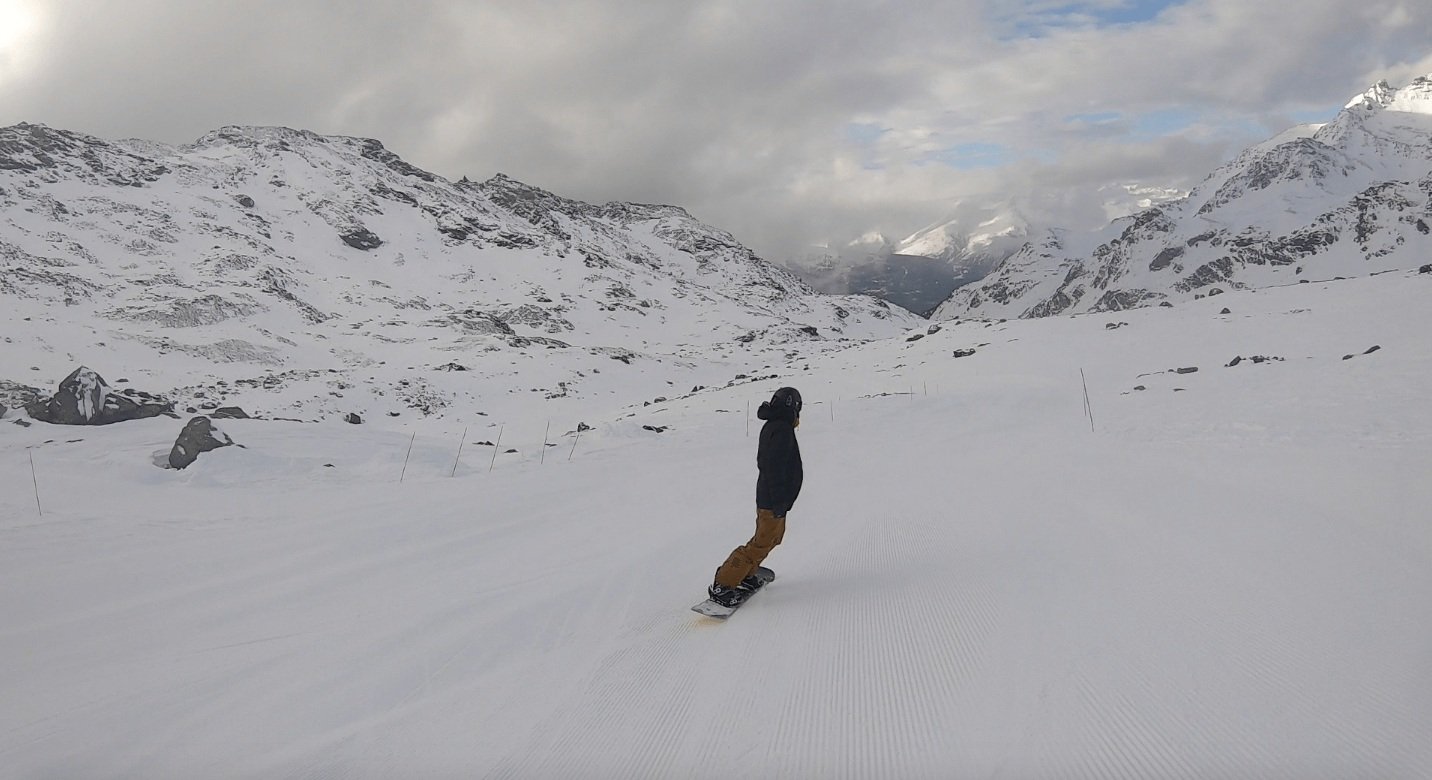

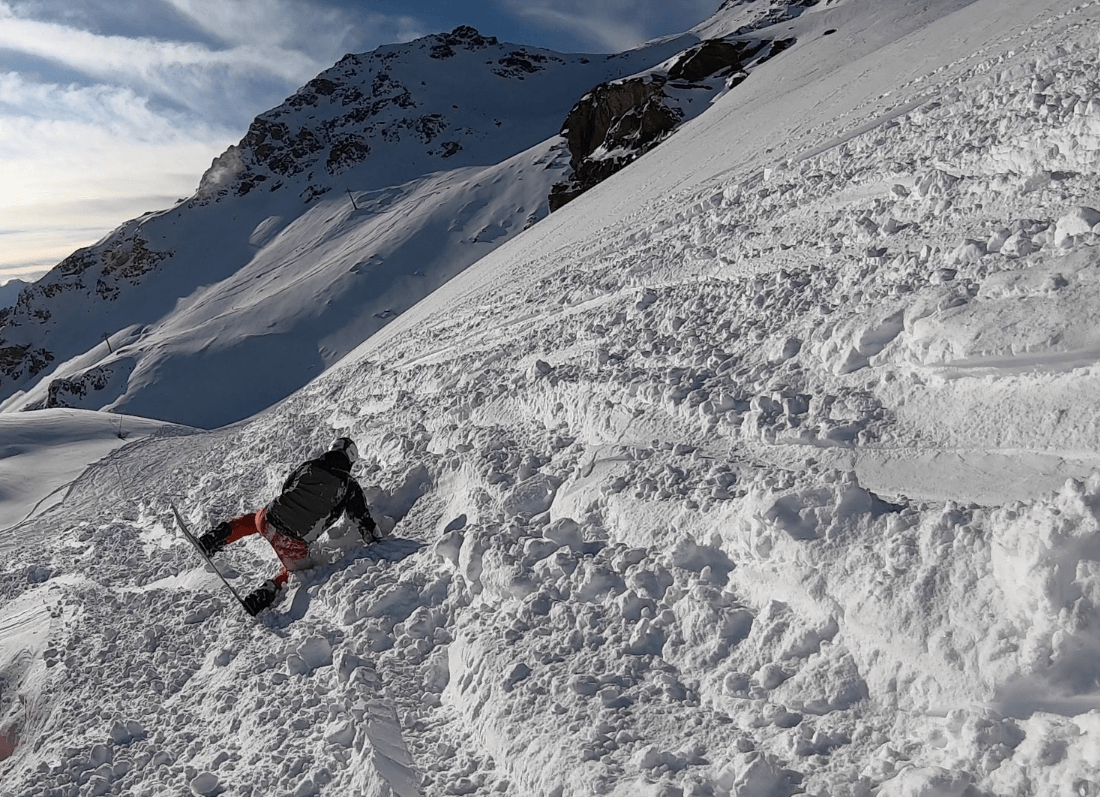
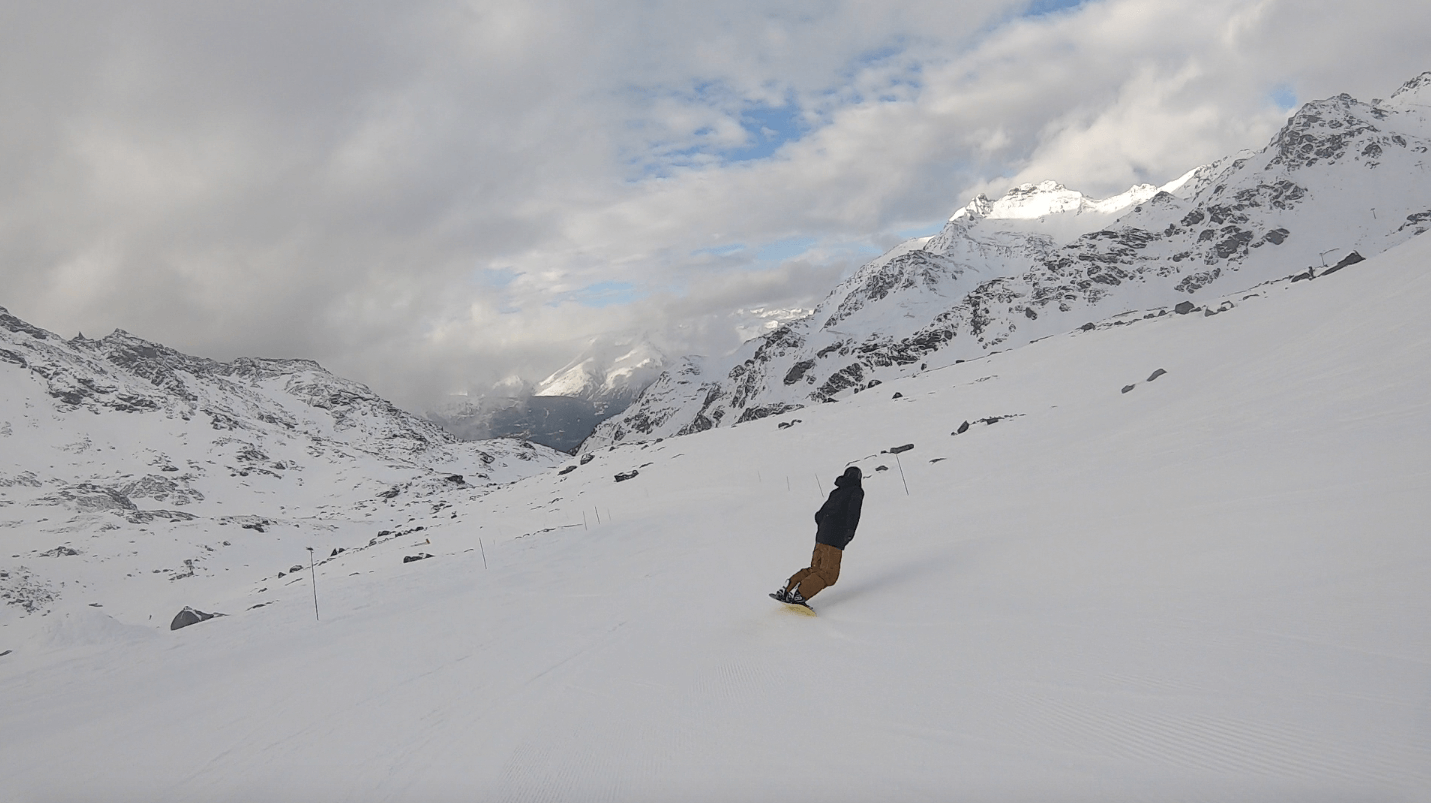
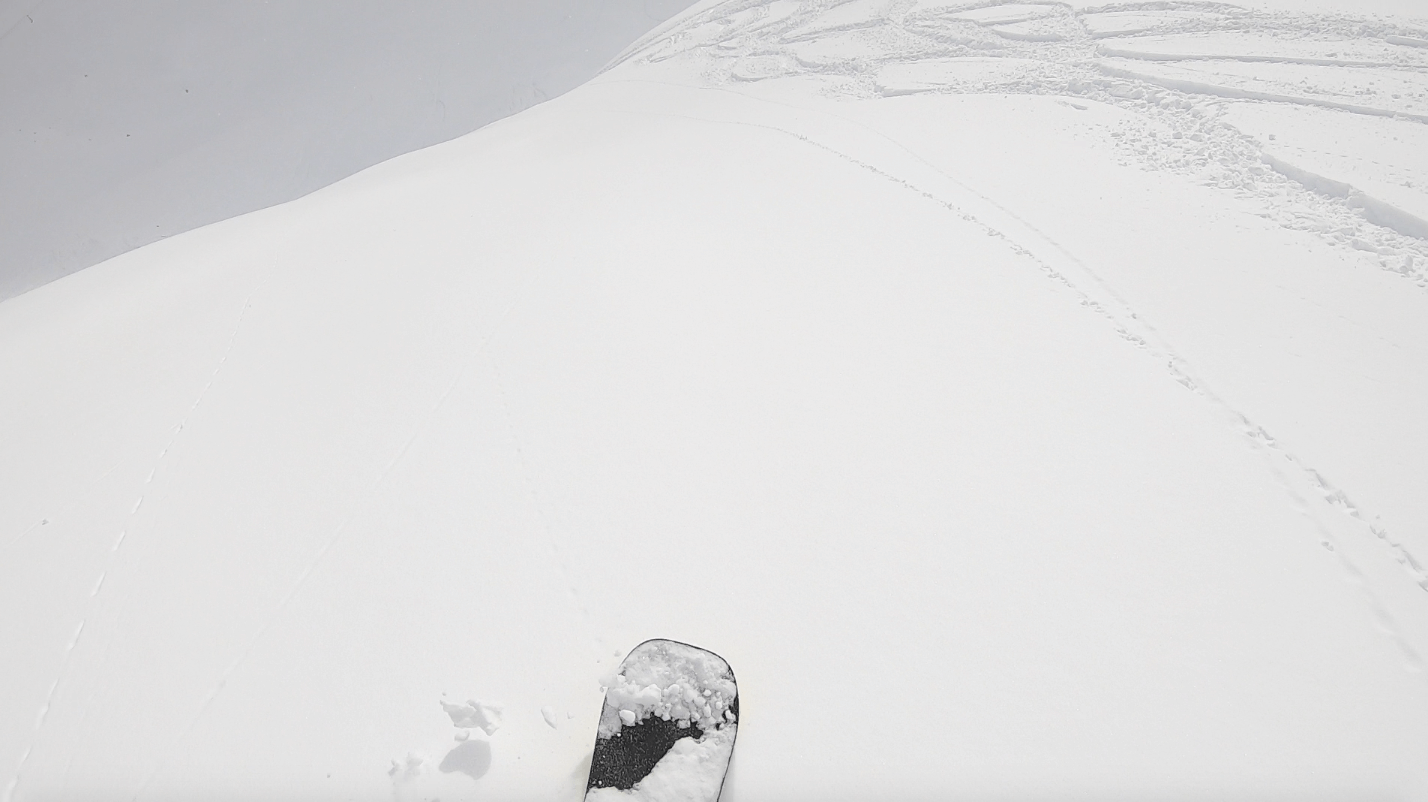
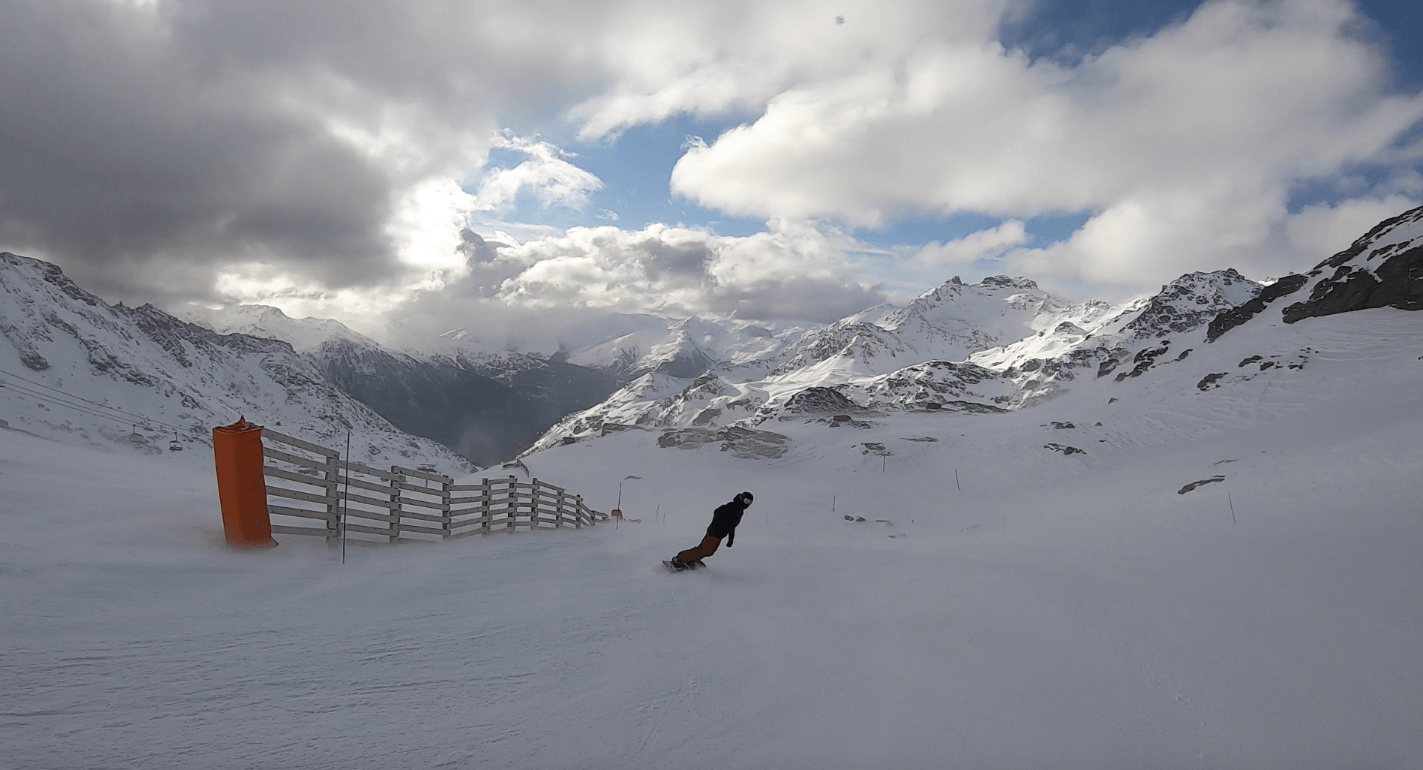
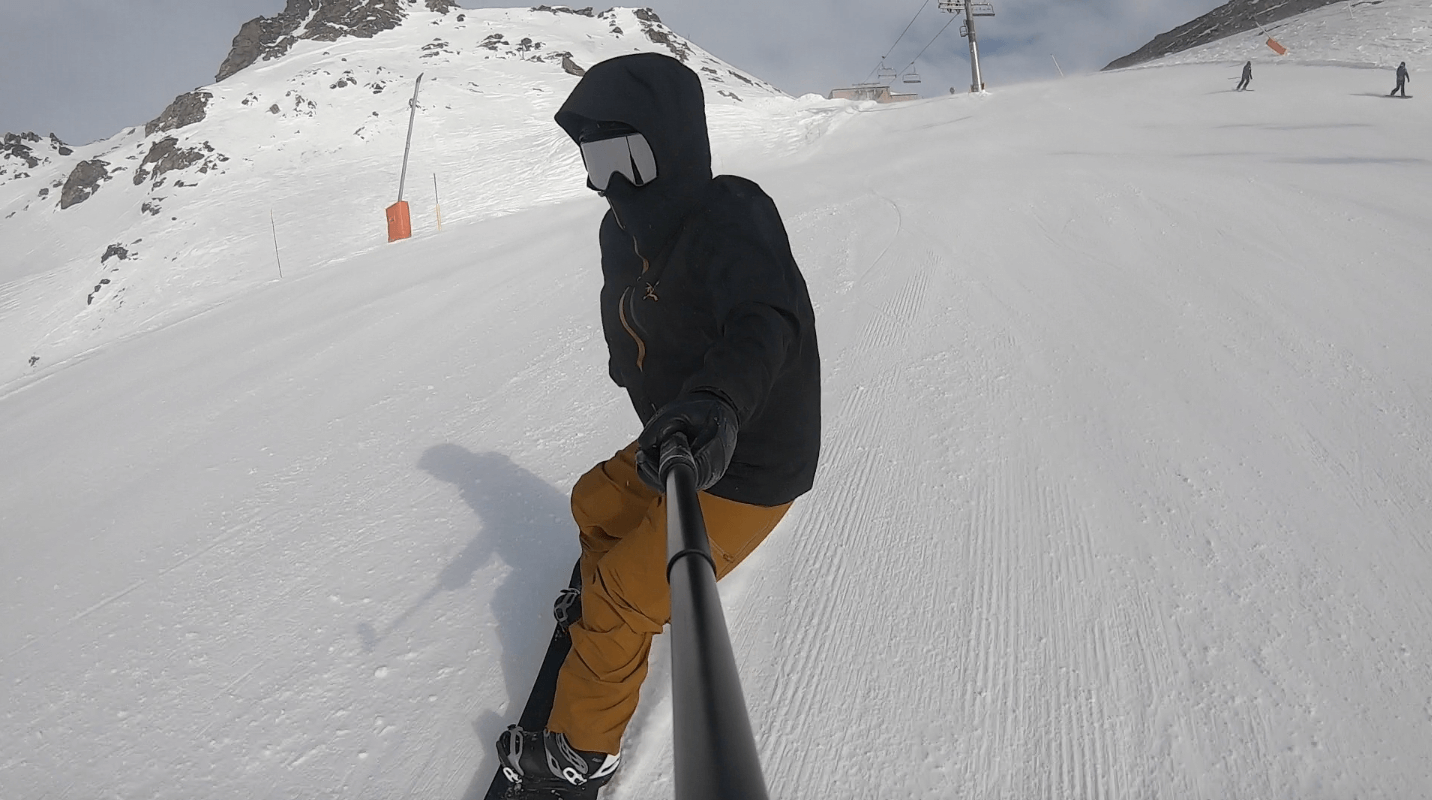
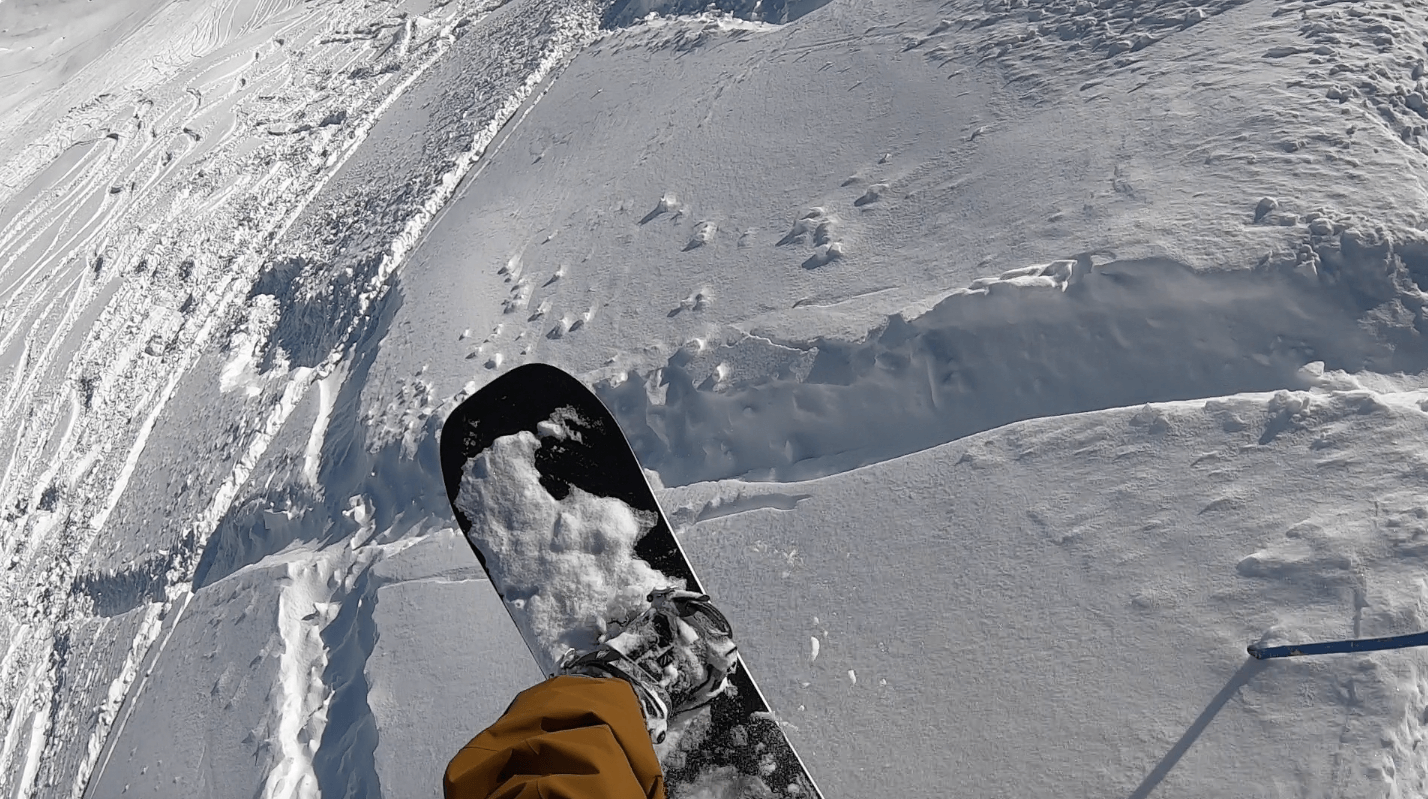
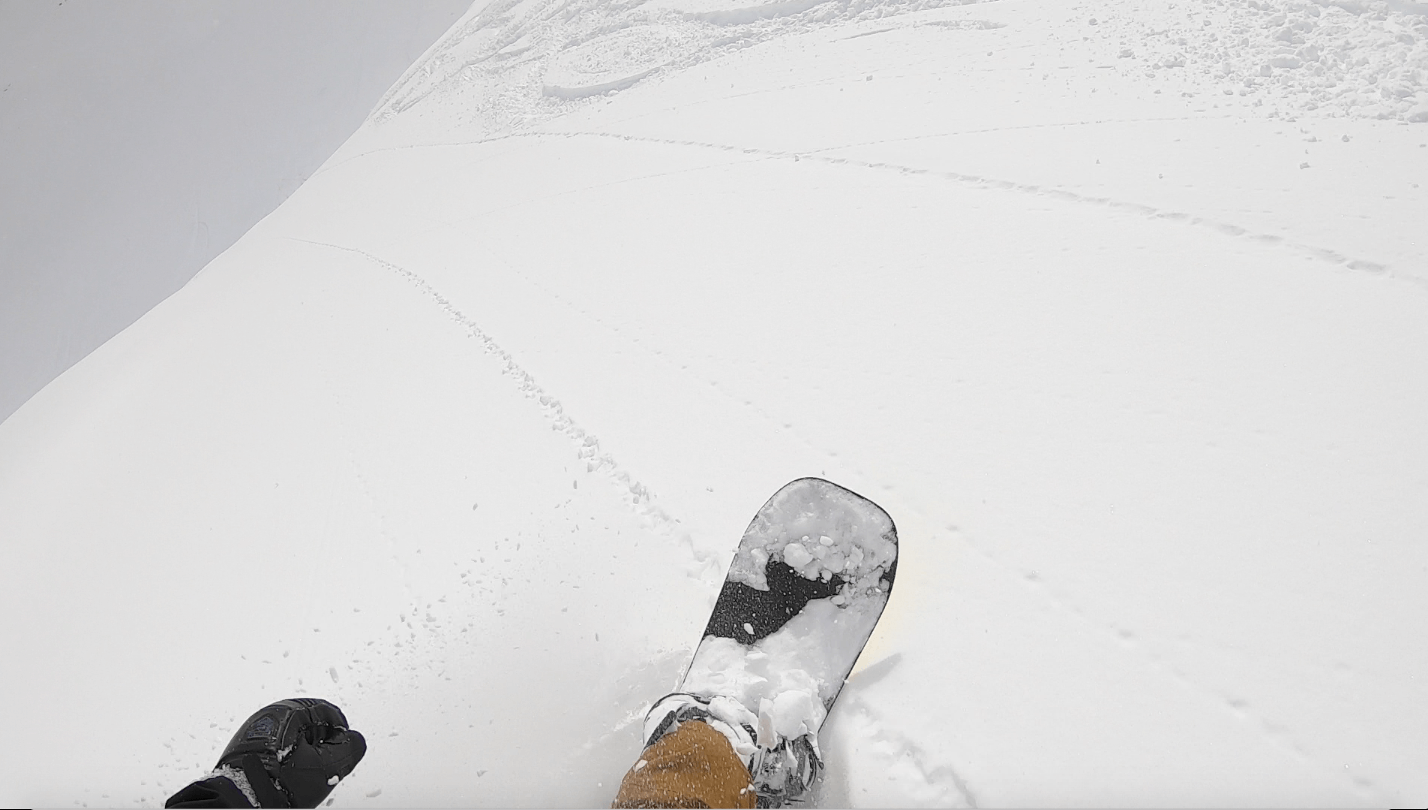
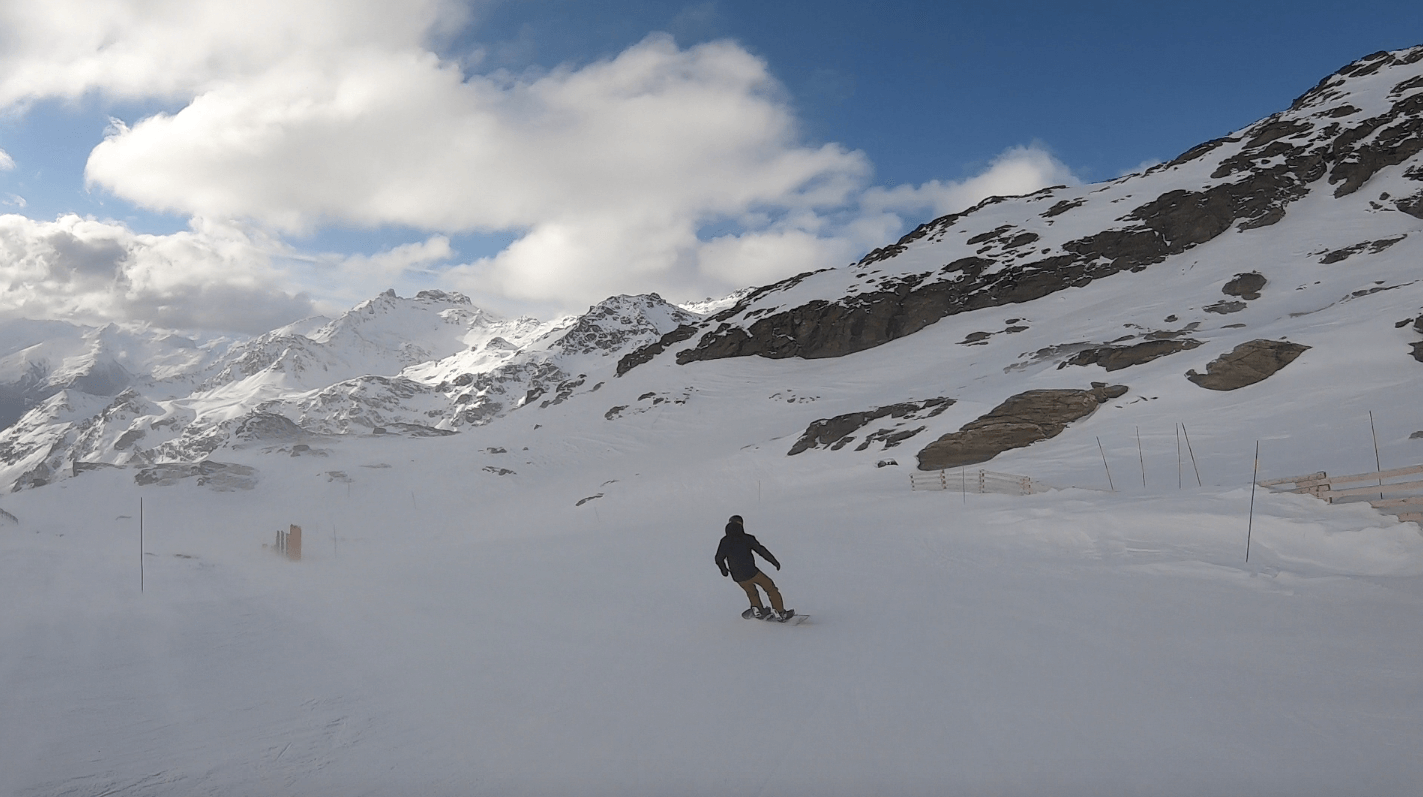
ORELLE VILLAGE
Orelle is located in the Maurienne Valley and can make for a quieter more affordable base to access the Three Valleys ski area. Orelle’s location is fantastic as a gateway to Val Thorens and the wider Three Valleys.
The village itself is divided into 10 hamlets that are spread between 880m and 1200m. The hamlet of Francoz is where you will find the gondola access and most tourist activity with the ticket office, ski rentals and more. The village of Orelle offers a different type of holiday to the purpose-built villages of Val Thorens, Meribel and Courchevel. In Orelle, you will find narrow cobbled streets and traditional houses set amongst a mellow atmosphere which is perfect for that more chilled ski trip vibe.
ORELLE SKI SEASON DATES
Orelle joins Val Thorens with having one of the longest ski seasons in Europe closing around three weeks after Courchevel and Meribel. Access to Val Thorens and Orelle is from Nov 25th and the ski area remains open until the first week of May.
TRAVEL TO ORELLE
WHERE IS ORELLE SKI RESORT?
Orelle is very accessible by car, rail and plane. The closest airports to Orelle are Lyon and Chambéry however access is still possible from Geneva. Geneva Airport is popular with British skiers who appreciate it for the regular flight schedule during the winter season, and the numerous ski resort transfer companies.
GETTING TO ORELLE
If your plan is to fly and self-drive, you can reach Orelle within one hour from Chambéry and two hours from Geneva. Fly and drive arrivals are also possible from across the border in Italy with Turin under two hours from Orelle. One benefit of self-drive holidays to Orelle is that the parking at the Orelle gondola is free!
Visiting Orelle via train is possible with connections via Paris and Milan on the TGV. The nearest train stations to Orelle are St Michel/Valloire and Modane. Train tickets can be purchased on RailEurope and are not cheap. However, travel by train does offer a certain freedom and is a fantastic way to travel to a ski resort.
Self-drive direct from the UK is possible with the most popular channel crossings via Dover and Folkestone to Calais. From Calais, the drive to Orelle takes around 9 hours when utilising the French toll roads. Driving to French ski resorts is great for when travelling in groups and wanting to bring extras for self-catering accommodation.
ORELLE LIFT PASS OPTIONS
There are multiple ski pass options for Orelle and choosing the right one for you and your group can be confusing. Let’s take a look at the best options below.
LOCAL AREA PASS - VAL THORENS/ORELLE
The local area pass is enough for most skiers and snowboarders visiting Orelle/Val Thorens for a 7-day period. The area encompassed by Val Thorens and Orelle includes 150km of pistes and some pretty epic off-piste terrain. By purchasing the local area ski pass you will be unable to venture further into the Three Valleys, but for many first-time/intermediate skiers, you won’t need to.
Purchasing the local pass will save you around €7 each day.
VALLEE DES BELLEVILLES PASS
This pass similar to the above does not offer full Three Valleys ski area access but it is a good medium point. This pass includes 300km of terrain shared between; Val Thorens, Orelle, Les Menuires, & St Martin de Belleville. With 300km of pistes, this pass covers 50% of the available pistes in the Three Valleys ski area.
Purchasing the Vallee des Bellevilles pass will save around €5 per day.
THREE VALLEYS LIFT PASS
Those looking to explore the full ski area should look to purchase the full Three Valleys ski pass. This pass covers the 600km of pistes across all Three Valleys ski areas. Although €7 more expensive than a local Val Thorens lift pass, this extensive pass is a great option for the more able who may wish to explore the entirety of the combined ski area. Using this pass from Orelle can account for some long ski safaris between Orelle and the resort of Courchevel at the far end of the Three Valleys.
EPIC PASS HOLDERS
If like me you visited the Three Valleys using an Epic Pass then you are entitled to a 7-day Three Valley ski pass which covers the entire 600km and all resorts in the Three Valleys. Epic Pass holders will need to take their Epic Pass and photo ID to the ticket office in Orelle where you will be given your free pass.
ABILITY
Beginners and early intermediates visiting Orelle should consider purchasing the local pass. There is plenty to keep you entertained whilst you are honing your skills within the local area. Access to Orelle could be considered adventure enough for your early trips to Val Thorens.
BUDGET
If budget is a consideration then meeting midway and getting the Vallee des Bellevilles pass could be your best option. 300km of pistes within this area should be enough to satisfy even the most ardent skiers and snowboarders on a week’s trip to the Three Valleys.
RETURNING VISITOR
If you are returning to Orelle and want to escape the local area then having the Three Valleys lift pass is ideal. You can still ski within the local area but the Three Valleys pass allows you to make the most of the connections to the nearby ski areas.
To check the latest prices and buy your lift pass click here.
ORELLE PROS
Orelle offers cheaper accommodation than Val Thorens but has quick access to the epic terrain shared between the two resorts. The new gondola ensures you are close enough to the action in Orelle.
Orelle is quieter than Val Thorens meaning you can often have no rivals for freshies on those powder days.
Orelle has access to 600km of pistes depending on your choice of lift pass, meaning that you can access the largest combined ski area in the world.
ORELLE CONS
Orelle is not central within the Three Valleys, therefore it can take a while to ski to the resorts of Meribel and Courchevel. Orelle however does have good access to Val Thorens and Les Menuires.
Orelle doesn’t have the amenities of Val Thorens or Apres scene…. actually for me this is a positive but some will rate this as a negative.
If you find value in this content please consider supporting the website by clicking the image below and buying me a coffee.
ORELLE FREQUENTLY ASKED QUESTIONS
CAN YOU SKI FROM ORELLE TO VAL THORENS?
Yes, the resorts of Orelle and Val Thorens are linked from the top of the Cime de Caron. From here, you can ski between the two resorts. Orelle and Val Thorens share 150km of pistes and are accessible on the same lift pass.
WHAT IS THE SKI ALTITUDE IN ORELLE?
Although the village of Orelle sits below the ski area, within minutes you have access to high-altitude skiing via the new gondola. The ski area in Orelle is situated between 3,230m and 1,100m offering 2,130m of vertical drop. The ski area of Orelle is very snowsure with the majority of its skiing above 1,800m.
ORELLE FINAL THOUGHTS
When heading to Orelle for the first time I made the decision to stay in Orelle due to budget constraints. Honestly, I was worried that I would be heading to the Three Valleys but wouldn’t get the proper experience. I can say now from experience that I would happily base myself in Orelle again as it delivered on so many levels.
The recent improvements with an upgraded gondola ensure that links to Val Thorens are seamless and efficient. Add to this some of the best off-piste areas in the Three Valleys and Orelle has to be high on most skiers and snowboarders watch-list.

Les Menuires Ski Resort Guide
Les Menuires is often overshadowed by its neighbours within the Three Valleys. With nearby Val Thorens being the highest ski resort in Europe, Courchevel being the playground of the rich and famous, and Meribel being the centre of the world’s largest combined ski area, Les Menuires can often be an afterthought. Honestly, that is a MASSIVE mistake and overlooking Les Menuires could just hurt your experience and your wallet.
Les Menuires is a fantastic family ski holiday destination with affordable ski-in-ski-out accommodation in a major ski area. Locally the 150km of local pistes combine with some excellent off-piste snowboarding to ensure Les Menuires has enough to entice visitors on its own. Les Menuires combines a great local ski area with excellent connections to Val Thorens, Meribel and St Martin de Belleville that help it pack a punch for skiable terrain and value.
WATCH THE FULL REVIEW
LES MENUIRES FIRST IMPRESSIONS
Driving to Val Thorens I passed through Les Menuires and was impressed by what I could see of La Masse from the road. This was reason enough to make Les Menuires one of my first stops on my most recent trip to the Three Valleys ski area.
LES MENUIRES SKI AREA
The ski area of Les Menuires is split across both sides of the Valley de Belleville with the village at 1850m. This lower base makes for a shorter season than nearby Val Thorens but there are plenty of areas in the resort that have great snow throughout the season with skiing possible to above 2800m.
The layout of Les Menuires offers a good variety of skiing and scenery with everything from wide-open pistes, to freeride zones, and high alpine skiing at Pointe de la Masse.
The area between the village at 1850m and the Col de la Chambre at 2850m offers 1000m of decent via mostly mellow beginner and intermediate terrain. The runs on this side were really fun, however the closer to the village you got crowds formed, especially close to the Sunny Express lift.
On Pointe de la Masse, you will find the more challenging terrain, including the Liberty Ride Zone and Dame Blanche. The terrain on both the La Masse side and closer to the village offers 1000m of vertical drop so Les Menuires is fantastic for long descents.
Within Les Menuires, there are 150km of pistes locally that combine with Val Thorens and St Martin de Belleville to form 300km of pistes within the Valley de Belleville. Further aside, the Les Menuires ski area also combines with Meribel, Courchevel, and Orelle to form the world’s largest combined ski area Les Trois Valley (3 Valleys).
LES MENUIRES FOR BEGINNERS
Les Menuires caters really well for beginners with a number of magic carpet learning areas dotted around the village. Dedicated beginner’s pistes help to make the process of learning easier for first-time skiers and snowboarders in Les Menuires, but beware these can be busy during peak weeks. Beginners in Les Menuires will appreciate the mellow green trails around the village, as well as the opportunity to progress onto the wide blues that spread across the eastern side of the Valley de Belleville.
LES MENUIRES FOR INTERMEDIATES
Les Menuires comes into its own for intermediates, especially those who have either the Valley de Belleville lift pass or the Three Valleys lift pass. Both locally and throughout the Three Valleys there is an extensive selection of blue and red terrain for intermediate skiers and snowboarders to explore. I particularly enjoyed the runs beneath the Bruyeres 1 and Bruyeres 2 gondolas that link together forming 1000m of vertical drop towards the village.
LES MENUIRES FOR ADVANCED
More experienced skiers and snowboarders visiting Les Menuires should head straight for La Masse. Pointe de la Masse, offers some of the best and most challenging terrain in Les Menuires and if you avoid the blues on La Masse you should also avoid the crowds.
View from Pointe De La Masse
FREESTYLE LES MENUIRES
In Les Menuires, there are a few freestyle areas. The Pixel Area Snowpark is the most traditional style terrain park in Les Menuires with features sized XS to L. Snowboarders and skiers can choose features in this area to suit their ability and progress accordingly. Les Menuires also has a boardercross track which can be found at the top of the Becca Chairlift. Finally, the Friendly Natural Park on La Masse offers a slalom alongside ski games.
OFF-PISTE LES MENUIRES
In Les Menuires, the off-piste snowboarding is a real draw to the area. The freeride areas known as the Liberty Ride Zones are perfect for finding untracked snow. There are two of these within Les Menuires, La Masse and Les Pylônes. La Masse is accessed via the Pointe de al Masse gondola and can be seen in my Les Menuires Ski Resort Review here (2.25). Les Pylônes Liberty ride zone is accessed from the Sunny Express chairlift.
If venturing off-piste in Les Menuires, the Park des Menuires AVD gives you the opportunity to practice search and rescue and check that your beacons are working. This can be found via the Roc 1 gondola.
LIFTS LES MENUIRES
Les Menuires lift infrastructure blends modern gondolas and fast chairlifts with some older installations like Croisette that serve their purpose. The new gondola to Pointe de la Masse is fast and quick rising 1000m in around 8 minutes. Similarly, the Bruyeres two-stage gondola is modern but can have serious queues during peak times at Bruyeres 1.
The lifts at Les Menuires ensure swift connections to the rest of the Three Valleys meaning skiers and snowboarders can be in Val Thorens or Meribel within a couple of lifts.
Network of Ski Lifts in Val Thorens.
WHERE TO SKI IN BAD WEATHER LES MENUIRES
The majority of the skiing in the Belleville valley is treeless due the high altitude of Val Thorens and Les Menuires. In whiteout conditions, consider skiing down into St Martin de Belleville or taking the links to Meribel where the trees will provide greater context.
LES MENUIRES PISTE MAP
LES MENUIRES GALLERY



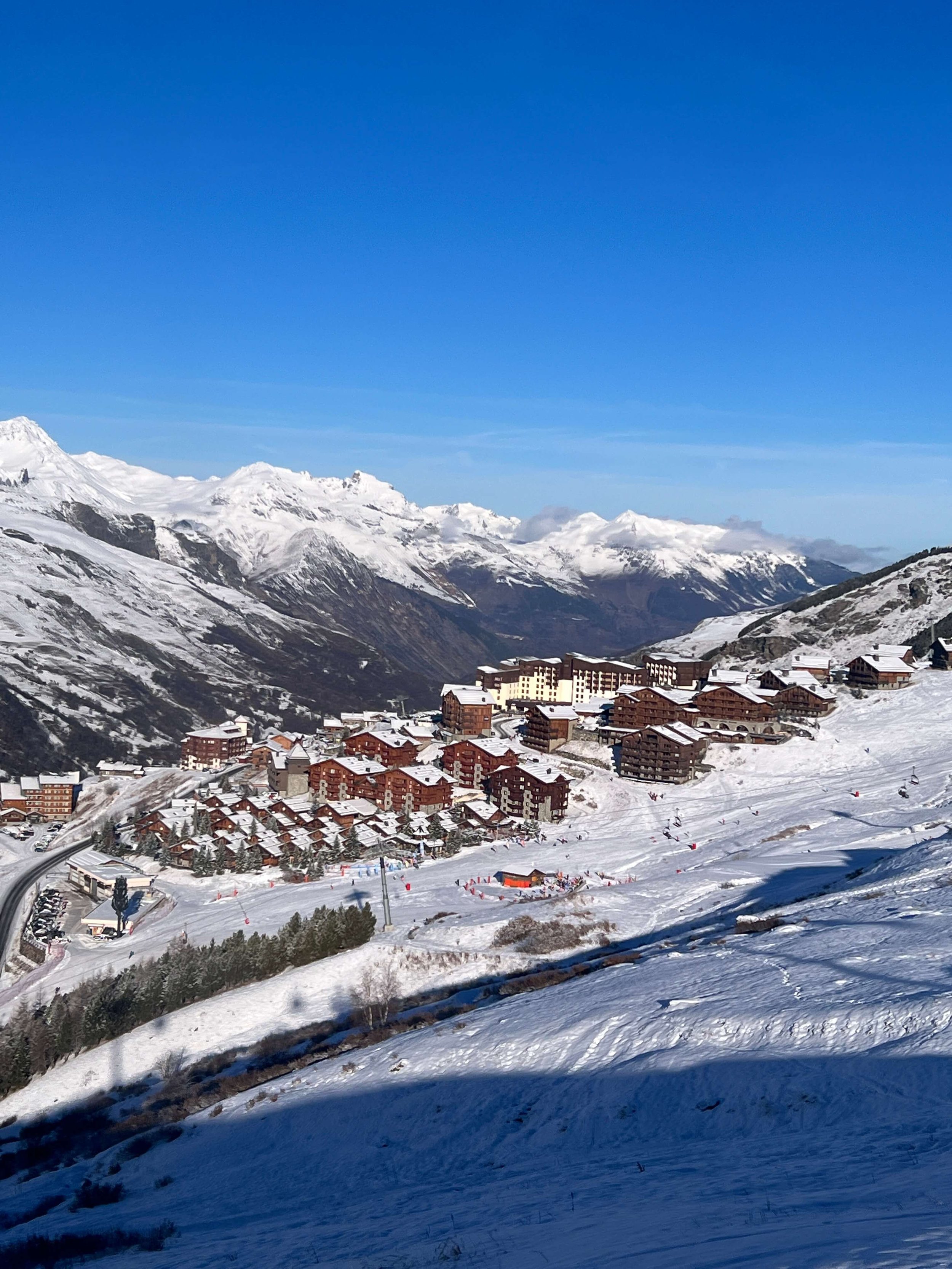
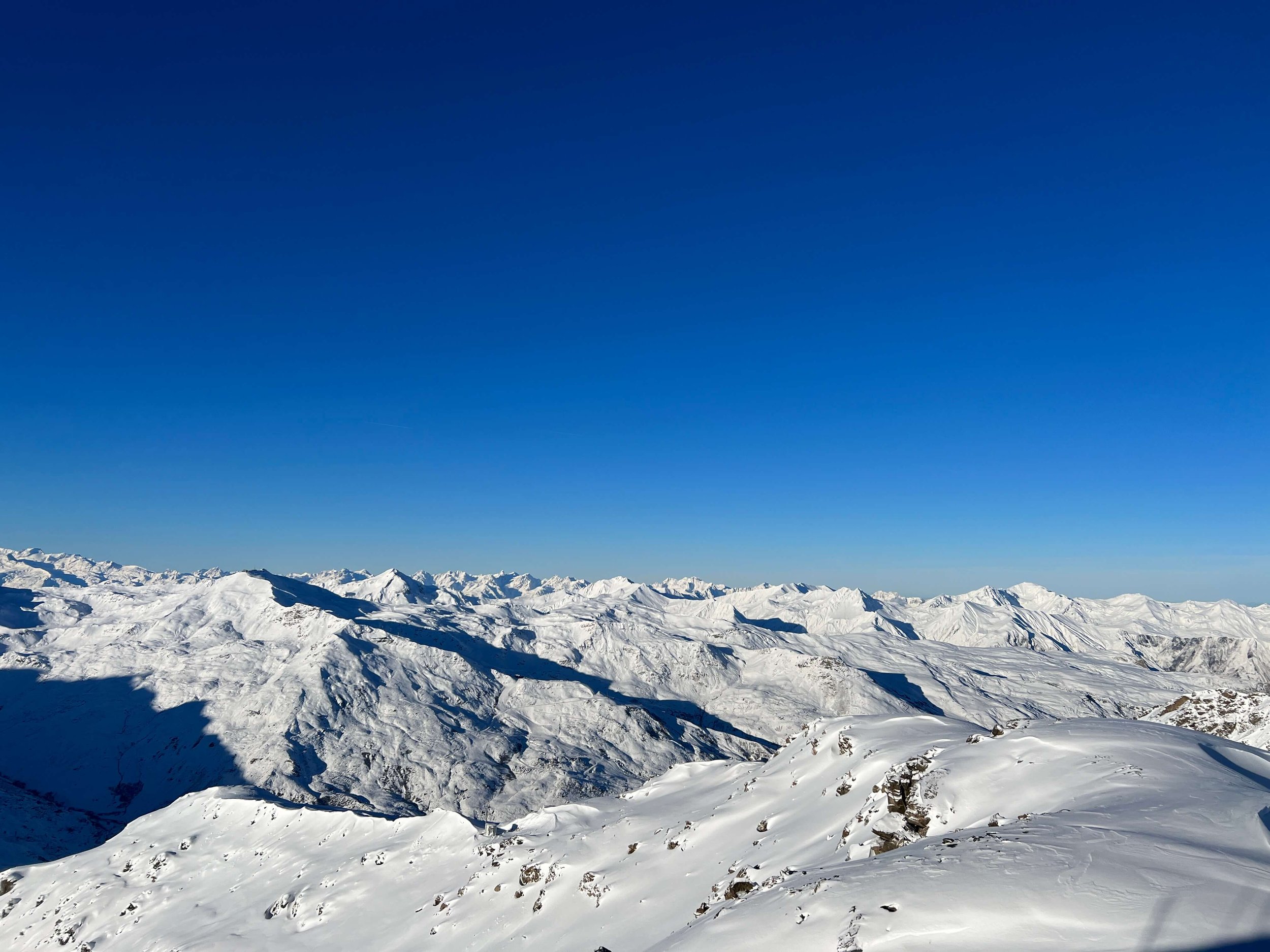
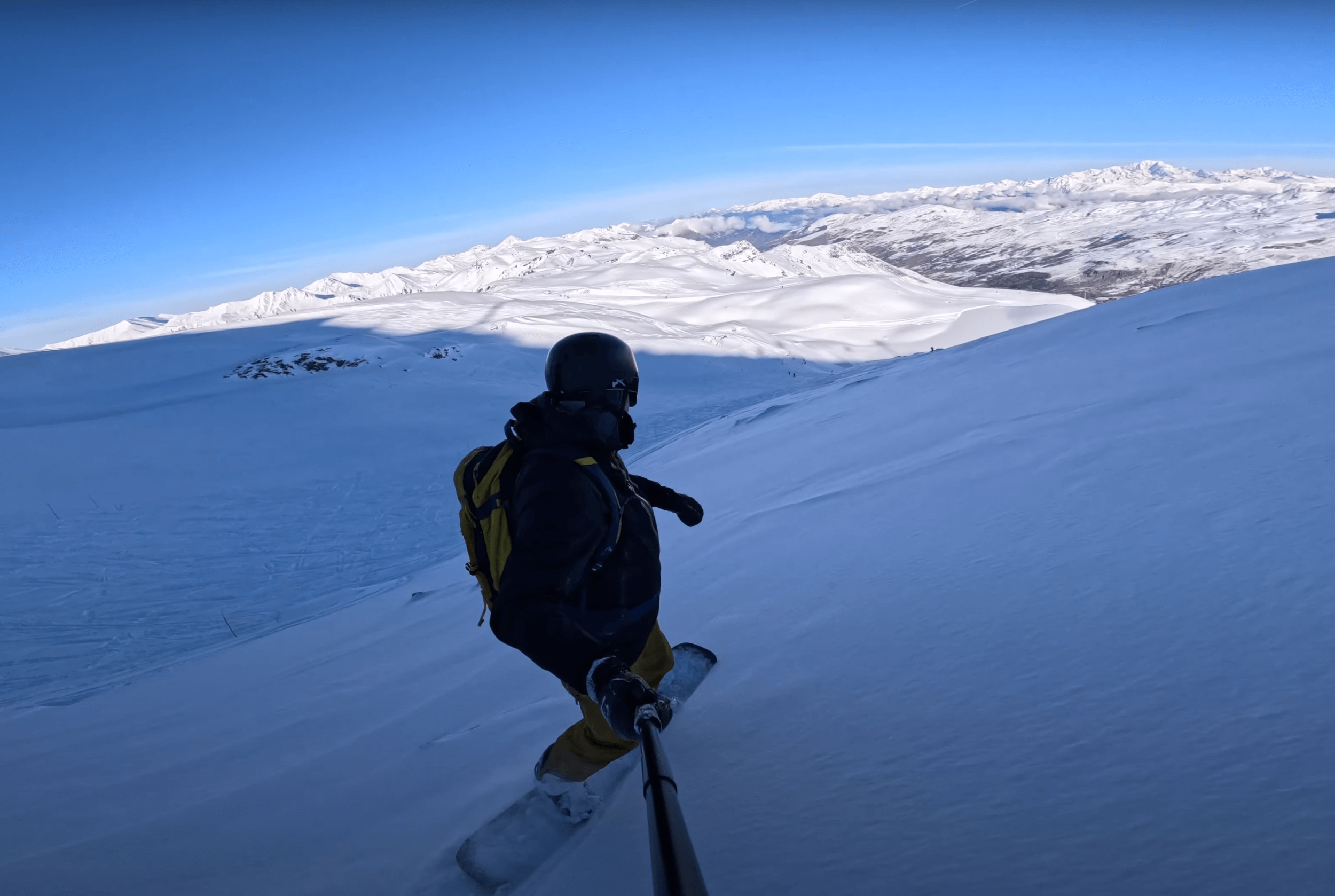
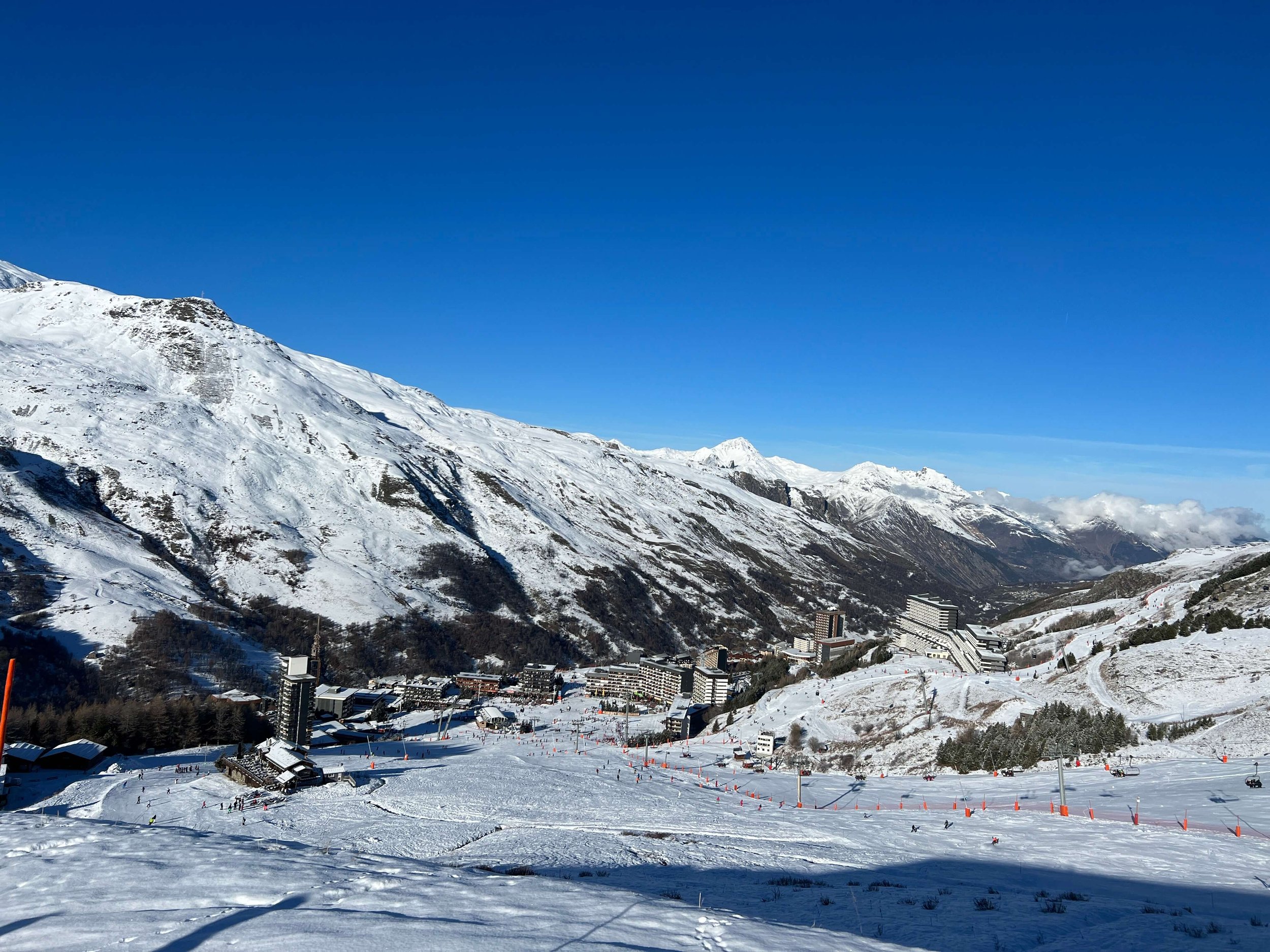
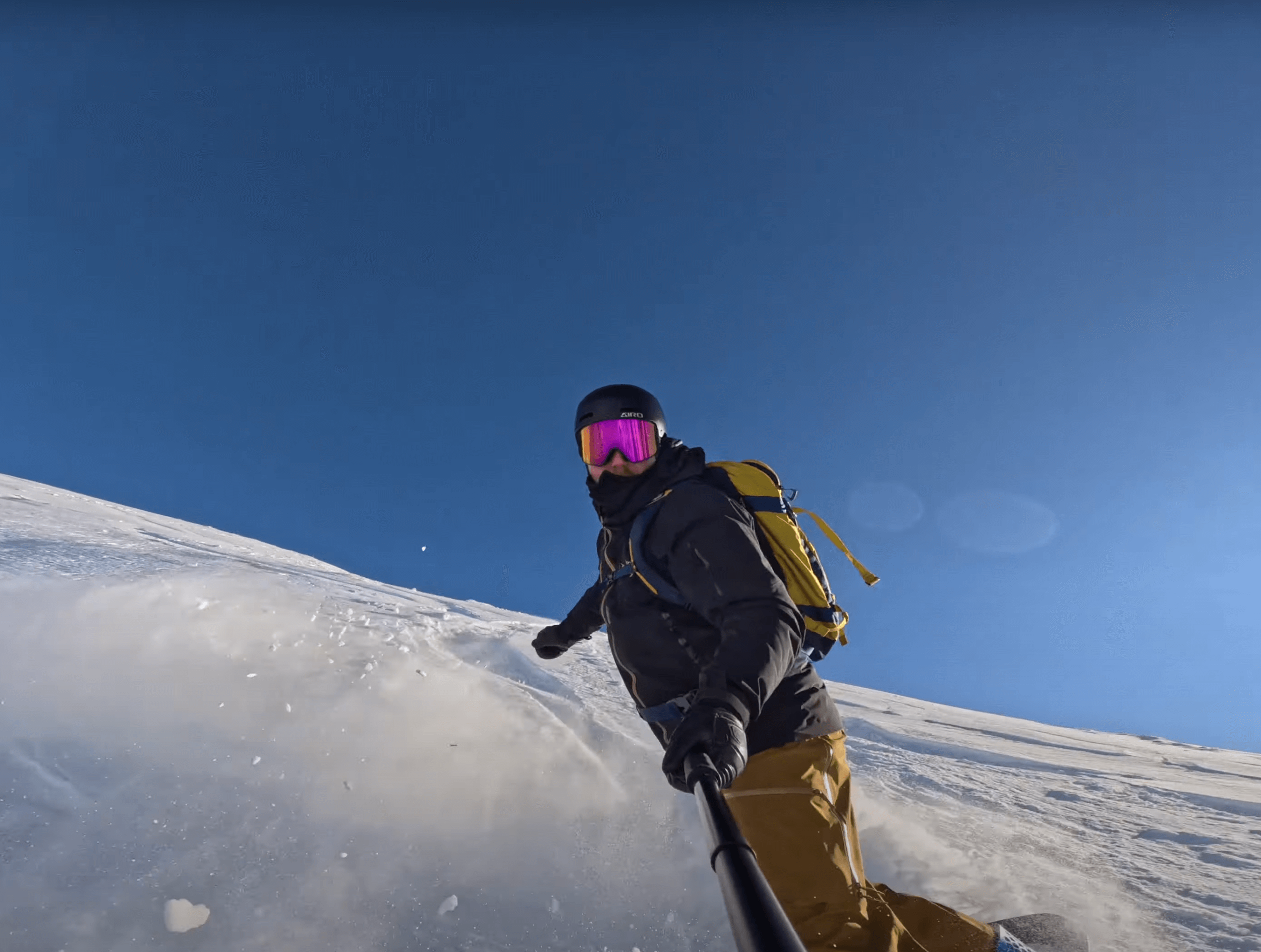


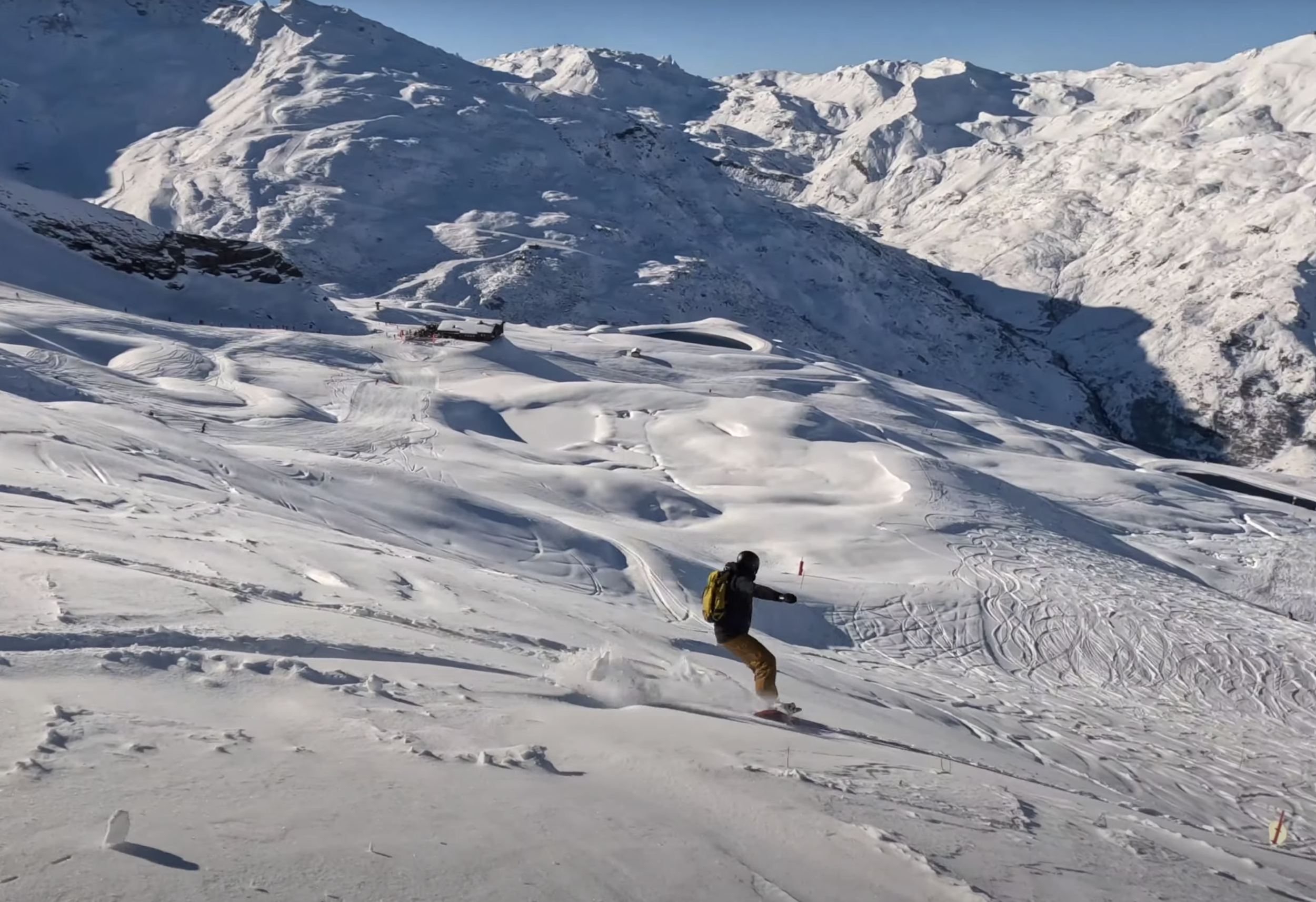
LES MENUIRES VILLAGE
The villages in Les Menuires are renowned for being unattractive eyesores that blight it as one of the ugliest ski resort villages. What the village at Les Menuires 1850 lacks in looks it makes up in convenience with ski-in-ski-out accommodation throughout the village.

Photo Credit @yannallegre
Les Menuires has 5 districts or villages that are served by free shuttle buses allowing easy travel between the villages. La Croisette is as described, the ugly purpose-built village that is the centre of Les Menuires. Below Croisette is Preyerand, which is a good shout for finding affordable accommodation. If you are looking for some charm then the Grand Reberty area has nice accommodation on the slopes with good access to the pistes of Les Menuires. Bruyères has good access to Val Thorens via its gondola that departs from the village.
LES MENUIRES SEASON DATES
Les Menuires opens in December and closes in April but that shouldn’t limit your visit to these months only. Val Thorens is open for longer and can be accessed by bus or self-drive when Les Menuires is closed for the winter. This can make Les Menuires an affordable base for a Nov or May trip to Val Thorens.
TRAVEL TO LES MENUIRES
WHERE IS LES MENUIRES SKI RESORT?
Les Menuires is in the Vallèe de Bellevilles in the Savoie region of France. Located between the villages of Val Thorens and St Martin, Les Menuires is a central location to explore the Vallee de Belleville.
Les Menuires is easy to access within France’s Savoie region which is cluttered with world-class ski areas. The high proximity of ski resorts in the Savoie ensures that many facilities and businesses are geared around travel to the ski areas.
GETTING TO LES MENUIRES BY AIR
Flying to Les Menuires is the fastest and easiest way to get to Les Menuires from the UK. Flying into Geneva airport represents your best bet with regular flights and many transfer operators in the terminal building. Alternative routes into Lyon are also possible.
From both Geneva and Lyon airports you can then either self-drive, take a transfer or continue your route by train towards Moutiers.
Flying is and will remain the easiest and quickest way to reach a ski resort however, it also has the largest impact on your Carbon footprint.
GETTING TO LES MENUIRES BY TRAIN
Taking the train to Les Menuires is possible with trains from London via Paris arriving at Moutiers which is within an hour from Les Menuires. Arriving in Moutiers by train you can connect to Les Menuires via local bus services. Train and bus journeys to Les Menuires are great for minimizing your carbon footprint.
GETTING TO LES MENUIRES BY CAR
Although a longer journey, I have always appreciated the freedom that can come from driving your car to the ski resort. Driving to Les Menuires is straightforward although cumbersome driving long distances down motorways. Having driven to nearby Val Thorens when travelling with my dog, I found the journey really simple. The car journey to Les Menuires will be slightly shorter than the journey to Val Thorens.
Driving to Les Menuires will involve taking either a ferry or Le Shuttle to Calais before starting your drive to the southeast of France. The easiest route is to stick to the French toll-roads which are well-maintained and easy to navigate, although this does come at a further cost.
If you intend to drive to Les Menuires, remember it is essential to have winter tyres and snow chains.
GETTING TO LES MENUIRES BY COACH
Travelling from London to Les Menuires by coach is an affordable option but is probably most people’s least favourite method of transport. Operating from London Victoria Coach Station Snow Express operates weekly departures to Les Menuires throughout the winter season.
The coach to Les Menuires travels through the night until arriving in Moutiers where you will change onto a public bus service (included in your ticket) to arrive into the resort.
LES MENUIRES LIFT PASSES
There are multiple ski pass options for Les Menuires and choosing the right one for you and your group can be confusing. Let’s take a look at the best options below.
LOCAL AREA PASS - LES MENUIRES/ST MARTIN DE BELLEVILLE
The local area pass for Les Menuires and St Martin de Belleville allows access to the 150km of runs within these ski areas. Purchasing the local pass will save you around €10 each day when compared to the Three Valleys Pass. I would recommend this lift pass if you are a beginner or early intermediate, as 150km is plenty of terrain to get started with.
VALLEE DES BELLEVILLES PASS
This pass similar to the above does not offer full Three Valleys ski area access but it is a good medium point. This pass includes 300km of terrain shared between; Val Thorens, Orelle, Les Menuires, & St Martin de Belleville. With 300km of pistes, this pass covers 50% of the available pistes in the Three Valleys ski area. This is a great option for those looking to explore further than Les Menuires but without the need to ski in every Three Valleys ski area.
Purchasing the Vallee des Bellevilles pass will save around €5 per day.
THREE VALLEYS LIFT PASS
Those looking to explore the full ski area should look to purchase the full Three Valleys ski pass. This pass covers the 600km of pistes across all Three Valleys ski areas. Although €10 per day more expensive than a local Les Menuires lift pass, this extensive pass is a great option for the more able who may wish to explore the entirety of the combined ski area.
EPIC PASS HOLDERS
If like me you visited the Three Valleys using an Epic Pass then you are entitled to a 7-day Three Valley ski pass which covers the entire 600km and all resorts in the Three Valleys. Epic Pass holders will need to take their Epic Pass and photo ID to La Croisette (under Roc 1 gondola) to collect there free 7-day Three Valleys lift pass.
ABILITY
Beginners and early intermediates visiting Les Menuires should consider purchasing the local pass. The local area is more than big enough for beginners and early intermediates.
The more able will want to escape Les Menuires and explore the rest of the Three Valleys as it has so much to offer.
BUDGET
If budget is a consideration then meeting midway and getting the Vallee des Bellevilles pass could be your best option. 300km of pistes within this area should be enough to satisfy even the most ardent skiers and snowboarders on a week’s trip to the Three Valleys.
RETURNING VISITOR
If you are returning to Les Menuires and want to escape the local area then having the Three Valleys lift pass is ideal. You can still ski within the local area but the Three Valleys pass allows you to make the most of the connections to the nearby ski areas. The connections between Les Menuires and the resorts of Meribel and Val Thorens are fantastic, this makes the Three Valleys pass worth having.
LES MENUIRES PROS
Les Menuires has skiing above the village at 1800m-2850m making it a snow-sure ski area.
The new Pointe de la Masse gondola gives fantastic access to high-altitude skiing with a quick ride (8 mins) to 2800m.
As with the whole Three Valleys, Les Menuires is continuing to invest in its lift infrastructure ensuring that connections within Les Menuires and between the resorts of the Three Valleys remain excellent.
The area around the village of Les Menuires is great for learning to ski and snowboard with wide trails and mellow gradients.
The village of Les Menuires is perfect for ski-in-ski-out accommodation… even if it is a bit ugly.
The area at the top of La Masse in Les Menuires has some great off-piste.
LES MENUIRES CONS
The area around the village can be busy with lift queues at key times of day. The slopes around the village can feel overcrowded. Once away from the village this is less of an issue.
The pistes around the village can have much different conditions to those at the top of the resort. The higher traffic and lower elevations can make village runs slushy and bumpy.
If you find value in this content please consider supporting the website by clicking the image below and buying me a coffee.
LES MENUIRES FREQUENTLY ASKED QUESTIONS
IS LES MENUIRES FOR BEGINNERS?
Les Menuires is perfect for beginner skiers and snowboarders. The slopes close to the village are mellow and there are a number of beginner areas with magic carpets to help you learn. The majority of the terrain on the village side of Les Menuires is suitable for beginner skiers and snowboarders with plenty of long blues and some green runs close to the village.
IS LES MENUIRES EXPENSIVE?
Les Menuires is one of the more affordable places to stay within the Three Valleys. The village of Les Menuires offers ski-in-ski-out apartment-style accommodation within easy access to the rest of the Three Valleys making it a great base for those on a budget.
WHAT IS THE CLOSEST AIRPORT TO LES MENUIRES?
The closest airport to Les Menuires is Chambery but it is more likely that you will fly to Geneva airport which has a more regular flight schedule than Chambery. Chambery Airport however offers the closest access and, therefore the shortest transfer journey to Les Menuires.
HOW LONG TO SKI FROM LES MENUIRES TO COURCHEVEL?
Skiing between Les Menuires and Courchevel is possible although it is the longest commute from Les Menuires. Expect to spend a couple of hours skiing between the resorts depending on your ability level.
IS LES MENUIRES CONNECTED TO VAL THORENS?
You can ski between Les Menuires and Val Thorens via Mont de la Chambre. From Val Thorens, it is possible to ski back into Les Menuires, simply continue to head down the valley.
LES MENUIRES FINAL THOUGHTS
Les Menuires remains a fantastic base for your Three Valleys ski holiday. As someone who always has an eye on the budget staying in Les Menuires appeals for good value accommodation without sacrificing access to the Three Valleys ski area. I enjoyed the skiing on La Masse and would opt to spend the majority of my time in La Masse when returning to Les Menuires.

Val Thorens Ski Resort Guide
Val Thorens is Europe’s highest ski resort and as such has one of the longest ski seasons in the Alps. The extensive local terrain in Val Thorens (150km) is made better by its links to the rest of the Three Valleys and a total of 600km of pistes! Whether you are heading to Val Thorens for guaranteed snow, the endless variety of pistes or to dance the night away, Val Thorens has you covered.
Locally Val Thorens links to neighbouring Orelle to form what is commonly referred to as ‘the fourth valley’. This part of the 3 Valleys ski area offers an exceptional snow record with enough terrain to keep everyone happy. Furthermore, the resorts across the 3 Valleys are constantly improving the lift network and Val Thorens is no exception.
WATCH THE FULL REVIEW
VAL THORENS FIRST IMPRESSIONS
If you will allow me, I have two very different first impressions of Val Thorens. Initially, as a beginner I made my first turns on a snowboard in Val Thorens. On that first trip, I considered Val Thorens to be a tough experience. I struggled with the crowds and my instructor dragging me onto button lifts… there were better places to learn.
More recently returning as a snowboarder who has visited resorts across the globe I was impressed by the facilities and terrain at Val Thorens. Noticeably from my earlier visit, the beginner’s areas had received an update with new magic carpet lifts running alongside the learner’s slopes. Similarly, the impressive Cascades chair moves crowds away from the village efficiently. Val Thorens had improved its facilities and I was excited to explore more around the resort.
VAL THORENS SKI AREA
Forming a key part of the world’s largest combined ski area, Val Thorens is a big reason why people visit the Three Valleys. The ski area is about as snow-sure as can be with the majority of its terrain (99%) above 2000m and skiing possible on two local glaciers.
Val Thorens is spread between its highest lift point, Cime De Caron (3200m) and its lowest point, Plan de L’eau (1800m) offering 1400m of vertical descent within the resort. Taking the Cime de Caron allows for skiing down to Pan Bouchet in Orelle. The Orelle Valley is one certainly worth exploring on your trip especially after fresh snowfall as there is less competition for freshies.
Throughout the resort, you will find your fair share of reds (35%) and blues (43%) which make Val Thoren’s ideal for intermediates. The quality of the snow in Val Thorens ensures that the pistes stay in exceptional condition making them really confidence building.
Val Thorens sits above the treeline so can be a tough place to ski on those bad weather days. The lack of context during a whiteout can become quite challenging. If the visibility is poor consult the webcams, as a real benefit of skiing the Three Valleys is that the sun is likely to be shining somewhere. Meribel and Courchevel offer more tree-lined runs which can be a godsend in adverse conditions.
VAL THORENS FOR BEGINNERS
Half of the pistes across the Three Valleys are graded as green or blue which goes some way to explaining why this mega-resort is popular with beginners. I personally learnt to snowboard in Val Thorens however the situation has changed greatly. Consider watching the below video which explains the learning experience in Val Thorens.
The beginner's areas in Val Thorens are located in the village with the main trail being quite crowded. Personally, I found this quite daunting when learning, however, it now seems there are more segregated areas off the main trail. Beginners will appreciate the investment in magic carpets across the resort which certainly improve the beginner experience.
When venturing away from the beginner area there are a number of mellow green runs that skiers can head to. The Cascade and 2 Lacs chairs will probably be your first choice. Similarly, the Pionniers chair marks a good place for progression onto blues with Plein Sud and Corniche leading back to the village.
The Magic Carpets in Val Thorens are free of charge which again is a major positive for beginners heading to VT.
VAL THORENS FOR INTERMEDIATES
Val Thorens is perfect for intermediate skiers and snowboarders with plenty of terrain to explore. I loved the trails of the Boismint chair that were nice and wide and tended to avoid crowds. The long red that links trails Boismint and Plan de L’eau was great for picking up some speed.
Elsewhere the pick of the intermediate terrain can be found of the three main gondolas, Peclet, Grand Fond, and Cime Caron. Each gondola accesses some long red trails that provide a good amount of challenge for the advancing intermediate skier.
Intermediates looking to get off-piste after snowfall will find pockets of great snow and mellow gradients to the side of the Peclet pistes. Similarly Grand Fond had some nice areas beside Variante and Falaise. Again Boismint offers good terrain for these conditions with nothing steep to the sides of the pistes.
The pick of the lot could be blue run Jerusamlem which has been voted amongst the Top 10 ski runs in the world. The area to the side of Jerusalem can be great for those looking for a mellow entry into off-piste snowboarding.
Photo Credit @judithgirardmarczak
VAL THORENS FOR ADVANCED
Although the piste map is dominated by blue and red trails, Val Thorens is a great place to snowboard for the more experienced. Val Thorens. The obvious run is Combe de Caron where you can pick your way down the slope which on my trip remained ungroomed. In reality, there is so much more in Val Thorens with the opportunity to find great off-piste across the whole mountain.

Combe de Caron
FREESTYLE VAL THORENS
There are two terrain parks in Val Thoresn, the VT Park and the Family Park. The VT park has its own surface lift which means you can effectively lap it, rather than doing a longer loop utilising the Grand Fond. The Terrain Park was still under construction during my visit but there was a good series of entry-level freestyle features and the jump line was being shaped.
The Plateux area where the park is located is normally found in shade during the morning meaning landings can be hard and icy. Consider delaying your visit until the afternoon until the sun has softened the snow.
The family park is found off the 2 Lacs chair and has a mellow boarder cross track with hoops to ride through. Again I can see them developing upon this throughout the season.
OFF-PISTE VAL THORENS
Getting off-piste in Val Thorens is possible across the resort with lots of options depending on the weather. Turning left at the top of Boismint chair will take you into some interesting terrain with a huge bowl and chutes leading back to the pistes. The Cime Caron offers options both back towards Val Thorens and down into Orelle and easy access is possible across to Meribel and Les Menuires where your options increase further. La Masse in Les Menuires is amongst my favourites with the Liberty Ride or Freeride Zone.
If you are interested in ski-touring or splitboarding then Val Thorens offers a number of interesting options within the resort or accessible by resort lifts. Amongst the most popular routes and the Lac du Lou or The Pierre Lory.
LIFTS VAL THORENS
What can not be argued is the quality of the ski lift infrastructure in Val Thorens. Across the resort and the wider Three Valleys ski area the the lifts are fast and modern, but more importantly well placed to navigate the resort. I was impressed by the ability of the lifts close to the village to move crowds quickly away from the resort. Cascades in particular loads and moves skiers effectively preventing crowds even at peak times.
Network of Ski Lifts in Val Thorens.
Being a high-altitude ski resort, Val Thorens can get those bad weather days when high winds can threaten closures. Luckily the ski lifts in Val Thorens are able to keep turning and the resort can keep running in all but the most adverse weather conditions.
WHERE TO SKI IN BAD WEATHER VAL THORENS
Sadly when the weather does get bad in Val Thorens there is little shelter or context to be found. Heading into Meribel or down into Les Menuires provides better shelter and more context from the tree-lined slopes. If you are restricted to Val Thorens then sticking to the runs closest to the resort will provide some context from the large apartment complexes.
VAL THORENS PISTE MAP
VAL THORENS GALLERY





VAL THORENS VILLAGES
Val Thorens combines with Les Menuires and St Martin de Belleville to form the Belleville Valley. From each of the villages, it is possible to explore the Val Thorens ski area with ease. Similarly, basing yourself in nearby Orelle can also reflect a great base for a Val Thorens ski holiday. All of this could make it confusing when deciding where to stay for your Val Thorens ski trip. In this section, I look to provide you with information about each village to make an informed choice.
VAL THORENS
The most obvious choice for your Val Thorens ski holiday is of course Val Thorens. Staying in the highest ski village in Europe comes with its advantages including direct access to the slopes and ski-in-ski-out accommodation. Val Thorens now a bustling ski town with everything you would need not just for a ski holiday but for life in general. The large sports centre, a great selection of restaurants and activities for kids make Val Thorens an easy choice for your ski accommodation.
The accommodation itself varies from large hotel chains like Club Med to self-catering apartments on the side of the piste. Whatever your requirements or budget Val Thorens will have something for you. Personally, for one of my trips to Val Thorens, I stayed in the worst-rated apartment on booking dot com and had a great time. Fair the apartment was naff, but it was central, ski-in-ski-out and budget-friendly.
If staying in Val Thorens it is worth noting that the village is not car-free but you have to park in the designated parking garages. Cars left at the side of the road will receive penalty tickets and possibly be towed. The garages vary in price and you can save money by parking further from the village centre. Free shuttle buses run between the car parks and the village regularly.
LES MENUIRES
A resort in its own right, Les Menuires represents a great base for your Val Thorens ski or snowboard holiday. Locally there are 150km of pistes, but with easy access by road or chairlift to Val Thorens this skiable area doubles. Staying in Les Menuires will save you cash but not at the expense of your experience. Les Menuires is referred to as the ‘Ugly Duckling’ of French ski villages but it provides a practical base for your ski holiday.
Photo Credit @yannallegre
The Village of Les Menuires is lower down the Belleville Valley at 1850m which certainly makes it a less reliable base during early and late season.
SAINT MARTIN DE BELLEVILLE
St Martin de Belleville is like a little brother to Val Thorens. Often overlooked as it is lower in the valley, St Martin has connections straight into the heart of the Three Valleys. At 1450m St Martin de Belleville is less snow-sure than Val Thorens but its links mean this isn’t really an issue. The village itself is quieter which can offer a more chilled alternative to a Val Thorens ski holiday.
ORELLE
Another cost-effective village to explore Val Thorens from is Orelle. Orelle is more traditional and less a ski village but more actual village. From Orelle, you will need to take the 3 Vallees Express and then Peyron and Bouchet chairs to ski into Val Thorens but this is all due to change with plans for an updated gondola.
The Village itself had a really nice vibe and felt like a quieter Samoëns, with a classic stone village centre and enough shops to fulfil your needs. Orelle is a combination of budget-friendly and quieter Val Thorens ski holiday base.
VAL THORENS SEASON DATES
Val Thorens regularly has one of the longest ski seasons in the Alps with the opening of the ski resort in November and closing in May. Therefore it is possible to ski for nearly six months in Val Thorens, longer than any of the other Three Valleys ski areas. The long ski season in Val Thorens makes it a fantastic choice for early and late season ski holidays to the Three Valleys.
TRAVEL TO VAL THORENS
WHERE IS VAL THORENS SKI RESORT?
Val Thorens is in the Vallèe de Bellevilles in the Savoie region of France. Located at the top of the Valley you will pass St Martin de Belleville and Les Menuires en route to Val Thorens.
Val Thorens is easy to access within France’s Savoie region which is cluttered with world-class ski areas. The high proximity of ski resorts in the Savoie ensures that many facilities and businesses are geared around travel to the ski areas.
GETTING TO VAL THORENS BY AIR
Flying to Val Thorens is the fastest and easier way to get to Val Thorens from the UK. Flying into Geneva airport represents your best bet with regular flights and many transfer operators in the terminal building. Alternative routes into Lyon are also possible.
From both Geneva and Lyon airports you can then either self-drive, take a transfer or continue your route by train towards Moutiers.
Flying is and will remain the easiest and quickest way to reach a ski resort however, it also has the largest impact on your Carbon footprint.
GETTING TO VAL THORENS BY TRAIN
Taking the train to Val Thorens is possible with trains from London via Paris arriving at Moutiers which is within an hour from Val Thorens. Although Val Thorens itself does not have a train station arriving at Moutiers and then taking a bus/transfer to the resort is a fairly simple process.
GETTING TO VAL THORENS BY CAR
Although a longer journey, I have always appreciated the freedom that can come from driving your car to the ski resort. Driving to Val Thorens is straightforward although cumbersome driving long distances down motorways. Having driven to Val Thorens when travelling with my dog, I found the journey really simple.
There is no need for a car within the resort and you will have to factor in the cost of using the underground parking areas in Val Thorens, but driving to Val Thorens was a stress-free travel method.
Driving to Val Thorens will involve taking either a ferry or Le Shuttle to Calais before starting your drive to the southeast of France. The easiest route is to stick to the French toll-roads which are well-maintained and easy to navigate, although this does come at a further cost.
If you intend to drive to Val Thorens, remember it is essential to have winter tyres and snow chains.
GETTING TO VAL THORENS BY COACH
Travelling from London to Val Thorens by coach is an affordable option but is probably most people’s least favourite method of transport. Operating from London Victoria Coach Station Snow Express operate weekly departures to Val Thorens.
VAL THORENS LIFT PASSES
There are multiple ski pass options for Val Thorens and choosing the right one for you and your group can be confusing. Let’s take a look at the best options below.
LOCAL AREA PASS - VAL THORENS/ORELLE
The local area pass is enough for most skiers and snowboarders visiting Val Thorens for a 7-day period. The area encompassed by Val Thorens and Orelle includes 150km of pistes and some pretty epic off-piste terrain. By purchasing the local area ski pass you will be unable to venture further into the Three Valleys, but for many first-time/intermediate skiers, you won’t need to.
Purchasing the local pass will save you around €7 each day.
VALLEE DES BELLEVILLES PASS
This pass similar to the above does not offer full Three Valleys ski area access but it is a good medium point. This pass includes 300km of terrain shared between; Val Thorens, Orelle, Les Menuires, & St Martin de Belleville. With 300km of pistes this pass covers 50% of the available pistes in the Three Valleys ski area.
Purchasing the Vallee des Bellevilles pass will save around €5 per day.
THREE VALLEYS LIFT PASS
Those looking to explore the full ski area should look to purchase the full Three Valleys ski pass. This pass covers the 600km of pistes across all Three Valleys ski areas. Although €7 more expensive than a local Val Thorens lift pass, this extensive pass is a great option for the more able who may wish to explore the entirety of the combined ski area.
EPIC PASS HOLDERS
If like me you visited the Three Valleys using an Epic Pass then you are entitled to a 7-day Three Valley ski pass which covers the entire 600km and all resorts in the Three Valleys. Epic Pass holders will need to take their Epic Pass and photo ID to either Forum Joseph Fontanet or the Funitel de Pèclet ticket offices to receive your free pass.
ABILITY
Beginners and early intermediates visiting Val Thorens should consider purchasing the local pass. There is plenty to keep you entertained whilst you are honing your skills within the local area. Access to Orelle could be considered adventure enough for your early trips to Val Thorens.
Remember if you are a never-ever, then you may not need to purchase a lift pass initially as the Magic Carpets are free to use. Liaise with your instructor to discuss whether you will be venturing further than this.
BUDGET
If budget is a consideration then meeting midway and getting the Vallee des Bellevilles pass could be your best option. 300km of pistes within this area should be enough to satisfy even the most ardent skiers and snowboarders on a week’s trip to the Three Valleys.
RETURNING VISITOR
If you are returning to Val Thorens and want to escape the local area then having the Three Valleys lift pass is ideal. You can still ski within the local area but the Three Valleys pass allows you to make the most of the connections to the nearby ski areas.
To check the latest prices and buy your lift pass click here.
VAL THORENS PROS
Val Thorens offers guaranteed skiing between Nov and May making it one of Europe’s longest ski seasons.
As part of the Three Valleys, Val Thorens has access to 600km of pistes across multiple French ski resorts.
Being a high-altitude village the Val Thorens ski area mostly sits above 2000m ensuring snow quality is great.
Val Thorens has 150km of local terrain which is well suited to intermediates.
Val Thorens has an exceptional lift system with modern lifts transporting skiers quickly and efficiently around the mountain.
Purpose-built village of Val Thorens has numerous accommodation options.
VAL THORENS CONS
The learner's areas in Val Thorens are busy with the main village run being a bit of a nightmare at peak times.
Val Thorens lacks context in trees due to its altitude meaning the resort can have bad visibility days which are not fun.
Limited on-piste terrain for the more advanced skiers and snowboarders.
If you find value in this content please consider supporting the website by clicking the image below and buying me a coffee.
VAL THORENS FREQUENTLY ASKED QUESTIONS
IS VAL THORENS FOR BEGINNERS?
As someone who learnt to snowboard in Val Thorens and subsequently taught snowboarding across various continents I wouldn’t say that Val Thorens is an ideal place to learn. The positives are that Val Thorens offers free use of the Magic Carpets to beginners which is a nice touch and there are plenty of ski schools available. My main issue are the crowds which can feel daunting, so if you are set to learn in Val Thorens avoid the peak weeks.
WHAT IS VAL THORENS FAMOUS FOR?
Val Thorens is the highest ski resort in Europe making it famous for exceptional skiing conditions and a long winter season.
IS VAL THORENS A PARTY RESORT?
Val Thorens is a party town but you don’t need to feel like you are in the thick of it. If you are after Après ski well Val Thorens does it superbly with a number of bars and nightlife throughout the village. Nightlife in Val Thorens stays open until the early hours so be prepared to dance away the hangover so you can still make first lift.
IS VAL THORENS EXPENSIVE?
Val Thorens is a premium ski resort in the largest combined ski area in the world so yes it can be expensive. Within the context of the Three Valleys, Val Thorens represents great value when compared to Courchevel and Meribel which are advertised towards the more affluent clientele. There are always ways to budget and reduce costs for your ski holiday from accommodation to bringing your lunch with you on the slopes.
IS VAL THORENS HARD TO SKI?
The resort runs of Val Thorens are suitable for beginner and intermediate skiers and snowboarders with the majority of terrain rated as blue or red. There are a few black graded slopes within the resort however the main challenge is found away from the pistes.
WHICH AIRPORT DO YOU FLY TO FOR VAL THORENS?
The airport of Chambery is the closest airport to Val Thorens but the choice of flights is limited. Flying into Geneva or Lyon will result in longer transfers but cheaper and more regular flight services.
VAL THORENS ACTIVITIES
Val Thorens has plenty to keep skiers and non skiers entertained when visiting for a winter ski holiday. There are a number of activities available throughout the resort which will add to your on snow experience. Below is a selection of my favourites.
BEE FLYING VAL THORENS
Bee Flying was incredible and certainly one of the highlights of my trip to Val Thorens. The journey back to the village takes on 1800m of zip lines in three stages, where you will hover 65m above the ground. Check out the video below for a POV of my experience at Bee Flying Val Thorens.
ICE RINK
In the village of Val Thorens, you will find an Ice Rink where beginners through to experts are welcomed to put on their skates and head out onto the ice. The rink is 400m2 and is only open during the winter season.
ICE DRIVING
Ice Driving Val Thorens is exactly what it sounds like! These go karts on ice race around the 225m ice track at the base of the village in this incredible mountain setting. Check out the Ice Driving Experience here.
BEST SKI SHOP IN VAL THORENS
When visiting a ski resort I always try to find the best ski and snowboard shops to recommend to others. After spending time looking for snowboard boots in most of the Val Thorens ski shops I can highly recommend Zenith Ski Shop.
Although I didn’t purchase anything in Zenith, the assistance I was given was exceptional. Zenith is ideally located in the centre of the village and has an excellent selection of ski and snowboard gear to buy and rent. I took my board in for a service and they did a great job with a quick turn-around.
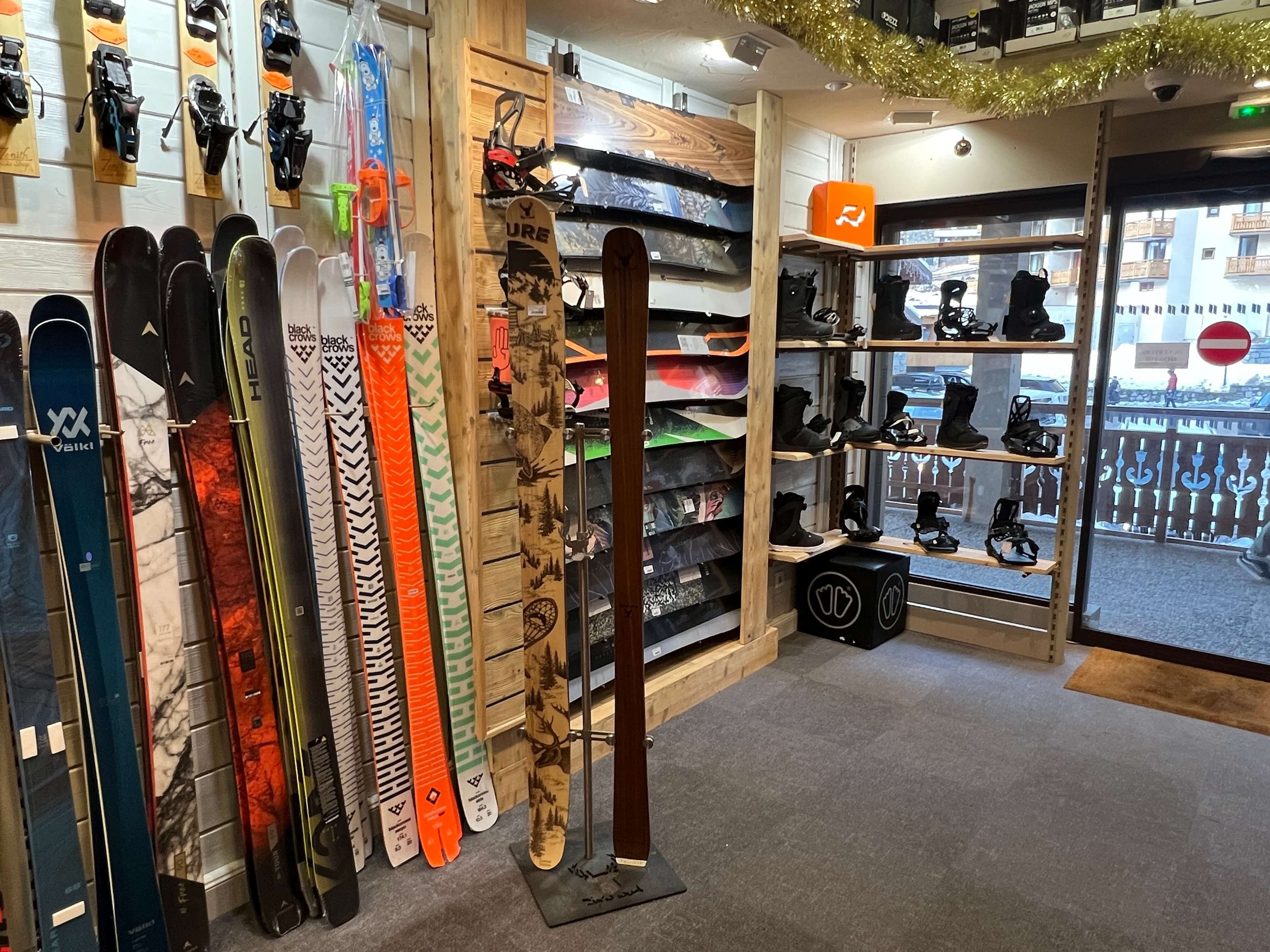
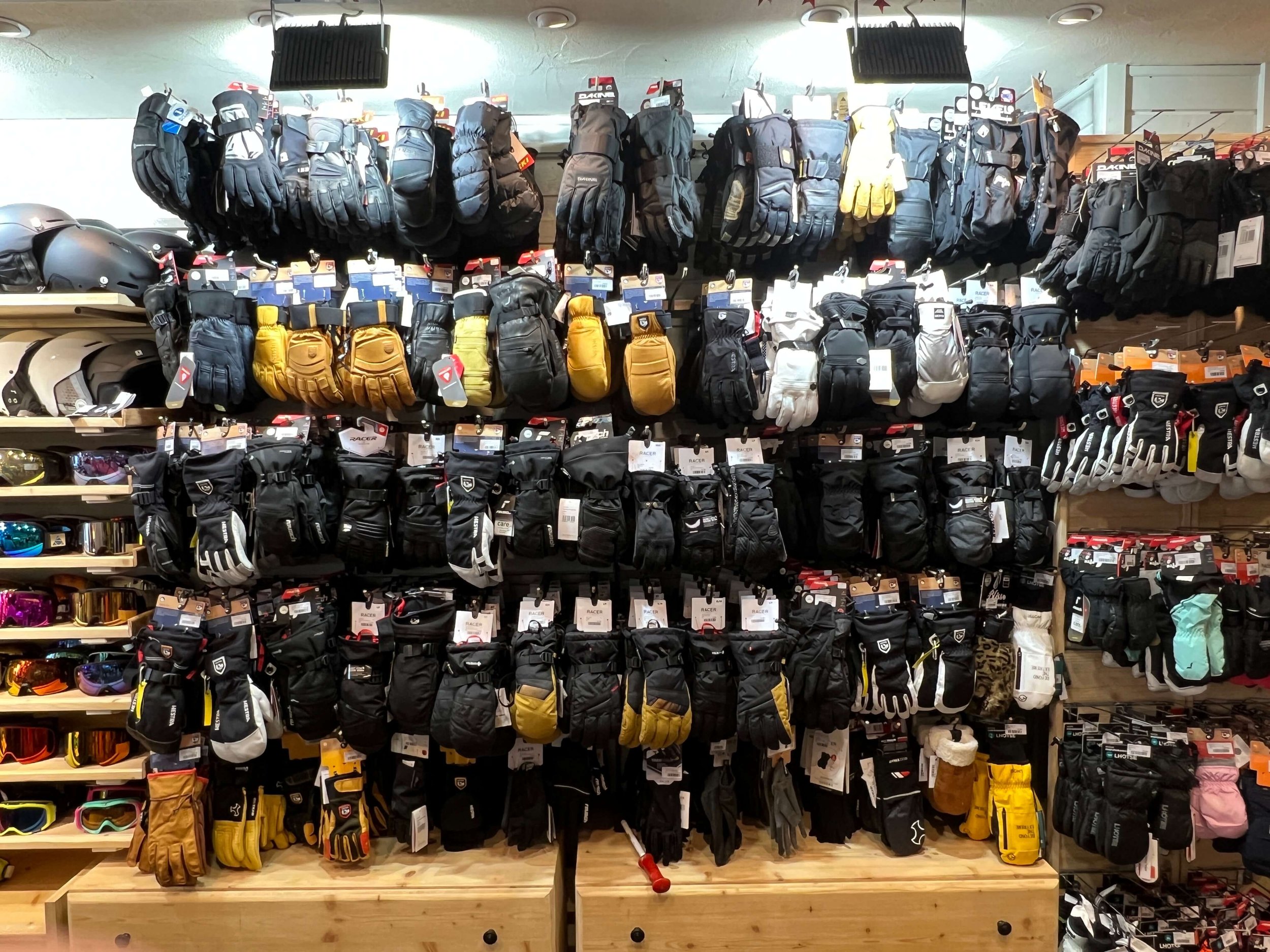
VAL THORENS FINAL THOUGHTS
Val Thorens is always going to be one of the best options for ski holidays in Europe. When you combine the highest resort village, with terrain above 2000m, and a large connected ski area Val Thorens packs a punch. The village and local area have everything you require in a ski resort base and it is hard to argue against returning to the resort year after year.

Cerro Catedral Ski Resort Guide
If you are looking for a well-developed ski resort in South America, well Cerro Catedral is your best option. The largest ski area in South America, Cerro Catedral has it all. A one-stop-shop for experiencing the best of the Argentine ski scene. At Cerro Catedral ski resort you will not only find some incredible terrain but you will find the views to match. Catedral’s location looking over Lago Nahuel Huapi is stunning and firmly cements its place amongst the most scenic ski resorts in the world.
Views from @ Cerro Catedral Across Lago Nahuel Huapi
CERRO CATEDRAL FIRST IMPRESSIONS
Flying into the local town of Bariloche it is easy to see what draws not only mountain lovers but tourists to this area. The Andes are spectacular and the location of Bariloche on the banks of Lago Nahuel Huapi is something extra special. You will need to leave the town of Bariloche and drive just over 16km to reach the resort and village base at Cerro Catedral. Now known as Catedral Alta Patagonia, the resort and village are about as modern as it comes in South America. You will find a fully functioning ski town, with accommodations and ski shops lining the pathways to the lifts. A particular highlight is the smell coming from Rapanui, a delightful chocolatier you will find both in Catedral and Bariloche.
CERRO CATEDRAL SKI RESORT
Catedral Alta Patagonia is huge and offers the largest lift accessible ski area in South America. There are over 30 lifts to transport you uphill around the 3000 acres of ski area here. There is an expanse of off-piste and sidecountry terrain at Cerro Catedral and this can make the skiable terrain seem endless. Inbounds you will find 120km of pistes that are most suited to intermediate skiers and snowboarders. Snowboarders who love to cruise the blues will really enjoy Cerro Catedral and if you are a competent red rider then Panorama will be a favourite. Panorama is a beautiful red run that winds its way from the top of Nubes chair offering (yes you guessed it,) panoramic views of Lago Nahuel Huapi and the Andes mountains.
Beginners will be happy enough at Catedral with a designated beginners area at the base and at mid-mountain. If you are learning for the first time whilst visiting Catedral aim to visit outside of the holiday season as the resort can get swarmed by Brazilian tourists making the learner slopes pretty hectic.
La Laguna Off-Piste @ Cerro Catedral
Where Catedral Alta Patagonia comes alive is in the advanced terrain. When conditions are good at Catedral this is one of the best resorts you can be at. The short hike into La Laguna is well worth it and offers up a good range of off-piste options. In La Laguna, you can hike to the imposing granite towers that give Catedral its name. This area is where we had our best days at Cerro Catedral ski resort, exploring the terrain and finding new ways to snowboard back down into the resort. Advanced skiers and boarders will also appreciate the lift accessible turns you can get straight from the Nubes chairlift. Directly under the chair, there are some steep runs lined with rocks however, these can get tracked quickly during the peak periods.
If you find value in this content please consider supporting the website by clicking the image below and buying me a coffee.
CERRO CATEDRAL FOR BEGINNERS
Beginner skiers and snowboarders will find a few areas to learn at Cerro Catedral with magic carpets and beginner’s lifts right outside Plaza Amancay and at the top of both Princesa 1 and Amancay gondolas. The beginner areas at Catedral can be really busy during holiday periods with an influx of Brazilian tourists learning to ski for the first time. Away from the never-ever slopes, Catedral ski resort has some interesting greens on the lower mountain. In the right conditions, beginners can ski from Esquiadores chair back to the base via a winding green trail 1200.
The main greens at Cerro Catedral are on the lower mountain meaning that they can be subject to poor conditions late in the season or during a lean snow year.
CERRO CATEDRAL FOR INTERMEDIATES
Intermediates will find no shortage of blue and red trails at Catedral Alta Patagonia. The reds and blues link together nicely across the mountain to ensure that intermediates can pick their preferred route down to the base.

The area underneath the Condor 1,2, & 3 chairs link together some long trails that head down to the base area. Beware, the Condor chairs are pretty old-school and not known for their speed. Elsewhere the Nubes chairlift accesses not only one of the prettiest runs on the mountain, Panorama, but also some interesting blues, Nuber and Paralela, which run alongside the Cerro Catedral terrain park.
CERRO CATEDRAL FOR ADVANCED
Although Cerro Catedral ski resort caters well to intermediates it is for the advanced skier that it comes into its own. The Nubes area was amongst my favourite hangouts with some great off-piste routes which pick their way between the rocks and are lift-accessible.
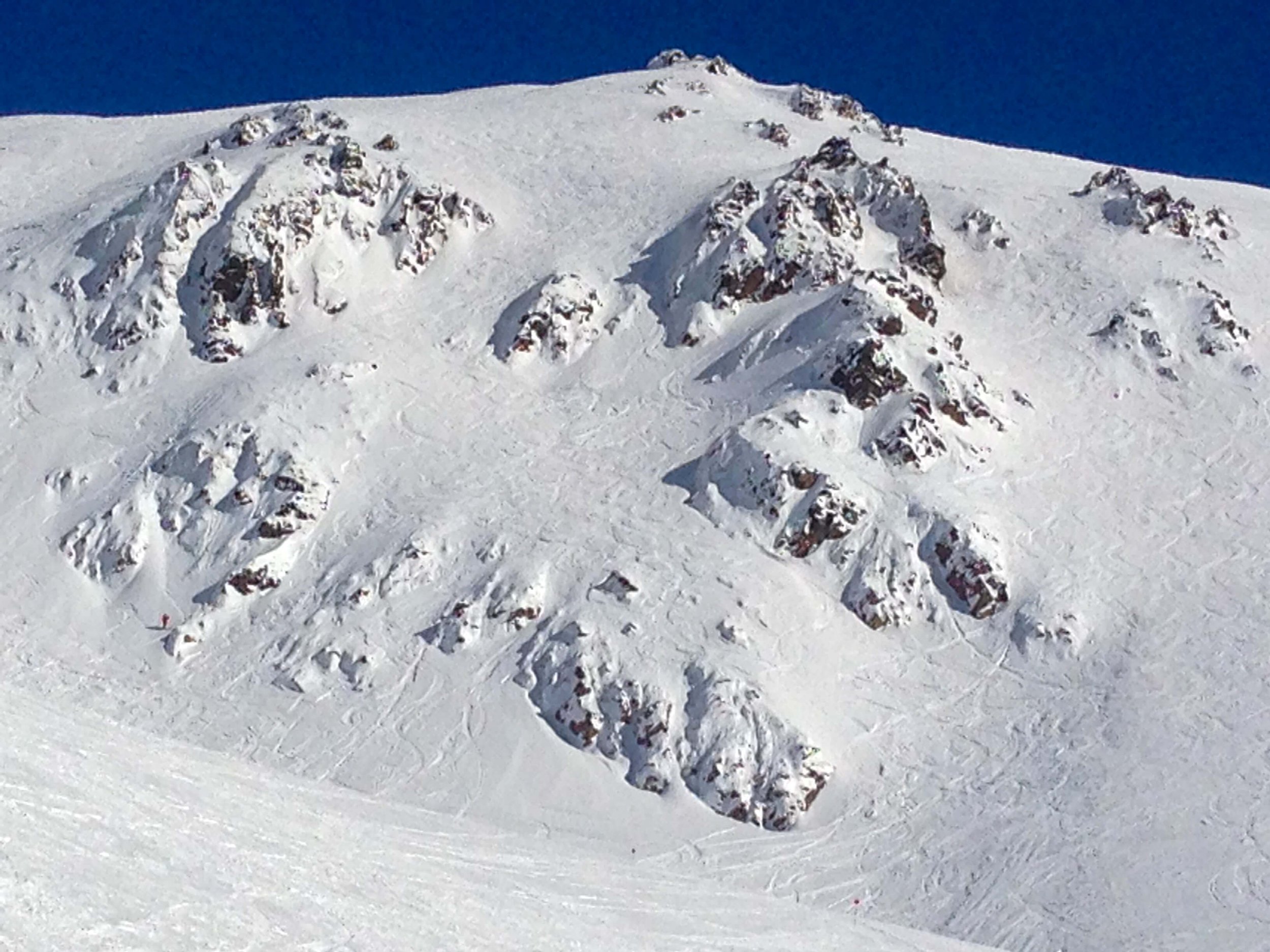
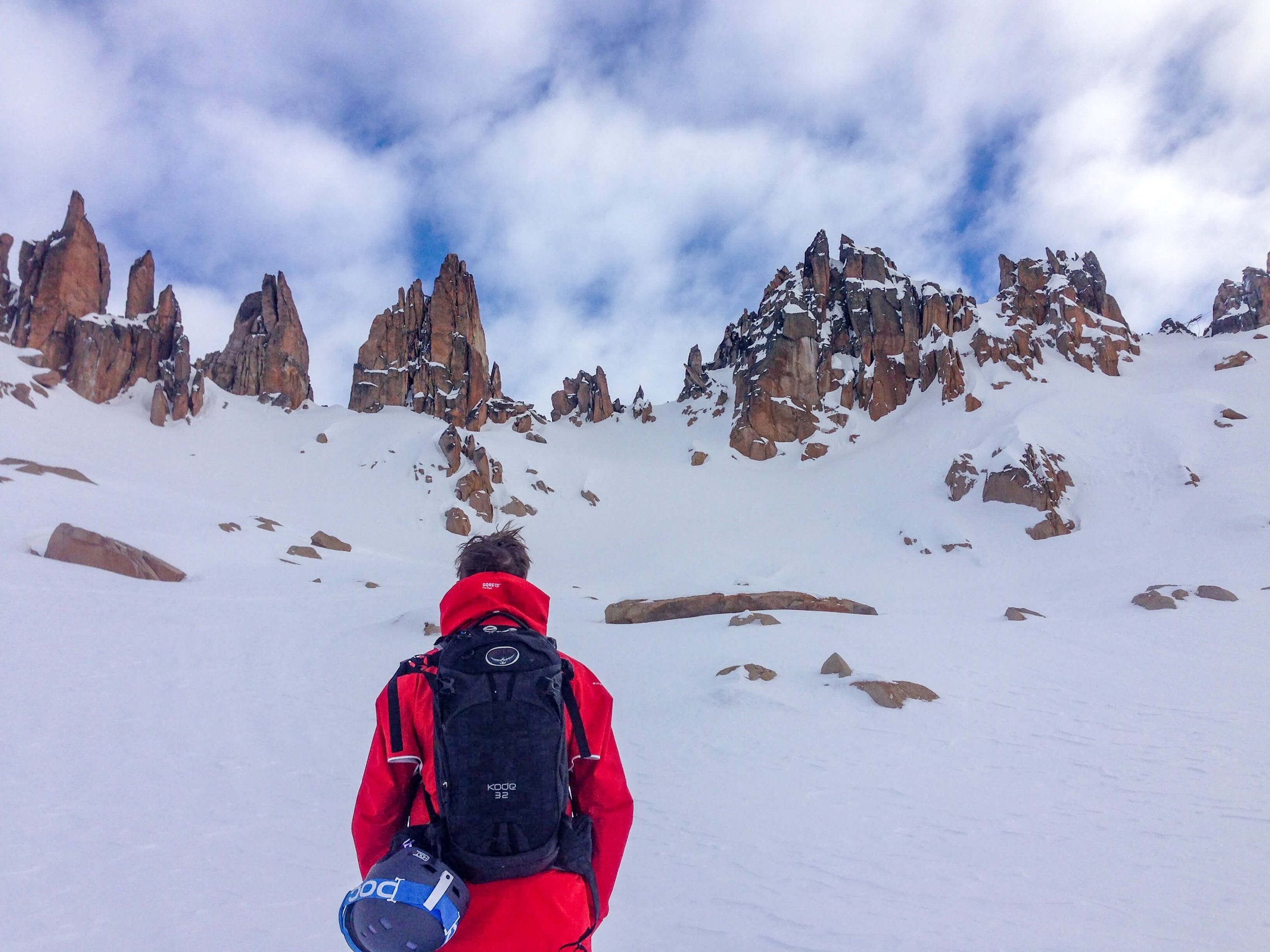
If you do not mind a short hike, then the La Laguna area is of absolute interest. It is here following the hike to 2180m and standing amongst the granite peaks that I enjoyed some of my most memorable days at Catedral.
CERRO CATEDRAL FREESTYLE
Cerro Catedral has a decent terrain park with its own quad chairlift making it simple to lap. The park has a number of freestyle features that progress in difficulty. The terrain park is located under Nubes and is well-maintained with regular staff ensuring that features are safe and fun.
CERRO CATEDRAL PISTE MAP
Catedral Alta Patagonia Piste Map
LIFTS AT CERRO CATEDRAL
The quality and speed of lifts at Cerro Catedral vary greatly. The Sextuple will be your fastest and most direct way to access the centre of the resort. Alternatively, you can take the arduous journey up the three old Condor chairs. This route is sometimes worth it when the crowds swamp the Sextuple. There is also an old gondola, Amancay, which accesses some of the beginner terrain and will get you closest to La Laguna. My favourite lift in the resort is the Nubes chair which takes you to some of the best views and runs on the mountain.

CERRO CATEDRAL SNOW RECORD
The snow at Cerro Catedral can be hit or miss and although the average snowfall in the resort is 6m per season it can be wet and heavy. The snow towards the base tends to worsen throughout the day and the season and it is possible you will be required to down lift. The upper slopes tend to stay in good condition and this is where the majority of the challenging terrain is found.
CERRO CATEDRAL SEASON DATES
The season at Cerro Catedral Alta Patagonia runs between June and October. The early and late season conditions can be fairly average so we would recommend visiting between August and early September.
CERRO CATEDRAL LIFT TICKTS
When buying your lift tickets for Cerro Catedral it is best to look in advance at the weather forecast. Patagonia is prone to some pretty serious weather systems that can cause down days. Cerro Catedral offers Flexi pass options which are great for this purpose.
For prices and the most up-to-date information on lift tickets for Cerro Catedral click here
TRAVEL TO CERRO CATEDRAL
GETTING TO ARGENTINA
Argentina is the 8th largest country in the world so getting around can involve long journeys. You will most likely enter via plane into Buenos Aires EZE or Ministro Pistarini Internation Airport. From here if you intend to take an internal flight you will need to transfer to AEP or Jorge Newbery Airport. From AEP you can fly directly to Bariloche.
WHERE IS CERRO CATEDRAL?
Cerro Catedral is the closest ski resort to the town of San Carlos de Bariloche in Argentina’s Lake District. Set within the area of the Nahuel Huapi National Park and near Lago Nahuel Huapi, Cerro Catedral is in a stunning location. To get to Bariloche from Buenos Aires the quickest route is to take a flight into Bariloche airport which will take around 2 hours. The airport is outside of Bariloche and you will need to either take the bus or a taxi into the town.
CERRO CATEDRAL ACCOMMODATION
The town of Bariloche is bustling with activity and would be a great place to base yourself during your stay at Cerro Catedral. There are plenty of accommodation options ranging from hostels to boutique hotels. If you stay in Bariloche you will need to take the bus to Cerro Catedral, hitchhike, or hire a car.
Alternatively, it is possible to stay in the village base area at Cerro Catedral. The village has a wide selection of accommodation and amenities. Most accommodation is a short walk from the slopes and the restaurants or bars in the village.
I opted to stay at a hostel halfway between Bariloche and Cerro Catedral called Alaska Hostel. We found this location great for both ease of getting to Cerro Catedral and also trips into town.
CERRO CATEDRAL PROS
Cerro Catedral has incredible lift-accessed side-country that offers plenty of challenges.
Modern lifts can be found at Catedral although the slow ones also remain… The offer is good though when compared to other South American ski resorts.
At Catedral Alta Patagonia you have the option of flexible lift passes which are a good choice with variable weather.
The resort of Cerro Catedral is stunning with some of the best views of any ski resort I have visited.
CERRO CATEDRAL CONS
July can be busy at Catedral with it being a busy holiday season. This results in queues on the lower mountain. Once up the mountain, crowds tend to spread.
Early and late season can require down lifting to the base area due to poor snow conditions.
Catedral can be expensive to visit when you factor in the cost of international flights.
CERRO CATEDRAL ACTIVITIES
There is a range of local ski schools at Cerro Catedral but if you want a proper adventure look into booking a trip with SASS Global Travel. SGT offers some intensive guided programs to help you make the most of the Cerro Catedral backcountry.
CERRO CATEDRAL GALLERY
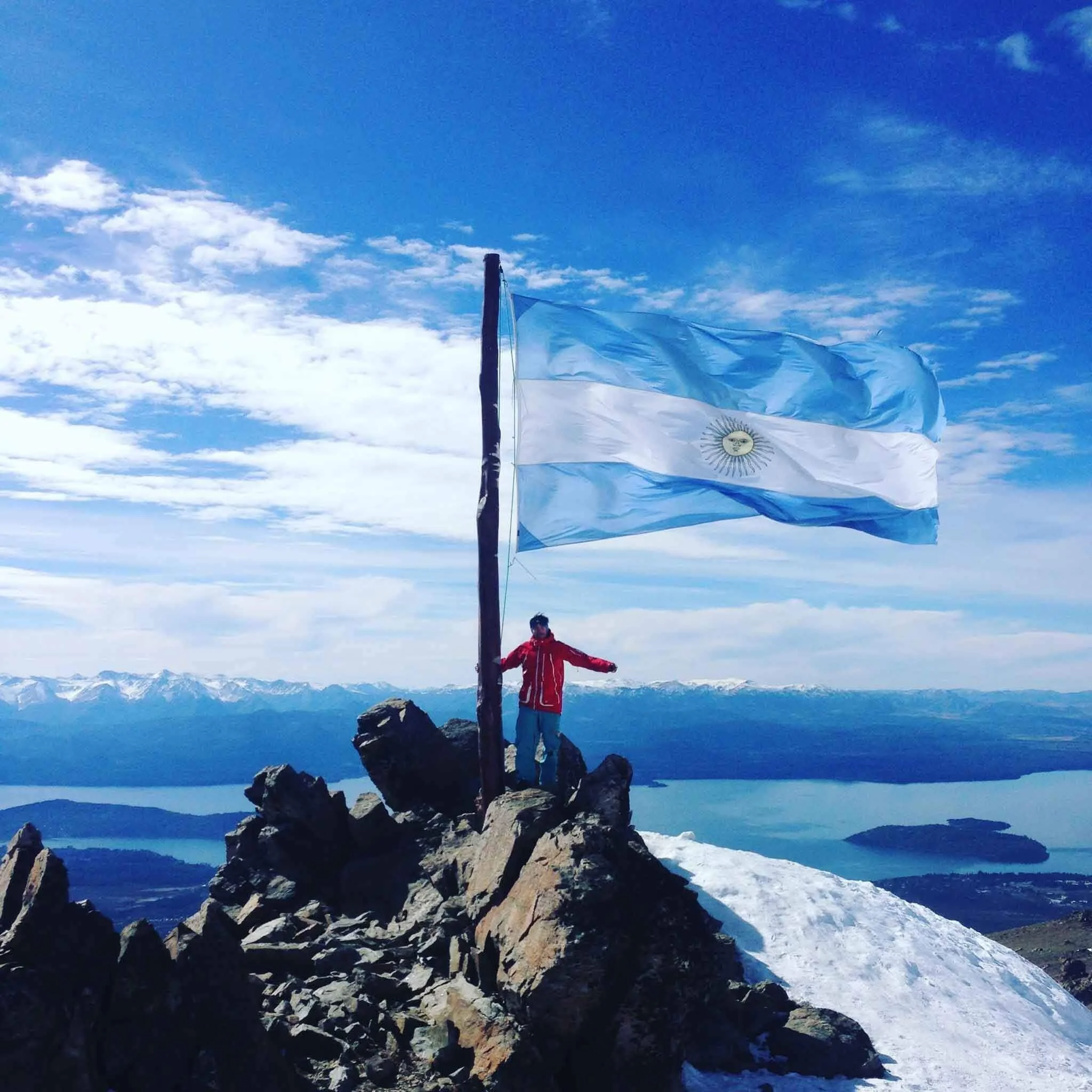


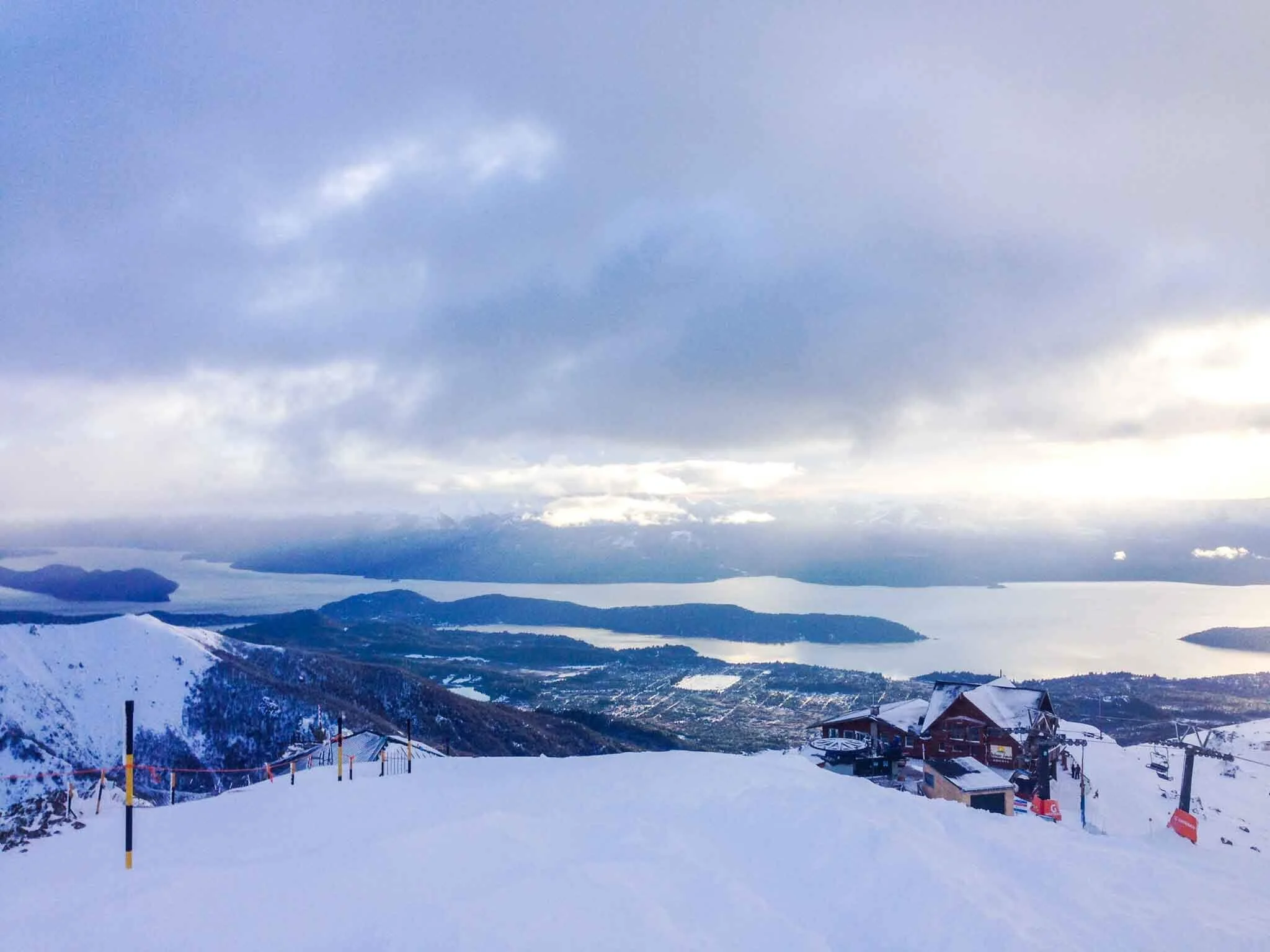



CERRO CATEDRAL FREQUENTLY ASKED QUESTIONS
HOW HIGH IS CERRO CATEDRAL SKI RESORT?
The highest lift-accessible point at Cerro Catedral is Nubes at 2100m. You can reach higher peaks by ski-touring into La Laguna where the peak is 2180m. With Nubes standing at 2100m there is a 1070m vertical drop back to the base area.
WHAT IS THE CLOSEST AIRPORT TO CERRO CATEDRAL?
The closest airport to Cerro Catedral is San Carlos de Bariloche which is located in the nearest town. International visitors will need to enter Argentina via either of the two main Buenos Aires airports before catching a connection to Bariloche.
HOW DO YOU GET TO CERRO CATEDRAL SKI RESORT?
From Buenos Aires, you have two main options… the long coach journey or the two-hour flight to Bariloche. Once in Bariloche, you will still need to travel to the resort. You can do this by hiring a car or travelling by public bus, though the buses can be extremely packed. It is also possible to hitchhike in Argentina and we always tried our luck whilst waiting for the bus.
IS IT EXPENSIVE TO SKI IN ARGENTINA?
The answer to whether Argentina is an expensive location to ski in isn’t simple. Ultimately, the cost of your trip to Cerro Catedral will depend on how and where you exchange your cash. I know this is true for most countries but none quite like Argentina. In Argentina there are two currency rates, the bank rate and the black market rate, with the latter offering up to 33% more for your money. Changing money on the streets in Argentina is easy and for the most part safe. If in doubt, I used a company called Azimo which provided the black market rate with currency collection from a bank.
IS BARILOCHE SAFE?
Our experience of Bariloche is that it is a safe place to visit. As with most places, beware of normal tourist crimes such as; pickpocketing or thefts of unattended bags. In general, the people in Bariloche were very kind and welcoming.
WHEN CAN YOU SKI OR SNOWBOARD IN BARILOCHE?
The ski season in Bariloche runs between June and October although the optimal months to visit would be August and September. July can be extremely busy and the early and late season snow is unpredictable.
CARE TO SHARE?
IF YOU FOUND THIS POST USEFUL AND YOU THINK IT MAY ALSO HELP OTHERS, PLEASE LIKE, SHARE AND COMMENT TO PROMOTE IT TO OTHERS
If you find value in this content please consider supporting the website by clicking the image below and buying me a coffee.
RECENT RESORT GUIDES





Paradiski Ski Area Guide
A combination of three ski resorts; La Plagne, Les Arcs and Peisey-Vallandry make up the third largest ski area in the world with a huge 425km of pistes awaiting you when visiting this mega ski resort in Frances Tarentaise Valley. Paradiski is an amalgamation of high altitude skiing with slopes to suit all abilities making it a firm favourite with families.

Skier enjoying what is left of the fresh snow in Les Arcs
PARADISKI AREA GUIDE
If you are looking for a ski area that has guaranteed snow then the Paradski area could be an awesome choice. With the majority of its skiable terrain above 2000m and glaciers in both Les Arcs and La Plagne you cant do much better. Skiing and snowboarding are possible to 3250m on the glacier Bellecôte with reliable snow-fall and good snow cannon coverage complenting each other throughout the five month season. The ski area of the Paradiski opens in mid December and closes in April.
The combination of three resorts is more likely two resorts with Peisey-Vallandry blending well into the Les Arcs infrastructure. Across the 425km of pistes you will find 260 pistes and well over 100 lifts in what is a fantastic infrastructure. The lifts across the Paradiski are mostly modern with the Vanoise Express holding the world record for speeds.
It is fair to say that the resorts within the Paradiski can feel less ski resort and more individual villages with many accommodation bases spread across the mountain. This contributes to the Paradiski having villages with their individual charm and feel. As such there is no real base for Après ski across Les Arcs or La Plagne although Arc 1800 and Belle Plagne do a good job of throwing a party.
The Paradiski is one of the most visited ski resorts in the world which is in some part down to its accessibility. Train routes run from London into Bourg St Maurice and regular flights/transfers are available from Geneva.
IF YOU FIND VALUE IN THIS POST CONSIDER CLICKING THE BUYMEACOFFEE LINK BELOW TO SUPPORT MY CONTENT.
SNOWBOARDING IN THE PARADISKI
Both the Paradiski resorts of Les Arcs and La Plagne are renowned for being beginner/intermediate accessible with the majority of the terrain-wide cruisey blues. From 260 slopes there are nearly 140 blue pistes which go some way to demonstrate this point, with blue routes available across the Paradiski. This ensures that the entire Paradiski is accessible to everyone which is perfect for skiers and snowboarders looking to explore the whole area.
Beginners will also appreciate the free beginner zones that are available with nursery slopes in some Paradiski villages. Consider basing yourself in Arc 1800 or Plagne Centre if you are a never ever heading to the snow for the first time.
For those of you who struggle to wait to get your Après on, then a unique run in La Plagne is the disco tunnel. The tunnel which connects the resorts of Belle Plagne and Plagne Bellecôte features disco lights and music. This isn’t something I have experienced elsewhere so it definitely makes for a unique experience.
Freestyle skiers and snowboarders will appreciate the terrain parks across the Paradiski with large multi-line terrain parks in Les Arcs 1800 and Belle Plagne. The freestyle scene is significant in the Paradiski so expect big jumps galore. If you are looking to experience freestyle skiing and snowboarding for the first time then do not worry as there are designated beginner terrain parks and fun-cross runs across the resorts.
LEARN MORE IN-DEPTH INFORMATION ABOUT THE SKI RESORTS IN THE PARADISKI BY CHECKING OUT THE FULL RESORT REVIEWS BELOW


OTHER FRENCH SKI AREAS



La Plagne Ski Resort Guide
Situated in the Tarentaise Valley, La Plagne forms part of the Paradiski area with the neighbouring resort Les Arcs. Combined these two popular French ski resorts offer 425km of pistes with La Plagne boasting the majority of this terrain. La Plagne offers skiers and snowboarders snow-sure pistes with 70% of the Paradiski terrain above 2000m. Add to this modern lift infrastructure and a varied selection of pistes and you can see why La Plagne is a popular destination among visitors to the French Alps.

Photo Credit cj580 - Chris Johnson
La Plagne is a purpose-built ski resort that opened in the 1960s, originally with a handful of slopes and two surface lifts. Over the last 60+ years, La Plagne has developed into a full-blown mega-resort with 74 ski lifts accessing over 130 runs within the local La Plagne ski area. In 2003 the Vanoise Express gondola was installed to link La Plagne to a further 200kms of ski runs in Les Arcs and Peisey-Vallandry forming the Paradiski.
LA PLAGNE FIRST IMPRESSIONS
I visited La Plagne whilst staying in neighbouring Les Arcs via the Vanoise Express gondola. The Vanoise Express gondola is an incredible piece of engineering that moves the largest cable car in the world between the two resorts. The Vanoise Express can accommodate 200 people per journey and was an experience in itself. Once in La Plagne I was impressed by the amount of wide intermediate pistes around the resort. I can see why La Plagne is popular amongst skiers and snowboarders who wanted to explore a large area.
If you find value in this content please consider supporting the website by clicking the image below and buying me a coffee.
LA PLAGNE SKI AREA
Forming part of the world’s third largest combined ski area Paradiski, La Plagne is a massive ski resort. Located in the Savoie, La Plagne is a combination of villages that provided high altitude access to an extensive ski resort. Across La Plagne and the further Paradiski area, skiers and snowboarders will be able to explore over 140 ski lifts and 260 trails across its 425km expanse.
La Plagne and the Paradiski is well suited to intermediates with a combined 212 blue and red pistes across the Paradiski. La Plagne is however suited to the entire family/ability range as beginners will enjoy La Plagne for its wide blue slopes and advanced skiers will enjoy the variety of terrain and off-piste bowls.
Locally in La Plagne skiers and snowboarders will find 132 pistes with 104 marked blue or red. The limited black runs on offer (under 10) should not deter advanced skiers and snowboarders who will be able to find challenges off-piste and in the terrain parks.
What may deter more able skiers and snowboarders from visiting La Plagne are the crowds! La Plagne is popular for a reason but this may frustrate those in search of runs without crowds that you can just bomb.
Similar to Les Arcs nearby La Plagne has a 2000m of vertical drop between the highest point Chiaupe (3250m) and the lower village of Montchavin (1250m). From Chiapue there are a number of interesting black and red trails in addition to some great off-piste after good snowfall.
LA PLAGNE FOR BEGINNERS
La Plagne is well suited for beginners with low-gradient blue trails across the whole resort. A few green trails can be found on the map with Plagne Centre and Plagne 1800 hosting most of these. This makes La Plagne a fantastic ski resort to visit as a beginner as you can pretty much go anywhere and find a number of suitable trails.
La Plagne has made an effort to improve the learning experience for its skiers and snowboarders with new Magic Carpet lifts replacing former surface lifts in Plagne Centre. In Plagne Centre, you will also find the Buffalo Kids Park with lots of small features to spice up the run for your little ones.
The best area for beginners in La Plagne is focused around Plagne Bellecôte where those new to skiing and snowboarding will find blue trails occupying the majority of the area here. The blue graded terrain in Plagne Bellecôte is mellow and a few in reality are more likely green runs.
LA PLAGNE FOR INTERMEDIATES
La Plagne is well suited for intermediates with the majority of runs in the local area and Paradiski being mellow blue graded trails. The area in Plagne Bellecôte is perfect for those looking for easier intermediate terrain with good snow conditions.
Intermediates looking for more challenge or adventure should looks to the area atop Roche De Mio. From the top of the Roche De Mio gondola and Inversens chair there are a number of interesting options. The tunnel run is exactly what it sounds like, a run that cuts underground and makes for an interesting trail. Sources and Inversens will appeal to intermediates looking to get out onto red trails with the later more challenging as it remains unpisted. Plagne Montalbert also makes an interesting option for intermediates with a number of reds and blues interlinking through this area.

Photo Credit @judithgirardmarczak
LA PLAGNE FOR ADVANCED
There are only a few black trails throughout La Plagne and the Paradiski but that doesn’t mean the area is not of interest to more experienced skiers and snowboarders. A number of ‘Natur’ (unpisted) trails can be found in Plagne Aime which are great fun and of varying difficulty. The mix of blacks and reds here will ensure you keep coming back.
The Bellecôte Glacier is also host to a number of fantastic black trails and a huge mogul field for those interested in skiing bumps.
FREESTYLE LA PLAGNE
La Plagne has a combination of terrain parks, half pipe and boarder cross tracks spread across the resort. The main park was moved to Montchavin in 22/23 and offers a variety of lanes which have small (Green) through to large (Black) features..
The Buffalo Park kids area in Plagne Centre is a nice intro to freestyle for kids with the Western themed fun area.
For those looking for their first foray into freestyle skiing and snowboarding then heading to Belle Plagne and the entry-level park will serve you best.
OFF-PISTE LA PLAGNE
Although La Plagne has a reputation as a bit of a beginner/intermediate paradise there are a number of interesting areas to get off-piste and away from the crowds. Even better is that as La Plagne mainly caters to beginners and intermediates the freshies seem to last longer here. It is the off-piste in La Plagne that particular makes the resort more interesting to experienced snowboarders.
LIFTS LA PLAGNE
There are 74 lifts across the La Plagne ski area with most of them modern and fast. One downside to the ski lifts in La Plagne is the lack of chairs with a weather bubble for those bad weather ski days. There are however a number of gondolas where you can find shelter from the elements.

Photo Credit cj580 - Chris Johnson
The most famous lift in La Plagne is the Vanoise Express gondola which not only links the ski area to the rest of the Paradski but also holds a number of world records. The Vanoise Express has the largest capacity (200 people), fastest speed (45km/hr) and highest distance from the ground (380m) when compared to lifts around the globe.
WHERE TO SKI IN BAD WEATHER LA PLAGNE
La Plagne like all ski resorts will receive its fair share of bad-weather ski days. Whiteout days can kill the fun for many skiers and snowboarders so finding areas of the resort where you have greater context and contrast is key. One good bit of advice is to head to the trees in areas like La Plagne Montalbert where the pistes run through the woodlands which makes visibility a lot easier.
LA PLAGNE PISTE MAP
Click the LA PLAGNE piste map below to visit the interactive piste map.

LA PLAGNE VILLAGES
MONTALBERT
The village of Plagne Montalbert is a more traditional setting lower down in the valley. Founded in 1980, Montalbert offers direct access to the La Plagne ski area from a 1350m elevation. Staying in Montalbert however, bases you at the furthest point from the Vanoise Express and access to Les Arcs.
PLAGNE 1800
Plagne 1800 is lovingly referred to as La Plagne’s nest due to its location with easy access to the whole ski area. The former mining settlement of Plagne 1800 is home to a good range of accommodations from private apartments, catered chalets or the all-inclusive UCPA. Basing yourself in Plagne 1800 ensure that you are well placed to explore the whole of the Paradiski.

Photo Credit @nicolasmichot
PLAGNE BELLECÔTE
Plagne Bellecôte has a modern base area that is well situated to discover the La Plagne and Les Arcs in a pedestrian only resort. At a 1930m elevation Plagne Bellecôte has fantastic access to some of the more advanced terrain on the Bellecôte Glacier. The village of Plagne Bellecôte has a good shopping centre and ice-rink and two escape rooms, to keep everyone occupied.
PLAGNE CENTRE
Plagne Centre is great for ski-in-ski-out accessibility in the true centre of the ski area. Using Plagne Centre as a base it is possible to head in all directions to explore the wider La Plagne ski area. At night, Plagne Centre is also well-linked to the surrounding villages of Plagne 1800 and Plagne Bellecôte by shuttle bus.
BELLE PLAGNE
Another car-free village is Belle Plagne at 2050m above Plagne Bellecôtte. The village is therefore pedestrian only with the upper and lower villages connected by a series of covered staircases and lifts. The accommodation in Belle Plagne is dominated by ski-in-ski-out apartments and chalets which make it a really convienient base for your La Plagne ski holiday. Access to the Bellecote Glacier from the Roche de Mio gondola. Belle Plagne is also ideally suited to explore the rest of the Paradiski.
PLAGNE AIME 2000
Plagne Aime 2000 is the highest village in La Plagne sitting at 2100m altitude. The resort of Plagne Aime 2000 was established in the 1960s but more recently has added Club Med as an accommodation option. The village of Plagne Aime 2000 has a ski-in-ski-out location that provides good access to Montalbert as well as Plagne Centre.
LA PLAGNE SEASON DATES
The ski season in La Plagne normally operates between mid-December and late-April although connections to Les Arcs will start later and finish earlier. The ski season in La Plagne and the Paradiski is reliable with 70% of the ski area above 2000m meaning snow cover is maintained across the season. La Plagne has a historical snow record of 4.6m on average during the course of the winter season. In addition to the annual snowfall, La Plagne supplements the natural stuff with snowmaking. The are 600 snow cannons spread around the resort to ensure that all slopes have ample coverage during the winter season.
TRAVEL TO LA PLAGNE
La Plagne situated in the Tarentaise Valley is a very accessible ski resort in the southeast of France. The main routes to La Plagne from the UK would be to fly, drive, or take a train. Below I will discuss the practicalities of each transport method.
GETTING TO LA PLAGNE BY AIR
La Plagne is 200km from the International Airport of Geneva on the border of Switzerland and France. Throughout the winter many budget and mainstream airlines operate flights into Geneva making it the most affordable route by Air. Geneva Airport is also fantastic for connections/transfers to the resorts of the French Alps and getting to La Plagne is no exception. Many transfer companies out of the arrivals area at Geneva and the journey to La Plagne will take around 2 hrs 30 mins.
Flying is and will remain the easiest and quickest way to reach a ski resort however, it also has the largest impact on your Carbon footprint.
GETTING TO LA PLAGNE BY TRAIN
La Plagne is accessible within an hour of the Bourg St Maurice train station which receives daily arrivals via the Eurostar from London’s King Cross Station (via Paris). Transferring to La Plagne from Bourg St Maurice isn’t quite as simple as taking the Funicular into Les Arcs with a longer transfer time. From Bourg St Maurice you can take the bus to La Plagne.
GETTING TO LA PLAGNE BY CAR
Although a longer journey, I have always appreciated the freedom that can come from driving your car to the ski resort. When in La Plagne you shouldn’t need your car to get around as free local shuttle buses run within the resort villages.
Driving to La Plagne will involve taking either a ferry or Le Shuttle to Calais before starting your drive to the southeast of France. The easiest route is to stick to the French toll-roads which are well-maintained and easy to navigate, although this does come at a further cost.
If you intend to drive to La Plagne, remember it is essential to have winter tyres and snow chains.
GETTING TO LA PLAGNE BY COACH
By far my least favourite way to travel to a ski resort is by coach however, it can be the most cost-effective way to reach your destination. From the UK regular coaches run to Bourg St Maurice from London Victoria throughout the winter. Coach trips can be arduous but with travel through the night, coaches can be the best way to maximise your time on the slopes on a budget.
LA PLAGNE LIFT PASSES
When skiing in La Plagne you will have two choices of lift pass; a local area pass which covers the 225km of pistes in La Plagne or the Paradiski pass which covers the 425km of Les Arcs and La Plagne combined area. Your choice of lift pass may depend on a few considerations.
ABILITY
Honestly if you are a beginner or even an intermediate visiting La Plagne for the first time then consider saving money and getting the local area pass. Within La Plagne there will be plenty of runs for you to explore. If you feel the need to explore further you can upgrade your lift pass for one day of skiing in the Paradiski area.
BUDGET
If budget is a consideration then skiing within the La Plagne ski area will still offer you an incredible experience. 225kms of pistes is loads so save some money and stay with a La Plagne local area pass.
RETURNING VISITOR
If you are a more able skier or snowboarder returning to La Plagne then it is certainly worth investing in the Paradiski lift pass. The upgrade will cost €50 more based on a 6-day pass in the 22/23 season and will open up over double the available terrain.
LA PLAGNE LIFT PASS COST
As with most lift passes, a ski pass in La Plagne will vary in price depending on; the duration of your trip, the skier’s age and whether you are visiting in or out of the peak period. The good news is that in La Plagne there are plenty of opportunities to save on your lift pass with offers throughout the season. There are even free lift passes available to skiers who are under 5 or over 75 years of age.
LA PLAGNE PROS
La Plagne is a large resort with access to 400+Kms of pistes that have a great snow record.
The ski season in La Plagne offers guaranteed snow with most terrain about 2000m.
The vertical drop in La Plagne means that there are plenty of longer runs across the resort.
La Plagne caters well for beginners and intermediates with a majority of blue trails.
The different villages across La Plagne offer a good range of accommodation and budget options.
LA PLAGNE CONS
La Plagne has a lot to offer so is often crowded during peak weeks especially on the pistes and lifts that are close to the villages.
The suitability for beginners relates to mellow runs which can have deadly flat spots which aren’t always fun on a snowboard.
Lack of enough advanced pistes across the Paradiski.
If you find value in this content please consider supporting the website by clicking the image below and buying me a coffee.
LA PLAGNE FREQUENTLY ASKED QUESTIONS
WHAT IS LA PLAGNE LIKE AS A SKI RESORT?
La Plagne and the extended Paradiski area is a huge ski area linked to nearby Les Arcs. The ski area of La Plagne is ideal for intermediate skiers and snowboarders who will make the most of the blue and red runs around the resort. The local area of La Plagne has 225km of pistes that cater to all abilities.
WHAT IS THE CLOSEST AIRPORT TO LA PLAGNE?
The closest airport to La Plagne is Chambery but this actually isn’t the best access point. Flights into Chambery are infrequent meaning that Geneva and Grenoble are probably better bets. The transfer time from Geneva is longer but its international airport has regular flights from across Europe with operators including budget airlines from the UK.
WHAT MAKES LA PLAGNE SO POPULAR?
La Plagne is one of the most visited ski resorts in the world with visitors drawn from far and wide. La Plagne has many positives that make it a popular place to visit with its high altitude and extensive terrain being a real draw. Over 70%I of the Paradiski sits above 2000m ensuring the La Plagne is snow-sure, this is a big factor in bringing visitors to La Plagne. La Plagne also attracts beginner skiers and snowboarders as many people know La Plagne for its mellow blue runs that spread across the mountain.
IS LA PLAGNE BEGINNER FRIENDLY?
Yes, La Plagne caters well for beginners despite the very few green trails on the piste map. La Plagne’s terrain is dominated by entry level blue pistes from all villages ensuring that beginners can have a nice time in La Plagne regardless of where they book their accommodations.
IS LA PLAGNE A GOOD PLACE TO SKI?
La Plagne can be considered a good place to ski for all-abilities and budgets. The expansive terrain in La Plagne and the Paradiski caters to all-abilities ranging from gentle blue-runs to challenging off-piste terrain. The variety makes it a great choice for families and groups of varying abilities.
DO I NEED SNOW CHAINS WHEN DRIVING TO LA PLAGNE?
When driving to any ski resort in France you should always carry snow chains which are a legal requirement now. Driving without snow-chains could put yourself and other drivers in danger and result in spot fines if searched by the Police.
IS LA PLAGNE SNOW SURE?
La Plagne and Les Arcs in the Paradiski are a good bet for snow-sure conditions throughout the season. The higher elevations and glacier skiing ensure that La Plagne maintains a good snow base. With a good snow record and 600 snow cannons, La Plagne is a safe bet for your ski or snowboard holiday.
LA PLAGNE FINAL THOUGHTS
La Plagne and the Paradiski would make a fantastic choice for your next ski holiday with snow-sure skiing and plenty of on snow accommodation. For me the decision whether to ski or snowboard in La Plagne or Les Arc would come down to access. If travelling via train I would stay in Les Arcs with better access via funicular from Bourg St Maurice. Whether driving or flying there isn’t much in it and I would decide between the two Paradiski resorts based on the best accommodation deal. Both La Plagne and Les Arc are well suited to all abilities and offer access to a large ski area.

Les Arcs Ski Resort Guide
Les Arcs ski resort is popular with skiers across Europe with a sizeable local ski area (200km). Forming part of the Paradiski with La Plagne, Les Arcs provides skiers and snowboarders access to 425km of pistes across the two French ski resorts. Visiting Les Arcs ski area allows for plenty of versatility with seven ski resort bases to choose from with a range of accommodations and amenities to suit every budget.

Les Arcs has a great combination of high-altitude skiing with diverse terrain. The library of ski runs across Les Arcs varies from extensive cruisey intermediate terrain along red and blue pistes with some steeper black trails as well. Les Arcs has some fantastic areas to learn to ski making it popular amongst beginners and families. Les Arcs provides snow-sure skiing, excellent transport links and a fantastic range of accommodations making it a popular choice for a French ski holiday. In this Les Arcs Ski Resort Guide I will explore what makes Les Arcs a must-visit destination for skiers and snowboarders alike.
LES ARCS FIRST IMPRESSIONS
Visiting Les Arcs for the first time I was lucky to be accompanied by skiers who knew the area well, ensuring that I was able to make the most of the substantial terrain available throughout the resort. The resort itself is fantastic and I really enjoyed waking up in the purpose-built village a few steps from the nearest slope. Les Arcs is a ski destination that has everything on your doorstep making it a worry-free ski holiday.
If you find value in this content please consider supporting the website by clicking the image below and buying me a coffee.
LES ARCS SKI AREA
Forming part of the world’s third largest combined ski area, Paradiski Les Arcs is a sizeable ski resort. Les Arcs is massive, demonstrated by the huge 2000m vertical drop between the Aiguille Rouge (3226m) and the village of Villaroger (1200m). In total 258 pistes and over 100 lifts make up the Les Arcs ski area, with the majority of that terrain (70%) above 2000m. With that in mind, Les Arcs is incredibly snow sure which can make it popular with visitors looking for early-season or spring snow.
Considered a benchmark ski resort in the Savoie, Les Arcs’ 200km of pistes are mostly suited to beginners (51%) and intermediates (35%). Advanced skiers will still appreciate the more challenging terrain that is available alongside the areas outside of the piste which are great for freeride.
LES ARCS FOR BEGINNERS
With the four main village bases in Les Arc; Arc 1600, Arc 1800, Arc 1950 and Arc 2000, beginners will be happy that each base caters to beginner skiers and snowboarders. The villages offer a number of free lifts that beginners can use to learn from.
Over half of the Les Arcs pistes are suitable for beginners which is fantastic for first-timers looking to explore different runs. There are however only three green pistes spread throughout the resort, two in Arc 1800, so beginners will have to learn on the various blue runs around the resort.
LES ARCS FOR INTERMEDIATES
Les Arcs has a number of wide cruisey blue pistes which spread throughout the ski area. This makes Les Arcs really fun for intermediates who are excited to get around the whole mountain. In Les Arcs you can pretty much head up any lift (except Grand Col and Aigulle Rouge) and find a decent blue to ride down. A particular favourite were the combined Vallée de l’Arc 3 and Vallée de l’Arc 2 which are found at the top of Varet.
Advanced intermediates may want to challenge themselves on the short reds found at the top of Plagnettes chairlift. Similarly, the area around Plan Peisey is a good combination of red and blue trails.
LES ARCS FOR ADVANCED
Looking at the piste map you can be forgiven for believing that Les Arcs doesn’t cater for the advanced skier or snowboarder. Although the black trails do not dominate the piste map, there is enough to keep even the most ardent skiers and snowboarders entertained. Head to Aiguille Rouge for a fantastic 7km descent back to the village of Villaroger. Les Arcs also has a number of un-pisted trails that are left to develop bumps throughout the season, if you like moguls you will like Les Arcs.
FREESTYLE LES ARCS
Les Arcs has two terrain parks in the resort; Apocalypse and Mille 8. Both parks have a good mix of freestyle terrain. Apocalypse is best suited to intermediate and advanced freestyle skiers and snowboarders with a good jump progression ending with some rather large kickers. Mille 8 has a little something for everyone with an entry-level green line and some more advanced features.
OFF-PISTE LES ARCS
Off-piste skiers and snowboarders will appreciate the area atop the Grand Col which ensures snow stays fresh due to its higher elevation. In cloudy weather, consider heading into the forest runs near the Derby chairlift.
WHERE TO SKI IN BAD WEATHER LES ARCS
Les Arcs is a fantastic resort even on those bad weather days. The lower resort villages are lined by trees which can add contrast in whiteout conditions.
LES ARCS PISTE MAP
Click the Les Arcs piste map below to visit the interactive piste map.

LES ARCS VILLAGES
Les Arcs has four main villages each has its own charm and appeal.
ARC 1600
Arc 1600, the earliest of the villages, feels quaint and tranquil in atmosphere. Developments in Arc 1600 began in the late 60’s and can be considered the original and centre of the resort. This feeling of being the centre of the resort is continued in Arc 1600 with regular shuttle buses linking Arc 1600 to the other Les Arcs villages. Arc 1600 is also linked to the valley and Bourg St Maurice with its international train station. The short funicular ride from Arc 1600 will take you directly into Bourg St Maurice with links to London.
ARC 1800
Conversely, Arc 1800 is known for its vibrant après-ski scene, boasting a lively feel with numerous restaurants, bars, and entertainment options. The largest of the Les Arcs villages you should head to Arc 1800 if you want an activity-packed holiday. Arc 1800 is very central within the wider context of the Les Arcs ski area and it has great access to the other Les Arcs villages.

ARC 1950
Arc 1950, a relatively newer addition, is a picturesque alpine village designed with a more upscale feel. It features luxurious accommodations and a pedestrian-friendly layout. The village itself can be a fantastic base for your Les Arcs ski holiday with ski-in-ski-out accommodation throughout the village.
ARC 2000
Arc 2000, the highest in elevation, provides direct access to high-altitude skiing and stunning panoramic views. This appeals to avid skiers and snowboarders seeking challenging terrain. The village of Arc 2000 is well designed allowing excellent access to the pistes in a compact ski village.
OTHER VILLAGES
VILLAROGER
Villaroger is not only the finishing point for one of the best runs in Les Arcs (Aiguille Rouge), but it is also the lowest of the villages in Les Arcs. At 1200m Villaroger is a quieter more relaxed base for your Les Arcs ski holiday. Villaroger has a good reputation for maintaining snow despite its lower altitude due to its shaded location in the valley. Villaroger can be a good base if you are looking to explore other local resorts such as Tignes - Val d’Isere and Les Rosière in addition to your Les Arcs ski days.
PEISEY - VALLANDRY
Plan Peisey and Vallandry are two separate villages that are essentially one. The villages of Peisey - Vallandry are not only a great base from which to explore Les Arcs, but equally have exceptional access to the La Plagne via the Vanoise Express. Plan Peisey and Vallandry would appeal to skiers looking for access to both La Plagne and Les Arcs, alongside those looking for a quieter evening base.
BOURG ST MAURICE
Bourg St Maurice will be the arrival point of many international skiers and snowboarders to Les Arcs with direct Eurostar access to London. A town, not a village, Bourg St Maurice is a great link between Les Arcs and other local ski resorts. It is possible staying in Bourg St Maurice to catch connections via bus to La Rosière, Tignes, La Plagne and others. Staying in Bourg St Maurice can offer easy travel as well as the ability to ski at a variety of resorts from the same base.
LES ARCS GALLERY


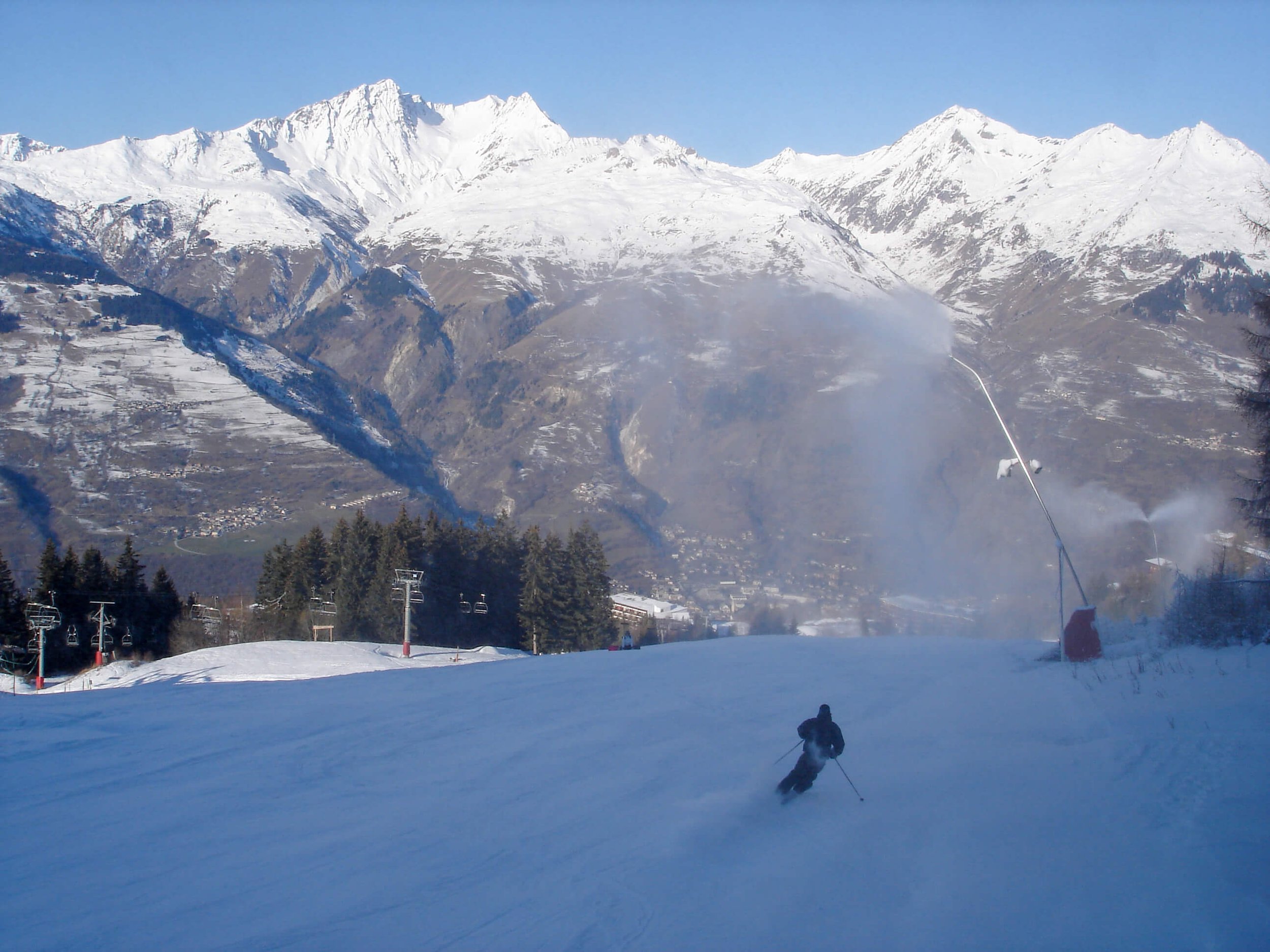


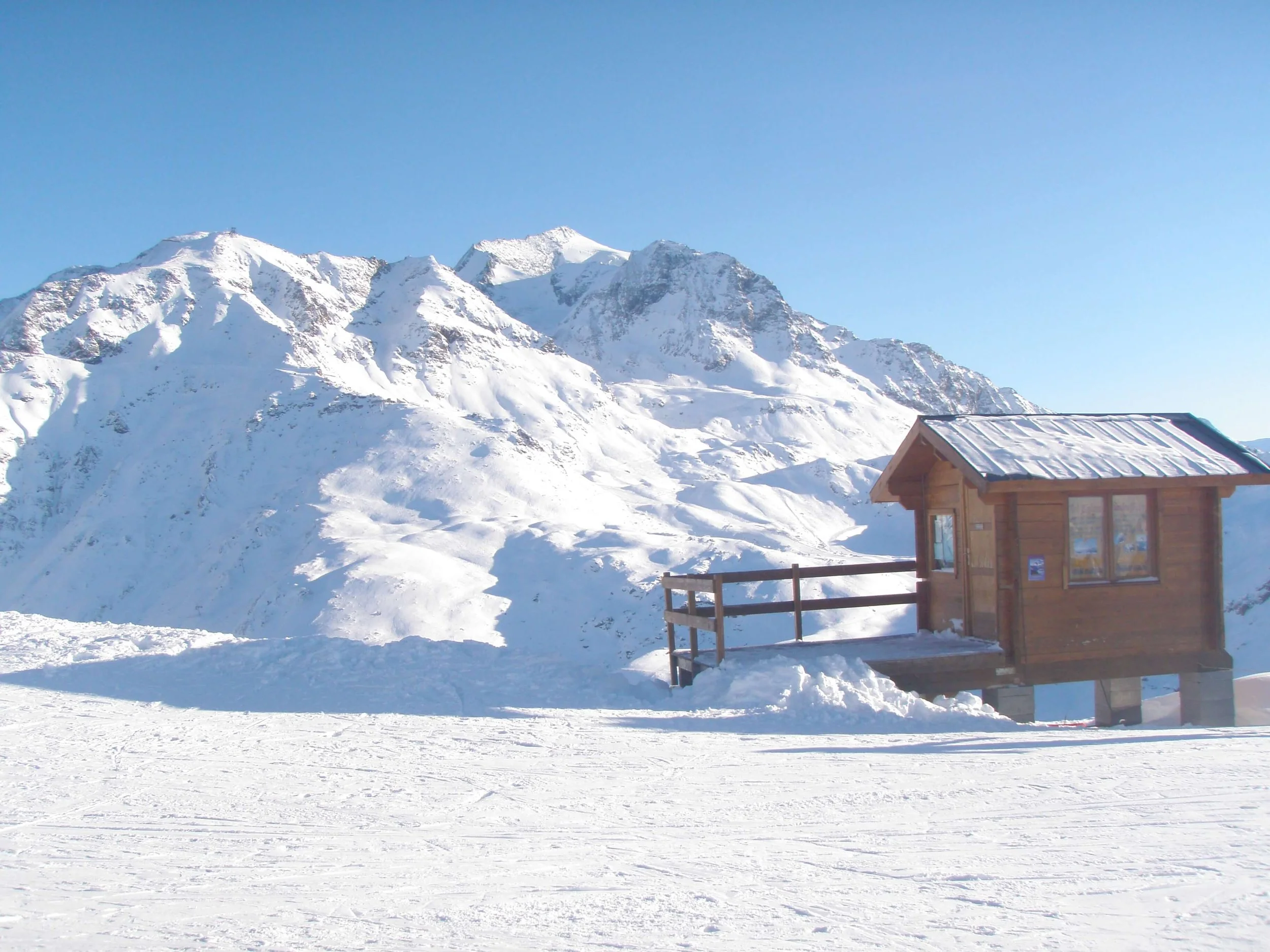


LES ARCS SEASON DATES
The ski season in Les Arcs normally operates between mid-December and late-April although connections to La Plagne will start later and finish earlier. The ski season in Les Arcs is a reliable one with 70% of the ski area above 2000m meaning snow cover is maintained throughout. Les Arcs has a historical snow record of 4.6m on average during the course of the winter season. In addition to the annual snowfall, Les Arcs supplements the natural stuff with snowmaking. The are 600 snow cannons spread around the resort to ensure that all slopes have ample coverage during the winter season.
TRAVEL TO LES ARCS
Les Arcs is one of the most accessible ski resorts in the Alps with international access by plane, train and automobile. Located in Frances Savoie, Les Arcs is a combination of mountain villages above the town of Bourg St Maurice.
GETTING TO LES ARCS BY AIR
Les Arcs closest airport is Chambery (CMF) which is 140 km from Les Arcs. Flights into Chambery are aplenty during the winter season with many transfer and private hire drivers operating out of the terminal. If you intend to fly it is worth considering heading to Geneva as flights tend to be cheaper and more frequent then those into Chambery. The trade-off for flying to Geneva is an extra hour on the transfer time but it could be a more budget-savvy option. Other possible airport entrance points for your Les Arcs ski trip are Lyon and Grenoble.
GETTING TO LES ARCS BY TRAIN
By far the most environmentally friendly way to get to Les Arcs is via train to Bourg St Maurice. Heading to the international train station in Bourg St Maurice uses Frances's electrified rail network and can save on your carbon footprint. The station itself is only a 7-minute funicular ride away from Arc 1600 meaning you can be in the resort within minutes of stepping off the train. Throughout the winter special services are operated by Eurostar for the SkiTrain.
GETTING TO LES ARCS BY CAR
Although a longer journey, I have always appreciated the freedom that can come from driving your car to the ski resort. When in Les Arcs you shouldn’t need your car to get around as free local shuttle buses run within the resort villages.
Driving to Les Arcs will involve taking either a ferry or Le Shuttle to Calais before starting your drive to Les Arcs. The easiest route is to stick to the French toll-roads which are well-maintained and easy to navigate, although this does come at a further cost.
If you intend to drive to Les Arcs, remember it is essential to have winter tyres and snow chains.
GETTING TO LES ARCS BY COACH
By far my least favourite way to travel to a ski resort is by coach however, it can be the most cost-effective way to reach your destination. From the UK regular coaches run to Bourg St Maurice from London Victoria throughout the winter. Coach trips can be arduous but with travel through the night, coaches can be the best way to maximise your time on the slopes on a budget.
LES ARCS LIFT PASSES
When skiing in Les Arcs you will have two choices of lift pass; a local area pass which covers the 200km of pistes in Les Arc or the Paradiski pass which covers the 425km of Les Arcs and La Plagne combined area. Your choice of lift pass may depend on a few considerations.
ABILITY
Honestly if you are a beginner or even an intermediate visiting Les Arcs for the first time then consider saving money and getting the local area pass. Within Les Arcs there will be plenty of runs for you to explore. If you feel the need to explore further you can upgrade your lift pass for one day of skiing in the Paradiski area.
BUDGET
If budget is a consideration then skiing within the Les Arcs ski area will still offer you an incredible experience. 200kms of pistes is loads so save some money and stay with a Les Arcs local area pass.
RETURNING VISITOR
If you are a more able skier or snowboarder returning to Les Arcs then it is certainly worth investing in the Paradiski lift pass. The upgrade will cost €50 more based on a 6-day pass in the 22/23 season and will open up over double the available terrain.
QUEUE JUMPING
Consider purchasing the Paradiski passes if you want to use priority lift lines. The Paradiski pass not only provides you with an extended ski area but also the ability to use dedicated queue jumping lines.
LES ARCS LIFT PASS COST
As with most lift passes, a ski pass in Les Arcs will vary in price depending on; the duration of your trip, the skier’s age and whether you are visiting in or out of the peak period. The good news is that in Les Arcs there are plenty of opportunities to save on your lift pass with offers throughout the season. There are even free lift passes available to skiers who are under 5 or over 75 years of age.

LES ARCS PROS
Les Arcs is a huge combined ski area with an extensive piste network.
Finding accommodation to suit your needs in Les Arcs should be possible with a range of villages to choose from. Staying in Les Arc gives you the opportunity to choose a village that suits your budget and vibe.
Les Arc has some awesome runs within its 2000m of vertical drop, consider taking the Augille Rouge trail for a long descent into Villaroger.
There is plenty of interesting off-piste in Les Arcs with bowls and tree runs for those poor weather days.
Les Arcs is well suited to beginners and intermediates with a large proportion of blue trails throughout the resort.
There are fantastic transport links to Les Arcs, with the hub of Bourg St Maurice a short funicular away.
LES ARCS CONS
Les Arcs has lots of positives going for it; large ski area, great transport links, reliable snow… all of which combine to draw crowds to Les Arcs.
Lift queues can be common in Les Arcs during peak weeks.
If you find value in this content please consider supporting the website by clicking the image below and buying me a coffee.
LES ARCS FREQUENTLY ASKED QUESTIONS
IS LES ARCS GOOD FOR BEGINNERS?
Yes, over 50% of Les Arcs terrain is suitable for beginner skiers and snowboarders. Another positive to using Les Arcs for your beginner’s ski holiday is that there are a number of beginner lifts that are free to use without a lift pass. Les Arcs has also introduced a slow speed zone which will make beginners feel more comfortable when learning to ski.
IS LES ARCS LIVELY?
One downside to Les Arcs is the layout across various villages can make it feel like there is no real centre or hub to Les Arcs. Depending on whether you are looking for nightlife will depend on where you base yourself around Les Arcs with Arc 1800 being the best known for its Après scene.
WHICH RESORT IS LES ARCS CONNECTED TO?
Les Arcs is connected to La Plagne to form the Paradiski area. The resorts of Les Arcs and La Plagne are joined by the Vanoise Express gondola which means skiing across 42km of pistes is possible. Les Arcs is also connected by funicular to Bourg St Maurice where it is possible to catch buses to La Rosiere and Tignes.
IS LES ARCS A HIGH RESORT?
Les Arcs ski resort has the majority of its terrain above 2000m which ensures a long ski season with a fantastic snow record. Consider basing yourself in Arc 1950 or Arc 2000 during the early and late seasons for the best snow conditions throughout Les Arcs.
IS LES ARCS ONLY POPULAR FOR SKIING?
While Les Arcs is undoubtedly famous for its ski slopes and winter sports, it has become a year-round destination. The summer season offers a wide range of outdoor and recreational activities, making it a popular spot for adventure enthusiasts.
IS LES ARCS GOOD FOR BEGINNERS AND ADVANCED SKIERS?
Yes, Les Arcs caters to skiers of all levels. Each village has a variety of slopes suitable for beginners, intermediates, and advanced skiers. The resort is also linked to La Plagne via the Paradiski area, offering a vast terrain for all skill levels.
CAN I PURCHASE MY LES ARCS LIFT PASS IN ADVANCE?
Yes, it's recommended to purchase lift passes in advance online. This can save you time, money and ensure you're ready to hit the slopes upon arrival. Various options are available including; day passes, multi-day passes and season passes.
WHICH RESORT IS HIGHER LES ARCS OR VAL THORENS?
Both the ski resorts of Les Arcs and Val Thorens are high-altitude resorts in the French Alps. Val Thorens is home to the highest ski resort village in the Alps which at 2300m offers an extra 300m altitude versus Arc 2000.
LES ARCS FINAL THOUGHTS
Les Arcs is an incredible ski area with a substantial link to the nearby resort of La Plagne. Les Arcs itself is a great option for those looking for guaranteed snow throughout the season. For me, I enjoyed Les Arcs for the intermediate terrain and cruisey blues that can be found right across the resort.