Visiting Milford Sound From Queenstown
If you are looking for a place to disconnect from the modern world and rediscover nature, there is no better place to start than Milford Sound. Set in the stunning Fiordland National Park, the impressive ocean inlet is one of the wettest places on earth but don’t let that put you off. A well-timed trip to Milford sound can offer some of the best views in the world and that really is not an exaggeration. The combination of imposing mountains reflecting in the water coupled with the numerous waterfalls and epic clouds really are not to be missed.
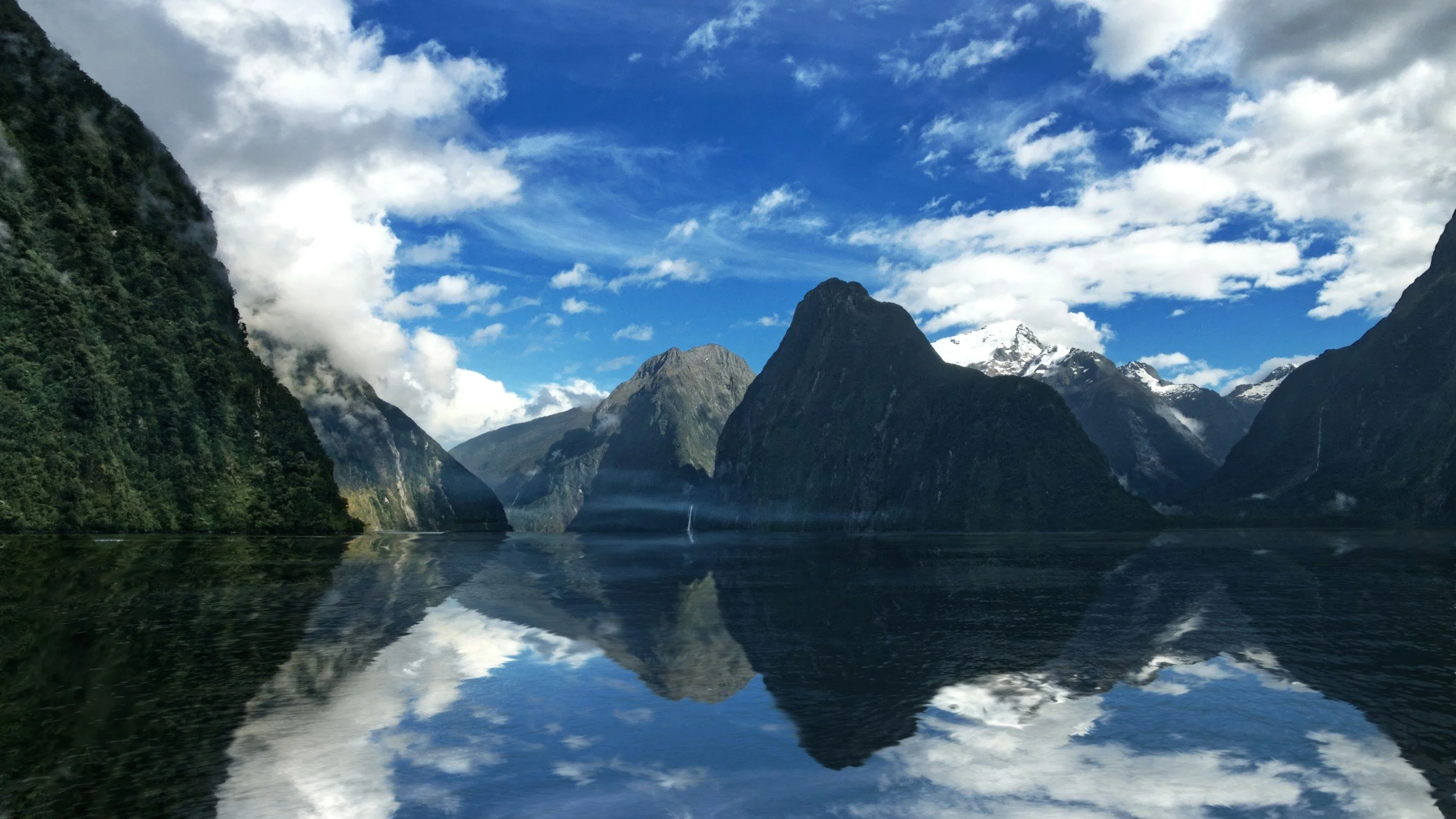
Home to two permanent waterfalls, Mitre Peak, and some incredible wildlife, it is no surprise that Milford Sound is one of the most popular New Zealand visitor attractions. Although a number of the local hikes are closed in winter for safety, I would recommend a winter visit as way to avoid the crowds. There are other ways to explore the local area and I would encourage anyone visiting to take a Milford Sound cruise.
On your cruise you will see lots of local wildlife including penguins, seals and if you are really lucky humpback whales and bottlenose dolphins. Although I was unable to see whales on my cruise it didn’t detract from the experience exploring an area of outstanding natural beauty. Mitre Peak is imposing, rising 1690m from the water to tower above the surrounding landscape. Additionally, Milford Sounds Stirling and Lady Bowen waterfalls are a reminder of the wet climate. You can see more of my Milford Sound experience by watching the video below.
DRIVING TO MILFORD SOUND
The drive to Milford Sound was a massive part of the experience for me. The 280km journey from Queenstown is stunning and although your sat nav will say it is a four hour drive be prepared for it to take much longer due to the plethora of photo stops along the way. Homer tunnel, The Chasm and driving alongside Lake Wakatipu make this one of the most scenic drives I have undertaken. I took the drive in winter so the roads were uncrowded but be aware due to the winter conditions chains should be carried and this can affect your journey time. The Milford Road is also prone to closures in Winter so plan to factor this into your trip. The benefit of driving means that you can structure your own timeline for your visit. I opted to arrive late at night so I was able to be up before the crowds the next morning. This really paid off as it wasn’t until I was leaving Milford Sound that I saw the Queenstown tourist buses arriving.
OTHER TRANSPORT OPTIONS
COACHES TO MILFORD
Regular bus tours operate out of Queenstown and this could be a more budget friendly way to visit Milford Sound. The buses tend to stop in the main sightseeing points along the route so you can stretch your legs and take in the scenery. You do sacrifice having Milford to yourself with this option as most coaches arrive mid-day meaning the ferries and tours can be more crowded.
FLY TO MILFORD
If you have a larger budget why not consider flying into Milford Sound. There is a small local airport that allows access to tour operators and private licensed pilots. If the weather is clear I can imagine this would be an incredible way to see Milford Sound, being able to take in birds eye views of Mitre Peak and surrounding waterfalls. Although I did not take a Milford flight with this company I can recommend Aspiring Helicopters in Wanaka who operate tourist flights. I took a scenic flight around Wanaka and was very impressed with their service.
MILFORD SOUND LODGE
Unfortunately for me Freedom camping wasn’t permitted at Milford Sound. This meant finding accommodation but in hindsight I am glad I stayed at the Milford Sound Lodge. The lodge offers a range of accommodation options including powered campsite berths which allow access to the main amenities. If like me you are on a budget, you probably won’t make use of the on site restaurant and bar but instead opt for the kitchen and lounge facilities. The kitchen at Milford Sound Lodge is perfect for camper van travellers and I was able to prepare a few evenings dinners making my life easy for the coming days. On site shower and laundry facilities were also available and were some of the better washrooms I experienced in New Zealand campsites. Prices vary greatly by time of year and the type of accommodation you want so check out their website for more info.
CONNECTIVITY AT MILFORD SOUND
If you are planning on live-streaming or constantly updating your social media whilst at Milford Sound, you’d better think again. Wifi is limited as well as expensive and you will have no phone signal. Your phone signal will disconnect as you approach Homer Tunnel so it is best to be sure of your route and have any accommodation booked by this point.
FREQUENTLY ASKED QUESTIONS
What is Milford Sound?
Milford Sound is a fiord on the southwest coast of New Zealand’s South Island, within Fiordland National Park. Renowned for steep cliffs, waterfalls, and abundant wildlife, it’s one of New Zealand’s most visited natural attractions.
How do I get to Milford Sound?
Most visitors travel by road from Te Anau (about 2 hours) or Queenstown (about 4–5 hours). There are also coach tours, small-plane flights, and scenic cruises that depart from Queenstown or Te Anau. Road access is via State Highway 94 (the Milford Road), which can be subject to weather-related closures.
When is the best time to visit?
Milford Sound is beautiful year-round. Summer (December–February) offers longer daylight and warmer temperatures. Winter (June–August) brings dramatic waterfalls and snow-capped peaks. Expect frequent rain anytime; the sound’s lushness and many waterfalls are a result of high rainfall.
What should I pack?
Waterproof jacket and pants, warm layers, sturdy shoes with good grip, hat and gloves in colder months, sunscreen, insect repellent, a refillable water bottle, and a camera with weather protection. If you plan a boat trip, bring a small dry bag for electronics.
What activities are available?
Scenic cruises (day and overnight), kayaking, guided nature and wildlife cruises, diving and snorkeling (for the Adventure Diver), hiking (Kepler, Routeburn, and Milford Track start/nearby), scenic flights, and photography tours. Choose based on fitness, budget, and desired perspective—kayaking gives closeness to the water; cruises offer comfort and commentary.
How long should I allow for a visit?
A typical visit by road with a daytime cruise can be a full day (10–12 hours round trip from Queenstown). Flights and overnight cruise options shorten travel time. If you want to hike nearby or relax, allow 2–3 days.
Do I need to pre-book tours?
Yes—especially during peak season (December–February) and for popular activities like kayaking, overnight cruises, and scenic flights. Book well in advance for guaranteed spots.
What wildlife can I expect to see?
Common sightings include bottlenose dolphins, fur seals, and a variety of seabirds such as shearwaters and terns. Rarely, visitors might spot penguins. Wildlife sightings aren’t guaranteed but are frequent on calm days.
Are there restroom and food facilities?
Facilities at the Milford Sound Visitor Centre and parking area include toilets and a café/shop. Options are limited, so bringing snacks and water is sensible.
Is Milford Sound accessible for people with limited mobility?
Some cruise operators and viewing platforms are accessible; the Milford Visitor Centre offers accessible facilities. However, road access and certain walking tracks can be challenging. Check with specific operators for accessibility options and assistance.
What about weather and safety considerations?
Weather can change rapidly. Rain, wind, and cold are common. Watch for road advisories and closures, and ensure vehicles are fuelled and equipped for long drives. On water, follow crew safety briefings, wear appropriate clothing, and consider seasickness medication if prone to motion sickness.
Are dogs/pets allowed?
Dogs and most pets are not allowed in Fiordland National Park, with limited exceptions for working animals. Leave pets at home or in approved boarding while you visit.
Can I camp in Milford Sound?
There are designated campsites in Fiordland National Park, but camping within the Milford Sound valley itself is restricted. Backcountry camping requires permits and adherence to park regulations.
Do I need permits for hiking?
Some tracks in Fiordland (like the Milford Track) require advance booking and a hut/camping pass during the main season. Day walks around Milford generally do not need permits, but check Department of Conservation (DOC) rules and seasonal restrictions before you go.
Any tips for photographers?
Arrive early or stay late for softer light and fewer crowds. Rain and mist enhance drama—embrace them. Use a waterproof cover for gear, bring a sturdy tripod for low-light shots, and include foreground elements to emphasize scale.
How crowded does Milford Sound get?
It can be busy, particularly in summer and during cruise departure times. Consider off-peak seasons, early departures, or limited-capacity kayak trips for a quieter experience.
How long is the Milford Road drive and what should I expect?
From Te Anau it’s roughly 2 hours (75 miles/120 km); from Queenstown about 4–5 hours (120–170 miles/200–275 km) depending on stops. Expect narrow, winding sections, scenic pullouts, single-lane bridges, and limited fuel/phone coverage. Allow time for stops at viewpoints like Mirror Lakes and the
STILL GOT QUESTIONS?
If you have any questions about Milford Sound or the drive from Queenstown be sure to drop them down in the comments. Have you visited in Milford Sound in summer? I’d love to hear about your experience.