THE WAINWRIGHTS
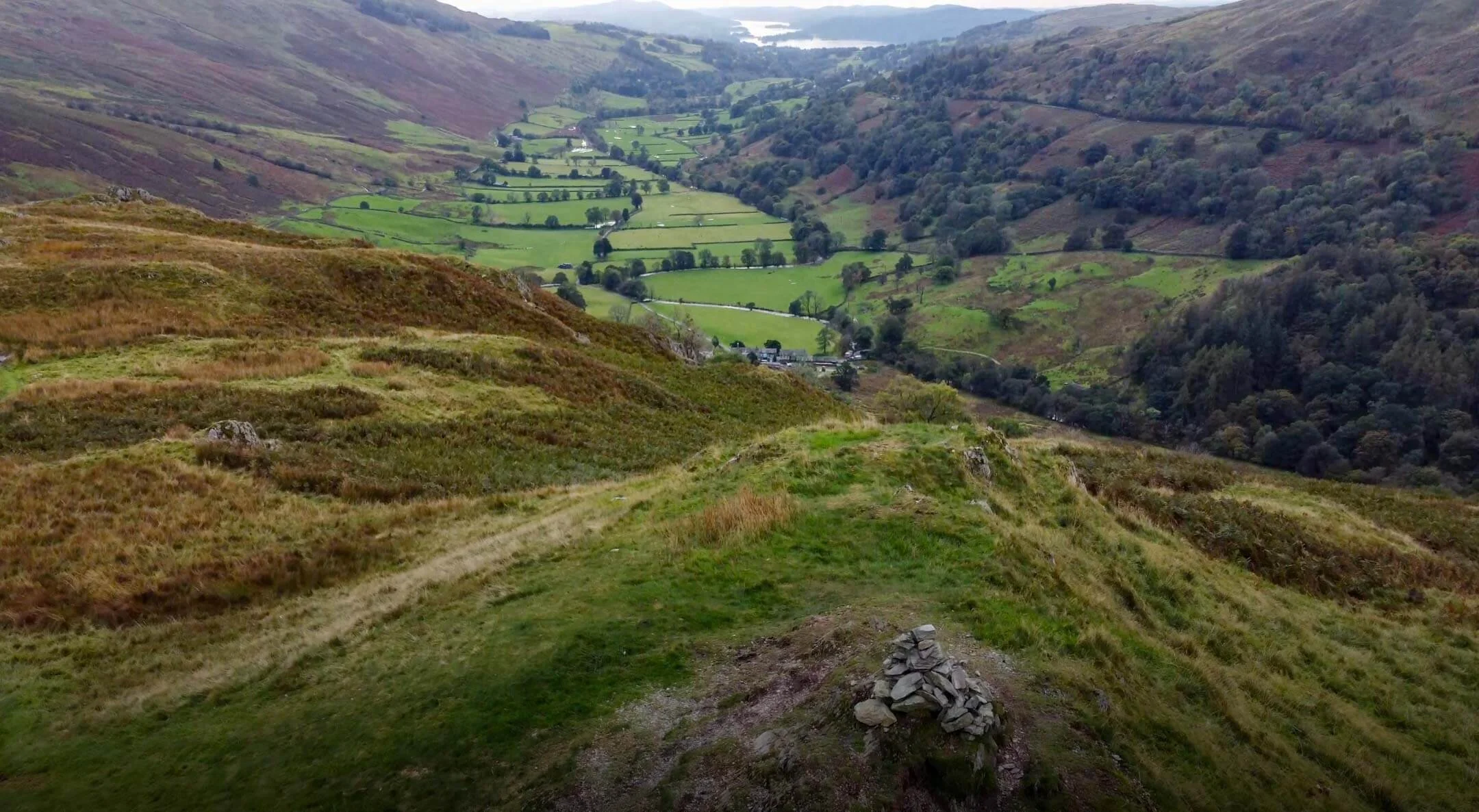
Alfred Wainwright completed a seven-volume series called A Pictorial Guide to the Lakeland Fells, in which he detailed the 214 Lake District Fells now known as The Wainwrights. What is interesting about this selection of Fells is that they were not chosen for their scale or grandeur… they were chosen because they were his favourites.
ABOUT ALFRED WAINWRIGHT
Alfred Wainwright (1907–1991) was a self-taught British fellwalker, artist, and author whose seven-volume Pictorial Guide to the Lakeland Fells transformed both how people navigated the Lake District and how they thought about walking there. A meticulous draughtsman and obsessive planner, Wainwright produced hand-drawn maps, detailed route descriptions, and pen-and-ink sketches for every fell in his guides. He avoided modern cartographic techniques in favor of an intensely personal, room-by-room approach: each page shows precise lines, annotated notes about paths, stiles, cairns and trig points, plus practical tips about gradients and footing. That distinctive, handcrafted style helped his books gain a devoted following and gave the guides a warmth and authority that resonated with walkers.
The list of 214 fells, now commonly called the "Wainwrights," was not compiled to be a formal topographic classification but emerged from Wainwright’s own walking and aesthetic judgments. He chose fells that he loved and that made sensible walking objectives—discrete tops or ridges with character, rather than strict elevation or prominence criteria. His selection reflects his eye for picturesque routes and satisfying days out, linking neighboring summits into ridge walks and circular itineraries. First published between 1955 and 1966, the Pictorial Guides captured a postwar appetite for outdoor recreation and helped standardize many of the classic Lakeland routes still used today.
Wainwright’s influence extended beyond the books themselves. His guides inspired generations of walkers to "bag" the Wainwrights, turning the list into an enduring challenge and social phenomenon—walkers log ascents, exchange tips, and celebrate completing all 214 summits. Though some purists debate his exclusions and inclusions (since he did not apply strict hill-list criteria), his choices have held cultural sway: Wainwright’s names and descriptions remain the most commonly used among Lake District walkers. Outside his guidebooks he wrote on local history and transport, campaigned for access to the fells, and maintained a persona of modest, dogged dedication—qualities that helped cement his reputation as the Lakes’ most beloved chronicler.
THE BOOKS
The seven volumes are as follows;
The Wainwrights have become a right of passage for many Lake District locals, as well as being a draw for ramblers all over the UK. This collection of Fells offer an incredible variety with the Wainwrights walks encompassing some of the best views in the Lakes. Walking the Wainwrights has become a challenge for many with walkers using the Wainwrights list to ‘bag’ as many as possible.
WHAT IS WAINWRIGHT BAGGING?
‘Peak Bagging’ is a term that describes walkers trying to summit as many hills or mountains on a list as possible. Therefore Wainwright Bagging is trying to summit all 214 Wainwrights. For some people, completing the Wainwrights can take a matter of weeks whereas other people will take years.
The best way to begin your Wainwright Bagging Adventure is to find a list of all the Wainwrights. Print it off or save it to your computer and then you can start recording your walks. If you prefer an online log of your Wainwrights, I log mine on Go4aWalk.com
I purchased a copy of Wainwrights A Pictorial Guide to the Lakeland Fells, at the beginning of my Wainwrights journey. I found these guidebooks an excellent resource before completing walks, although I did not use them whilst walking.
My method of Wainwright Bagging is being methodical and geographical. I aim to complete my Wainwrights a book at a time, focussing on an area. You can find all my walks below.
WHO SHOULD WALK THE WAINWRIGHTS?
Easy answer, anyone with a passion for being outside in the hills. It is possible that if you live local or have visited the Lake District over the years you may find yourself frequenting the same areas. With the aim of walking all of the Wainwrights, you will find yourself visiting new places or even hiking miles out of the way just to tick off a neglected fell.
FASTEST WAINWRIGHT ROUND
The hills were not just made for walkers, runners are also fascinated by the Wainwrights. The challenge of summiting all 214 peaks as quickly as possible has been competitive and the record was recently broken by Sabrina Verjee. The first attempt as this round in 1985 saw Alan Heaton complete the Wainwrights in nine days, 16 hours and 42 minutes. Since Alan’s attempt there have been various record holders but as recently as June 17th 2021 Sabrina Verjee smashed the previous record by 6 hours to be the first male or female to complete the Wainwright challenge in under six days!
FAR EASTERN FELLS
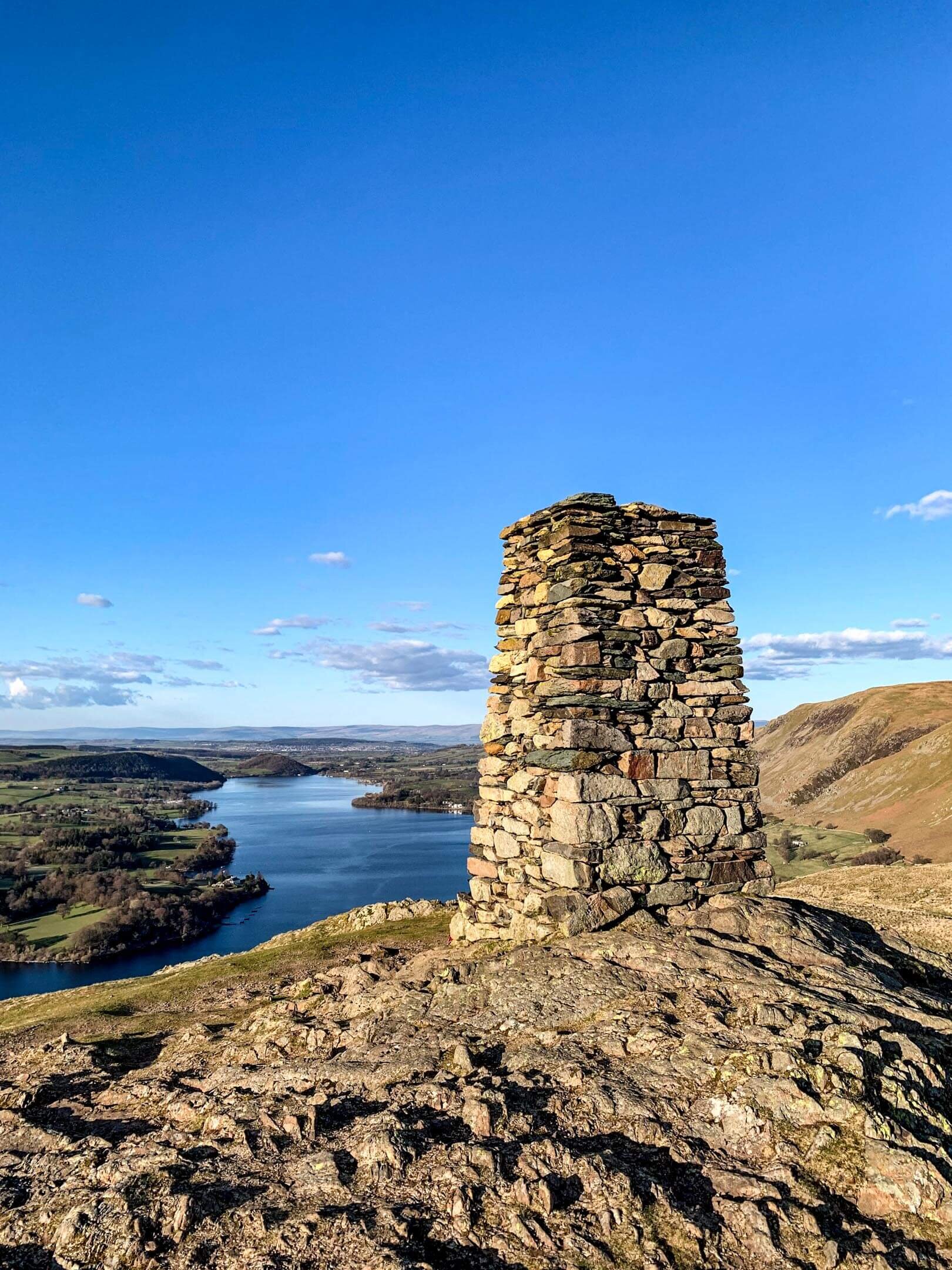
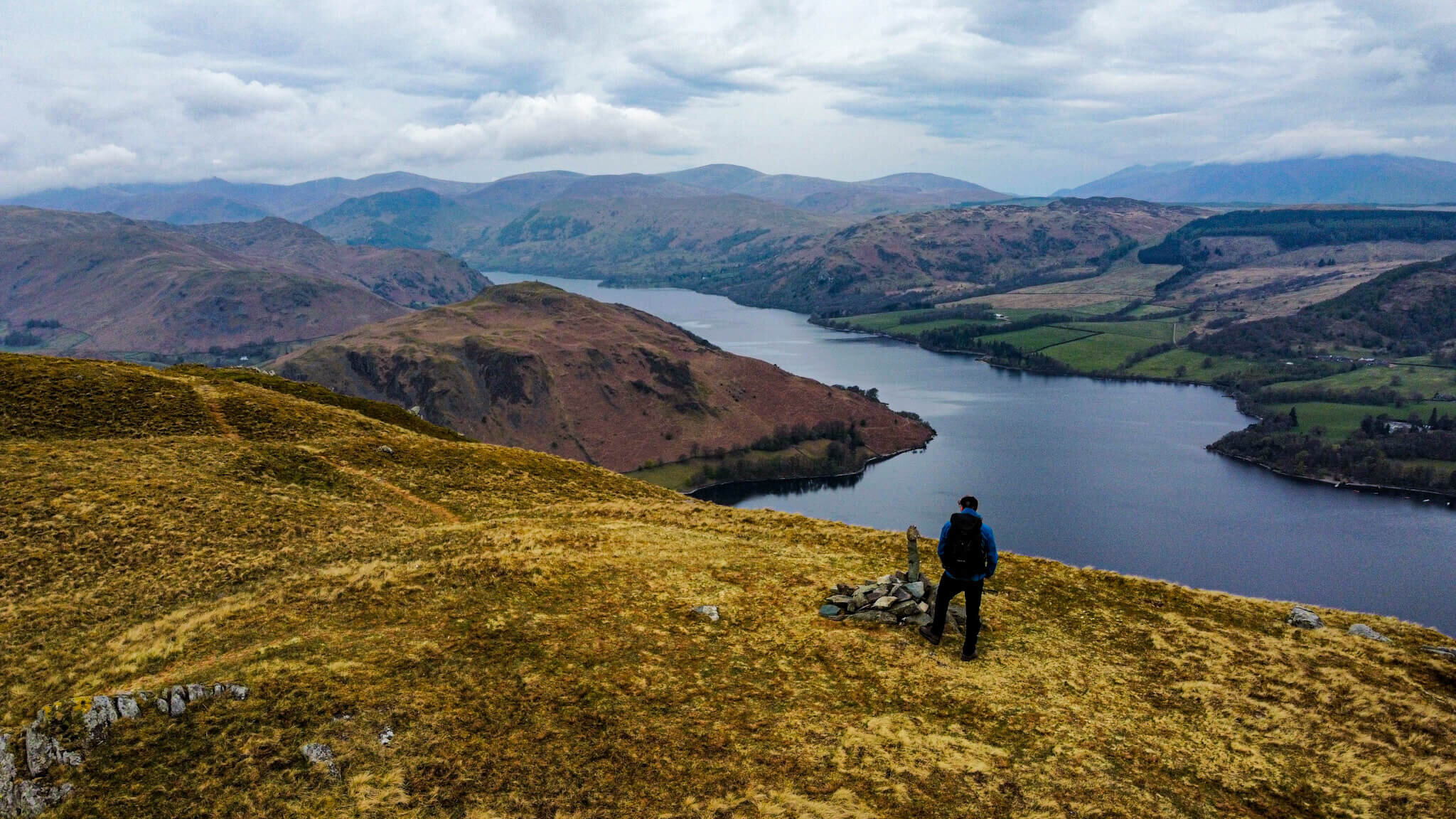
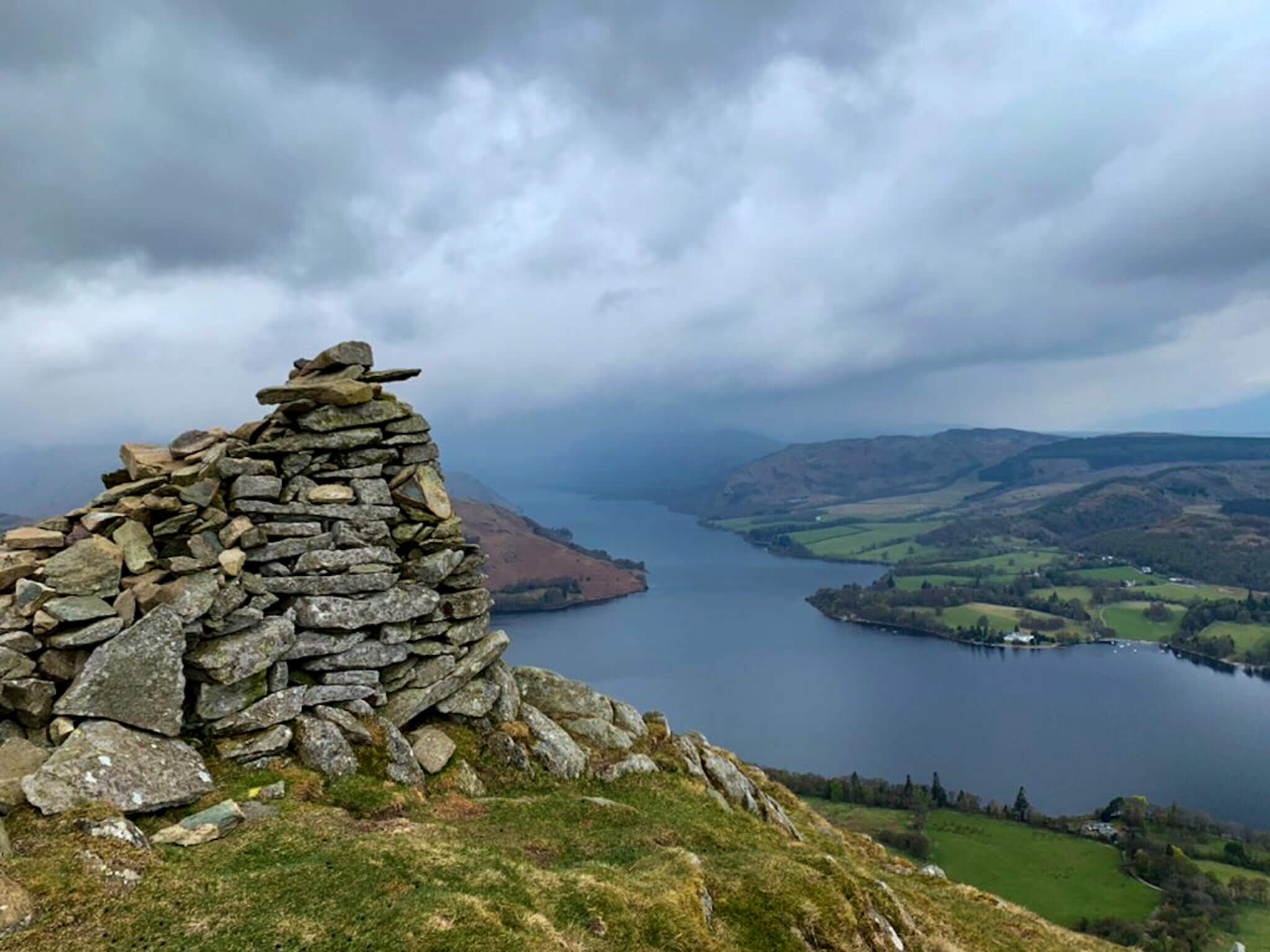
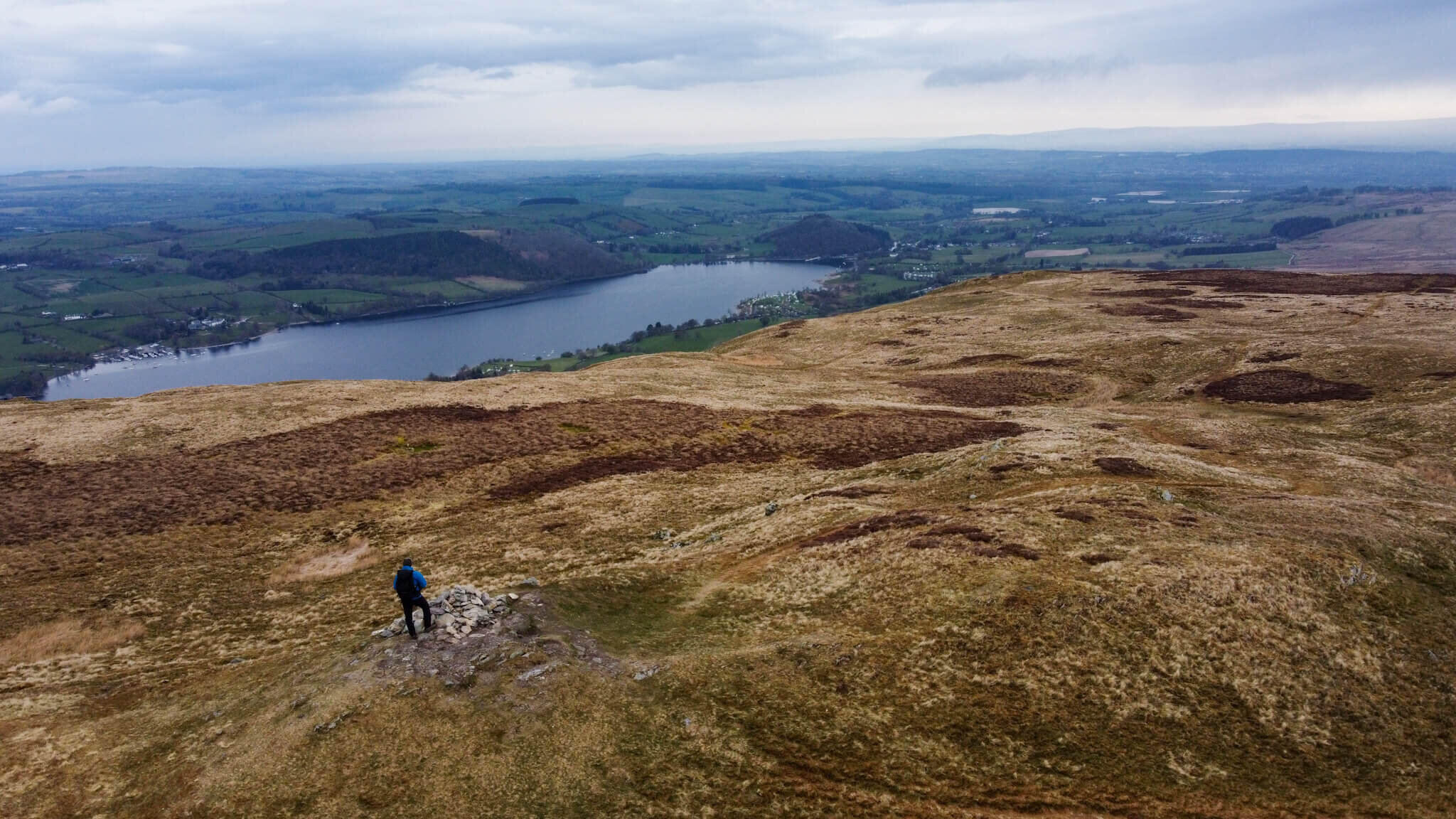
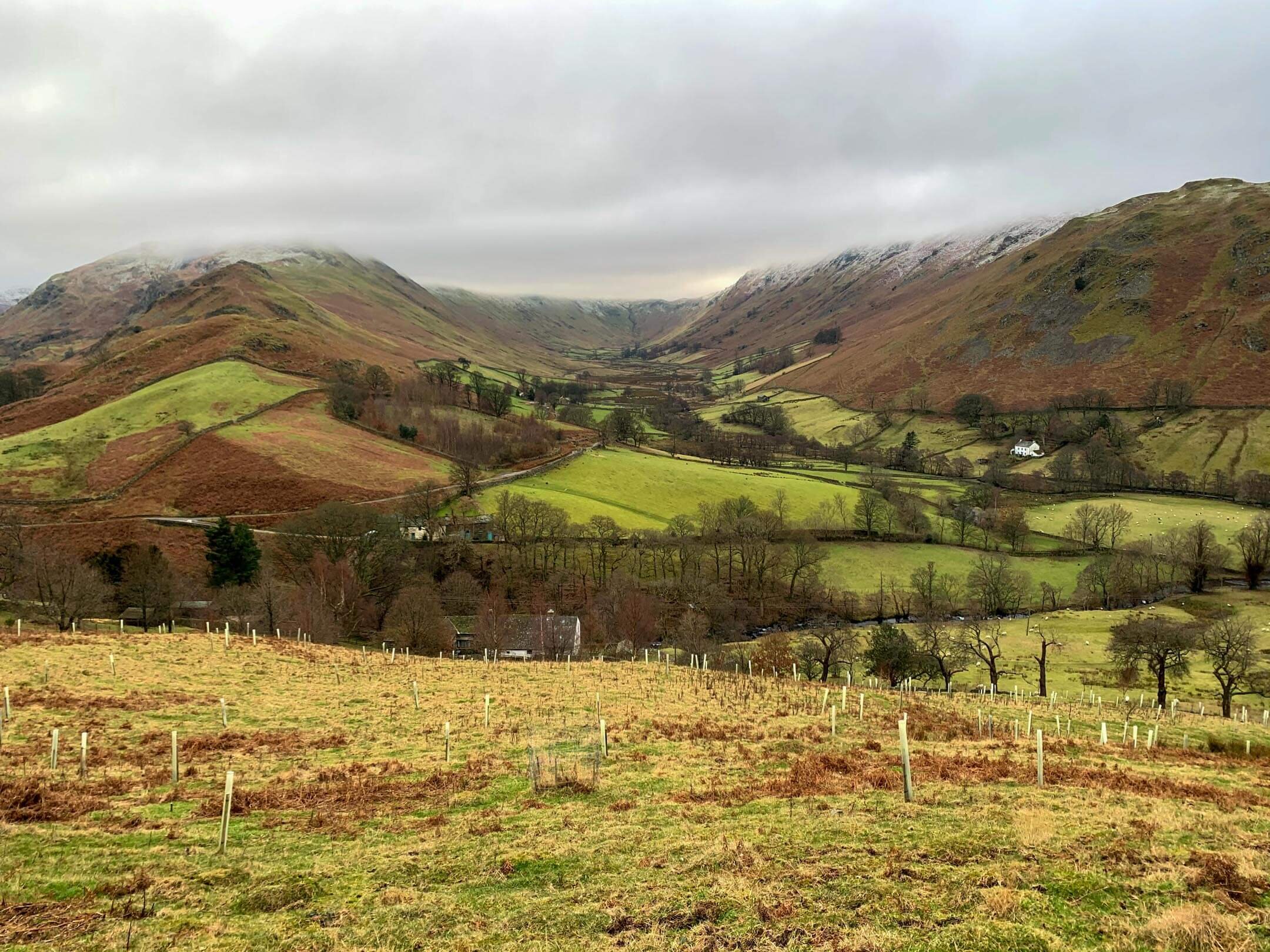
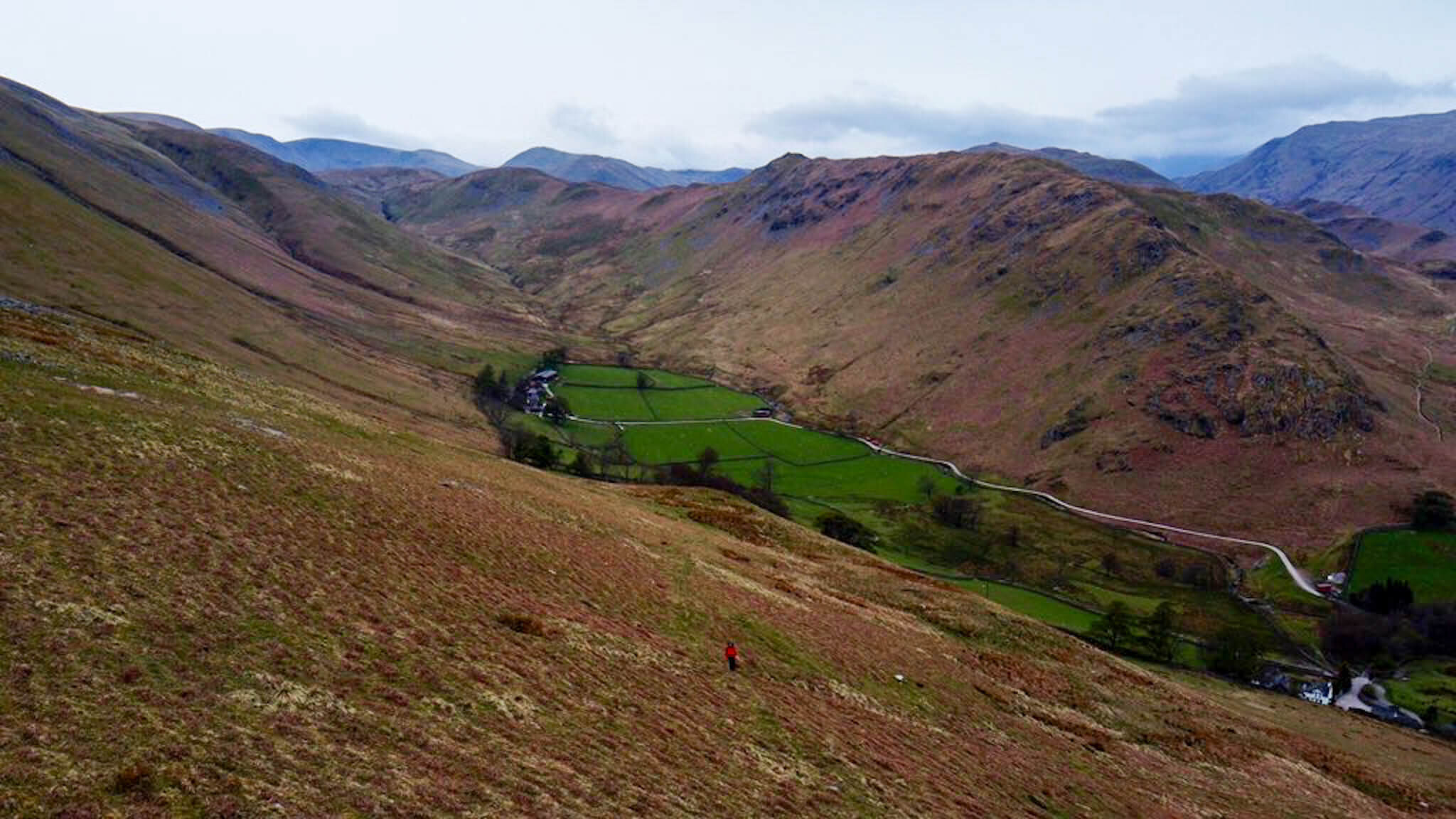
The Far Eastern Fells deliver a rewarding mix of solitude, sweeping panoramas, and classic Lakeland terrain: rugged ridges linking rolling summits like Dove Crag, High Street, and Stony Cove Pike; expansive views into the Helvellyn range and across Ullswater’s curving shoreline; easy-to-follow paths punctuated by stone walls and dry-stone piers; and the satisfying contrast of quiet sheep-scattered pastures below with wind-scoured, rocky tops above. Highlights include the dramatic descent into the steep-sided Deepdale, the broad, ancient feel of High Street’s summit plateau, and the autumnal color along the lower flanks — all achievable in a long day’s walk yet felt as a genuine escape from the busier central fells.
WAINWRIGHTS POSTS