













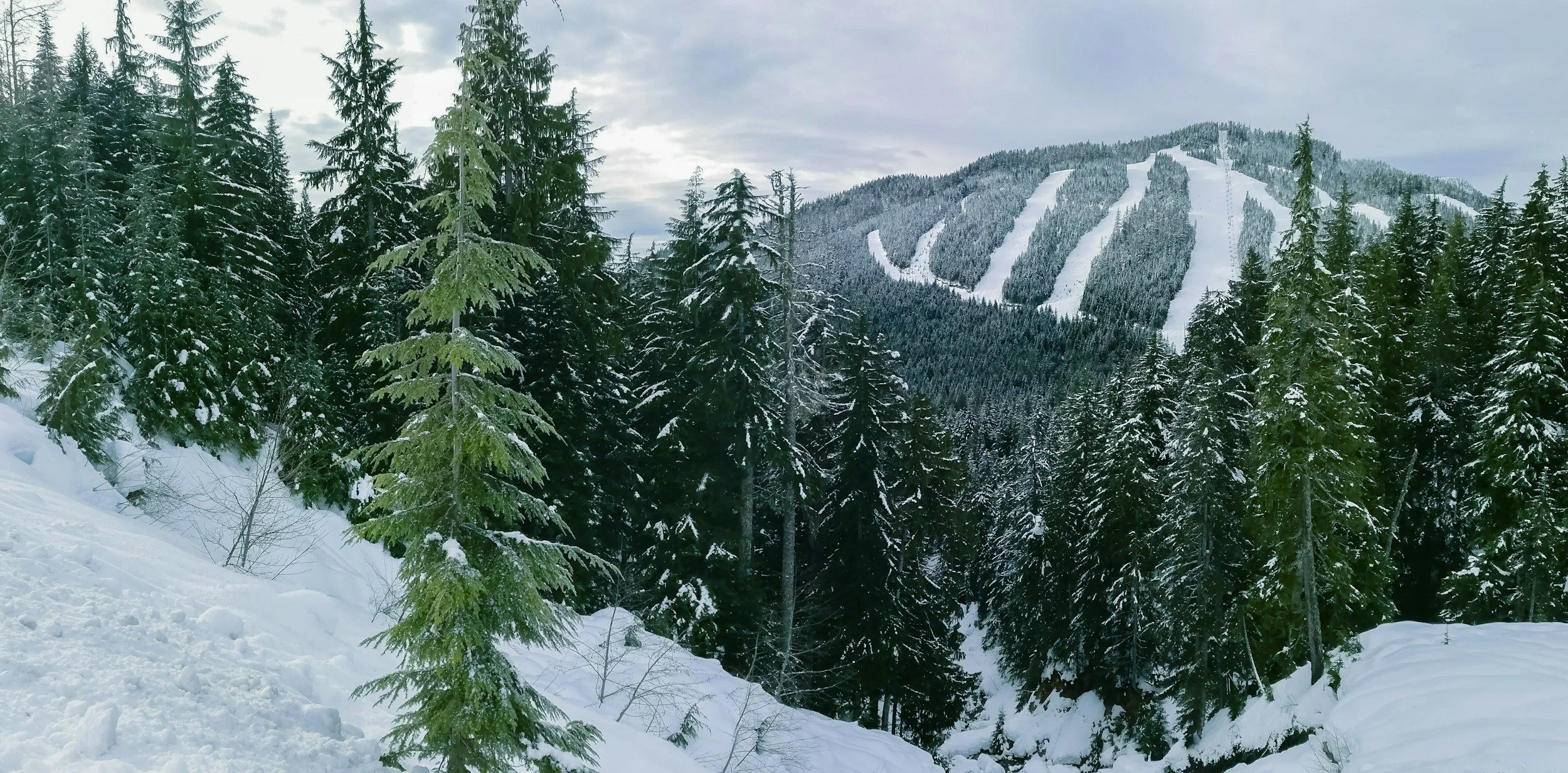
Staying Safe When Tree Skiing
Tree skiing and snowboarding is simply some of the most fun you can have on a mountain. Tight glades, pitch changes, and sheltered deep snow create a playground that often beats open runs for variety and fresh tracks. But trees demand respect: they change the game from piste riding to a mix of route-finding, quick reactions, and serious safety preparation.

This guide is not an all encompassing survival kit but suggestions based on my experience riding in trees around the globe but note… I still find myself in sticky situations. This post is not intended as an alternative to proper training but more as a guide for some key aspects I consider when heading into gladed terrain. It is also well worth noting that trees around the world all ski different. Whether you are hitting the Snow Gums in Australia, North American Pines or the Tsuga Trees in Hakuba’s famous powder district all offer something a little different.
Below is practical, experience-based advice for staying safe and getting the most from tree runs — what to wear and pack, how to ride, and how to pick terrain. But first it is worth trying to understand why tree runs are so special.
Why We Love Tree Skiing
Trees or glades offer the snow protection and shelter from the wind and burning sun. This means that not only does the snow get preserved for longer but it also tends to keep it softer and less crusty. This means that heading into the trees a few days after recent snowfall can often reward you with some insane powder turns.
Tree runs tend to be a bit like a natural terrain park filled with natural features to hop, jump and weave between. Whether you are jumping a stump, navigating a natural corridor or finding some powder pillows tree runs really do tend to deliver more often than not.
The nature of tree skiing often means taking things a bit slower to allow you to navigate tight tree lines. These slower, dynamic turns often get you feeling in a flow state that are the reward for effective tree skiing. It honestly feels so good to smoothly pick your path between the trees ensuring that you are spraying some powder on every turn doesn’t hurt either.
The worst days are made better by trees. Everybody hates turning up at the mountain in a whiteout but if you do and there is decent tree skiing available it is like your day has been saved. The trees provide valuable context which allow you to continue enjoying your day on the snow rather than trying to work your way through a cloud. Actually, this is one of the reason why some of the worlds highest ski resorts are not my favourites. Take Val Thorens which has Europes highest ski resort village. On a bad weather day there is no context as Val Thorens sits above the treeline. Whereas Flaine, which is lower has some great tree skiing at lower elevations. Checkout the difference in these videos below to see what I mean.
Staying Safe in The Trees
You can never guarentee that you are safe when heading anywhere in a ski resort and the trees are no different. Whether it be high impact collisions, getting burried in a tree well or simply getting lost in terrain you are unfamiliar with, trees offer many dangers. Managed correctly, tree skiing can be well worth the effort so consider adding the following to your tree skiing safety routines.
Riding within your limits is key even for more able experienced skiers and snowboarders especially when riding in terrain that is unfamiliar to you. We have all been there; new resort, coupled with recent snowfall and we all start to forget about some of the key aspects of managing risk in the trees. When you do not know the terrain well be sure to slow down and get to know the terrain first.
Riding with a partner and ensuring that you always keep visual contact is another key factor of skiing and snowboarding in the glades. If something goes wrong you want somebody around who can help you out and call for help. Taking it in turns to ride pitches of terrain ensures that you stay in each others sight, can share any dangers found and of course… you have someone to get that awesome picture or video of you as they wait for you to ride down. Recently, I got way too excited on a powder day in Flaine and kept going when my friend took a well deserved break. You can see what happened in the video at the bottom of this section.
The avalanche risk in the trees can be lower but this doesn’t mean the risk is zero. Therefore, carrying essential avalanche safety equipment is advisable. Again this is definitely a do as I say not as I do, because I am stupid enough to opt to ride without my backpack at times in resort. Often I will still wear my avalanche transeiver but really I know that I should carry my whole avalanche safety kit (Shovel, probe, & beacon). Bringing a backpack is also great for some snacks and an accessible drink just incase you feel the burn and need to rest on the mountain rather than in a hut…. A reminder to myself to ensure I do this more.
This one is for those heading into the unknown, a new area of trees or sometimes a new resort entirely. Dont be affraid to scout something out first before commiting to a run. This is especially the case if you feel there is a jump/drop and you are not sure of the landing. Normally, either you or your partner are willing to take one for the team and scout it out first. This rule also applies to just stopping to check your line as you move into unknown terrain. Look out for terrain traps, changes in the environment (trees aren’t fixed forever) or other hazards.
The nature of tree runs mean that getting assistance with a recovery is harder in this terrain. At a minimum this means a longer wait for ski patrol (if in bounds) so be prepared as with point 3. Be sure to control your speed as controlled turns are preferable to blasting it in this terrain. If you feel you are going too fast you probably are.
Communication is key. It is really easy to get serperated in gladed terrain so be sure to communicate. Whether this is clear communication such as “dropping left,” or “stopping.”, or even just your holars and whoops as you ride through the terrain. Ensuring your group know where each other are can prevent people getting stranded by themselves and prevents collisions when visibility is limited.
Plan your route out. I learnt this one early when at Marmot Basin where missing my route out ended up in one hell of a big hike in deep snow. Fair to say at the end of that experience I was done for the day curtailing my fun. This rule goes into knowing your terrain as planning the right route out can save you time, misfortune, and energy.
First aid and skills: Everyone in the party should carry a small first aid kit and know how to treat basic injuries and immobilize limbs. CPR and basic evacuation planning are good to review before heading in.
Watch for tree wells: A significant hazard around tree trunks where loose snow forms deep, hidden voids. Avoid skiing directly around the base of trees after heavy snow, and keeping sight of partners is essential.
What to wear and pack Pack for mobility, protection, and multiple contingencies.
This is always contentious as people always have their preferences… so feel free to listen to mine or ignore, that is of course your prerogative.
Dress in breathable layers so you can adjust on the move. Conditions change so having the ability to change your layering systems is one of the most important parts of staying comfortable in the mountains. I prefer a thin waterproof shell, coupled with a good quality base layer and mid-layer option.
Shell Jackets and Pants
Gone are the days of needing to purchase the more expensive Gore-tex shells. Yes, spending this money does provide you with a product that has been shown to stand the test of time but there are many new shells that are equally reliable. Patagonia have their own shell technology called H2No, The North Face use Futurelight, and Helly Hansen use Helly Tech. Each of these is a viable option. Regardless of your choice of membrane, opting for a shell jacket allows you greater versatility for temperature management whilst ensuring you stay dry.
Shell jacket and pants: Waterproof breathable shells with articulated fit for snowboarding through tree lines. Look for durable fabrics to withstand brush and branches.
Base Layers
Probably one of the most underrated bits of kit is your choice of base layer top and bottoms. Your main choices are a synthetic or merino base layers. Gone are the days of people wearing cotton surely? Merino for me is the standout winner with odour resistant properties and greater weight to warmth ration. Merino used to be really expensive but now I pick mine up from SportPursuit. If you sign up via this link you are supporting the website and you will have access to some great discounts. If you are trying to save some money there are some great synthetic options however be prepared for a good stench after a long day skiing trees.
Mid-Layers
I often alternate between a lightweight fleece (Arcteryx Delta) or a slightly thicker syntethic jacket (Arcteryx Atom) depending on the temps. On a cold day I may layer up and wear both. This is where having the lightweight shell suggested above pays dividends as it allows this flexibility. Often in a grabable place in my rucksack will be my puffy (Arcteryx Cerium). Lightweight, it’s like its not there but if I need to stop for a prolonged period I will through this on to boost my warth.
Gloves
This is a strange one for me as I run warm so wearing a thick pair of gloves isn’t usually my go to choice. That being said when snowboarding in the trees I opt for my Hestra Heli Mitts due to their long gaitor. Not only does this stop snow from flying up my sleeves but if I fall it gives me the reassurance that no snow is getting in however much I need to dig myself out of trouble.
Helmet
Sorry not sorry. In my opinion a helmet should be mandatory especially if you are opting to ski in the trees. Good quality helmets have MIPs which is a god send when it comes to head impact. Protecting yourself from impact whether it be a tree, the ground or your buddy could save a life. I use the OutdoorMaster Diamond 2 MIPs helmet which you can buy here with 20% off. Helmet: Mandatory. Trees multiply the risk of head impacts — use a well-fitting certified helmet.

Save 20% Just Click the Image
Goggles
My view on goggles has changed significantly in the past few years. No longer do you need to pay top dollar to get high quality goggles. Essentially, a photochromic lens is now an affordable option for many and its how I would suggest you go. Photochromic lenses adapt to the light meaning when you are in the protection of the trees, the lens will let more light in and when you pop out of the trees into the sun, the lens will reduce the amount of light that gets through to protect your eyes.
Over the past few years I have used many goggles but my go to would be either the Julbo Launcher Photochromic (Purchased from Sport Pursuit for big discount) or the Outdoormaster Ultra (Again save 20% here)
If you would prefer to opt for more traditional lenses than a low-light and contrast-enhancing lenses (yellow/rose) are often best in shaded tree areas. Carry a spare lens or goggles if practical.
Backpack
Ideally, when skiing in the trees you can wear a small backpack which will allow you to bring essential safety items with you. I would aim for a 20-25l backpack that has comfortable straps and a good waist belt for stability and support with the weight of the back. You do not want your pack fully loaded but I would aim to get the below items inside the bag.
Essential pack items
Hydration: Lightweight water bottle or hydration bladder.
Snack: High-calorie, quick energy (bars, gels, chocolate).
First-aid kit: Small kit with bandages, tape, wound treatment, and a space blanket.
Communication: Whistle for signalling, and two-way radios if group members want better communications than shouting. Radios are a pro option, I have never used one but I am interested in testing a system like Cardo Outdoor.
Beacon, probe, shovel: If you’re in avalanche terrain or venturing beyond controlled boundaries, carry and know how to use avalanche rescue gear. Even inside trees, slides and tree wells can create burial risk.
Repair kit: Multi-tool, ski/snowboard straps, small zip ties, duct tape.
In short, gladed terrain offers some of the most rewarding and enjoyable skiing and snowboarding you'll find, provided you approach it with respect, the right skills, and the right preparation. The key takeaways are simple: know the snow and avalanche conditions, refine your tree-skiing technique, travel with partners and the necessary safety gear (avalanche transceiver, probe, shovel), and make conservative terrain and route choices that match your ability.
When you combine good judgment with solid skills and proper equipment, you’ll dramatically reduce risk and increase the enjoyment of glades. Gladed runs reward patience and attentiveness, stay within your limits, communicate with your group, and embrace a mindset that prioritises safety over a single run or line. That balance is what lets you explore these beautiful, wooded slopes season after season.




Off-Piste Etiquette: Where Is The Boundary?
Whether you love fresh corduroy in the morning or a park lap in the sun, there is one thing that unites all skiers and snowboarders… a powder day! Waking up in the morning to a fresh cover of snow is why so many people work minimum wage resort jobs but when the pistes are tracked out where we go next is often heated debate. Having snowboarded across the continents this is our take on where the boundaries lie.
ARGENTINA
The mountain environment in Argentina is pretty special. The Andes offer towering peaks and pretty harsh weather systems. These weather systems bring plenty of snow but also incredibly high-speed winds that can make the snowpack variable. At Cerro Catedral the freeriding opportunities were incredible and I have heard the same for many other South American resorts.
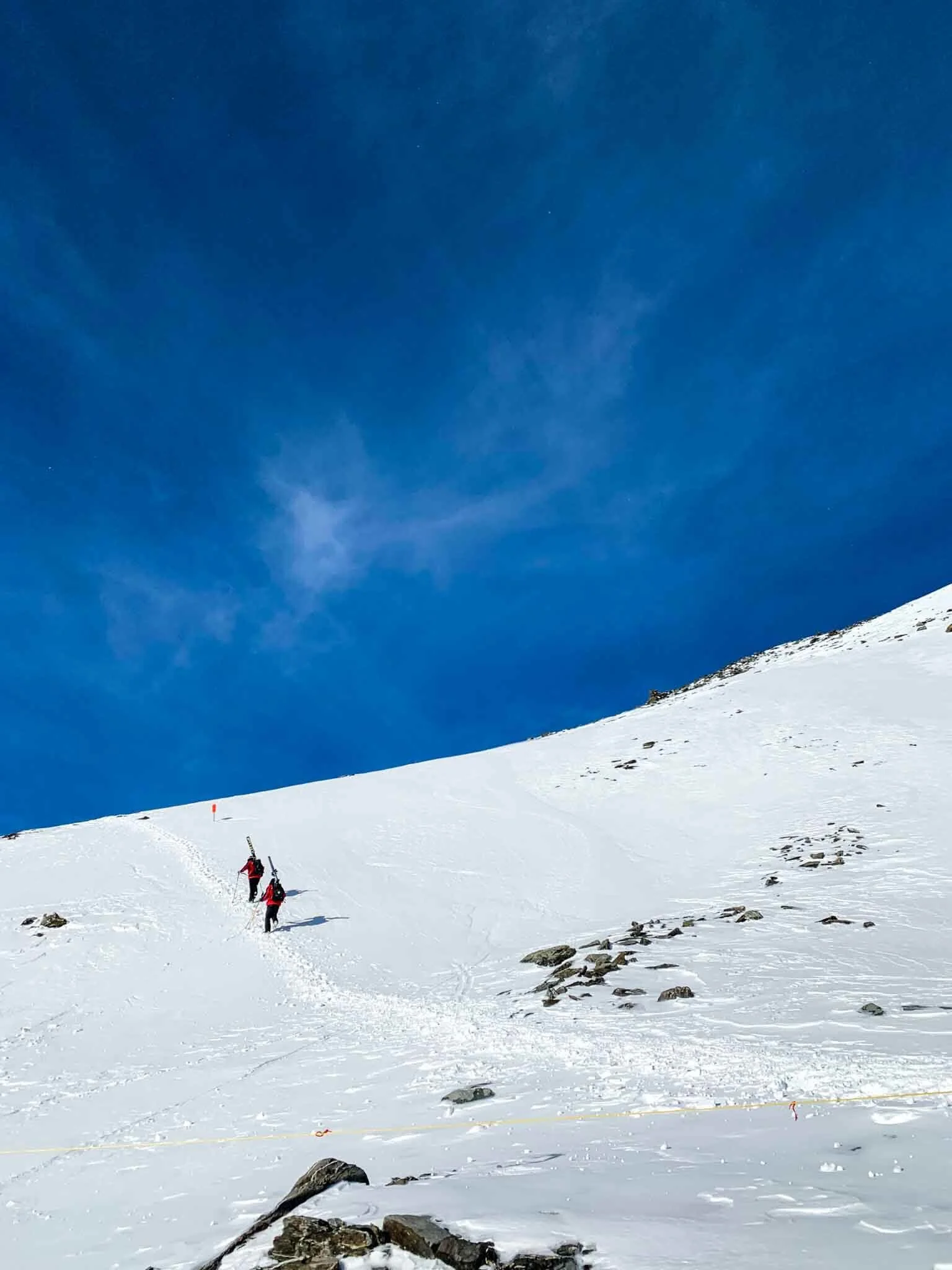
Cerro Catedrall offers the opportunity for easy access backcountry into La Laguna area and there is no boundary rope showing the laid-back attitude of the South American ski patrols. The Nubes area would close when the lift could not run due to high winds, but there was no barrier to those who would take the hike to the top. This means backcountry at Cerro Catedral and other South American ski resorts should not be taken lightly and you really should operate with caution and knowledge. With the lack of closures at Cerro Catedral, we often found ourselves asking questions and even walking away from a run after reaching the summit of a hike.

JAPAN
If there is one place in the world I had always wanted to experience snowboarding it was Japan. An absolute mecca for skiers and snowboarders, the amount of snow that Japanese resorts receive in a season shouldn’t be legal! With such regular snowfall, heading off-piste or into the backcountry needn't be high on your priority list, that is until you realize just how good tree riding is here in Japan.
Attitudes to off-piste in Japan are completely juxtaposed to what we Europeans are used to. For starters, some Japanese skiers and riders believe that the trees are home to spirits and it was believed these should be disturbed. This attitude resulted in many Japanese ski resorts roping off their tree runs and designating them as out of bounds.
Now I don’t know about you, but if I see an area of widely spaced trees with a carpet of fresh snow that is exactly where I want to be. Fortunately, Japanese ski resorts are starting to open these areas to budding powder hunters, although you may need to take a course to enter.
In Hakuba, these resorts offered off-piste skiing under the following conditions
Hakuba Cortina - No restrictions
Tsugaike Kogen - On completion of DBD course and only in gated areas
Hakuba Iwatake - In gated areas only
Hakuba 47 - On completion of the course and only in gated areas
Norikura Onsen - No Restrictions
Hakuba Goryu - Adventure course only
At least the few resorts not currently opening off-piste terrain to the public are blessed with an incredible snow record. That being said, with the number of Western tourists visiting Japan each year, it can’t be long before these resorts get with the times… Can it?
IF YOU FIND VALUE IN THIS POST CONSIDER CLICKING THE BUYMEACOFFEE LINK BELOW TO SUPPORT MY CONTENT.

NORTH AMERICA
North America is home to some great off-piste resorts with Canada’s powder triangle and America’s West Coast Resorts getting pounded with fresh powder. North American resorts tend to have groomed and ungroomed terrain. In effect, from a European perspective, I would not class it as off-piste.
You can feel pretty safe at all times in the knowledge that even the ungroomed terrain is patrolled, although be aware accidents do happen and it is again down to you to use your best judgment. It is pretty clear within both US and Canadian ski resorts that a rope means DO NOT CROSS and you do so risking not only your life but your lift privileges.
Ropes tend to mean that patrol is currently managing terrain and crossing could put you in range of dynamite, not something I’d advise. Resorts in Canada are starting to introduce gated areas, for example, Sunshine Village has Delerium Dive, but these are still the minority. If you want the true backcountry experience in North America you will have to leave the resort boundaries completely. Outside of the resort’s boundaries, you are in charge of your safety and there isn’t anybody coming to help you if things go array, not without paying huge fees anyway.
EUROPE
Oh Europe, the land of you can ski where you want but if you die don’t look at us culture. Europe pretty much offers freeriders exactly that, the freedom to ride. Do not get me wrong, in Europe, you will find ropes and closure signs however you have the freedom to cross them at your own risk.
Resorts like Verbier offer runs classed as Itineraries which are within the resort’s boundaries but are unmanaged. Normally a row of yellow poles will mark the route down an itinerary run but besides that, you are free to ride wherever you see a fresh turn.
WHY IS IT SO DIFFERENT IN EUROPE?
Well, I think it comes down to two main cultural aspects. Firstly from my experience, in Europe people are more likely to ski with an instructor or guide than in North America. This means Europeans are happy to hire an expert to make safety decisions for them.
Secondly, and linked to point one, by having a culture of hiring ski/snowboard instructors or guides Europeans also promote a culture of learning. This education culture promotes a strong sense of mountain etiquette and understanding of the risks which is not always prevalent when these decisions are made for you by ski patrol.
For this reason, I would urge caution when riding off-piste or backcountry routes in Europe. It is not uncommon to find a crevasse or other unmarked hazards between pistes so what could you find in the backcountry?

NEW ZEALAND
Similarly to North American resorts, in New Zealand, the Ski Patrol will let you know where the boundary is. Any area outside of the pisted terrain tends to be roped off but with gated access. The main difference I found when riding in New Zealand as compared to Canada was that at the gate you would occasionally find a patroller to give you a heads-up on the conditions. Mt Hutt, in particular, was great for this, with a Patroller normally sitting at the entrance to the lower towers informing people about the traverse. In the absence of a patroller, there would normally be a sign giving a rundown of recent conditions.
Leaving the resort boundary in New Zealand is similar to the European attitude… here is the information you need to know, now go and make smart decisions. If you choose to leave the resort boundary you are no longer covered by the protection of ski patrol. New Zealand resorts are small and with this in mind, you may want to explore outside the boundary lines. Outside of the resort’s boundaries terrain isn’t managed for avalanche danger (unless it could cause havoc on the access roads) so be sure to have the correct equipment and ride with a friend.
AUSTRALIA
Ok honestly, Australia is not being added to this list as a joke. Having spent time working Australian winters I know first-hand that Australian snowboarding can be really good. Although resorts are heavily reliant on snowmaking that does not mean there is no backcountry scene. Within the resorts, Australia is similar in approach to New Zealand and Europe. If you step out of the resort’s boundaries you do so at your own risk. Sometimes the best snow can be found outside of the resort’s boundary due to the high wind found at Australian resorts. This wind often blows snow, natural/man-made, out of bounds and into some pretty interesting gullies.
Check out the video below for some insight into Australian backcountry snowboarding.
CHINA
Heading out of bounds directly from the ski resort in China is a big no-no and not actually that exciting. With resorts tending to be purpose-built and with much focus on the inbounds experience, off-piste in China isn’t really a thing. There will be ropes and fences that are possible to cross in the resort, but the risk of losing your pass is rarely worth the rewards as runs are pretty short.
If you are heading to China instead opt for a backcountry tour. The mountains in China can rival anywhere in the world for terrain and the backcountry should be at the top of most people’s lists when visiting. Consider the Altai Mountains which border Mongolia offering some incredible peaks. Our advice is to travel with a guide, as amazing a country as China is, there are plenty of ways you can overstep the line and end up in trouble. Having a guide will help you stay safe both on snow and culturally.

FINAL THOUGHTS
Wherever your travels take you this year if you plan to venture off the groomers be sure to know the local attitudes. By understanding the local’s approach to backcountry you will be in a better place to make decisions that will keep you safe, but also on the right side of ski patrol. Knowing the local culture can inform your decisions with regard to the amount of support you will receive if you run into trouble. If you are heading through the gate and out of bounds, stay safe and ride with a friend.